
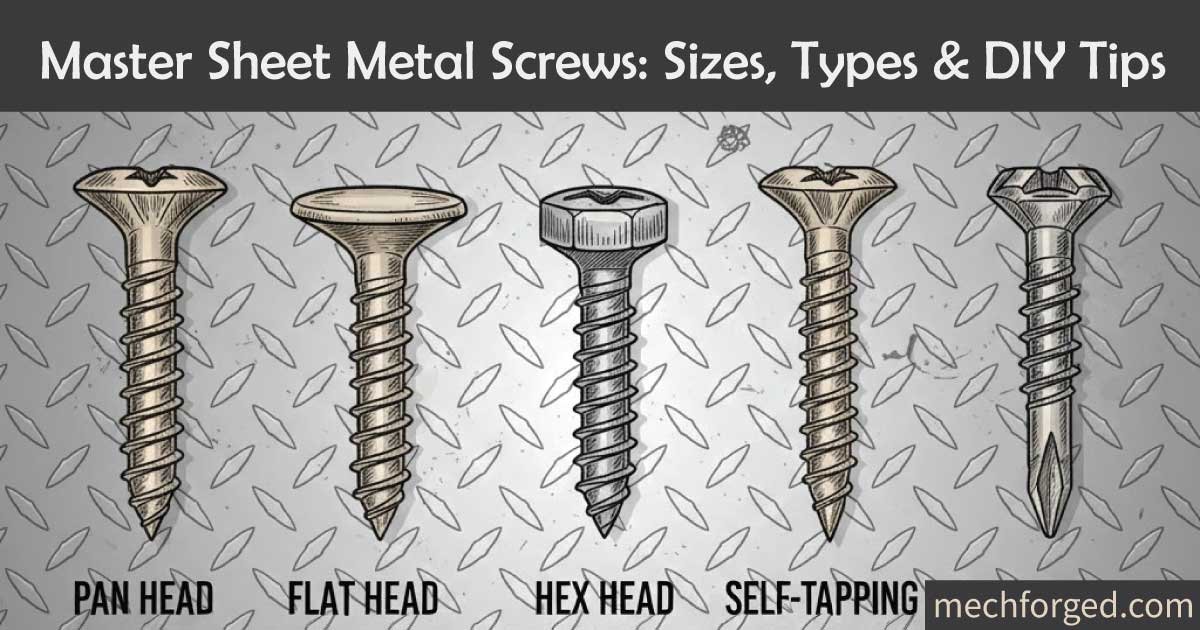
Sheet metal screws might appear simple at first glance—just a small, threaded fastener but they play a critical role in ensuring your metal, wood, or plastic projects hold together reliably. Whether you’re working on HVAC systems, automotive repairs, DIY electronics enclosures, or home improvement tasks, choosing the right sheet metal screw can make the difference between a secure, professional finish and a frustrating, unstable connection.
Understanding sheet metal screw sizes, types, and best applications isn’t just about picking the longest or thickest screw you find. It’s about matching the screw’s length, diameter, threads, and material to the specific sheet metal or substrate you’re fastening. In this guide, we’ll break down the essentials of sheet metal screws, including sizing, gauges, common mistakes to avoid, and practical tips to ensure perfect fittings every time.
What Are Sheet Metal Screws?
Sheet metal screws are threaded fasteners designed to join thin sheets of metal or attach metal to other materials like wood or plastic. Unlike wood screws, which have coarse threads for gripping wood fibers, sheet metal screws typically feature finer threads and sharper tips to cut into metal surfaces or pre-drilled holes.
Most sheet metal screws have a tapered point, which helps them penetrate thin metal sheets without needing a pre-drilled pilot hole in softer metals. However, for harder metals, drilling a small pilot hole is often necessary to prevent damage to both the screw and the material.
| Part of a Sheet Metal Screw | Description |
|---|---|
| Head | Can be flat, pan, or hex, determines the driving method and finish appearance. |
| Shank | The smooth portion, sometimes absent, contributes to alignment. |
| Threads | Fine or coarse spirals that grip metal securely. |
| Point | Sharp or self-tapping tip that initiates entry into the metal sheet. |
📌 Check out our Piston Ring Size Chart: a complete guide for mechanics, automotive engineers, and DIY enthusiasts! Learn about ring dimensions, types, and proper fit to boost engine performance and longevity. Discover all the details and expert tips—read the full guide now!
Why Screw Size Matters
Screw size is not arbitrary. Using a screw that’s too short may fail to hold your components together, while one that’s too long can protrude or damage underlying surfaces. Similarly, the wrong diameter can either strip the metal threads or fail to provide a secure hold.
Sheet metal screws are sized based on two factors: gauge (diameter) and length. Matching the size to the metal thickness and type ensures stability and durability. For example, fastening a thin aluminum sheet requires a smaller gauge screw than connecting a thick steel panel.
| Metal Thickness | Recommended Screw Length | Gauge |
|---|---|---|
| 18 gauge | 3/4 inch | #6 |
| 16 gauge | 1 inch | #8 |
| 14 gauge | 1-1/4 inch | #10 |
| 12 gauge | 1-1/2 inch | #12 |
| 10 gauge | 2 inches | #14 |
Understanding Screw Gauge
The gauge of a sheet metal screw indicates its thickness, with higher numbers representing thicker screws. For example, a #6 gauge is thinner than a #12 gauge. Choosing the correct gauge is essential to prevent stripping the threads in the sheet metal or causing deformation of the material.
A smaller gauge screw is ideal for thin aluminum or light-gauge steel, while a larger gauge is required for heavy-duty steel panels. Always consider the material’s strength, flexibility, and intended load when selecting a screw gauge.
| Gauge | Diameter (inches) | Common Applications |
|---|---|---|
| #4 | 0.112 | Thin aluminum, small electrical panels |
| #6 | 0.138 | HVAC ducts, light steel assemblies |
| #8 | 0.164 | Medium steel, small machinery |
| #10 | 0.190 | Heavy sheet metal, automotive panels |
| #12 | 0.216 | Structural metal, large enclosures |
| #14 | 0.242 | Thick metal fastening, industrial use |
Common Types of Sheet Metal Screws
Sheet metal screws come in several varieties depending on their intended application. The most common types include:
1. Pan Head Screws:
Pan head screws feature a slightly rounded, elevated head that sits above the material surface. They are particularly useful when attaching components where the screw head does not need to be hidden, such as metal brackets, electrical assemblies, or hardware installations, providing stability while maintaining a simple, practical appearance.
2. Flat Head Screws:
Flat head screws are designed to be countersunk, allowing the head to sit flush with the surface of the material. This creates a smooth, seamless finish, making them ideal for applications like cabinetry, furniture, or projects where aesthetics matter, ensuring the screw does not protrude or interfere with sanding and finishing.
3. Hex Head Screws:
Hex head screws have a six-sided head designed to be driven with a wrench or socket. They are commonly used in structural, heavy-duty, or construction applications, providing excellent torque and grip. Their design makes them ideal for projects requiring strong fastening, including machinery assembly, wooden structures, and metal frameworks.
4. Self-Tapping Screws:
Self-tapping screws are engineered to create their own threads in softer metals or plastics as they are driven. This eliminates the need for a pilot hole, simplifying installation and saving time. They are widely used in DIY projects, light construction, and metal assemblies, providing secure fastening without pre-drilling.
5. Self-Drilling Screws:
Self-drilling screws include a drill-like tip that allows them to penetrate metal without the need for pre-drilling. This feature makes them highly efficient for rapid assembly, saving time and effort. They are perfect for roofing, HVAC installation, and other projects requiring strong, quick, and precise fastening into metal surfaces.
| Screw Type | Best Use |
|---|---|
| Pan Head | Electronics, light metal assemblies |
| Flat Head | Flush mounting, aesthetic finishes |
| Hex Head | Heavy panels, structural assembly |
| Self-Tapping | Quick assembly in soft metals |
| Self-Drilling | Hard metals, fast installation |
Head Styles and Drive Types
Selecting the right head style affects both function and finish. Flat heads allow countersinking and a flush appearance, while pan heads leave the screw exposed but provide more surface contact. Hex heads allow high torque applications, and star or Torx drives reduce slipping during installation.
Matching the drive type with the right tool is also critical. Phillips and slotted drives are common, but Torx or square drives can reduce cam-out and ensure the screw is driven straight.
| Head Type | Drive Type | Best Application |
|---|---|---|
| Flat Head | Phillips, Slotted | Flush mounting |
| Pan Head | Phillips, Slotted | Light metal |
| Hex Head | Hex, Socket | Structural, high torque |
| Torx / Star | Torx driver | Precision, reduced slipping |
Length Selection
The length of a sheet metal screw depends on the thickness of the material being fastened and whether additional materials are being joined. The general rule is the screw should penetrate the second material at least half its thickness for a secure hold.
For example, joining a 16-gauge steel sheet to a wooden frame may require a 1-inch #8 screw. If joining two steel sheets, a longer screw might be necessary to ensure the threads fully engage in the bottom sheet.
| Material Combination | Recommended Screw Length | Gauge |
|---|---|---|
| Thin metal + wood | 3/4 inch | #6 |
| Medium steel + wood | 1 inch | #8 |
| Thin + medium steel | 1-1/4 inch | #10 |
| Medium + heavy steel | 1-1/2 inch | #12 |
| Thick steel + wood | 2 inches | #14 |
Material Considerations
Sheet metal screws are made from various materials to suit different environments. Standard steel screws are common for indoor use, but stainless steel, brass, and coated screws are preferable for outdoor or corrosive environments.
Galvanized screws resist rust and are ideal for roofing or outdoor metal structures. Stainless steel offers superior corrosion resistance, perfect for coastal environments or wet areas. Brass screws, while not as strong, provide a decorative, corrosion-resistant finish for specialty projects.
| Material | Strength | Corrosion Resistance | Best Use |
|---|---|---|---|
| Steel | High | Low | Indoor, non-humid |
| Stainless Steel | High | High | Outdoor, marine |
| Brass | Medium | Medium | Decorative, lightweight |
| Galvanized | High | High | Outdoor, roofing, garden |
📌 Discover our Hose Size Chart: a complete guide for plumbers, mechanics, and DIY enthusiasts! Learn about hose diameters, types, and applications to choose the perfect hose for any project. Get expert tips and detailed insights—read the full guide now!
Thread Types and Their Function
The thread type determines how well a screw grips metal. Coarse threads are designed for softer metals like aluminum, offering quick penetration and strong hold. Fine threads are better for harder metals like steel, providing higher thread engagement and minimizing stripping.
Self-tapping screws rely on their threads to cut into metal, while self-drilling screws include a tip that drills through harder materials. Recognizing thread type helps prevent common issues such as stripping, loosening, or poor alignment.
| Thread Type | Best For | Notes |
|---|---|---|
| Coarse | Soft metals | Fast penetration, strong grip |
| Fine | Hard metals | Prevents stripping, stronger engagement |
| Self-Tapping | Light-medium metals | Cuts its own threads |
| Self-Drilling | Medium-hard metals | Drills and threads in one step |
Pilot Holes: When and Why
Although some sheet metal screws are self-tapping, drilling a pilot hole can prevent metal warping, splitting, or misalignment. Pilot holes are especially recommended for harder metals or thicker sheets. The hole diameter should be slightly smaller than the screw’s core diameter to maintain holding power while allowing smooth insertion.
| Screw Gauge | Pilot Hole Diameter |
|---|---|
| #4 | 3/32 inch |
| #6 | 7/64 inch |
| #8 | 1/8 inch |
| #10 | 9/64 inch |
| #12 | 5/32 inch |
| #14 | 11/64 inch |
Common Mistakes to Avoid
Even seasoned DIYers sometimes make mistakes with sheet metal screws. Using the wrong gauge can strip threads or split thin metals, while overtightening can deform the sheet. Ignoring pilot holes in harder metals often results in misalignment and damaged screws.
Additionally, mismatching screw head styles and driving methods can make finishing difficult. For example, using a flat head screw where a pan head is appropriate may require excessive countersinking, weakening the metal. Always check your material type, thickness, and intended load before selecting screws.
Practical Tips for Perfect Fittings
Choosing the right screw involves more than length and gauge. Always consider material compatibility, thread type, and environmental exposure. For example, when installing roofing panels outdoors, galvanized or stainless steel self-drilling screws with a washered hex head provide both strength and weather resistance.
Some additional tips include lightly lubricating screws to ease installation, using torque-controlled power drivers to prevent overtightening, and keeping a reference chart handy to match metal thicknesses with recommended screws. A small mini-list of key tips: always check screw alignment, pre-drill for hard metals, and use corrosion-resistant finishes for outdoor applications.
| Project Type | Recommended Screw Type | Material | Head Style |
|---|---|---|---|
| HVAC duct assembly | Self-Tapping | Steel | Pan Head |
| Roof metal panels | Self-Drilling | Galvanized | Hex Head |
| Electronics enclosure | #4 or #6 Pan Head | Aluminum | Pan Head |
| Automotive body work | #10 Fine Thread | Steel | Flat Head |
📌 Check out our Drill Tap Chart: a complete guide for engineers, machinists, and DIY enthusiasts! Learn about drill sizes, tap threads, and proper matching to ensure precise and efficient work. Get all the details and expert tips—read the full guide now!
Tools for Installing Sheet Metal Screws
Proper tools can make installation easier and reduce mistakes. Manual screwdrivers, power drills with adjustable torque, hex keys, and specialty drivers like Torx are commonly used. Using the right driver ensures proper torque, reduces cam-out, and prevents screw or metal damage.
When working on multiple screws, a magnetic bit holder or screw gun can speed up the process, especially for repetitive tasks such as HVAC ductwork or metal cabinet assembly.
| Tool Type | Best Use |
|---|---|
| Manual Screwdriver | Small projects, delicate work |
| Power Drill | Medium to large projects |
| Torx / Hex Driver | High torque, precision work |
| Screw Gun | Repetitive fastening, assembly lines |
Conclusion: Mastering Sheet Metal Screw Selection
Decoding sheet metal screw sizes is a skill every DIYer, craftsman, or professional should master. The right screw ensures a secure, durable, and professional finish, while the wrong one can cause frustration, damage, or weak joints. By understanding gauges, lengths, threads, head styles, and material compatibility, you can confidently select screws for any metal project.
Remember, small decisions—like choosing the correct pilot hole diameter, avoiding overtightening, and using corrosion-resistant screws outdoors—have a big impact on the final result. Keep reference charts, follow practical tips, and always match the screw to the material and application. With these strategies, your metal projects will not only fit perfectly but also stand the test of time.
| Quick Reference: Sheet Metal Screw Guide | Length | Gauge | Thread Type | Head Style |
|---|---|---|---|---|
| Thin aluminum sheet | 3/4 inch | #4 | Coarse | Pan Head |
| HVAC ductwork | 1 inch | #6 | Coarse | Pan Head |
| Medium steel panels | 1-1/4 inch | #8 | Fine | Flat Head |
| Automotive repair | 1-1/2 inch | #10 | Fine | Flat Head |
| Heavy metal assembly | 2 inch | #12 | Fine | Hex Head |
| Industrial sheet metal | 2-1/2 inch | #14 | Fine | Hex Head |
FAQs:
How to determine the size of a sheet metal screw?
To determine sheet metal screw size, check both the diameter (gauge) and length. The gauge indicates thickness, while the length ensures proper grip in the material. Always match the screw to the metal’s thickness, and consider whether it’s self-tapping or requires a pilot hole for accurate installation.
How to differentiate screw size?
Screw size is defined by three factors: gauge (thickness), length, and thread type. Gauge is a number, length is measured in inches or millimeters, and threads can be coarse or fine. By comparing these attributes, you can select the right screw for the material and weight it must hold.
What is the rule for screw size?
The general rule is to choose a screw long enough to pass through the material being joined and penetrate the base by at least half its length. The gauge should be strong enough to hold the load without splitting or stripping the material. Material type always affects screw selection.
What does #8 mean on a screw?
A #8 screw refers to its gauge or thickness. The higher the number, the thicker the screw. #8 is common for general woodworking and sheet metal projects, offering a balance between strength and ease of insertion. Always pair gauge with appropriate length for secure fastening.
What are the conventions for screw size?
Screw size conventions include gauge (thickness), length (inches or mm), and thread type (coarse or fine). Wood screws and metal screws follow different numbering systems. For sheet metal, gauge indicates diameter, while length is measured from the head’s base to the tip for accurate sizing.
What are the sheet metal screw sizes?
Sheet metal screws commonly range from #2 to #14 gauge and lengths from 1/4 inch to 3 inches. Smaller gauges suit thin metal, while larger ones hold thicker panels. Choosing the right combination ensures strong attachment without stripping threads or deforming the metal surface.
What size screws should I use for metal roofing?
For metal roofing, use #10 or #12 self-tapping screws with rubber washers to prevent leaks. Length depends on panel thickness, usually 1 to 2 inches. Coated or stainless steel screws resist corrosion. Proper gauge, length, and washer placement ensure a secure, weatherproof roof installation.
What is the difference between #10 and #12 metal screws?
The difference is mainly gauge: #12 screws are thicker and stronger than #10. Thicker screws provide greater holding power for heavier or thicker materials but require larger pilot holes. Choose based on the material’s strength, load, and whether durability against stress or vibration is needed.
What size are standard roofing screws?
Standard roofing screws are usually #10 or #12 gauge, with lengths between 1 inch and 2.5 inches depending on panel thickness. They often feature a hex or pan head with a sealing washer to prevent leaks. Selecting the correct gauge and length ensures proper hold and long-lasting roof integrity.