
Choosing the right tile size can completely transform the look and feel of a room.
Whether you are renovating a bathroom, upgrading your kitchen backsplash, or tiling a large open-plan living area, tile size plays a major role in aesthetics, functionality, and even maintenance.
With so many tile dimensions available today, it’s easy to feel overwhelmed.
This comprehensive tile size guide will walk you through common tile sizes, how to choose the right size for different rooms, and practical tips to avoid common mistakes.
By the end, you will feel confident selecting tiles that balance style, proportion, and practicality.
Why Tile Size Matters
Choosing the right tile size goes beyond aesthetics; it directly impacts functionality, maintenance, and the overall feel of a space.
The size of tiles influences perception, safety, and installation complexity, making it an important consideration in both residential and commercial projects.
Understanding the effects of tile dimensions ensures a balance between style and practicality.
1- Visual Space Perception
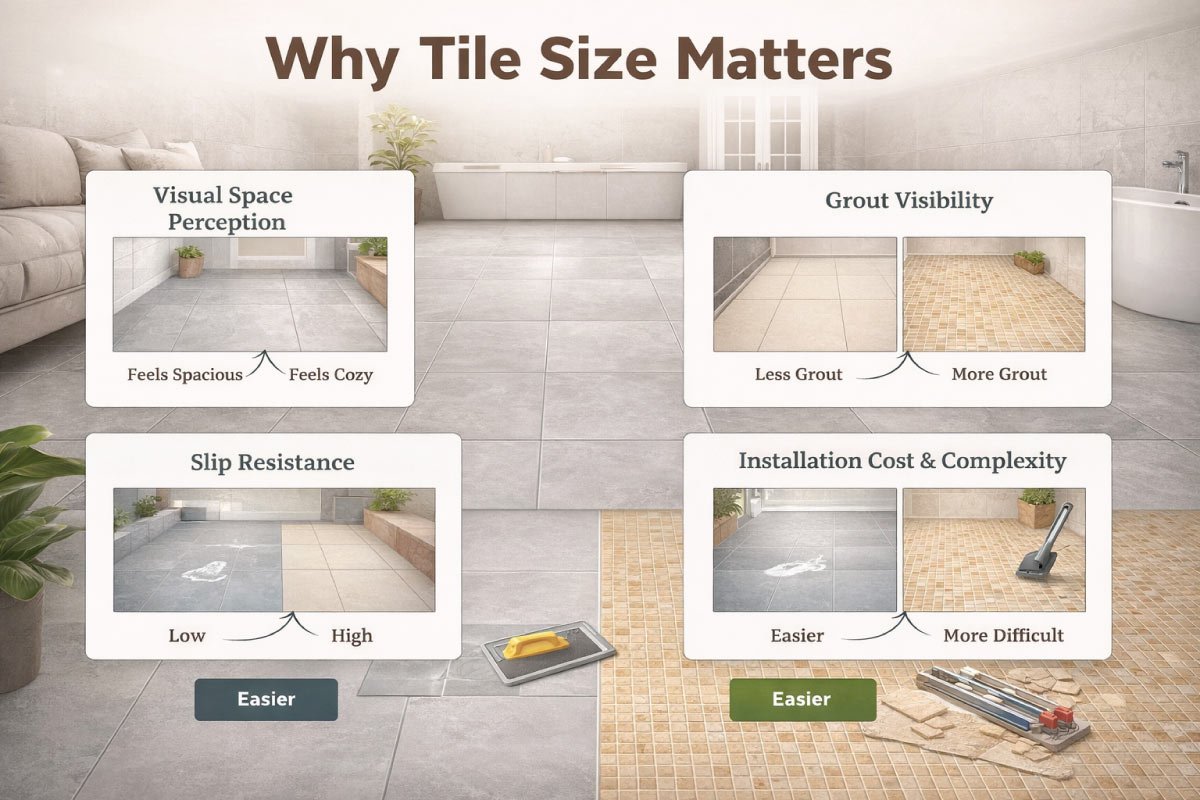
Tile size can dramatically affect how spacious a room feels. Larger tiles create a sense of openness and fewer visual interruptions,
while smaller tiles add texture, detail, and a more intricate pattern that can make compact areas feel busier or cozier.
2- Grout Visibility
Smaller tiles result in more grout lines, which can be more noticeable and affect the overall appearance.
More grout may require extra cleaning and maintenance to prevent discoloration or staining over time.
3- Slip Resistance
The number and spacing of grout joints influence traction. Smaller tiles with more grout lines generally provide better slip resistance, making them safer for wet or high-traffic areas like bathrooms and kitchens.
4- Installation Cost and Complexity
Tile size affects labor and precision during installation.
Smaller tiles often require more cutting, alignment, and attention to detail, which can increase both installation time and cost compared to larger,
simpler tiles.Installation cost and complexity – Some tile sizes require more cutting and precision.
Understanding these factors helps you choose a tile size that works for both form and function.
Common Tile Sizes Explained
Tiles are available in a variety of sizes, each suited to different design goals and functional needs.
Understanding common size categories helps in selecting the right tile for aesthetic appeal, practicality, and installation efficiency.
From mosaics to oversized slabs, the size impacts layout, maintenance, and the overall feel of a space.
1- Small Tiles
Small tiles are ideal for detailed patterns, decorative accents, or areas that require extra slip resistance.
Their numerous grout lines add texture and grip, making them popular for bathrooms, shower floors, and intricate mosaic designs.
2- Medium Tiles
Medium-sized tiles offer versatility and are well-suited for most residential spaces, including kitchens, living rooms, and hallways.
They balance installation ease with visual appeal and work well with a variety of layouts and patterns.
3- Large and Extra-Large Tiles
Large-format and extra-large tiles create a sleek, modern, and seamless appearance.
Fewer grout lines make spaces appear more open, while their minimalistic look is favored in contemporary interiors and open-plan designs.
They often require careful handling and precision during installation.
Common Tile Sizes and Typical Uses
Tile size plays a key role in both the functionality and aesthetics of a space.
Different sizes are suited to different applications, from small mosaics for detailed work to large-format tiles for modern, open designs.
Understanding which size works best for each area ensures optimal appearance, slip resistance, and installation efficiency.
| Tile Size | Category | Common Uses |
|---|---|---|
| 1” × 1” | Mosaic | Shower floors, accents |
| 2” × 2” | Small | Bathroom floors, backsplashes |
| 4” × 4” | Small | Kitchen backsplashes, walls |
| 6” × 6” | Medium | Bathroom walls, small floors |
| 12” × 12” | Medium | Kitchens, hallways |
| 12” × 24” | Large | Living rooms, bathrooms |
| 24” × 24” | Extra-Large | Open areas, modern interiors |
| 24” × 48” | Slab-style | Luxury floors and walls |
Choosing Tile Size by Room
Selecting the right tile size depends on both the function of the room and the visual effect you want to achieve.
Factors such as room size, traffic, slip resistance, and style influence which tile dimensions work best.
Choosing the appropriate size enhances space perception, durability, and overall design cohesion.
1- Bathrooms
In bathrooms, smaller tiles like mosaics or 2”–6” squares are ideal for wet areas and shower floors.
The extra grout lines improve traction, reducing slip risk.
Medium tiles can be used on walls for a clean, balanced look, while larger tiles create a modern, open feel in spacious bathrooms.
2- Kitchens
Kitchen floors and backsplashes benefit from medium to large tiles, such as 12” × 12” or 12” × 24”.
Medium tiles are easier to cut around cabinets and appliances, while larger tiles reduce grout lines, making cleaning easier.
Tile choice also influences the kitchen’s visual flow and perceived size.
3- Living Rooms
Open areas like living rooms work well with large or extra-large tiles, including 24” × 24” or slab-style options.
Fewer grout lines create a seamless, contemporary look that makes spaces feel expansive. Large tiles also contribute to a luxurious, clean aesthetic in modern interiors.
4- Hallways
Hallways and corridors require durable, medium to large tiles, such as 12” × 12” or 12” × 24”.
Medium tiles balance ease of installation with visual appeal, while larger tiles help create the illusion of longer, uninterrupted space, making narrow corridors appear wider and more open.
5- Outdoor Areas
For patios, terraces, or pool surrounds, larger tiles or textured medium tiles are recommended.
Tile selection must consider slip resistance, weather durability, and ease of cleaning.
Grout lines and surface texture can enhance traction, while larger tiles provide a cohesive, visually appealing outdoor surface.
Bathroom Tile Size Guide
Choosing the right tile size in bathrooms is essential for safety, functionality, and aesthetics.
Proper sizing enhances slip resistance, simplifies cleaning, and can make the space feel larger or more cohesive.
By selecting appropriate tiles for floors, walls, and showers, you can create a stylish, durable, and comfortable bathroom environment.
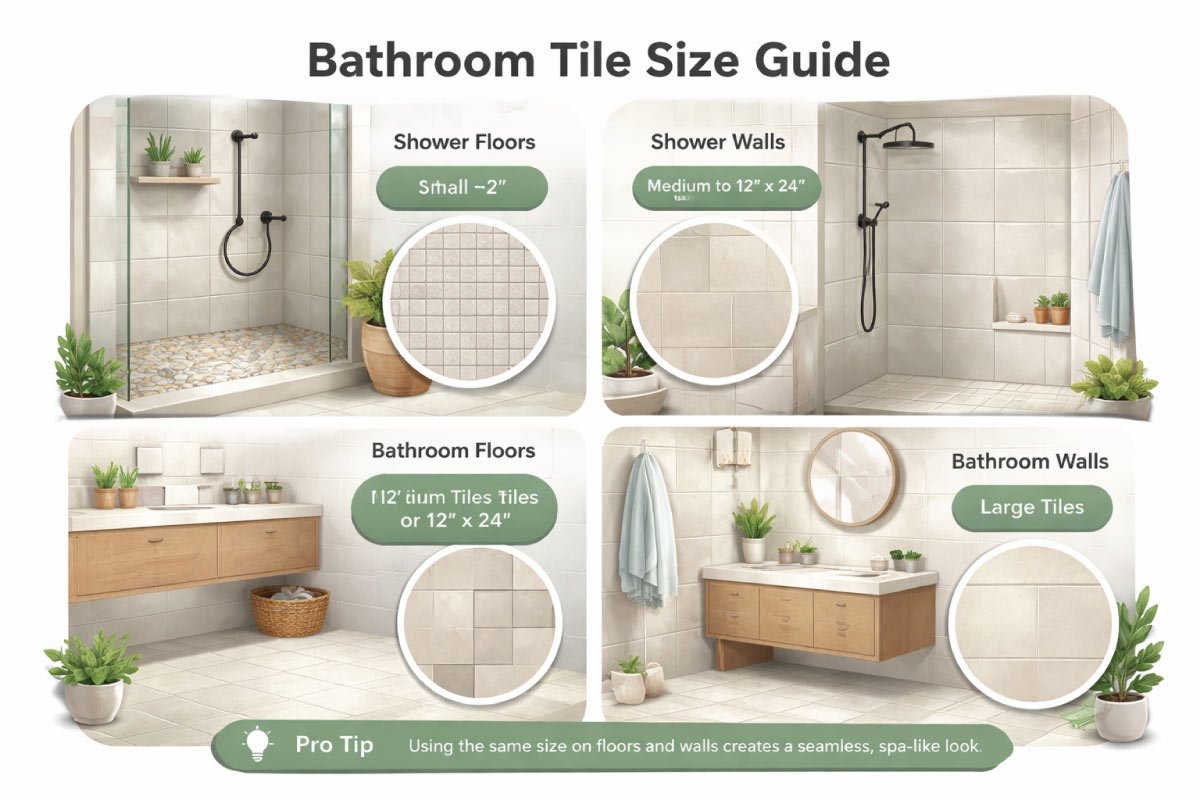
Shower floors: Small tiles (1”–2”) are ideal because they provide better grip and conform easily to floor slopes.
Shower walls: Medium to large tiles (12” × 24”) reduce grout lines and create a clean look.
Bathroom floors: Medium tiles (12” × 12” or 12” × 24”) are a safe and stylish choice.
Bathroom walls: Larger tiles make small bathrooms feel more spacious.
Pro tip: Using the same tile size on floors and walls can create a seamless, spa-like appearance.
Kitchen Tile Size Guide
Selecting the right tile size in kitchens is key for combining durability, functionality, and style.
Proper tile choices make cleaning easier, withstand daily wear, and enhance the overall design.
By matching tile size to specific areas like backsplashes, floors, and countertops, you can create a practical and visually appealing kitchen space.
Backsplashes: Smaller tiles such as subway tiles (3” × 6”) or mosaics are popular for their decorative charm.
Kitchen floors: Medium to large tiles (12” × 12” or 12” × 24”) handle foot traffic well and are easy to maintain.
Countertops: Larger tiles minimize grout lines, making cleanup easier.
Living Room and Open Areas
In living rooms and other open spaces, larger tiles help create a seamless, elegant, and cohesive appearance.
Proper tile sizing enhances the sense of space while minimizing grout lines, making cleaning and maintenance easier.
Recommended sizes: 24” × 24” or larger
Benefits: Fewer grout lines, cleaner look, enhanced sense of space
Style tip: Rectangular tiles laid in a staggered or herringbone pattern add movement without clutter.
Outdoor Tile Size Guide
Outdoor tile selection focuses on durability, weather resistance, and safety.
The right size and texture help prevent slips and ensure long-lasting performance in varying conditions.
Proper sizing also supports stability and aesthetic appeal for exterior spaces.
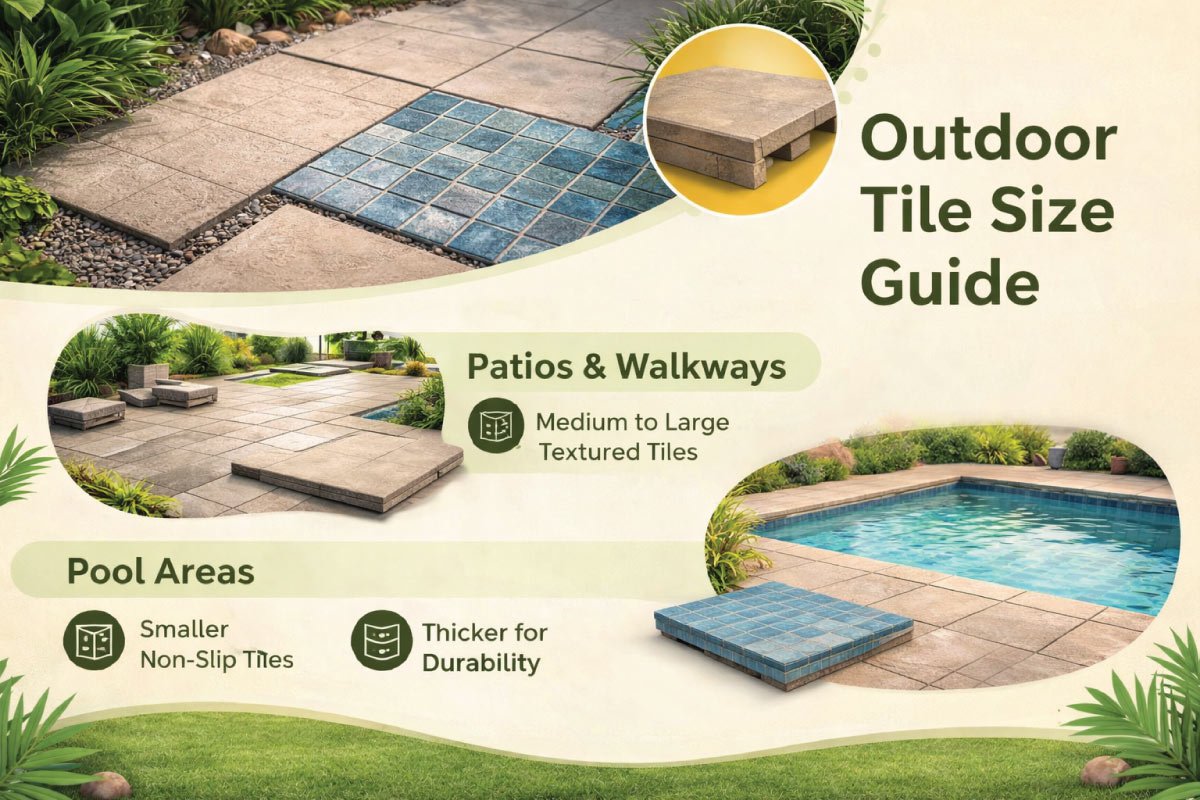
Patios and walkways: Medium to large tiles with textured surfaces
Pool areas: Smaller tiles for improved traction
Thickness matters: Outdoor tiles are usually thicker than indoor tiles
Recommended Tile Sizes by Room
Choosing the right tile size for each room ensures a balance between functionality, safety, and aesthetics.
Proper sizing affects slip resistance, ease of cleaning, visual flow, and overall design harmony.
The table below provides guidance on commonly recommended tile sizes for different spaces, helping you select the most suitable option for your project.
| Room | Recommended Tile Sizes | Notes |
|---|---|---|
| Bathroom Floor | 2” × 2”, 12” × 12” | Slip resistance important |
| Shower Wall | 12” × 24” | Fewer grout lines |
| Kitchen Floor | 12” × 12”, 12” × 24” | Durable and easy to clean |
| Kitchen Backsplash | 3” × 6”, mosaics | Decorative focus |
| Living Room | 24” × 24” | Modern, spacious look |
| Outdoor Patio | 12” × 24”, 24” × 24” | Weather-resistant |
Also Read:
How Tile Size Affects Room Perception
Tile size not only impacts functionality but also dramatically influences how a room feels visually.
The right tile dimensions and layout can make spaces appear larger, taller, or more balanced, while poor choices can make a room feel cramped or cluttered.
Understanding these effects helps optimize both style and spatial perception.
1- Small Rooms
In small rooms, using larger tiles can create the illusion of more space by minimizing grout lines and visual interruptions.
Fewer divisions on the floor or walls make the area feel more open and continuous, enhancing a sense of spaciousness despite limited square footage.
2- Narrow Rooms
Rectangular tiles laid horizontally across narrow rooms can visually expand the width.
The elongated pattern draws the eye along the shorter dimension, making corridors, hallways, or tight spaces appear wider and more comfortable without structural changes.
3- Low Ceilings
Vertical tile layouts help draw the eye upward, creating the perception of height in rooms with low ceilings.
Taller patterns or stacked tiles give a sense of vertical extension, balancing proportions and preventing spaces from feeling squat or compressed.
4- Tile Layout Importance
Choosing the right tile layout is as crucial as selecting the tile size itself.
Orientation, pattern, and grout line alignment all influence visual perception, adding flow, balance, and rhythm to a room’s design.
Proper planning ensures tiles enhance the space rather than overwhelm it.
Choosing the right layout is just as important as choosing the right size.
Also Read:
Tile Layout Patterns and Size Compatibility
Tile size and layout go hand in hand, as certain patterns complement specific dimensions better than others.
Choosing the right combination enhances visual appeal, balances proportions, and ensures a cohesive design.
Understanding which patterns work best with each tile size helps create spaces that are both functional and aesthetically pleasing.
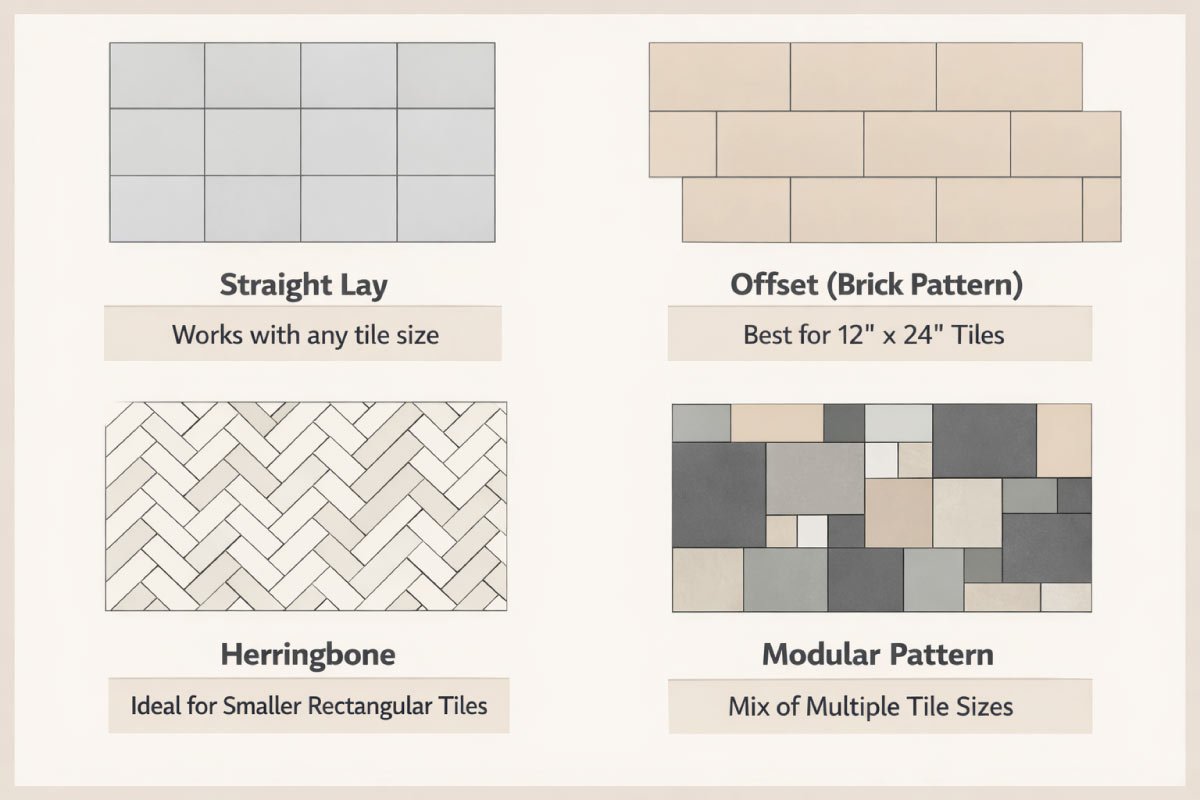
Straight lay: Works with any tile size; clean and timeless
Offset (brick pattern): Best for rectangular tiles like 12” × 24”
Herringbone: Ideal for smaller rectangular tiles
Modular patterns: Combine multiple tile sizes for a custom look
Also Read:
Tile Size vs. Layout Pattern Compatibility
The relationship between tile size and layout pattern significantly affects the room’s visual appeal and overall design impact.
Choosing the right combination ensures harmony, enhances texture, and highlights architectural features.
Smaller tiles add detail, medium tiles offer versatility, and larger tiles create a modern, seamless look, while mixed sizes allow for creative, custom designs.
| Tile Size | Best Layout Patterns | Visual Effect |
|---|---|---|
| Small tiles | Mosaic, straight | Detailed and textured |
| Medium tiles | Straight, offset | Balanced and versatile |
| Large tiles | Straight, minimal offset | Modern and seamless |
| Mixed sizes | Modular | Custom and dynamic |
Practical Tips for Choosing the Right Tile Size
Selecting the right tile size involves more than picking a favorite style—it impacts installation, maintenance, and the overall look of your space.
Paying attention to measurements, grout, and tile weight ensures a smooth installation process and a durable, visually appealing result.
The following tips help guide your decision
Measure your space carefully before buying tiles.
Consider grout width—larger tiles usually mean fewer grout lines.
Think about maintenance—smaller tiles require more grout cleaning.
Check tile weight—large tiles may need reinforced walls.
Always order extra tiles (10–15%) for cuts and future repairs.
Also Read:
Common Tile Size Mistakes to Avoid
Selecting the wrong tile size can negatively impact both the look and functionality of a space.
Being aware of common pitfalls helps prevent costly errors, ensures proper installation, and creates a safer, more visually appealing environment.
Avoiding these mistakes saves time, money, and frustration.
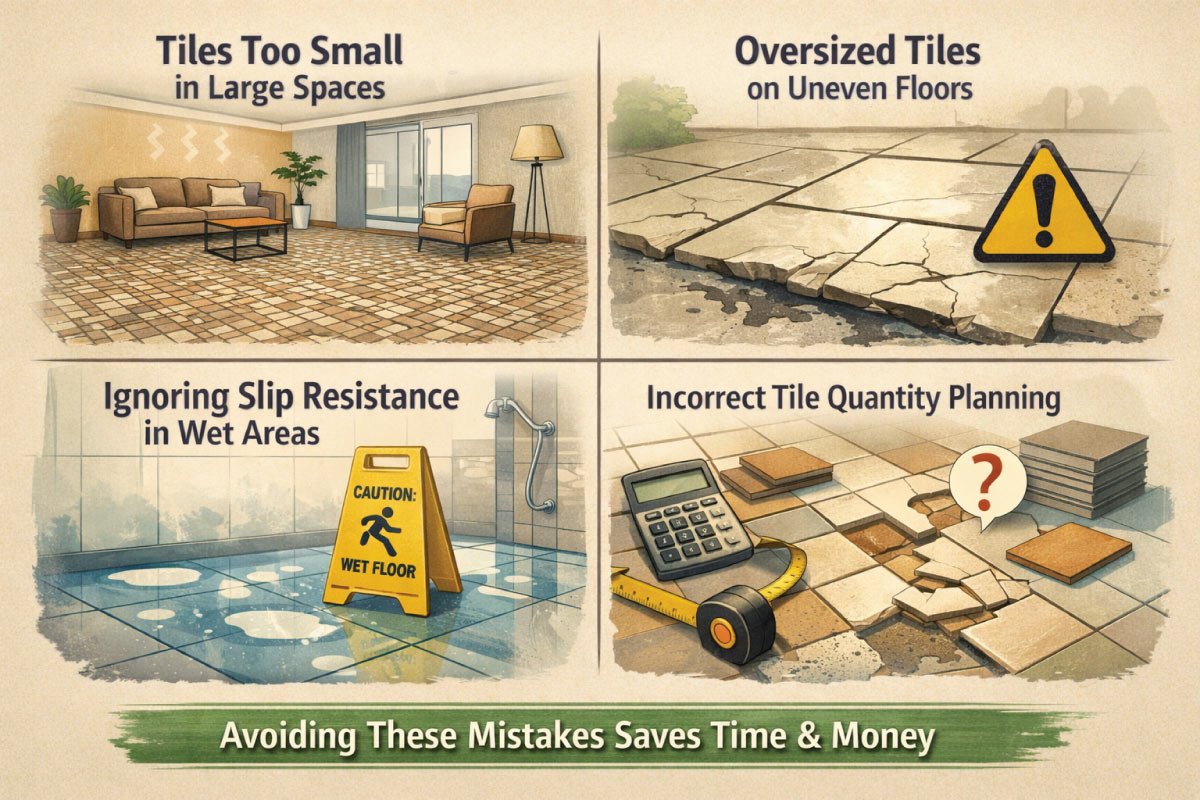
Choosing very small tiles for large open areas (can look busy)
Using oversized tiles on uneven floors
Ignoring slip resistance in wet areas
Not accounting for tile layout when calculating quantity
Avoiding these mistakes saves time, money, and frustration.
Also Read: