
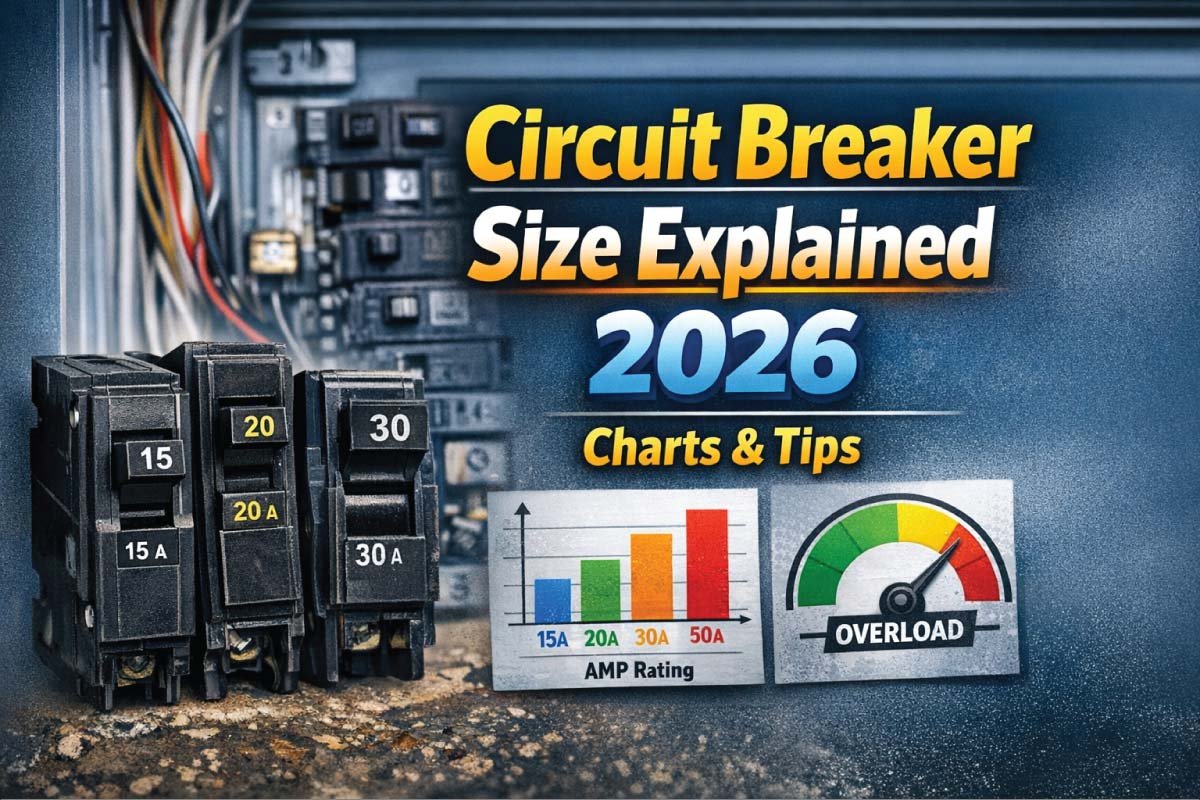
Choosing the correct circuit breaker size is one of the most important steps in any electrical system. Whether you’re wiring a new home, upgrading a panel, or adding an appliance, the right breaker protects your wiring, appliances, and most importantly, lives. Using the wrong size can cause nuisance tripping, overheating, or serious fire hazards.
This complete circuit breaker size guide explains everything you need to know—from basic concepts to load calculations—so you can make safe and informed decisions.
What Is a Circuit Breaker?
A circuit breaker is an automatic electrical safety device designed to protect a circuit from damage caused by overcurrent or short circuits. When the current exceeds a safe level, the breaker trips and cuts off power.
Unlike fuses, circuit breakers can be reset instead of replaced, making them a reliable and reusable safety solution in modern electrical systems.
Why Circuit Breaker Size Matters
Choosing the correct circuit breaker size is essential for maintaining electrical safety and efficiency in any building. The breaker controls how much current flows through a circuit, preventing overloads, equipment damage, and potential hazards. An accurately sized breaker ensures reliable operation and long-term system protection.

Correct sizing ensures:
Fire prevention
Appliance protection
Stable electrical performance
Compliance with electrical codes
Understand Amps, Volts, and Watts
To choose the correct circuit breaker, it’s important to understand how electrical measurements work together. Amps, volts, and watts define how electricity flows, how strong it is, and how much power devices use. Knowing their relationship helps prevent overloads and ensures accurate breaker sizing.
Before selecting a breaker, you must understand three basic electrical units:
Amps (A): Current flow
Volts (V): Electrical pressure
Watts (W): Power consumption
The basic formula is:
Watts = Volts × Amps
This formula is essential for calculating breaker size based on appliance load.
What Does Circuit Breaker Size Mean?
Circuit breaker size indicates the maximum amount of electrical current a breaker can safely carry without tripping. It serves as a safety limit that protects wiring and connected devices from overloads. Understanding breaker ratings helps ensure proper installation, balanced loads, and long-term electrical system safety.
Circuit breaker size refers to the maximum current rating it can handle safely. Common residential breaker sizes include 15A, 20A, 30A, 40A, and 50A.
Each breaker size must match:
Wire gauge
Load requirements
Circuit type
Common Circuit Breaker Sizes Explained
Knowing common circuit breaker sizes helps you quickly match electrical loads with the correct protection. Each breaker rating is designed for specific applications based on power demand and safety limits. Understanding these standard sizes makes it easier to plan circuits, avoid overloads, and ensure reliable, code-compliant electrical performance in residential systems.
Here’s a quick overview of standard breaker sizes and their typical uses:
Table: Common Circuit Breaker Sizes and Uses
| Breaker Size | Typical Use |
|---|---|
| 15 Amp | Lighting, outlets |
| 20 Amp | Kitchens, bathrooms |
| 30 Amp | Water heaters, dryers |
| 40 Amp | Ranges, large appliances |
| 50 Amp | Electric ovens, EV chargers |
Circuit Breaker vs Fuse: Key Differences
Both circuit breakers and fuses protect electrical circuits from overcurrent, but they work in different ways. Circuit breakers automatically trip during overloads and can be reset, while fuses melt to stop current and require replacement. Modern electrical codes prefer circuit breakers because they are safer, more reliable, and easier to maintain.
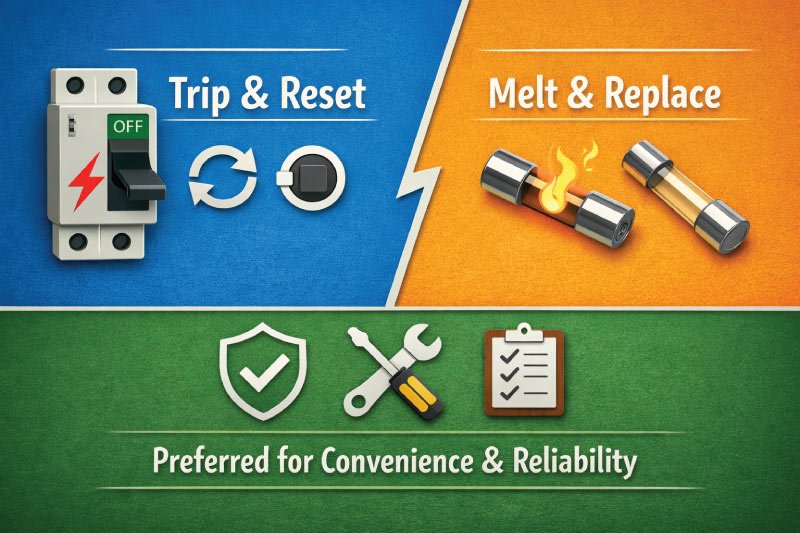
Circuit breakers trip and reset
Fuses melt and must be replaced
Modern electrical codes favor circuit breakers due to convenience and reliability.
How to Calculate the Right Circuit Breaker Size
Calculating the correct circuit breaker size is a critical step in designing a safe and reliable electrical system. The right breaker protects wiring from overheating, prevents appliance damage, and reduces fire risk. By understanding load requirements, voltage, and safety margins, you can select a breaker that handles power demands without nuisance tripping.
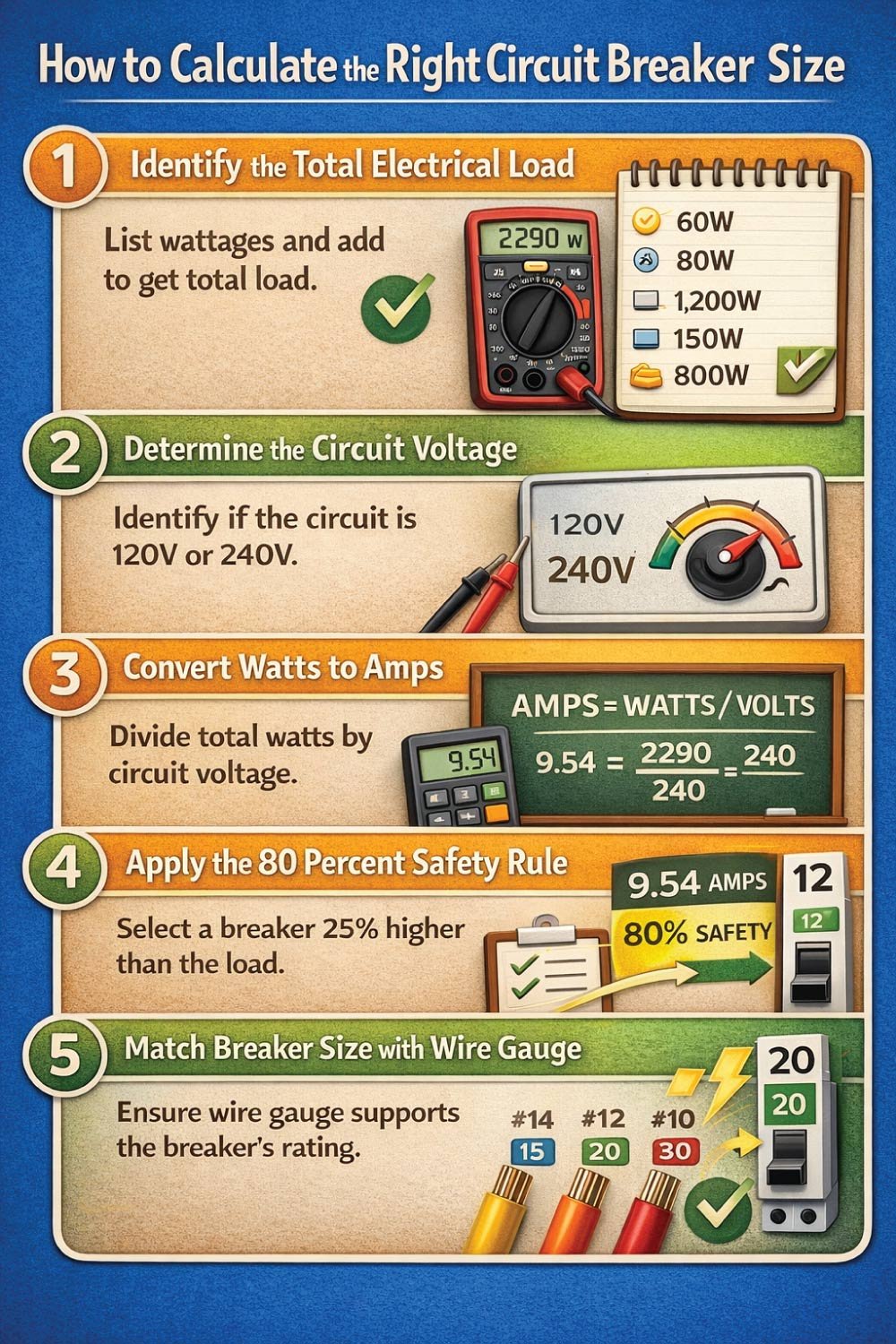
1- Identify the Total Electrical Load
Start by listing all appliances and devices that will run on the circuit. Check their wattage ratings, usually found on labels or manuals. Add the watt values together to determine the total load, which forms the foundation for selecting the correct breaker size.
2- Determine the Circuit Voltage
Next, identify whether the circuit operates at 120V, 240V, or another voltage level. Voltage directly affects current calculations. Using the correct voltage ensures accurate amp values and prevents choosing a breaker that is either undersized or dangerously oversized.
3- Convert Watts to Amps
Use the basic electrical formula by dividing total watts by the circuit voltage. This calculation gives you the current draw in amps. Knowing the exact amperage helps match the load with a breaker rating that can safely handle normal operating conditions.
4- Apply the 80 Percent Safety Rule
For continuous loads, apply the 80% rule recommended by electrical codes. This means the breaker should be rated higher than the calculated amps. This safety margin prevents overheating and allows the circuit to handle long-term usage without frequent breaker trips.
5- Match Breaker Size with Wire Gauge
Finally, confirm that the selected breaker size matches the installed wire gauge. Wires have current limits, and mismatched sizing can cause overheating. Proper alignment between breaker rating and wire size ensures safe, code-compliant, and long-lasting electrical performance.
The 80% Rule Explained
Wire Gauge and Breaker Size Relationship
The relationship between wire gauge and circuit breaker size is critical for electrical safety. Each wire size has a maximum current limit it can handle without overheating. Matching the correct breaker to the wire gauge prevents insulation damage, reduces fire hazards, and ensures the electrical system operates safely and efficiently.
Table: Wire Gauge vs Circuit Breaker Size
| Wire Gauge (AWG) | Max Breaker Size |
|---|---|
| 14 AWG | 15 Amp |
| 12 AWG | 20 Amp |
| 10 AWG | 30 Amp |
| 8 AWG | 40–50 Amp |
| 6 AWG | 55–65 Amp |
Using a larger breaker on smaller wire is a serious fire risk.
Circuit Breaker Sizing for Home Appliances
Choosing the correct circuit breaker size for home appliances is essential for safe and efficient operation. Each appliance draws a different electrical load, and using the wrong breaker can cause frequent tripping or overheating. Proper sizing helps protect wiring, improves performance, and ensures your electrical system meets safety standards.
Table: Appliance Circuit Breaker Size Chart
| Appliance | Breaker Size |
|---|---|
| Refrigerator | 15–20 Amp |
| Microwave | 20 Amp |
| Electric Dryer | 30 Amp |
| Water Heater | 30–40 Amp |
| Electric Range | 40–50 Amp |
Always check the manufacturer’s label for exact requirements.
Lighting Circuit Breaker Size Guide
Selecting the correct circuit breaker size for lighting circuits ensures safe operation and prevents wire overheating. Breaker choice depends mainly on wire gauge and circuit design rather than the type of light installed. Even though LED lights consume less power, standard breaker and wiring rules must still be followed.
15 amp breakers with 14 AWG wire
20 amp breakers with 12 AWG wire
LED lighting uses less power, but breaker size is still determined by wire and circuit design.
Also Read:
Understand Shoulder Bolt Measurements and Specifications
Kitchen and Bathroom Circuit Requirements
Kitchens and bathrooms require careful circuit planning because of moisture exposure and the high power demands of appliances. Proper breaker sizing and safety devices are essential to prevent electrical hazards. Following modern electrical codes ensures both safety and reliable operation for these high-risk areas.
Typical requirements:
20 amp breakers
GFCI protection
Dedicated circuits for major appliances
HVAC and Air Conditioner Breaker Sizing
Proper breaker sizing for HVAC systems and air conditioners is crucial because these appliances experience high startup currents that can trip undersized breakers. Selecting the right breaker ensures safe operation, prevents damage to equipment, and maintains consistent performance. Always refer to manufacturer specifications for accurate sizing.
Table: AC Unit Breaker Size Guide
| AC Capacity (BTU) | Breaker Size |
|---|---|
| 5,000–8,000 | 15 Amp |
| 10,000–12,000 | 20 Amp |
| 18,000–24,000 | 30–40 Amp |
| Central AC | 40–60 Amp |
Always follow manufacturer specifications.
Single-Pole vs Double-Pole Breakers
Understanding the difference between single-pole and double-pole breakers is essential for electrical safety. Single-pole breakers are used for standard 120V circuits like lighting and outlets, while double-pole breakers handle 240V circuits such as dryers and ovens. Using the wrong type can damage appliances or create serious safety hazards.
Single-pole breakers: 120V circuits (lights, outlets)
Double-pole breakers: 240V circuits (dryers, ovens)
Using the wrong type can damage equipment or create safety hazards.
Also Read:
Complete M Set Screw Size Guide with Metric Dimensions
Circuit Breaker Size for Subpanels
Choosing the correct breaker size for subpanels is important to protect wiring and connected circuits. The feeder breaker must be sized according to the total electrical load, the distance from the main panel, and the wire gauge. Proper sizing ensures safety, prevents overheating, and maintains reliable power distribution.
Total load
Distance
Wire size
Common subpanel breaker sizes range from 60A to 100A for residential use.
Common Mistakes When Choosing Breaker Size
Selecting the wrong breaker size can compromise safety and cause electrical failures. Many homeowners make avoidable mistakes when sizing breakers, leading to tripping, overheating, or even fire hazards. Understanding proper sizing rules and following electrical codes ensures safe and reliable operation.
Oversizing breakers to stop tripping
Ignoring wire gauge
Not applying the 80% rule
Mixing breaker brands incorrectly
These mistakes can lead to serious electrical failures.
Also Read:
Reducer Size Guide with Size Charts, Dimensions & Standards
Electrical Code Requirements You Should Know
Following electrical codes is essential for safety, compliance, and reliable operation. Most regions adopt NEC (National Electrical Code) standards, which set rules for breaker sizing, wire selection, and protection devices. Adhering to these codes prevents hazards, ensures inspections pass, and protects your home’s electrical system.
Most regions follow NEC (National Electrical Code) guidelines, which require:
Proper breaker sizing
Correct wire matching
GFCI/AFCI protection
Approved breaker brands
Always check local codes before installation.
When to Call a Professional Electrician
Electrical work can be dangerous if not done correctly. Knowing when to call a licensed electrician ensures your safety and protects your home from damage. Professionals can handle complex calculations, high-load equipment, and panel upgrades, reducing the risk of electrical fires or code violations.
You should contact a licensed electrician if:
You are upgrading the electrical panel
Breakers trip repeatedly
You are unsure about calculations
You are installing high-load equipment
Safety should always come first.
Also Read:
Final Thoughts
Understanding circuit breaker sizing is essential for any homeowner, DIYer, or contractor. A correctly sized breaker not only prevents electrical hazards but also ensures your system runs efficiently under all conditions.
If you’re planning electrical upgrades, take time to calculate loads accurately—or consult a professional to ensure your electrical system remains safe and compliant.
Also Read:
Aerospace Fastener Sizes Explained: Complete Guide 2026
FAQs:
What is a Circuit Breaker in Microservices?
A circuit breaker in microservices is a design pattern used to detect failures and prevent cascading issues across services. It monitors service calls, and when failures exceed a threshold, it stops further calls temporarily, protecting the system and improving resilience, reliability, and fault tolerance in distributed applications.
What Are the Types of Circuit Breakers?
The main types of circuit breakers include closed, open, and half-open states. The closed state allows normal operation, the open state blocks requests after repeated failures, and the half-open state tests if the service has recovered. These types ensure smooth flow and prevent system-wide outages in microservices architectures.
What Does a Circuit Breaker Mean?
In software, a circuit breaker is a mechanism that prevents repeated failures from overwhelming a system. It “breaks” the connection to a failing service temporarily and allows recovery. This concept, inspired by electrical circuit breakers, enhances application stability by avoiding cascading errors in microservices environments.
What is the Definition of a Circuit Breaker?
A circuit breaker is a software design pattern that detects faults in service calls and stops repeated attempts to prevent system overload. It improves reliability by managing failures, monitoring service health, and restoring communication when the service recovers. It is crucial in distributed systems like microservices.
How Does a Circuit Breaker Work?
A circuit breaker works by monitoring service calls for failures. If failures exceed a set threshold, it trips to an open state, blocking further calls. After a timeout, it enters a half-open state to test the service. Successful calls reset it, while failures reopen it, preventing cascading failures in the system.
How Circuit Breaker Works in Microservices?
Circuit breakers monitor interactions between microservices. When a service fails repeatedly, the breaker opens, preventing further requests. This stops cascading failures, allows the service to recover, and ensures other services continue running smoothly. Once the service stabilizes, the breaker tests it before fully resuming normal traffic.
What Does a Circuit Breaker Do?
A circuit breaker prevents a failing service from affecting the entire system. It blocks requests after repeated failures, monitors service health, and allows recovery testing. This ensures high availability, reduces latency, and protects dependent services from overload, improving overall reliability in microservices architectures.
What is a Circuit Breaker Pattern?
The circuit breaker pattern is a software design approach used in microservices to handle failures gracefully. It monitors remote service calls, stops repeated requests when failures occur, and allows controlled recovery. This pattern improves system resilience, prevents cascading failures, and maintains stability in distributed applications.