

Collets are precision tool-holding devices used to clamp cutting tools, workpieces, or rods with high accuracy and repeatability. Choosing the correct collet size is critical for machining accuracy, surface finish, tool life, and safety. A proper collet size guide helps machinists, CNC operators, and hobbyists select the right collet for their specific application.
This guide explains collet sizing, standards, types, applications, and selection tips in detail.
What Is a Collet?
Why Collet Size Matters
Selecting the correct collet size is essential for precision and safety in machining. Proper sizing ensures the tool or workpiece is held securely and concentrically, reducing vibration and improving performance. Using the wrong size can lead to misalignment, chatter, or even tool damage, compromising both quality and safety.

1-Proper Tool Alignment
A correctly sized collet holds the tool or workpiece concentrically within the spindle, ensuring accurate alignment. Proper alignment minimizes runout, prevents uneven cutting, and maintains dimensional accuracy. Misaligned tools can cause uneven wear, poor surface finish, and reduce overall machining precision, affecting both efficiency and quality.
2-Reduced Vibration
Using the correct collet size helps minimize vibration during operation, which protects both the tool and the workpiece. Reduced vibration improves cutting stability, prevents chatter marks, and extends tool life. Conversely, an improperly sized collet can allow movement that leads to excessive vibration and poor machining performance.
3-Improved Surface Finish
A properly fitting collet ensures the tool rotates smoothly without wobble, producing a cleaner and more precise surface finish. Even minor runout can leave marks, uneven cuts, or dimensional inaccuracies. Correct collet selection is critical for high-quality machining results, especially in precision parts or finishing operations.
4-Longer Tool and Spindle Life
Correct collet sizing reduces stress on both the tool and spindle, preventing excessive wear or premature failure. Secure gripping distributes loads evenly, protecting cutting edges and spindle bearings. This extends the operational life of tools, collets, and the machine itself, saving time and reducing replacement costs.
5-Enhanced Machining Safety
Proper collet selection improves safety by preventing tool slippage, breakage, or unexpected movement during machining. A secure grip keeps the tool stable, protecting operators and minimizing the risk of accidents. Using the right collet size is essential for safe, efficient, and reliable machining operations.
How Collet Sizes Are Measured
Collet sizing is crucial for ensuring a secure fit and precise machining. Proper measurement ensures the collet grips the tool or workpiece correctly while fitting snugly into the chuck. Collets are defined by several dimensions, including inner and outer diameters, clamping range, and overall length, and are available in metric and imperial systems.
1-Inner Diameter (ID)
The inner diameter (ID) of a collet refers to the size of the tool or workpiece it is designed to hold. Selecting the correct ID ensures a secure, concentric grip, preventing slippage and runout. Accurate ID measurement is essential for precision machining and consistent tool performance.
2-Outer Diameter (OD)
The outer diameter (OD) determines how the collet fits into the chuck or spindle. A correct OD ensures proper seating and even compression when tightened. Mismatched OD can cause uneven gripping, reduced accuracy, and potential damage to both the collet and the machine.
3-Clamping Range
The clamping range indicates the maximum compression the collet can achieve while still securely holding the tool or workpiece. Choosing a collet with the appropriate clamping range allows flexibility for slightly varying diameters while maintaining strong gripping force and preventing tool movement under load.
4-Length
The length of the collet affects how far it extends into the chuck and the overall stability of the tool or workpiece. Longer collets provide better support and rigidity, reducing deflection, while shorter collets are used in compact setups. Proper length selection ensures consistent machining accuracy and safety.
5-Metric and Imperial Sizing
Collets are available in both metric (millimeters) and imperial (inch) sizing systems to match different tools and machinery standards. Using the correct system is crucial to avoid misfits, slippage, or damage. Always verify the collet and tool measurements before installation to ensure proper engagement and optimal performance.
Collets are available in metric and imperial (inch) sizing systems.
Metric vs Imperial Collet Sizes
Collets are available in metric and imperial systems, with metric collets measured in millimeters (mm) and imperial collets in inches. For example, metric sizes include 6 mm, 8 mm, and 10 mm, while imperial sizes include 1/8″, 1/4″, and 1/2″. Mixing the two can lead to poor clamping and excessive runout.
Metric collets measure tool diameters in millimeters (mm), while imperial collets use inches.
Examples:
Metric: 6 mm, 8 mm, 10 mm
Imperial: 1/8″, 1/4″, 1/2″
Mixing metric and imperial collets can cause poor clamping and runout issues.
Common Collet Standards
Collets are manufactured according to various standards and systems, each suited to specific machines, tools, or applications. Choosing the correct standard ensures compatibility, precision, and secure gripping. Popular collet systems include ER collets, 5C collets, R8 collets, DA collets, and TG collets, each offering unique features for machining and toolholding needs.
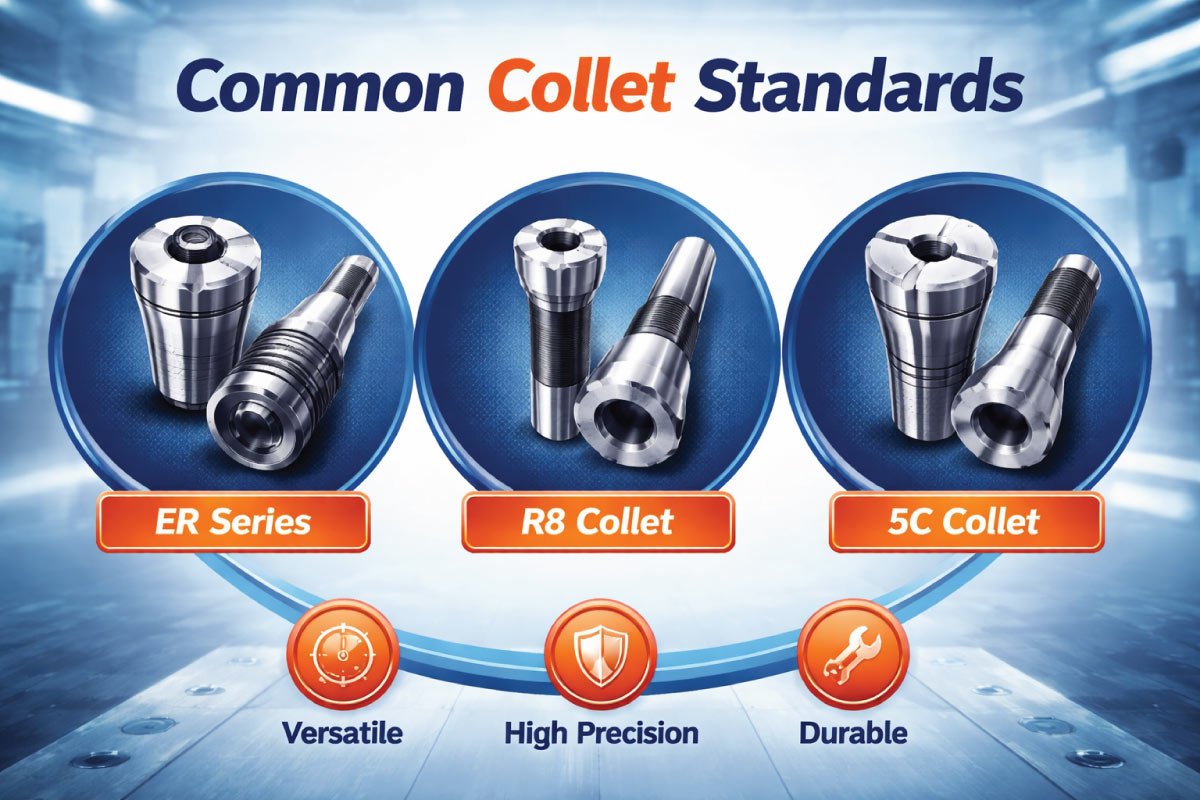
Popular standards include:
ER collets
5C collets
R8 collets
DA collets
TG collets
ER Collet System Overview
The ER collet system is one of the most widely used collet types because of its versatility and broad clamping range. It is commonly found in CNC milling machines, routers, and lathes, accommodating a wide variety of tools. ER collets can hold both metric and imperial-sized tools securely within their specified range, making them ideal for precision machining applications.
ER Collet Size Chart (Metric & Imperial)
ER collets are valued for their versatility, wide clamping range, and precision, making them suitable for a variety of CNC and milling applications. The chart below shows common ER collet types, their clamping ranges in both metric and imperial units, and typical uses.
ER Collet Size Guide
| ER Type | Clamping Range (mm) | Clamping Range (inch) | Common Use |
|---|---|---|---|
| ER11 | 1 – 7 | 1/32″ – 1/4″ | Small tools, engraving |
| ER16 | 1 – 10 | 1/32″ – 3/8″ | Light milling |
| ER20 | 1 – 13 | 1/32″ – 1/2″ | General CNC work |
| ER25 | 2 – 16 | 1/16″ – 5/8″ | Medium-duty machining |
| ER32 | 2 – 20 | 1/16″ – 3/4″ | Heavy-duty milling |
| ER40 | 3 – 26 | 1/8″ – 1″ | Large tools |
Understanding Collet Clamping Range
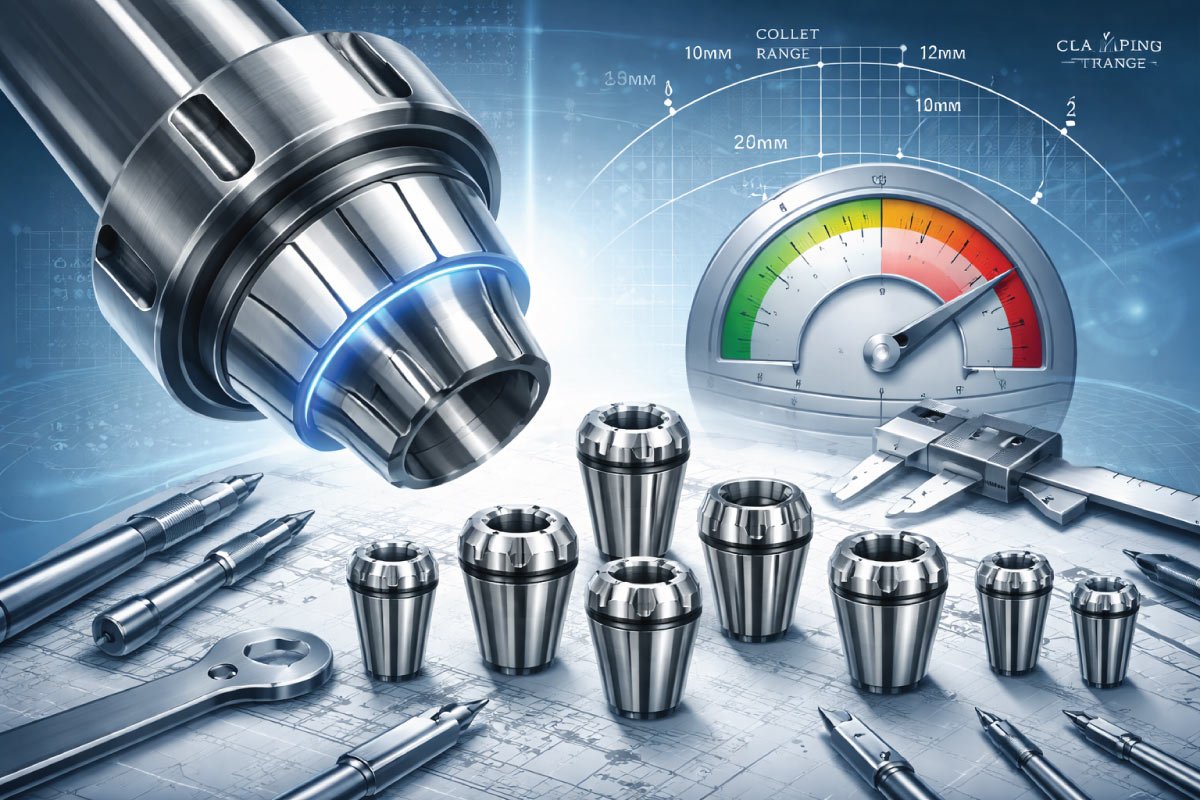
A collet’s clamping range defines the maximum and minimum tool or workpiece diameter it can securely hold. Most ER collets can compress by about 1 mm (0.040″), allowing flexibility for slightly undersized tools. Exceeding the rated range reduces grip strength, precision, and runout control, potentially causing slippage or damage during machining.
5C Collet System Explained
The 5C collet system is commonly used in lathes and grinding machines for holding round, square, or hex stock with high precision. Unlike ER collets, 5C collets are fixed size, offering no clamping range, which ensures consistent accuracy and repeatability. Their reliability makes them ideal for production work and precision machining applications.
Key characteristics:
Fixed size (no clamping range)
High accuracy
Ideal for production work
5C Collet Size Chart
5C collets are precision fixed-size collets commonly used in lathes and grinding machines. They provide consistent holding for various shapes of stock, including round, square, and hex, making them ideal for production work and precision machining.
5C Collet Sizes
| Collet Size | Capacity (inch) | Capacity (mm) | Shape Options |
|---|---|---|---|
| 1/16″ | 0.0625 | 1.6 | Round |
| 1/8″ | 0.125 | 3.2 | Round |
| 1/4″ | 0.250 | 6.35 | Round, Hex |
| 3/8″ | 0.375 | 9.5 | Round, Square |
| 1/2″ | 0.500 | 12.7 | Round, Hex, Square |
| 1″ | 1.000 | 25.4 | Round |
R8 Collet System Overview
R8 collets are widely used in manual milling machines, such as Bridgeport-style mills. They are designed to fit R8 spindles directly, allowing tools to be held securely without the need for a separate chuck. R8 collets provide accurate, concentric gripping, making them ideal for precision milling and general machining tasks.
R8 Collet Size Guide
R8 collets are designed for direct tool holding in R8 spindles, commonly used in manual milling machines. They provide secure, concentric gripping for precision machining. The chart below shows standard R8 collet sizes and the corresponding tool diameters.
R8 Collet Sizes
| R8 Collet Size | Tool Diameter |
|---|---|
| 1/8″ | 3.175 mm |
| 3/16″ | 4.76 mm |
| 1/4″ | 6.35 mm |
| 3/8″ | 9.52 mm |
| 1/2″ | 12.7 mm |
| 3/4″ | 19.05 mm |
Collet Length and Taper Angle
The length and taper angle of a collet significantly influence its gripping force, alignment, and runout. Longer collets provide improved concentricity and stability, while standard taper angles—such as 8° per side for ER collets—ensure even compression and uniform clamping. Always match the collet’s taper to the chuck or spindle to maintain precision and secure tool holding.
Longer collets provide better alignment
Standard taper angles (e.g., ER = 8° per side) ensure uniform clamping
Always match the collet taper to the chuck or spindle.
Collet Material Options
Collets are commonly made from materials that balance strength, flexibility, and durability. Spring steel is the most widely used, offering excellent resilience and long life. Alloy steel provides higher strength for demanding applications, while hardened steel ensures precision and minimal wear in machining. Using high-quality materials enhances gripping accuracy and extends collet lifespan.
Spring steel – Most common, flexible and durable
Alloy steel – Higher strength applications
Hardened steel – Precision machining
High-quality material improves accuracy and lifespan.
Accuracy and Runout Considerations
Runout measures how much a tool deviates from the spindle centerline during rotation. High-quality collets typically maintain ≤ 0.01 mm (0.0004″) runout, ensuring precise machining, smoother surface finishes, and longer tool life. Regular cleaning and maintenance are essential to prevent debris buildup, which can increase runout and reduce overall accuracy.
High-quality collets typically offer:
≤ 0.01 mm (0.0004″) runout
Improved surface finish
Better tool longevity
Clean collets regularly to maintain accuracy.
How to Choose the Right Collet Size
Choosing the right collet size is essential for safe, accurate, and efficient machining. The correct collet ensures a firm grip on the tool, reduces runout, and prevents slipping during operation. Understanding basic factors like tool size, collet type, and machine compatibility helps improve precision, tool life, and overall machining performance.
1. Understand Your Tool Shank Diameter
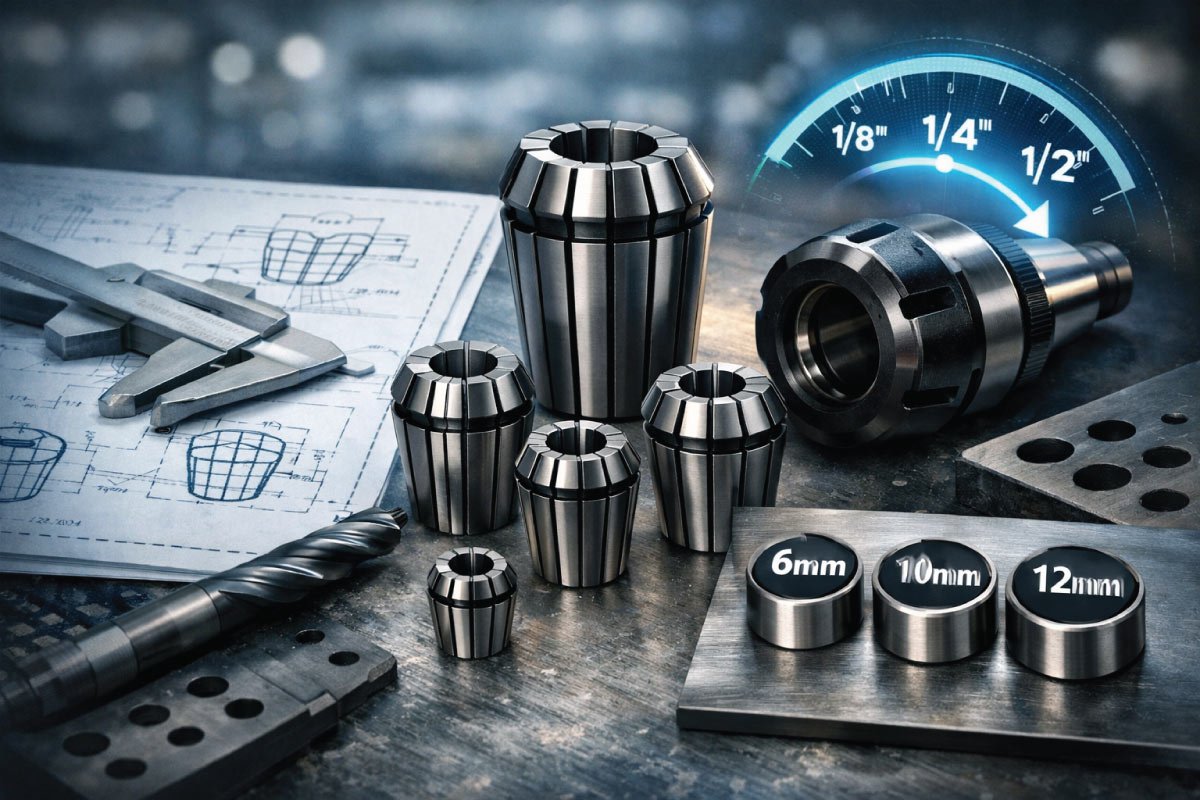
Start by accurately measuring the tool’s shank diameter using a caliper or micrometer. Collet size must exactly match the shank size for proper grip. Even small mismatches can cause runout, slippage, or vibration during operation, affecting accuracy and tool life.
2. Identify the Collet System Type
Different machines use specific collet systems such as ER, R8, 5C, or MT. Each system has its own size range and clamping behavior. Always confirm your machine’s compatible collet standard before selecting a size to ensure safe installation and proper holding strength.
3. Check the Collet Size Range
Some collets, especially ER collets, have a small clamping range rather than one fixed size. Review the manufacturer’s size chart to confirm the collet can securely clamp your tool diameter within its rated range without overstressing or under-gripping the tool shank.
4. Consider Application and Cutting Load
Heavier cutting operations require a tighter, more secure grip. Choose a collet size that fits the tool shank closely to handle torque and vibration. Using an oversized or borderline-fit collet can reduce stability and increase the risk of tool pull-out.
5. Verify Machine and Spindle Compatibility
Ensure the selected collet size fits your machine spindle, nut, and holder correctly. Check maximum RPM ratings and balance requirements as well. Proper compatibility helps maintain concentricity, reduces wear on components, and ensures safe, consistent machining performance.
Always choose the closest matching collet size for maximum grip.
Common Collet Sizing Mistakes
Collet Maintenance and Care
Proper collet maintenance is essential for preserving accuracy, safety, and long service life. Regular cleaning, inspection, and correct storage help maintain consistent gripping force and minimize runout. Neglecting collet care can lead to premature wear, poor tool holding, and reduced machining performance over time.
Clean after every use
Remove chips and debris
Lightly oil before storage
Inspect for cracks or wear
Replace worn collets promptly
Collets vs Other Tool Holding Systems 05
Compared to end mill holders and drill chucks, collets offer superior concentricity, resulting in better accuracy and surface finish. They also provide wider tool compatibility, accommodate both metric and imperial sizes, enable faster tool changes, and feature a compact design ideal for tight spaces. However, collets generally offer less gripping force than advanced systems like hydraulic or shrink-fit holders, which are preferred for heavy cutting or high-precision applications.
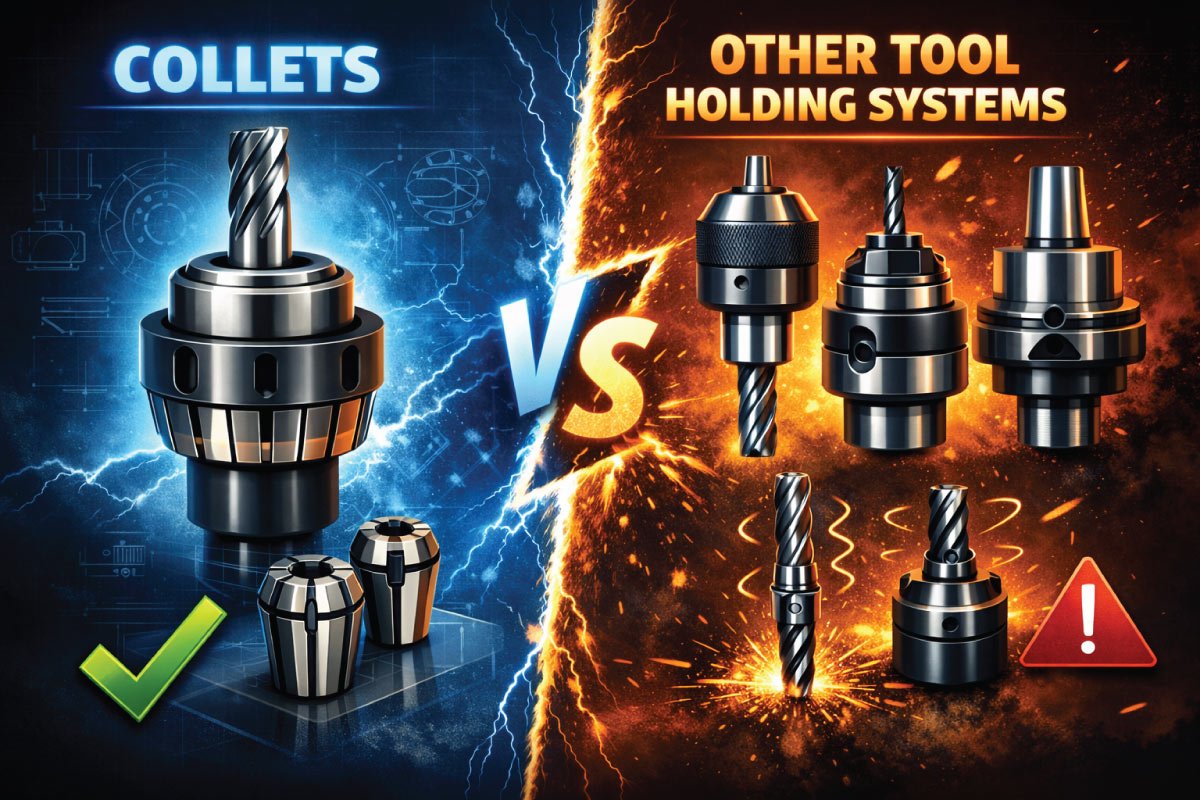
Better concentricity
Wider tool compatibility
Faster tool changes
Compact design
However, they may not provide as much gripping force as hydraulic or shrink-fit holders.
Applications of Different Collet Sizes
Selecting the right size improves productivity and precision.
Frequently Asked Questions About Collet Sizes
Final Thoughts
Understanding collet sizes is essential for achieving precision, safety, and efficiency in machining operations. Whether you are using ER, 5C, or R8 systems, selecting the correct collet size ensures secure tool holding and superior machining results.
Use this collet size guide as a reliable reference when setting up your machine, upgrading tooling, or troubleshooting accuracy issues.