
Medium Density Fiberboard (MDF) is one of the most versatile materials in woodworking and interior design.
Whether you are a DIY enthusiast, a furniture maker, or a professional carpenter, understanding MDF board sizes is crucial to making the right choices for your projects.
This guide covers everything from standard dimensions, thickness options, types, and usage tips to ensure your projects are successful.
What is MDF Board?
MDF, or Medium Density Fiberboard, is a versatile engineered wood product made by compressing wood fibers with resin and wax under high heat and pressure.
Known for its smooth, uniform surface, MDF is easy to cut, drill, and shape. Its consistent density, absence of knots, and affordability make it a popular choice for furniture, cabinetry, and interior projects.
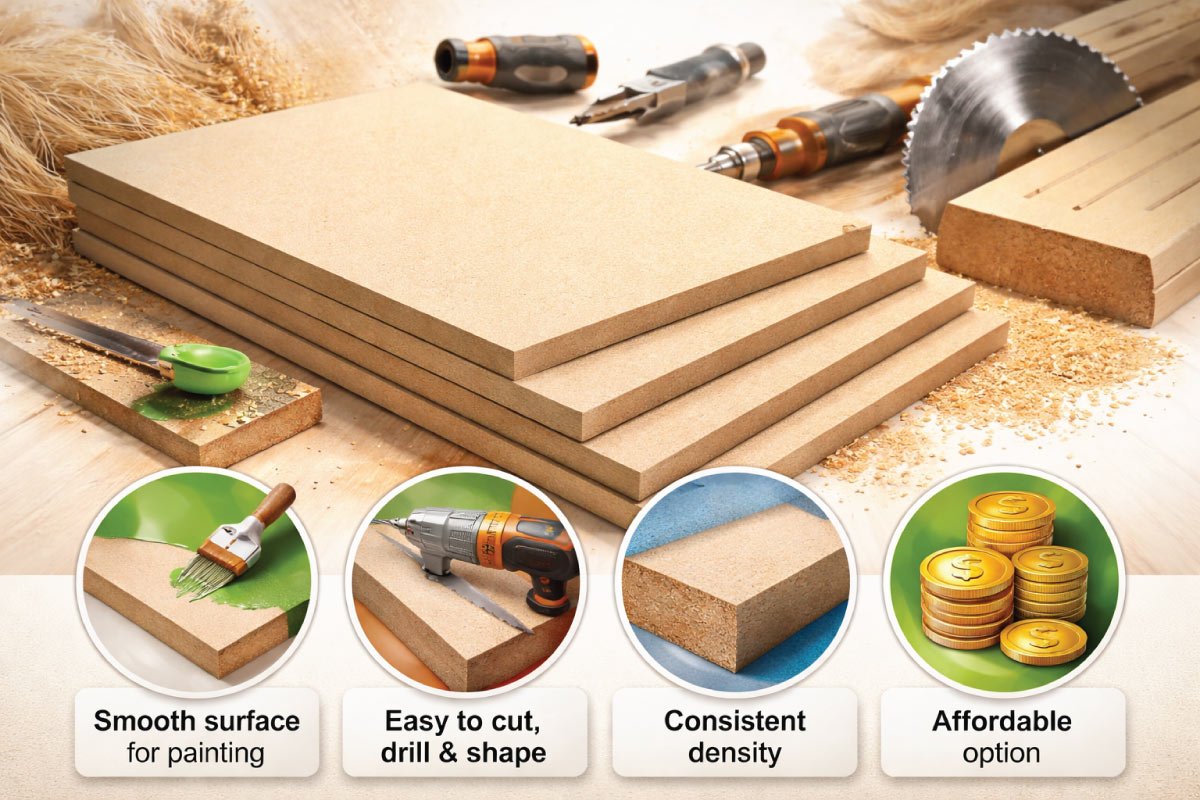
Key Features of MDF:
Smooth surface, ideal for painting
Easy to cut, drill, and shape
Consistent density, no knots or grains
Affordable compared to plywood
Standard MDF Board Sizes
MDF boards are available in a range of standard sizes to accommodate different construction and design needs.
Selecting the correct size and thickness minimizes material wastage and ensures structural stability.
From thin panels for crafts to thick boards for furniture and partitions, understanding these dimensions helps achieve precise cuts, optimal performance, and long-lasting results in both DIY and professional projects.
| Thickness (mm) | Width (mm) | Length (mm) | Common Uses |
|---|---|---|---|
| 3 | 1220 | 2440 | Small crafts, model making |
| 6 | 1220 | 2440 | Cabinet backs, lightweight panels |
| 12 | 1220 | 2440 | Furniture panels, shelves |
| 18 | 1220 | 2440 | Wardrobes, cabinets, doors |
| 25 | 1220 | 2440 | Heavy-duty furniture, partitions |
Pro Tip: Thickness selection depends on structural requirements; thicker boards offer more durability.
MDF Board Thickness Guide
MDF boards come in various thicknesses to suit different applications, from delicate decorative projects to heavy-duty furniture.
Choosing the right thickness ensures structural stability, ease of machining, and optimal performance.
Understanding which thickness is best for specific uses—such as panels, shelves, drawers, or countertops—helps achieve professional results while minimizing material waste and enhancing durability.
| Thickness (mm) | Recommended Use |
|---|---|
| 3–6 | Decorative panels, crafts |
| 9–12 | Shelves, drawer bottoms |
| 15–18 | Cabinet doors, furniture panels |
| 22–25 | Heavy-duty doors, countertops |
Why Choose MDF Over Plywood?
MDF and plywood are both popular engineered wood products, but MDF offers specific advantages for many applications.
Its smooth surface, consistent density, and ease of machining make it ideal for furniture, cabinetry, and decorative projects.
Additionally, MDF is more cost-effective than plywood, making it a practical choice for budget-conscious projects without compromising quality or finish.
1-Smooth Finish
MDF has a uniform, smooth surface that is ideal for painting, laminating, or veneering. Unlike plywood, it contains no knots or grain patterns, ensuring a flawless finish.
This makes MDF perfect for decorative panels, cabinets, and furniture components where aesthetics are critical and professional-looking surfaces are required.
2-Cost-Effective
MDF is generally less expensive than plywood while still providing strong structural performance for many applications.
Its affordability makes it suitable for large-scale furniture production, interior paneling, and DIY projects. Choosing MDF helps reduce overall material costs without sacrificing durability or appearance.
3-Consistent Density
MDF has uniform density throughout the board, unlike plywood, which may contain voids or irregular layers.
This consistency ensures predictable machining, reduces the risk of splitting or warping, and provides stable support for screws, nails, and other fasteners, improving the overall reliability of your project.
4- Easy Machining
MDF can be easily cut, drilled, shaped, or routed without splintering, chipping, or cracking. This makes it highly versatile for creating intricate designs, grooves, or profiles.
Its predictable behavior under cutting tools allows for precise fabrication and reduces material wastage during production.
Types of MDF Boards
MDF boards are available in several types, each tailored for specific applications and environments.
Understanding the differences between standard, moisture-resistant, fire-retardant, ultralight, and laminated MDF helps in selecting the right board for your project.
Choosing the correct type ensures durability, safety, ease of installation, and an optimal finish for furniture, interiors, and decorative applications.
1- Standard MDF
Standard MDF is smooth, dense, and easy to work with, making it suitable for furniture, cabinetry, and shelving.
Its uniform texture allows for precise cutting, drilling, and finishing. Ideal for general-purpose projects,
standard MDF provides consistent performance at an affordable cost, making it one of the most widely used MDF types in woodworking and interior applications.
2- Moisture-Resistant MDF
Moisture-resistant MDF is manufactured with water-resistant resin to withstand humidity and occasional water exposure.
It is perfect for bathrooms, kitchens, and damp environments where standard MDF would swell or degrade.
This type maintains dimensional stability, prevents warping, and ensures long-lasting performance in areas with higher moisture levels.
3- Fire-Retardant MDF
Fire-retardant MDF is treated with special chemicals to resist ignition and slow the spread of flames.
It is commonly used in commercial buildings, public spaces, and safety-critical applications where fire protection is essential.
While slightly heavier, it offers enhanced safety without compromising workability or surface finish.
4- Ultralight MDF
Ultralight MDF is designed to reduce weight while maintaining structural integrity. It is ideal for wall panels, decorative items, and portable furniture where easy handling is important.
Despite being lighter, it offers a smooth surface for painting, laminating, or veneering, making it convenient for creative and interior design projects.
5- Laminated MDF
Laminated MDF comes with a pre-laminated surface, ready for installation or furniture assembly. This saves time and effort in finishing, while providing a durable, visually appealing surface.
It is commonly used in ready-to-install furniture, cabinets, and wall panels, offering both convenience and professional-quality results for both residential and commercial applications.
Standard Sheet Sizes
MDF sheets are manufactured in standard dimensions to meet a variety of project needs, from small furniture pieces to large architectural panels.
Choosing the right sheet size minimizes cutting waste and ensures efficient use of material.
Understanding the common sizes—ranging from 4×8 feet to 6×12 feet—helps in planning furniture, partitions, or commercial interior projects effectively.
1220 x 2440 mm (4 x 8 feet) – Most common size
1525 x 3050 mm (5 x 10 feet) – For large furniture or partitions
1830 x 3660 mm (6 x 12 feet) – Large architectural panels
| Sheet Size (mm) | Sheet Size (ft) | Best For |
|---|---|---|
| 1220 x 2440 | 4 x 8 | General furniture, cabinets |
| 1525 x 3050 | 5 x 10 | Wardrobes, partitions |
| 1830 x 3660 | 6 x 12 | Large panels, commercial interiors |
Edge Profiles and Finishing Options
MDF boards offer versatile edge profiling and finishing options, allowing for functional, decorative, and safety-oriented designs.
Selecting the appropriate edge finish enhances aesthetics, usability, and ease of installation. Common profiles include square, beveled, rounded, and laminated edges,
each suited to specific furniture, cabinetry, and interior projects while ensuring a professional and polished appearance.
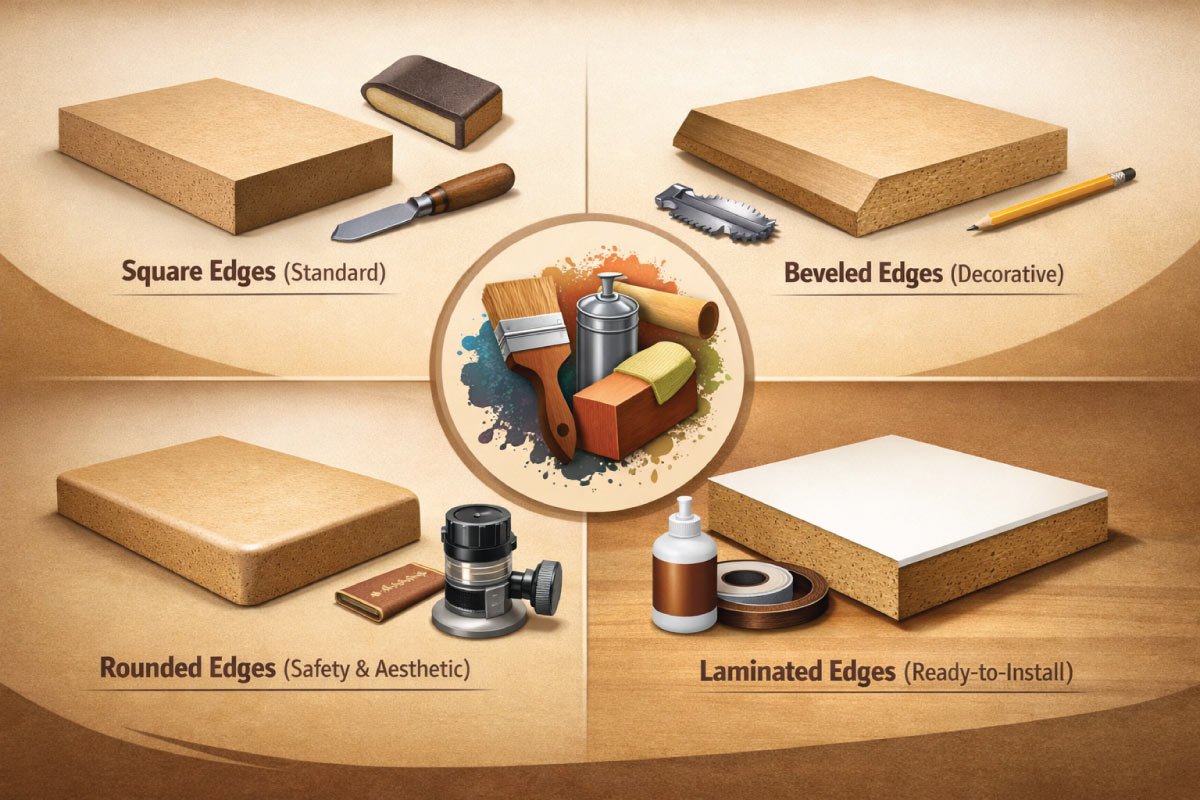
Square edges (standard)
Beveled edges (decorative)
Rounded edges (safety, aesthetic)
Laminated edges (ready-to-install panels)
Choosing the Right MDF Thickness
Selecting the correct MDF thickness is crucial for strength, durability, and overall performance.
The right choice depends on factors such as load-bearing requirements, panel size, and the intended surface finish.
Using appropriate thickness prevents sagging, improves stability, and ensures long-lasting results, whether you are building cabinet doors, shelves, wall panels, or heavy-duty countertops.
| Application | Recommended Thickness |
|---|---|
| Cabinet doors | 18 mm |
| Shelves (short span) | 12 mm |
| Shelves (long span) | 18–25 mm |
| Decorative wall panels | 6–12 mm |
| Countertops | 25 mm |
MDF Density Grades
MDF boards are manufactured in different density grades, which directly influence their strength, durability, and ease of machining.
Choosing the correct density is essential for achieving the desired balance between workability and load-bearing performance.
From lightweight decorative panels to heavy-duty flooring and doors, understanding MDF density grades helps ensure long-lasting and reliable results for any project.
| Grade | Density (kg/m³) | Uses |
|---|---|---|
| Low-density | 500–600 | Decorative panels |
| Standard | 600–800 | Furniture, cabinets |
| High-density | 800–1000 | Flooring, doors, heavy furniture |
Tip: High-density MDF is harder to cut but provides superior durability.
Moisture-Resistant MDF
Moisture-resistant MDF is specially designed for environments exposed to humidity, such as kitchens and bathrooms.
It is manufactured using water-resistant resins that help reduce moisture absorption and swelling.
This makes it more stable and durable than standard MDF in damp conditions, while still offering a smooth surface and easy machinability for furniture and interior applications.
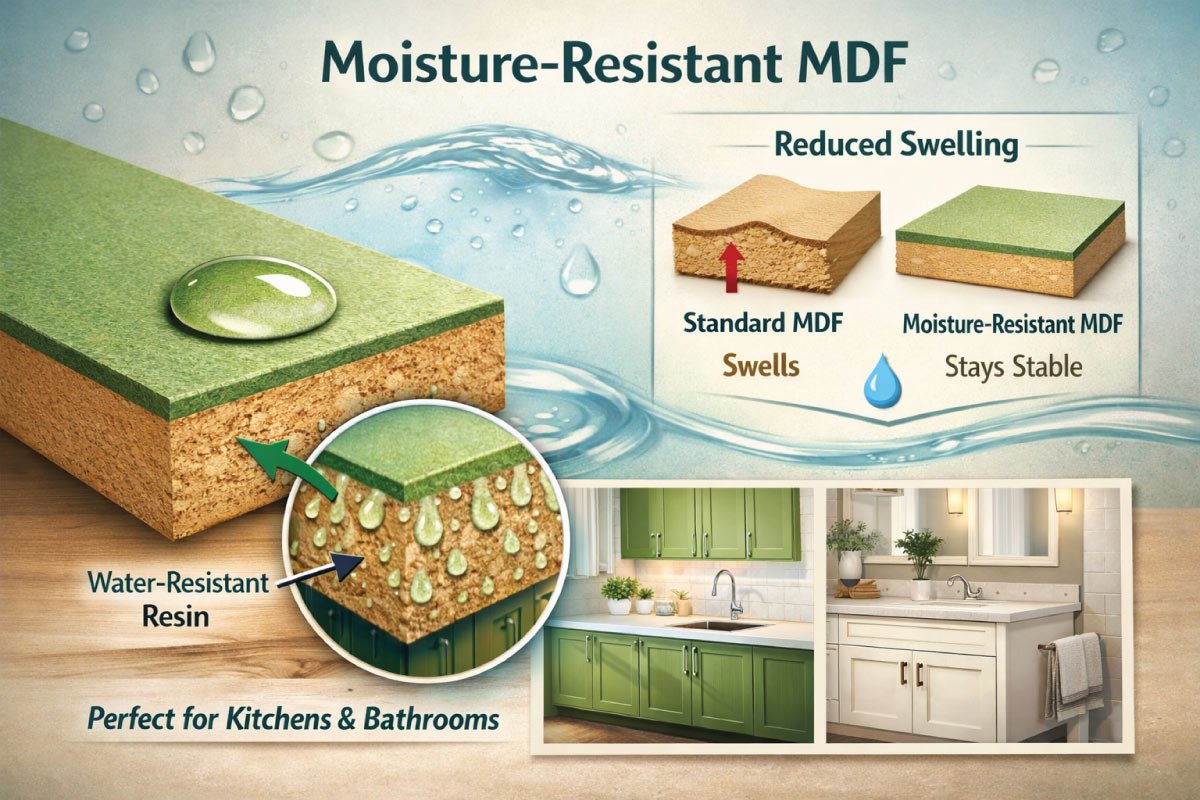
Special resin treatment
Reduced swelling when exposed to moisture
Ideal for cabinet doors, bathroom vanities
Discover More:
Fire-Retardant MDF
Fire-retardant MDF is specially manufactured with fire-resistant additives that slow ignition and reduce flame spread during a fire.
This enhanced safety makes it suitable for environments where fire protection is critical.
While maintaining a smooth surface and good machinability, fire-retardant MDF helps meet building safety standards in both commercial and public interior applications.
Commercial interiors
Public buildings
Safety panels
| Fire Rating | Thickness | Use Case |
|---|---|---|
| FR-MDF 15 | 15 mm | Wall panels |
| FR-MDF 18 | 18 mm | Doors |
| FR-MDF 25 | 25 mm | Heavy partitions |
Laminated MDF Boards
Laminated MDF boards feature a factory-applied decorative surface that enhances both appearance and durability.
This ready-finished material eliminates the need for painting or additional surface treatment, saving time and labor.
Laminated MDF is widely used in modern furniture and interior design projects due to its clean finish, consistency, and ease of installation.
Ready for installation
Scratch-resistant
Available in multiple finishes: wood grain, glossy, matte
Cutting and Handling MDF
Proper cutting and handling techniques are essential when working with MDF to achieve clean results and maintain safety.
MDF is easy to machine, but its fine fibers and dense structure require the right tools and precautions.
Following correct cutting methods and safety practices helps prevent chipping, reduces material damage, and protects your health during woodworking projects.
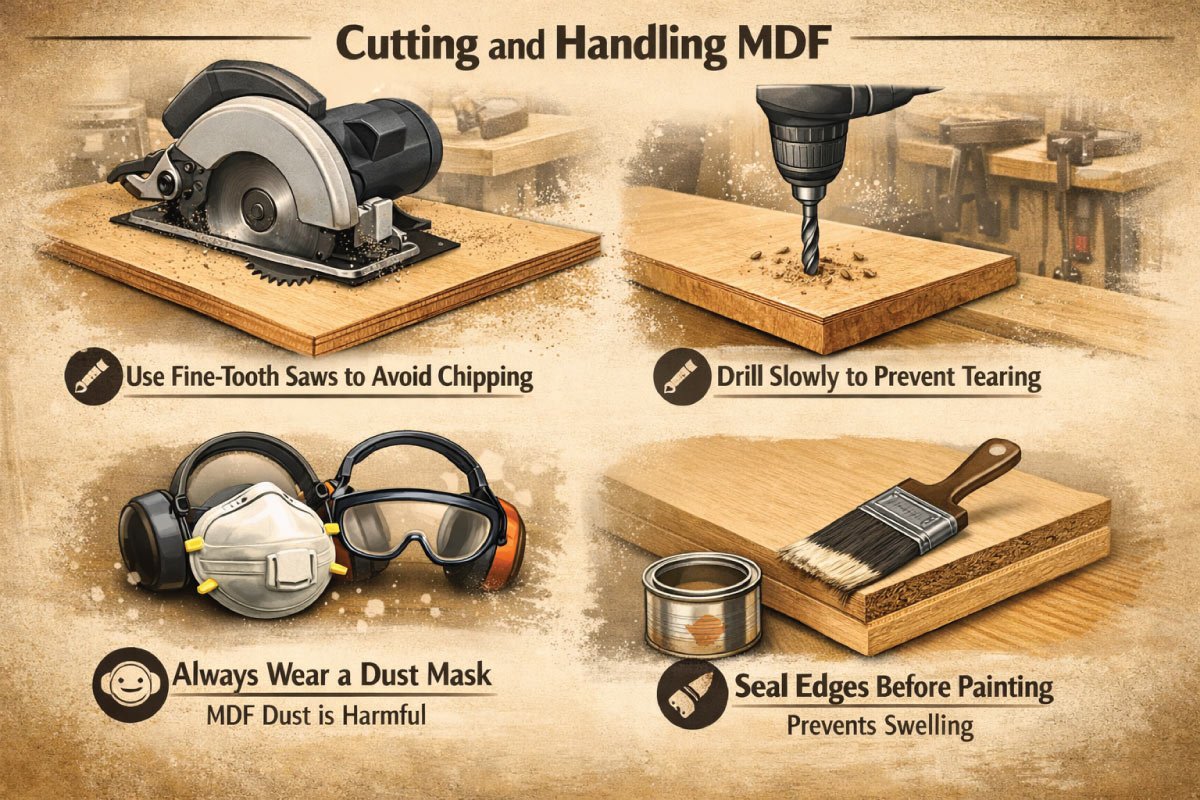
Use fine-tooth saws to avoid chipping
Drill slowly to prevent tearing
Always wear a dust mask; MDF dust is fine and harmful if inhaled
Seal edges before painting to prevent swelling
Discover More:
Cost Comparison of MDF
MDF is widely preferred for its affordability compared to plywood and solid wood, making it a popular choice for furniture and interior projects.
Its cost varies mainly by thickness and intended use, from lightweight craft panels to heavy-duty furniture boards.
Understanding MDF price ranges helps in budgeting accurately while selecting the right thickness for durability, strength, and overall project requirements.
| Thickness | Price Range (per sheet) | Notes |
|---|---|---|
| 6 mm | $10–$15 | Craft and lightweight projects |
| 12 mm | $15–$25 | Furniture panels |
| 18 mm | $25–$40 | Cabinet doors, partitions |
| 25 mm | $35–$50 | Countertops, heavy-duty furniture |
Common Applications of MDF
MDF is a highly versatile material widely used in residential, commercial, and decorative projects.
Its smooth surface, uniform density, and ease of machining make it suitable for both functional and aesthetic applications.
From furniture manufacturing to interior design and craft work, MDF offers flexibility, affordability, and consistent performance across a wide range of uses.
1- Furniture (Cabinets, Wardrobes, Tables)
MDF is commonly used in furniture such as cabinets, wardrobes, and tables due to its smooth finish and easy workability.
It supports painting, laminating, and veneering well, making it ideal for modern furniture designs.
Its consistent structure ensures precise cuts and stable joints in both residential and commercial furniture projects.
2- Wall Paneling and Ceiling Designs
MDF is widely used for wall paneling and decorative ceiling designs because it can be cut into intricate patterns and profiles.
Its smooth surface allows for elegant finishes, while its uniform density ensures durability. MDF panels enhance interior aesthetics in homes, offices, hotels, and commercial spaces.
3- Doors and Partitions
MDF is a popular choice for interior doors and partitions due to its strength, stability, and clean appearance.
Thicker MDF boards provide rigidity, while fire-retardant or moisture-resistant variants improve safety and durability.
MDF doors and partitions are easy to customize and finish according to design requirements.
4- Craft Projects and Decorative Items
For craft and decorative projects, MDF is ideal because it is easy to cut, carve, and shape. It is commonly used for signage, wall art, moldings, and decorative panels.
Its affordability and smooth surface make it a favorite material for DIY enthusiasts and creative designers.
5- Laminated Ready-to-Install Furniture
Laminated MDF is widely used in ready-to-install furniture such as modular cabinets, wardrobes, and storage units.
The pre-finished surface saves time and labor while offering durability and scratch resistance. This makes laminated MDF a practical choice for modern interior solutions and fast installation projects.
Discover More:
Advantages of MDF
MDF (Medium Density Fiberboard) offers numerous benefits that make it a popular choice for furniture, cabinetry, and interior projects.
Its consistent quality, ease of machining, and affordability make it ideal for both DIY enthusiasts and professional woodworkers.
Understanding these advantages helps you make informed material choices for durable and visually appealing results.
Smooth and uniform surface for painting
Easy to shape and cut
Affordable and widely available
Resistant to warping
Can be laminated for a finished look
Disadvantages of MDF
While MDF is versatile and cost-effective, it does have certain drawbacks that should be considered before use.
Understanding these limitations helps you choose the right type and thickness for your project, ensures proper handling, and prevents unexpected issues during fabrication or long-term use.
Sensitive to water unless treated
Heavier than plywood
Produces fine dust when cut
May sag under heavy load if not thick enough
Discover More:
Tips for Buying MDF
Buying the right MDF board ensures better results, less waste, and long-term durability. A little planning before purchase can save time, money, and effort during installation or fabrication.
Keeping the following tips in mind will help you select the most suitable MDF for your specific project requirements.
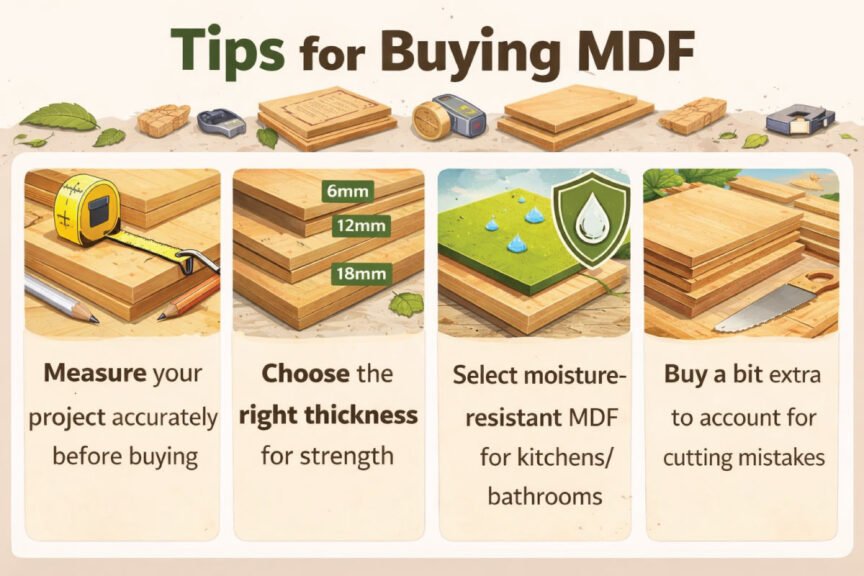
Measure your project accurately before buying
Choose the right thickness for strength
Select moisture-resistant MDF for kitchens/bathrooms
Buy a bit extra to account for cutting mistakes
Conclusion
Understanding MDF board sizes, thicknesses, and types is essential for both DIY enthusiasts and professional woodworkers.
Selecting the right MDF ensures durability, structural stability, and a high-quality finish while keeping projects cost-effective.
Always evaluate your project’s load-bearing requirements, moisture exposure, and intended use before choosing an MDF board to achieve long-lasting, visually appealing, and reliable results.