
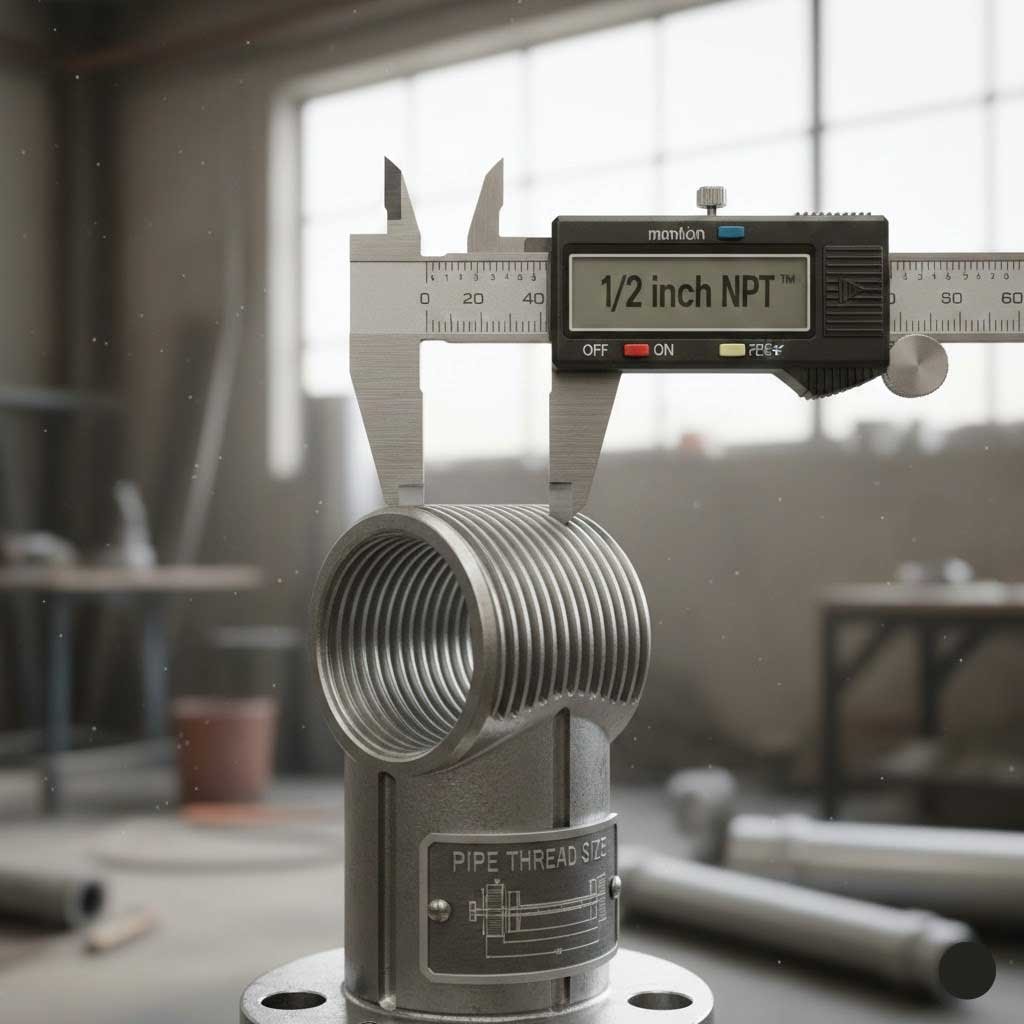
If you have ever tried to fix a plumbing line, install an air compressor, or replace a pipe fitting, you already know one thing: pipe threads can be confusing. You pick up a pipe marked ½-inch, and it doesn’t look like ½ inch at all. Then one fitting screws in perfectly, while another, also labeled the same size—refuses to fit. I have personally faced this headache while working with hydraulic fittings and even simple home plumbing repairs. After a lot of trial, error, and digging through charts, I finally understood how pipe thread sizing actually works.
So in this post, I am going to walk you through everything in a simple, teacher-like way—no over-technical jargon.
By the end, you will know:
- What pipe threads are
- Why the size printed on a pipe is not its actual physical size
- The difference between NPT, BSP, and other thread types
- How to read and use a pipe thread size chart
- Common pipe thread sizes for plumbing, air systems, gas lines, and more
Let’s begin.
What Are Pipe Threads?
Pipe threads are the spiral grooves cut on the outside (male) or inside (female) of a pipe or fitting. They allow the pieces to screw together and form a mechanical connection as well as, often, a leak-proof seal.
Threads help you:
- Connect two pipes
- Attach fittings (elbows, tees, couplers)
- Connect pipes to valves or equipment
- Seal fluid, air, or gas systems
But the main confusion starts here: in pipe sizing, the measurement printed on the pipe is nominal—not the actual diameter.
That means a “½-inch pipe” doesn’t measure ½ inch anywhere on the pipe!
Why? Because pipe sizing was standardized more than 100 years ago, based on the inside diameter of older pipes. Even when pipe walls changed in thickness, the size names stayed the same.
👉 If you are looking for accurate measurements and a clear understanding of M Dowel Pin Size, this post gives you everything in a simple, practical way. From charts to real-life uses, it explains every detail. Don’t miss out—read the full guide to avoid sizing mistakes.
Why Pipe Thread Sizes Are Confusing
There are two reasons people get confused:
1. Nominal pipe size ≠ actual size
For example:
A ½-inch NPT pipe has an outside diameter (OD) of 0.84 inches
A 1-inch pipe has an OD of 1.315 inches
So when someone says “1-inch pipe,” it’s not actually 1 inch anywhere.
2. There are different thread standards
Different countries and industries use different thread types:
NPT (National Pipe Thread) – USA standard
NPTF (Dryseal) – leak-proof threads
BSPP/BSPT – British standard, used worldwide
Metric threads – used in Europe and automotive sectors
Garden hose threads (GHT)
Fire hose threads (NH/NST)
Each type has its own angle, diameter, and shape. That’s why two pipes with the same “size” won’t fit unless they share the same system.
Pipe Thread Size Chart (NPT) – Most Common in USA
Here is the simple, accurate NPT thread chart you can use for plumbing, air compressors, hydraulic fittings, gas pipes, and general use.
📌 NPT Pipe Thread Size Chart
| Nominal Pipe Size | Actual OD (inches) | Threads per Inch (TPI) | Major Uses |
|---|---|---|---|
| 1/8″ NPT | 0.405″ | 27 | Air fittings, gauges |
| 1/4″ NPT | 0.540″ | 18 | Air compressors, water lines |
| 3/8″ NPT | 0.675″ | 18 | Plumbing, pressure systems |
| 1/2″ NPT | 0.840″ | 14 | Household plumbing |
| 3/4″ NPT | 1.050″ | 14 | Sinks, garden taps |
| 1″ NPT | 1.315″ | 11.5 | Main water lines |
| 1-1/4″ NPT | 1.660″ | 11.5 | High-flow systems |
| 1-1/2″ NPT | 1.900″ | 11.5 | Fire protection, HVAC |
| 2″ NPT | 2.375″ | 11.5 | Industry, water pumps |
| 2-1/2″ NPT | 2.875″ | 8 | Fire hydrants |
| 3″ NPT | 3.500″ | 8 | Industrial pipelines |
| 4″ NPT | 4.500″ | 8 | Large fluid systems |
This chart helps answer the most common question:
👉 Why doesn’t my half-inch pipe measure half an inch?
Because the size is only a name, not a measurement.
Pipe Thread Size Chart PDF
Understanding pipe threads is essential for anyone working with plumbing, gas lines, or industrial piping. Sizes can be confusing because the nominal size often differs from the actual diameter. This Pipe Thread Size Chart PDF provides a clear, easy-to-use reference for NPT threads, showing nominal sizes, actual diameters, threads per inch, and common uses to simplify your work.
👉 Understanding J-Bolt Size is essential for choosing the right fastener for construction, concrete anchoring, or heavy-duty projects. This post explains the sizes, measurements, and charts in a clear, simple way. Read the full guide to avoid mistakes and select the perfect J-bolt every time.
Understand Each Column of the Chart
To make pipe thread charts useful, it’s important to understand what each column represents. Each heading provides specific information about the pipe or fitting. By knowing how to interpret these values, you can quickly select the correct pipe size, avoid leaks, and ensure your plumbing, gas, or industrial system works smoothly.
1. Nominal Pipe Size
The nominal pipe size is simply the label used to identify the pipe. It is a traditional naming system and does not correspond to the actual measurements of the pipe. Understanding nominal size helps you communicate effectively when ordering pipes or fittings and ensures you select compatible components for your project.
2. Actual Outside Diameter (OD)
The actual outside diameter (OD) is the real physical measurement across the outside of the pipe thread. This dimension is critical when selecting fittings because the OD determines whether a male thread can properly fit into a female thread. Always measure OD for accurate, leak-free connections in plumbing and industrial applications.
3. Threads Per Inch (TPI)
Threads per inch (TPI) indicate how many threads are present along one inch of pipe. This measurement determines thread spacing and compatibility between fittings. For example, a ½-inch NPT has 14 TPI while a ¼-inch NPT has 18 TPI. Mismatched TPI can prevent proper assembly and cause leaks or damage.
NPT vs BSP – Don’t Mix Them Up
One of the biggest mistakes beginners make is mixing NPT and BSP threads.
Here’s the difference:
| Feature | NPT | BSP |
|---|---|---|
| Origin | USA | UK/Europe |
| Thread Angle | 60° | 55° |
| Type | Tapered | Both tapered (BSPT) and parallel (BSPP) |
| Seal Method | Thread sealing compound / Teflon tape | Rubber gasket or thread sealant |
An NPT fitting will almost fit into a BSP fitting but not perfectly. It may screw halfway and then jam.This creates leaks or thread damage. If you work with imports, air tools, or equipment from China/Europe, double-check before connecting.
👉 Choosing the correct Brake Pad Size is essential for safe, smooth, and reliable braking performance. This post explains sizes, fitment, and measurement methods in a simple, clear way. Don’t risk choosing the wrong pads—read the full guide to make confident, accurate decisions for your vehicle.
How to Identify Pipe Thread Size (Simple Method)
Identifying pipe thread size becomes easy when you follow a clear, step-by-step approach. This practical method is the same one commonly used in workshops, plumbing jobs, and industrial maintenance. By measuring correctly and comparing your results with a chart, you can avoid mismatched fittings, leaks, and unnecessary frustration.
Step 1: Measure Outer Diameter (OD)
Start by measuring the pipe’s actual outside diameter using a caliper for best accuracy, though a ruler also works in simple cases. The OD helps you identify the real physical size of the pipe, which rarely matches the nominal name. For example, an OD of 0.84 inches usually corresponds to a ½-inch NPT pipe.
Step 2: Count the Threads Per Inch (TPI)
Next, determine the number of threads per inch. Use a thread gauge if available, or mark a one-inch section and count the threads manually. TPI is crucial because it ensures proper thread engagement. Even a small mismatch in thread count can cause fittings to jam, leak, or fail under pressure.
Step 3: Match Results With the Pipe Size Chart
Once you have both the OD and TPI measurements, compare them with a verified pipe thread size chart. The chart helps you identify the exact nominal pipe size and corresponding thread type. This prevents guesswork and ensures you select the correct fitting every time, whether you’re working on plumbing, gas lines, or industrial equipment.
Step 4: Identify Thread Type
Finally, determine whether the thread is tapered or straight. Tapered threads become slightly narrower toward the end, indicating types like NPT or BSPT. Straight threads maintain the same diameter along their length, such as BSPP or metric threads. Identifying the correct thread type prevents cross-threading, leaks, and system damage.
Why Tapered Threads Matter
Pipe threads are often tapered, meaning:
The male thread becomes narrower at the end
When you tighten it, it wedges into the female thread
This creates a leak-resistant seal
NPT threads seal through metal-to-metal pressure. That’s why we use:
Teflon tape
Pipe dope
Thread sealant
These help fill microscopic gaps.
Pipe Thread Uses
Pipe thread sizes are designed for specific applications, and knowing where each size is commonly used helps you choose the right fittings. Here’s a clear breakdown of how each size range is used in practical, everyday situations.
1- Small Sizes (1/8″ – 3/8″)
Small pipe thread sizes are ideal for low-flow, precision systems where tight control is needed. These threads connect small instruments, compact lines, and equipment that rely on accurate pressure or fluid movements.
Pressure gauges
Used to connect gauge housings to pressure lines, allowing accurate pressure readings in air, water, or hydraulic systems without leaks or measurement errors.
Air compressor fittings
Commonly used for quick-connect couplers, regulator ports, and airline accessories, ensuring smooth airflow in small pneumatic tools and household compressors.
Refrigeration lines
Used in refrigeration and HVAC systems for connecting capillary tubes, pressure switches, and sensors where small, precise connections are essential.
Water filters
Found on compact filter housings and drinking water systems, these threads enable secure, leak-free connections for safe and continuous water flow.
Small hydraulic systems
Used in light-duty hydraulic applications like foot pumps and compact cylinders, providing reliable sealing under moderate fluid pressure.
2- Medium Sizes (1/2″ – 1″)
Medium pipe thread sizes are the most common in everyday households. They handle general water, gas, and outdoor utility needs and offer the perfect balance of flow capacity and ease of installation.
Faucets
Used for connecting faucets and mixer taps, providing dependable water supply connections for sinks, kitchens, and bathrooms.
Water supply lines
These threads are standard on household plumbing lines, ensuring safe water delivery to appliances like heaters, washing machines, and dishwashers.
Gas pipes
Used for residential gas supply systems, including natural gas and LPG lines, ensuring safe and consistent flow to stoves or heaters.
Garden adapters
Found in outdoor spigots, hose connectors, and irrigation systems, providing strong, weather-resistant connections for gardening tools and water hoses.
3- Large Sizes (1-1/4″ – 4″)
Large pipe thread sizes are built for high-volume, heavy-duty systems where strong flow and durability are crucial. These threads are commonly used in industrial, commercial, and high-pressure environments.
Industrial pipelines
Used for transferring liquids, chemicals, steam, or air in factories, ensuring high-capacity flow and robust system reliability.
Sprinkler systems
Installed in fire sprinkler networks and large irrigation systems, providing strong connections capable of handling high water discharge.
Fire hydrants
Used in municipal firefighting connections, these threads allow quick attachment of hoses and withstand extreme pressure during emergency use.
Water pumps
Found in pumps for agriculture, industry, and commercial buildings, helping move large volumes of water efficiently and safely.
Drainage lines
Used for waste and stormwater systems, offering wide channels to remove water quickly and prevent blockages in large-scale plumbing.
👉 Understanding Band Saw Blade Size is key to getting clean, accurate cuts and extending your blade’s life. This post simplifies blade length, width, and thickness so you choose the perfect match for your saw. Read the full guide to avoid mistakes and improve your cutting performance.
Tips You Should Always Remember (From Experience)
These practical tips come directly from real workshop situations and home plumbing projects. Following them saves time, prevents thread damage, and ensures leak-free connections. Even experienced technicians rely on these basics because they consistently make installation and troubleshooting much easier.
✔ Always check OD, not the nominal size
Measuring the actual outside diameter removes most sizing confusion because nominal pipe size rarely matches real measurements. When you rely on OD instead of labels, you immediately know the true pipe size and avoid mismatched fittings, incorrect ordering, or wasted installation time.
✔ Never force a fitting
If a fitting doesn’t screw in smoothly by hand, stop immediately. Forcing it can damage threads, ruin the seal, or cause leaks later. Smooth engagement means correct size and thread type. Resistance usually signals an incorrect match, worn threads, or dirty connections.
✔ When in doubt, use a thread gauge
Thread gauges are inexpensive, simple to use, and extremely accurate. They help you quickly check thread pitch and TPI, ensuring the correct match every time. Using one prevents guesswork, avoids fitting mistakes, and is especially helpful when working with unfamiliar or imported parts.
✔ Use sealant on tapered threads
Tapered threads rely on pressure to form a leak-resistant seal, but even perfect tapered fits can leak if not sealed properly. Always apply Teflon tape or pipe dope to fill microscopic gaps and ensure long-term, leak-free performance under pressure.
✔ Parallel threads need a washer
Parallel threads do not seal by tightening alone because they don’t taper. They require a washer, O-ring, or gasket to create a proper seal. This is especially true for BSPP threads, where the sealing surface depends entirely on the added washer.
Extended Pipe Thread Size Chart (NPT + BSP)
Here is a more detailed comparison chart that is helpful for international fittings.
NPT vs BSP Comparison Chart
| Nominal Size | NPT OD (inches) | BSP OD (inches) | NPT TPI | BSP TPI |
|---|---|---|---|---|
| 1/8″ | 0.405 | 0.383 | 27 | 28 |
| 1/4″ | 0.540 | 0.518 | 18 | 19 |
| 3/8″ | 0.675 | 0.656 | 18 | 19 |
| 1/2″ | 0.840 | 0.825 | 14 | 14 |
| 3/4″ | 1.050 | 1.041 | 14 | 14 |
| 1″ | 1.315 | 1.309 | 11.5 | 11 |
They look dangerously close—but they do NOT fit perfectly.
How to Know Which Thread System You Need?
Choosing the correct thread system is essential for creating leak-free, secure, and compatible connections. Because different regions and industries use different standards, identifying the right system ensures your fittings match perfectly and prevents damage, frustration, and costly installation mistakes.
1. If You Are in the USA – Use NPT
In the United States, NPT is the standard for plumbing, gas lines, air compressors, and industrial systems. Most American-made tools and fittings follow NPT, so choosing this system ensures proper sealing, easy compatibility, and reliable performance without needing adapters or conversions.
2. If Your Equipment Is From Europe or Asia – Use BSP
Imported tools, pumps, compressors, and valves from Europe or Asia commonly use BSP threads. These fittings look similar to NPT but differ in angle and sealing method. Matching them with BSP ensures accurate tightening, proper sealing, and prevents cross-threading or damaging connections.
3. If You’re Unsure – Measure OD and TPI
When the thread type isn’t clear, measuring the outside diameter and counting threads per inch is the safest approach. These two measurements allow you to compare directly with a thread chart and identify the correct system without guessing or risking mismatched fittings.
4. If the Thread Shape Confuses You – Check Taper vs. Straight
Thread shape immediately reveals the system. Tapered threads become narrower and usually indicate NPT or BSPT. Straight threads maintain the same diameter, meaning BSPP or metric. Identifying this difference helps you choose the correct sealing method and avoid installation problems.
👉 Selecting the correct M Key Size is essential for achieving a secure, slip-free fit in shafts and mechanical assemblies. This post explains sizes, charts, and real-world applications in a simple, clear way. Read the full guide to avoid sizing errors and ensure perfect mechanical alignment.
Final Thoughts
Understanding pipe threads is one of those skills that seems complicated at first—but once you learn the basics, everything becomes easy. I struggled with this years ago, especially when fitting sizes didn’t match what was written on the box. But with charts, measuring, and a little practice, it becomes second nature.
Use the chart included in this guide to quickly identify any NPT or BSP size you’re working with.
And remember:
- Nominal size is just a name
- Actual OD is what matters
- TPI must match
- Thread type must match
Once you follow these rules, you will never mix up pipe threads again.
FAQs:
What size is pipe thread?
Pipe thread size refers to the nominal size, not the actual measurement. This nominal value is a traditional label used to identify pipes. The real outside diameter is different. For example, a ½-inch NPT pipe actually measures around 0.84 inches across the outside of the threads.
How to measure pipe thread size?
To measure pipe thread size, start by measuring the outside diameter (OD) using a caliper. Next, count the threads per inch (TPI) with a gauge or ruler. Compare both values with a pipe thread chart. Matching OD and TPI will help you determine the correct nominal size.
What is BSP thread size?
BSP thread size refers to British Standard Pipe threads, commonly used in Europe, Asia, and imported tools. BSP has two forms: BSPT (tapered) and BSPP (parallel). Thread angles are 55°, different from NPT. The nominal size is also not the actual diameter, similar to NPT sizing.
What size is 3/4 pipe thread?
A 3/4-inch pipe thread does not measure 0.75 inches. Its actual outside diameter is about 1.050 inches. It normally has 14 threads per inch for NPT and BSP versions. This size is widely used for garden taps, home plumbing, and many medium-flow applications.
Is PVC sized by ID or OD?
PVC is generally sized by nominal inside diameter (ID), not the actual OD. The outside diameter stays consistent across different wall thicknesses, but the internal diameter varies. This sizing method helps maintain standardized fittings, even when using Schedule 40, Schedule 80, or other PVC wall thicknesses.
How to identify a thread size?
To identify thread size, measure the outside diameter and count the threads per inch. Then determine whether the thread is tapered or parallel. Compare your measurements with a thread chart to determine the correct system, such as NPT, BSP, or metric. This prevents mismatched or leaking connections.
How to know pipe size in mm?
To know pipe size in millimeters, measure the outside diameter in mm using calipers. Then compare the measurement with a pipe size conversion chart that lists nominal inch sizes and their metric equivalents. This makes it easy to convert NPT or BSP sizes into exact millimeter dimensions.