
Whether you are a seasoned carpenter, a DIY enthusiast, or just starting with home improvement projects, understanding wood screws is a crucial skill. Wood screws may seem simple at first glance, a slender metal fastener with threads but choosing the right screw for the right job can make the difference between a sturdy project and a frustrating repair job. From cabinets and furniture to outdoor decks and small craft projects, the proper screw ensures durability, stability, and professional results. In this guide, we will break down everything you need to know about wood screw sizes, including lengths, gauges, types, and practical tips to help you select the perfect screw for your project.
What Are Wood Screws?
Wood screws are fasteners specifically designed to join pieces of wood. Unlike nails, which primarily rely on friction and sometimes adhesives to hold materials together, wood screws use their threaded shaft to bite into wood fibers. This creates a stronger, more secure joint that can withstand stress, movement, and weight.
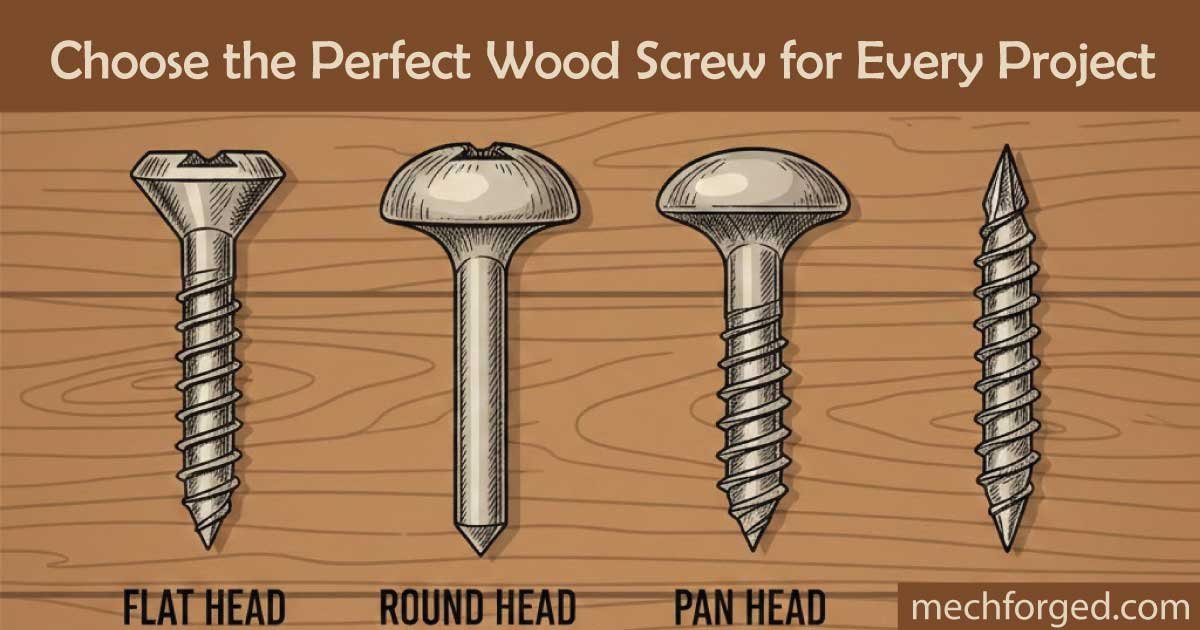
Most wood screws have a tapered shaft that narrows toward the tip, allowing easier insertion and reducing the risk of splitting the wood. They also feature a variety of head types, including flat, round, and pan heads, to accommodate countersinking or surface finishing. Recognizing the anatomy of a wood screw is essential before diving into sizes and applications.
| Part of Screw | Description |
|---|---|
| Head | The top portion, can be flat, round, or oval, allowing for different types of driving tools and finishing styles. |
| Shank | The unthreaded portion near the head, which provides alignment and grip. |
| Thread | The ridged portion that cuts into the wood for holding power. |
| Point | The tip that helps the screw enter wood, can be sharp, self-drilling, or pilot-friendly. |
Understanding Screw Lengths
Screw length is measured from the tip of the screw to the point where the head sits flush with the wood surface. Choosing the correct length depends on the thickness of the wood pieces you are joining. As a general rule, the screw should enter the bottom piece of wood at least halfway its thickness to ensure a strong bond.
For example, when attaching a 1-inch thick board to another 1-inch board, a screw that is 2 inches long is usually ideal. Avoid screws that are too short, as they may not hold, or too long, which could protrude through the opposite side and ruin the finish.
| Wood Thickness | Recommended Screw Length |
|---|---|
| 1/2 inch | 1 inch |
| 3/4 inch | 1-1/4 inch |
| 1 inch | 1-1/2 to 2 inch |
| 1-1/2 inch | 2 to 2-1/2 inch |
| 2 inch | 2-1/2 to 3 inch |
📌 Discover everything about stud bolt sizes with our complete guide! From measurements, types, and standards to choosing the right size for your project, this post is perfect for engineers, DIYers, and builders. Learn practical tips, avoid mistakes, and make informed decisions. Read the full guide now!
Screw Gauge: The Diameter Explained
While length tells you how deep a screw goes, the gauge indicates its thickness. Gauge numbers may seem backward at first—the smaller the gauge number, the thicker the screw. For instance, a #6 screw is thinner than a #12 screw.
Choosing the right gauge is critical for maintaining wood integrity. Too thin a screw in hardwood may strip easily, while too thick a screw in softwood can split the material. It’s also important to note that some projects, such as furniture assembly, may require matching gauge for aesthetic reasons.
| Gauge | Diameter (inches) | Common Uses |
|---|---|---|
| #4 | 0.112 | Small crafts, thin plywood |
| #6 | 0.138 | Light wood projects, cabinetry |
| #8 | 0.164 | General woodworking, softwood furniture |
| #10 | 0.190 | Heavy-duty projects, hardwood |
| #12 | 0.216 | Decking, structural woodwork |
Wood Screw Types and Their Uses
Wood screws come in various types, each tailored for a specific purpose. Some of the most common include:
Flat Head Screws:
Flat head screws are designed to sit completely flush with the wood or material surface. This makes them ideal for furniture, cabinetry, and other woodworking projects where a smooth, seamless finish is essential and the screw head should remain invisible.
Round Head Screws:
Round head screws feature a domed, visible top that adds a decorative touch. They are commonly used where the screw head remains exposed, such as in light fixtures, cabinetry, or panels, offering both functionality and an aesthetically pleasing appearance.
Pan Head Screws:
Pan head screws have a slightly rounded, low-profile dome, providing good surface contact and stability. They are perfect for attaching metal brackets, electrical components, or hardware to wood or metal, where a slightly raised, secure head is acceptable.
Self-Tapping Screws:
Self-tapping screws are engineered to cut their own threads into wood, plastic, or soft metals, eliminating the need for pilot holes. They simplify installation, save time, and are widely used in construction, DIY projects, and light manufacturing applications.
Selecting the appropriate type ensures your project looks professional and the joint remains strong. For example, using a round head screw on a deck board may leave an uneven surface, while a flat head would allow for sanding and finishing.
| Screw Type | Best Use |
|---|---|
| Flat Head | Furniture, cabinetry |
| Round Head | Decorative projects, exposed screws |
| Pan Head | Metal-to-wood connections |
| Self-Tapping | Quick assembly without pilot holes |
📌 Explore our Copper Pipe Size Chart: a complete guide for plumbers, DIYers, and home improvement enthusiasts! Learn about pipe diameters, types, and standard measurements to choose the perfect copper pipe for your project. Get all the details and expert tips—read the full guide now!
Pilot Holes: Why They Matter
One of the most common mistakes DIYers make is skipping pilot holes, especially when working with hardwood. A pilot hole is a small, pre-drilled hole that guides the screw into the wood. This reduces the risk of splitting and ensures the screw goes in straight.
For softwood, pilot holes may not be necessary for smaller gauges (#4 or #6), but in hardwood or when using thicker screws (#10 and above), pilot holes are essential. Remember, the diameter of the pilot hole should be slightly smaller than the screw’s core diameter to maintain holding strength.
| Screw Gauge | Recommended Pilot Hole Diameter |
|---|---|
| #4 | 3/32 inch |
| #6 | 7/64 inch |
| #8 | 1/8 inch |
| #10 | 9/64 inch |
| #12 | 5/32 inch |
Head Styles and Driving Methods
Choosing the right head style not only affects the look of your project but also determines the driving method. Flat heads are commonly driven with a Phillips or slotted screwdriver, while some modern screws feature square (Robertson) or star (Torx) drives for better torque and reduced cam-out.
For example, a Torx drive is ideal when working with power tools, as it reduces slipping and minimizes damage to the wood. On the other hand, traditional Phillips heads may be sufficient for hand tools or light applications.
| Head Type | Common Drive | Best For |
|---|---|---|
| Flat Head | Phillips, Slotted | Furniture, cabinetry |
| Round Head | Phillips, Slotted | Decorative, exposed screws |
| Pan Head | Phillips, Slotted | Brackets, metal attachments |
| Torx / Star | Torx driver | High torque, power tools |
Material Considerations
Wood screws are made from a variety of metals and finishes, each suited for specific environments. Standard steel screws are common for indoor use, but when working outdoors, corrosion-resistant screws such as stainless steel or coated screws are better choices.
Galvanized screws resist rust, making them suitable for decks, fences, and garden projects. Brass screws, on the other hand, are often used in decorative woodworking due to their golden appearance and resistance to tarnish. Choosing the right material ensures longevity and prevents damage over time.
| Material | Strength | Corrosion Resistance | Best Use |
|---|---|---|---|
| Steel | High | Low | Indoor woodwork |
| Stainless Steel | High | High | Outdoor, wet areas |
| Brass | Medium | Medium | Decorative furniture |
| Galvanized | High | High | Decks, fences |
Common Mistakes to Avoid
Even experienced DIYers occasionally make mistakes when choosing or using wood screws. Some common pitfalls include using the wrong length, skipping pilot holes in hardwood, using the wrong gauge for softwood, and mismatching head styles for visible projects.
Another overlooked issue is overtightening, which can strip the wood fibers or the screw threads, weakening the joint. A good practice is to gradually drive the screw while checking alignment and resistance. For particularly dense hardwood, applying a bit of wax or soap on the screw can help ease it into the wood.
📌 Discover our M6 Bolt Size Chart: a complete guide for mechanics, engineers, and DIYers! Learn about dimensions, thread pitch, and applications to choose the perfect M6 bolt for your projects. Get all the details and expert tips—read the full guide now!
Practical Tips for Choosing Screws
Selecting the right screw is easier when you remember a few simple principles. First, always match the screw length to at least half the thickness of the material being joined. Second, pick a gauge that balances strength with the wood’s vulnerability to splitting. Third, consider the screw head and driving method in relation to the project’s finish.
In practice, many woodworkers keep a small reference chart in their workshop, listing wood thicknesses against recommended screw lengths and gauges. This reduces guesswork and ensures consistent results across projects. For example, a small furniture project might use #6 flat head screws for 3/4-inch plywood, while a garden bench might require #10 stainless screws for 1-1/2 inch decking boards.
| Project Type | Wood Thickness | Recommended Screw Gauge | Head Type |
|---|---|---|---|
| Cabinet assembly | 3/4 inch | #6 | Flat Head |
| Outdoor bench | 1-1/2 inch | #10 | Flat Head |
| Decorative shelving | 1 inch | #8 | Round Head |
| Fence panels | 2 inch | #12 | Flat Head |
Summary & Final Thoughts
Understanding wood screw sizes, lengths, gauges, and types is foundational for successful woodworking. The right screw ensures your projects are secure, durable, and visually appealing, while the wrong screw can lead to splitting, weak joints, or structural failures. By paying attention to screw length, gauge, material, and head type, and by practicing careful driving techniques, you can elevate both the quality and longevity of your work.
Remember, the small details matter. From selecting the proper pilot hole size to choosing corrosion-resistant screws for outdoor projects, each choice impacts the final result. Whether you’re crafting furniture, building a deck, or tackling a DIY repair, using this knowledge will save time, reduce frustration, and improve your craftsmanship.
Next time you reach for a wood screw, take a moment to consider the material, the thickness, and the intended load—these little decisions make all the difference. With the right approach, your projects won’t just hold together—they’ll stand the test of time.
| Quick Reference Guide | Length | Gauge | Best Use |
|---|---|---|---|
| Thin plywood / craft | 1 inch | #4 | Small crafts, light attachments |
| Cabinetry / light wood | 1-1/4 inch | #6 | Furniture, interior woodworking |
| General furniture | 1-1/2 inch | #8 | Softwood boards, medium weight |
| Decks / structural | 2-1/2 inch | #10 | Hardwood, outdoor applications |
| Heavy construction | 3 inch | #12 | Fence posts, heavy-duty structures |
📌 Explore our Rebar Size Chart: a complete guide for builders, engineers, and construction enthusiasts! Learn about rebar diameters, grades, and applications to ensure strong and durable structures. Get practical tips and detailed insights—read the full guide now!
FAQs:
How to know what size wood screw to use?
To choose the right wood screw size, consider the wood thickness and project type. The screw should be long enough to secure both pieces without splitting the wood. Measure the thickness of the material and select a screw slightly shorter than the total depth for safety and stability.
How to know what gauge screw to use?
Screw gauge refers to the thickness of the screw. Thicker screws hold more weight but may split the wood. For softwood, a thinner gauge (like #6 or #8) works well, while hardwoods need stronger, larger gauges (#10 or #12). Always match gauge to material strength and load.
What are the different types of wood screws?
Wood screws come in flat head, round head, pan head, and oval head styles. Some are self-tapping, while others require pilot holes. Each type serves a purpose: flat heads sit flush, round heads are decorative, and self-tapping screws save effort by cutting their own threads in softer wood.
What is the best screw to use for wood?
The best screw depends on the project. Typically, coated steel or brass wood screws are preferred for durability and resistance to rust. For furniture, fine-thread screws work well; for structural projects, coarse-thread screws grip better. Always select a screw that balances strength, corrosion resistance, and ease of use.
What is the rule of thumb for wood screw length?
A good rule is to use a screw at least twice as long as the thickness of the material being fastened. This ensures proper grip without splitting the wood. For thinner wood, use shorter screws; for thicker pieces, choose longer screws to secure both layers firmly.
What is the most common screw gauge?
The most common wood screw gauges are #6, #8, and #10. Gauge #8 is often considered standard for most DIY and furniture projects, offering a good balance between holding power and ease of use. Choosing the right gauge ensures your screw grips properly without damaging the wood.