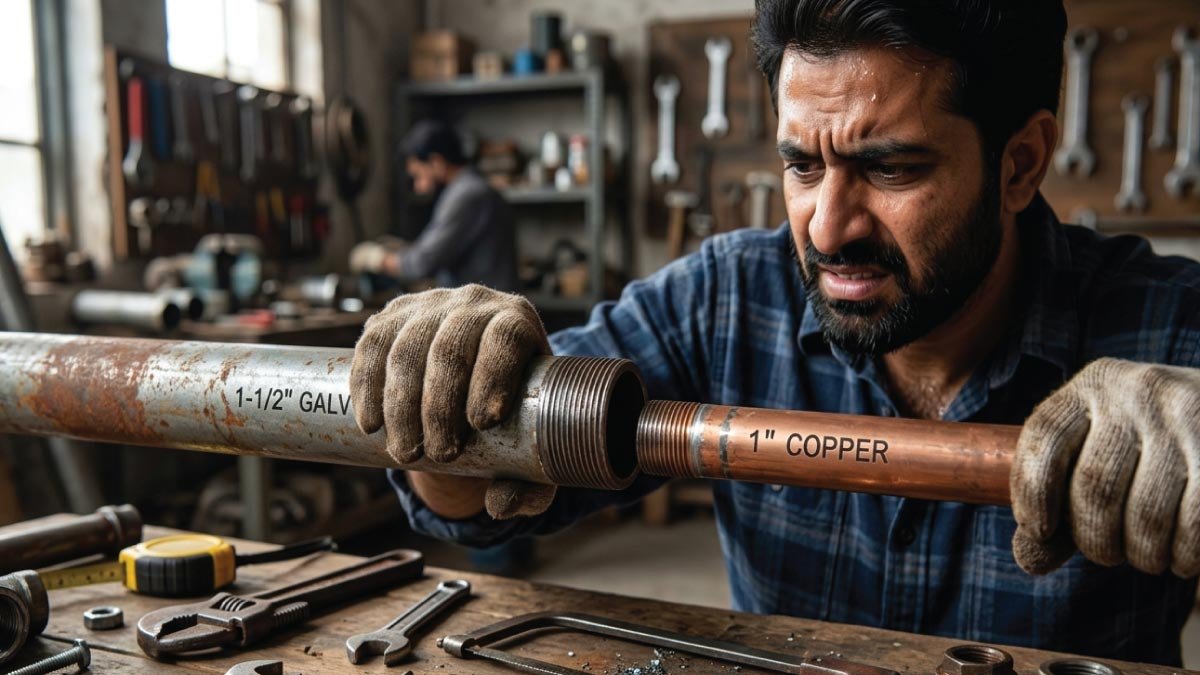
Pipe size mismatch is one of the most common problems in plumbing, HVAC systems, irrigation setups, and industrial piping work. It happens when two pipes or fittings do not match in diameter, thread type, or measurement system. Even a small mismatch can cause leaks, pressure loss, system failure, or costly repairs.
In this detailed guide, you will learn how to identify pipe size mismatch, how to fix it step by step, and how to use a complete pipe size chart to avoid mistakes in the future.
What Is Pipe Size Mismatch?
Pipe size mismatch occurs when two pipe components that are expected to connect do not have compatible physical dimensions, threading systems, or standardized measurements. This incompatibility prevents proper sealing and flow continuity in plumbing, HVAC, or industrial piping systems, often leading to leaks or installation failure.
This mismatch can include differences in:
- Outer diameter (OD)
- Inner diameter (ID)
- Thread type (BSP vs NPT)
- Metric vs imperial sizing
- Pipe schedule (wall thickness)
In simple terms, pipe mismatch means the fittings cannot properly align, connect, or seal together, which results in leakage, pressure loss, or complete system malfunction.
Although pipes may appear similar externally, even minor variations in standards or manufacturing specifications can make them completely incompatible in practical applications, especially in high-pressure or precision systems.
Why Pipe Size Mismatch Happens
Understanding the root causes of pipe size mismatch is essential for preventing installation errors and system failures. Most mismatches occur due to incorrect selection of fittings, lack of technical knowledge, or confusion between international standards used in plumbing and industrial systems.
1. Mixing Metric and Imperial Systems
Different countries follow different measurement systems for pipes and fittings. When metric and imperial components are mixed without proper conversion or adapters, it often results in incorrect fitting and leakage issues.
- Different countries use different standards
- Mixing systems leads to incorrect fitting
This mismatch is one of the most common issues in international plumbing and imported equipment installations, where compatibility is not properly checked before assembly.
2. Wrong Thread Type
Pipe threads are not universally compatible, and different standards such as BSP (British Standard Pipe) and NPT (National Pipe Thread) have different thread angles and sealing methods. Using incompatible threads results in poor sealing and leakage.
- BSP (British Standard Pipe) and NPT (National Pipe Thread) are not compatible
Even if the pipe sizes appear similar, thread design differences prevent proper engagement, making sealing unreliable without specialized adapters.
3. Incorrect Measurement of Diameter
Accurate pipe measurement is critical for proper fitting. Even a small error in measuring outer or inner diameter can result in selecting the wrong pipe size or connector, leading to mismatch during installation.
- Even slight measurement errors can lead to improper fitting
This issue commonly occurs when tools are not used correctly or when measurements are estimated instead of precisely taken using proper instruments like calipers or gauges.
4. Using Worn or Damaged Fittings
Pipes and fittings that are old, corroded, or physically damaged may lose their original dimensions or thread accuracy. This makes it difficult to achieve proper sealing even if the correct size is selected.
- Old fittings may expand, deform, or lose thread accuracy
Such components can create hidden mismatches that are not immediately visible but cause long-term leakage or system inefficiency under pressure.
5. Lack of Standard Knowledge
Many beginners and non-professionals assume that all pipes of similar appearance or size are interchangeable. However, different industries follow strict standards that must be understood before installation.
- Beginners often assume all pipes of similar size are interchangeable
This lack of awareness leads to incorrect part selection, especially when working with mixed systems or imported materials that follow different sizing conventions.
Common Problems Caused by Pipe Size Mismatch
Pipe size mismatch is not just a minor installation issue—it can lead to serious mechanical, structural, and operational problems in plumbing, HVAC, and industrial systems. When pipes do not fit correctly, the entire system performance is affected, often resulting in safety risks, inefficiency, and costly repairs.
1. Water or Gas Leakage
One of the most common and immediate problems caused by pipe mismatch is leakage. When pipe sizes or threads do not align properly, the sealing becomes weak and incomplete, allowing fluids or gases to escape.
- Improper sealing causes continuous leakage
This can lead to water wastage, gas hazards, and reduced system efficiency, especially in high-pressure pipelines where even small gaps become significant over time.
2. Pressure Drop
Pipe mismatch often restricts the smooth flow of liquids or gases inside the system. When the internal diameter is not properly aligned, it creates resistance and reduces overall pressure.
- Mismatch restricts flow and reduces system efficiency
This pressure drop affects system performance, leading to weak output in water supply systems, inefficient HVAC circulation, or reduced industrial productivity.
3. Thread Damage
Forcing incompatible pipes together is a common mistake that results in permanent damage to threads. Once threads are stripped or deformed, proper sealing becomes impossible.
- Forcing mismatched pipes damages threads permanently
This type of damage often requires complete replacement of fittings, increasing repair time and cost significantly.
4. System Failure
In industrial environments, pipe mismatch can cause serious system failures. If critical pipelines do not function correctly, it may lead to shutdowns or interruptions in production processes.
- In industrial systems, mismatch can shut down entire operations
Such failures are particularly dangerous in chemical plants, manufacturing units, and high-pressure systems where continuous operation is essential.
5. Increased Maintenance Cost
Frequent pipe mismatches lead to repeated repairs, replacements, and system inspections. Over time, this significantly increases maintenance expenses and reduces operational efficiency.
- Frequent repairs and replacements increase expenses
Preventing mismatch from the beginning is always more cost-effective than fixing recurring issues later.
Types of Pipe Size Mismatch
Before fixing pipe problems, it is essential to understand the different types of mismatches. Each type affects the system in a different way and requires a specific solution for proper correction and sealing.
1. Diameter Mismatch
Diameter mismatch occurs when two pipes have different outer or inner diameters, making them physically incompatible for direct connection.
- Pipes have different outer or inner diameters
This type of mismatch often requires reducers, couplings, or adapters to create a proper transition between different pipe sizes.
2. Thread Mismatch
Thread mismatch happens when pipe threads do not match in design or angle, such as BSP and NPT standards, which are not compatible with each other.
- Threads do not align properly (BSP vs NPT)
Even if the pipe size appears similar, incorrect thread types prevent proper sealing and often require specialized adapters.
3. Material Mismatch
Material mismatch occurs when pipes made from different materials, such as plastic and metal, are joined without proper connectors or transition fittings.
- Plastic and metal pipes may require adapters
Each material behaves differently under pressure and temperature, so proper fittings are necessary to ensure safe and leak-free connections.
4. Pressure Rating Mismatch
This type of mismatch happens when one pipe or fitting cannot handle the pressure level of the system, leading to potential failure or rupture.
- One pipe cannot handle the system pressure
Using pipes with incorrect pressure ratings can be dangerous, especially in industrial or high-pressure water systems.
5. Length or Fit Mismatch
Length mismatch occurs when pipes are not properly sized for alignment during installation, causing gaps or tension in the system.
- Incorrect pipe length affects alignment and sealing
This type of issue can lead to poor sealing, stress on joints, and long-term structural instability in the piping system.
Complete Pipe Size Chart (Standard Reference)
Below is a commonly used and industry-standard pipe size chart used in plumbing, HVAC systems, irrigation setups, and industrial piping work. This chart helps technicians, engineers, and DIY users quickly identify correct pipe sizes based on nominal size, outer diameter, and typical application.
Pipe sizing is standardized, but it is important to understand that nominal size does not always equal actual measured diameter. That is why comparing charts is essential before selecting or replacing pipes.
Metric Pipe Size Chart (PVC/Steel)
This metric chart is widely used in Asia, Europe, and many industrial systems where measurements are based on millimeters. It includes nominal pipe size, outer diameter, and common usage scenarios to help in proper selection.
| Nominal Size (mm) | Outer Diameter (mm) | Common Use |
|---|
| 15 mm | 21.3 mm | Household plumbing |
| 20 mm | 26.9 mm | Water supply lines |
| 25 mm | 33.7 mm | Medium flow systems |
| 32 mm | 42.4 mm | Industrial plumbing |
| 40 mm | 48.3 mm | Drainage systems |
| 50 mm | 60.3 mm | High flow pipelines |
| 65 mm | 76.1 mm | Industrial systems |
| 80 mm | 88.9 mm | Heavy water supply |
| 100 mm | 114.3 mm | Sewer systems |
This metric system is commonly used in modern plumbing installations because it offers precise scaling for both residential and industrial applications. Correct interpretation of nominal size versus outer diameter is essential to avoid mismatch during installation or replacement.
Imperial Pipe Size Chart
The imperial pipe size system is widely used in the United States and some older industrial systems. It is based on inches and is often used in mechanical, plumbing, and construction applications. Like the metric system, nominal size does not directly match actual diameter, so reference charts are essential.
| Nominal Size (inch) | Outer Diameter (inch) | Common Use |
|---|
| 1/2″ | 0.84″ | Home plumbing |
| 3/4″ | 1.05″ | Water lines |
| 1″ | 1.315″ | General supply |
| 1-1/4″ | 1.660″ | Medium systems |
| 1-1/2″ | 1.900″ | Drainage |
| 2″ | 2.375″ | Industrial flow |
| 3″ | 3.500″ | High capacity systems |
| 4″ | 4.500″ | Sewer systems |
This imperial chart is essential for working with imported equipment, older installations, and systems designed under American standards. Proper understanding ensures compatibility between fittings, pipes, and adapters, reducing the risk of leakage or installation failure.
Also Read:
How to Fix Pipe Size Mismatch (Step-by-Step)
Fixing pipe size mismatch is a practical skill used in plumbing, HVAC systems, irrigation networks, and industrial piping. A correct repair ensures leak-free connections, proper pressure flow, and long-term system reliability. The key is to identify the exact type of mismatch and apply the correct solution in a structured way.
Step 1: Identify the Type of Mismatch
The first and most important step is to carefully inspect the piping system and determine what kind of mismatch is present. Different mismatch types require different fixing methods, so correct identification is essential before any repair work begins.
- Diameter mismatch
- Thread mismatch
- Material mismatch
- Pressure mismatch
👉 This step helps decide the correct fixing method and avoids unnecessary replacement or incorrect fitting choices.
Step 2: Measure Pipe Diameter Accurately
Once the mismatch type is identified, the next step is precise measurement of the pipe dimensions. Accurate measurement ensures that the correct fittings, reducers, or adapters are selected for the repair.
- Measure outer surface
- Check inner flow area
- Compare with standard chart
Using tools like calipers or pipe gauges helps eliminate guesswork. Proper measurement ensures compatibility and prevents repeated installation errors or leaks.
Step 3: Check Thread Compatibility
Thread compatibility is critical in ensuring a proper seal between two pipe ends. Even if pipe sizes appear similar, thread standards may differ and prevent proper engagement.
- BSP threads (common in Asia & Europe)
- NPT threads (common in USA)
👉 Never force different thread types together.
If incompatibility is detected, a proper thread adapter must be used to ensure a secure and leak-free connection without damaging the threads.
Step 4: Use Pipe Adapters or Reducers
When pipe sizes do not match directly, adapters and reducers are the most effective and widely used solution. These fittings allow smooth transitions between different pipe sizes or types.
- Reducer fittings
- Couplings
- Bushings
- Flexible connectors
These components help connect mismatched pipes safely while maintaining flow efficiency and preventing leakage or pressure loss in the system.
Step 5: Apply Thread Seal Tape or Sealant
To improve sealing quality and ensure leak-free joints, sealing materials are used during pipe assembly. These materials fill microscopic gaps between threads and enhance connection strength.
- Use PTFE (Teflon) tape
- Apply pipe thread sealant
- Tighten properly without over-force
Proper sealing ensures a strong, durable connection that prevents leakage under pressure and improves overall system reliability.
Step 6: Replace Damaged or Incorrect Fittings
In cases where mismatch is severe or components are damaged, replacement becomes the most reliable long-term solution. Temporary fixes may not provide adequate safety or durability.
- Remove incompatible parts
- Install correct standard pipes
- Ensure proper alignment
Replacing faulty components ensures system stability and eliminates recurring leakage or fitting issues in the future.
Step 7: Test the System
After completing the repair, system testing is essential to confirm that the fix is successful and safe for operation. This step ensures that no hidden issues remain.
- Check for leaks
- Verify pressure flow
- Inspect joints carefully
Testing helps validate the repair work and ensures that the piping system operates efficiently under normal working conditions.
Also Read:
Common Mistakes When Fixing Pipe Mismatch
Many beginners and even semi-skilled workers make simple but critical mistakes during pipe repair. These errors often lead to repeated leakage, damaged fittings, and higher maintenance costs. Understanding these mistakes helps ensure safer and more reliable pipe installation and repair work.
1. Forcing incompatible pipes
One of the most damaging mistakes is forcing two incompatible pipes together. Even if they look similar in size, they may not match in thread type or diameter standards.
- Leads to thread damage and leakage
This often permanently damages the fittings and makes proper sealing impossible, requiring full replacement of components.
2. Ignoring thread standards
Different piping systems use different thread standards such as BSP and NPT. Ignoring these differences is a major cause of leakage and installation failure.
- BSP and NPT confusion is very common
Even slight differences in thread angle and pitch prevent proper sealing, leading to weak or unreliable connections.
3. Skipping measurement
Another common mistake is skipping proper measurement and relying on guesswork. This leads to incorrect pipe selection and mismatch during installation.
- Guessing pipe size causes incorrect fittings
Accurate measurement using proper tools is essential to ensure compatibility and avoid unnecessary rework.
4. Over-tightening joints
Many beginners believe that tighter joints mean better sealing, but over-tightening can actually damage threads or crack fittings.
- Can crack fittings or damage threads
This reduces the lifespan of the connection and may cause sudden leakage or failure under pressure.
5. Using low-quality adapters
Using cheap or low-quality adapters is another major issue. These fittings often fail under pressure or degrade quickly over time.
- Weak fittings fail under pressure
High-quality, standard-compliant fittings should always be used to ensure durability and long-term system safety.
Professional Tips for Pipe Fitting
Experienced plumbers and technicians follow proven practices to ensure accurate installation, long-lasting performance, and leak-free piping systems. These simple habits significantly reduce errors and improve efficiency in real-world applications.
Tip 1: Always measure before installation
Proper measurement is the foundation of accurate pipe fitting. It ensures that the correct pipe size and adapter are selected before installation begins.
This reduces the risk of rework and ensures smooth assembly without leaks or alignment problems.
Tip 2: Use standard fittings only
Standardized fittings are designed to match industry specifications, ensuring compatibility across different systems and manufacturers.
Using standard parts improves system reliability and reduces the chances of unexpected failures during operation.
Tip 3: Keep pipe chart handy
Having a pipe size chart available during installation helps quickly identify correct sizes and reduces confusion.
- Speeds up decision-making
It improves efficiency on-site and ensures accurate selection of pipes and fittings without unnecessary delays.
Tip 4: Never mix thread types
Thread compatibility is critical in piping systems. Mixing different thread standards leads to poor sealing and frequent leakage issues.
- Avoids leakage and damage
Always ensure BSP and NPT threads are not mixed and use proper adapters when necessary.
Tip 5: Test before final use
After installation, testing the system is essential to ensure everything is functioning correctly and safely.
Pressure testing and leak inspection help detect hidden issues before full operation begins.
Also Read:
Why Pipe Size Accuracy Matters
Accurate pipe sizing is extremely important for the performance, safety, and efficiency of any piping system. Even minor measurement or selection errors can lead to serious operational problems in both residential and industrial applications.
Incorrect sizing can lead to:
- Water leakage
- Pressure loss
- System inefficiency
- Equipment damage
- Safety hazards
Proper sizing ensures smooth fluid or gas flow, reduces stress on fittings, and improves long-term durability of the entire system. It also helps maintain stable pressure and prevents unexpected breakdowns.
Final Thoughts
Fixing pipe size mismatch is not just a simple repair task—it is a critical process that ensures proper system performance, safety, and long-term reliability. With the correct tools, accurate measurements, and proper use of pipe size charts, most issues can be resolved effectively.
The key is to always measure accurately, understand thread standards, and use proper adapters instead of forcing incompatible connections.
Simple rule to remember:
👉 “Never force pipes—always match standards first.”
Views: 342