
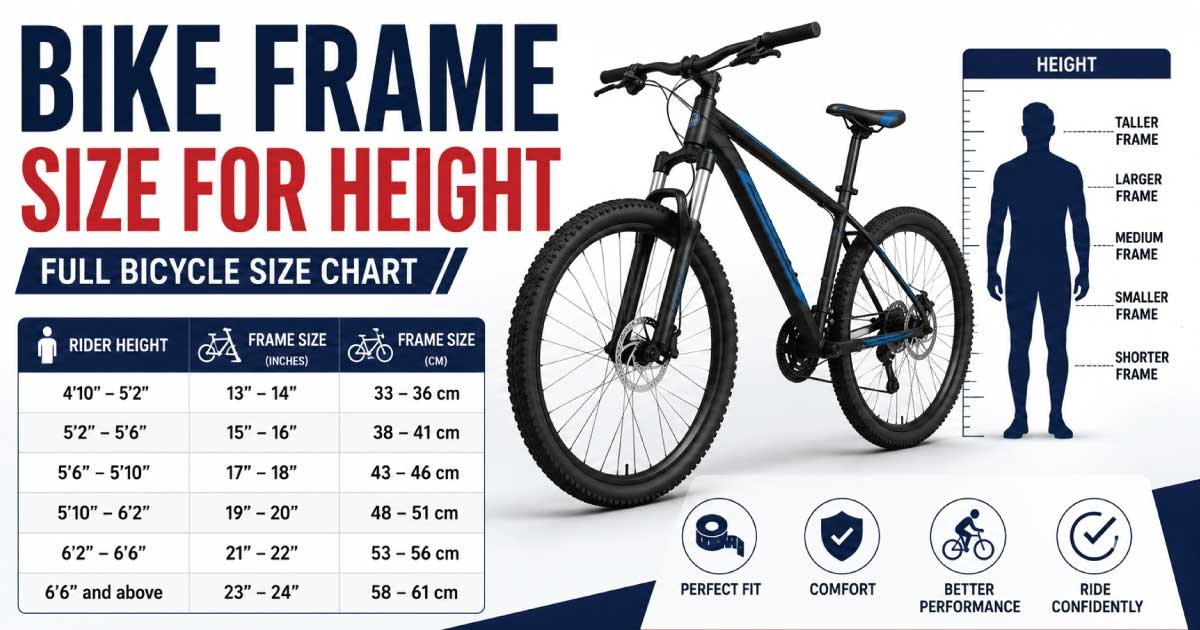
Choosing the right bike frame size for your height is one of the most important steps when buying a bicycle. A frame that is too small can feel cramped and uncomfortable, while a frame that is too large can be hard to control and even unsafe. Whether you are buying a road bike, mountain bike, hybrid, or commuter bike, the correct frame size directly affects your comfort, performance, and riding efficiency.
In this detailed guide, you will learn how bike frame sizing works, how to match frame size with your height, and how to use a simple size chart to choose the perfect fit.
Why Bike Frame Size Matters
Bike frame size is not just a technical detail—it defines your entire riding experience. The frame determines how your body aligns with the bike, how efficiently you can pedal, and how comfortably you can ride for long distances.
A properly fitted bike helps you:
- Maintain better posture and reduce back pain
- Improve pedaling efficiency and speed
- Avoid knee and joint strain
- Maintain better balance and control
- Ride longer distances without fatigue
On the other hand, an incorrect frame size can lead to discomfort, injuries, and poor riding performance. That’s why understanding sizing is essential before making a purchase.
How Bike Frame Size Is Measured
Bike frame size is usually measured in centimeters (cm) for road bikes and inches (in) for mountain bikes. The measurement refers to the length of the seat tube—the part of the frame from the crank (pedal center) to the top of the seat tube.
However, modern bike manufacturers sometimes label sizes as:
- XS, S, M, L, XL (especially for mountain and hybrid bikes)
Even though these labels seem simple, they still correspond to specific height ranges.
Bike Frame Size Chart According to Height
Choosing the correct bike frame size is essential for comfort, safety, and performance. A properly sized frame improves balance, reduces injury risk, and ensures efficient pedaling. Below are general size charts used for road, mountain, and hybrid bikes based on rider height.
🚴 Road Bike Size Chart
Road bikes are designed for speed and efficiency on paved surfaces. Frame size is measured in centimeters and matched with rider height to ensure aerodynamic positioning and proper riding posture.
Road Bike Size Chart
| Rider Height | Frame Size (cm) | Size Label |
|---|---|---|
| 4’10” – 5’2″ (147–157 cm) | 46–48 cm | XXS–XS |
| 5’2″ – 5’5″ (157–165 cm) | 48–51 cm | XS–S |
| 5’5″ – 5’8″ (165–173 cm) | 51–54 cm | S–M |
| 5’8″ – 5’11” (173–180 cm) | 54–56 cm | M–L |
| 5’11” – 6’2″ (180–188 cm) | 56–59 cm | L–XL |
| 6’2″ – 6’5″ (188–196 cm) | 59–62 cm | XL–XXL |
🚵 Mountain Bike Size Chart
Mountain bikes are built for off-road riding, requiring stability, control, and durability. Frame sizes are measured in inches and matched with rider height for better handling on rough terrain.
Mountain Bike Size Chart
| Rider Height | Frame Size (inches) | Size Label |
|---|---|---|
| 4’10” – 5’2″ (147–157 cm) | 13″–14″ | XS |
| 5’2″ – 5’6″ (157–168 cm) | 15″–16″ | S |
| 5’6″ – 5’10” (168–178 cm) | 17″–18″ | M |
| 5’10” – 6’1″ (178–185 cm) | 19″–20″ | L |
| 6’1″ – 6’4″ (185–193 cm) | 21″–22″ | XL |
| 6’4″+ (193+ cm) | 23″+ | XXL |
🚴 Hybrid Bike Size Chart
Hybrid bikes combine features of road and mountain bikes, offering balanced performance for commuting and casual riding. Their frame sizing falls between both categories for comfort and versatility.
Hybrid Bike Size Chart
| Rider Height | Frame Size |
|---|---|
| 4’10” – 5’3″ | 14″–15″ |
| 5’3″ – 5’6″ | 15″–16″ |
| 5’6″ – 5’9″ | 17″ |
| 5’9″ – 6’0″ | 18″–19″ |
| 6’0″ – 6’3″ | 20″–21″ |
| 6’3″+ | 22″+ |
How to Measure Your Height Correctly for Bike Size
Accurate height measurement is the first step in choosing the right bike frame size. Stand barefoot against a wall with straight posture and measure from the floor to the top of your head for best results.
However, height alone may not be sufficient. Inseam length provides a more accurate fit for proper riding comfort and control.
How to Measure Inseam
- Stand straight with legs slightly apart
- Place a book between your legs up to the crotch
- Measure from floor to top of the book
This helps determine seat height and frame clearance for safe riding.
Frame Size Based on Inseam (More Accurate Method)
Inseam measurement is widely used by professional cyclists because it provides better accuracy than height alone. It ensures optimal riding posture, comfort, and power transfer.
Simple Formulas
- Road bikes: Frame Size (cm) = Inseam (cm) × 0.67
- Mountain bikes: Frame Size (inches) = Inseam (inches) × 0.66
This method ensures precise bike fitting, improving efficiency, comfort, and long-term riding performance.
🚀 Read Our Latest Guide 👉 Pliers Size Chart: Complete Guide 2025 + PDF
Choosing the Right Bike Type Before Frame Size
Before selecting the correct frame size, it is important to first decide which type of bike you are going to use. Each bike category has a different design purpose, riding posture, and sizing approach, which directly affects the ideal frame size for comfort and performance.
🚴 Road Bikes
Road bikes are designed for speed, efficiency, and long-distance riding on smooth paved roads. They have lightweight frames and a more aggressive riding posture, which requires a more precise and accurate frame size selection.
- Lightweight and fast
- Best for paved roads
- Require a more precise fit
Because of their performance-focused design, even a small frame size difference can affect comfort, aerodynamics, and pedaling efficiency in road cycling.
🚵 Mountain Bikes
Mountain bikes are built for rough terrains, trails, and uneven surfaces where stability and control are more important than speed. Their geometry allows slightly more flexibility in frame sizing compared to road bikes.
- Designed for off-road trails
- Slightly smaller frames for better control
- More flexible sizing
Many riders prefer a slightly smaller frame in mountain bikes to improve maneuverability, balance, and handling on steep or technical terrain.
🚲 Hybrid Bikes
Hybrid bikes combine features of both road and mountain bikes, making them suitable for commuting, fitness riding, and casual use. They offer a balanced geometry that makes sizing easier for beginners.
- Mix of road and mountain bikes
- Comfortable for commuting
- Easier sizing for beginners
Hybrid bikes provide a more forgiving fit range, meaning small differences in frame size usually have less impact on comfort compared to specialized bikes.
How Bike Type Affects Frame Size Choice
Your chosen bike type can slightly change the ideal frame size even if your height remains the same. This is due to differences in geometry, riding posture, and intended usage.
Road bikes typically require a more precise fit, while mountain bikes allow slightly smaller frames for better control. Hybrid bikes fall in between, offering more flexibility and comfort for general use.
Final Thoughts
Choosing the correct bike frame size for your height is essential for comfort, safety, and performance. While size charts provide a great starting point, your inseam length, riding style, and bike type also play an important role.
A properly fitted bike will not only improve your riding experience but also reduce the risk of injury and fatigue. Whether you are a beginner or an experienced cyclist, taking the time to select the right frame size is always worth it.
If you are unsure between sizes, remember this simple rule: comfort and control always come before speed or appearance.
🚀 Read Our Latest Guide 👉 End Mill Size Chart: Complete Guide + Pdf