
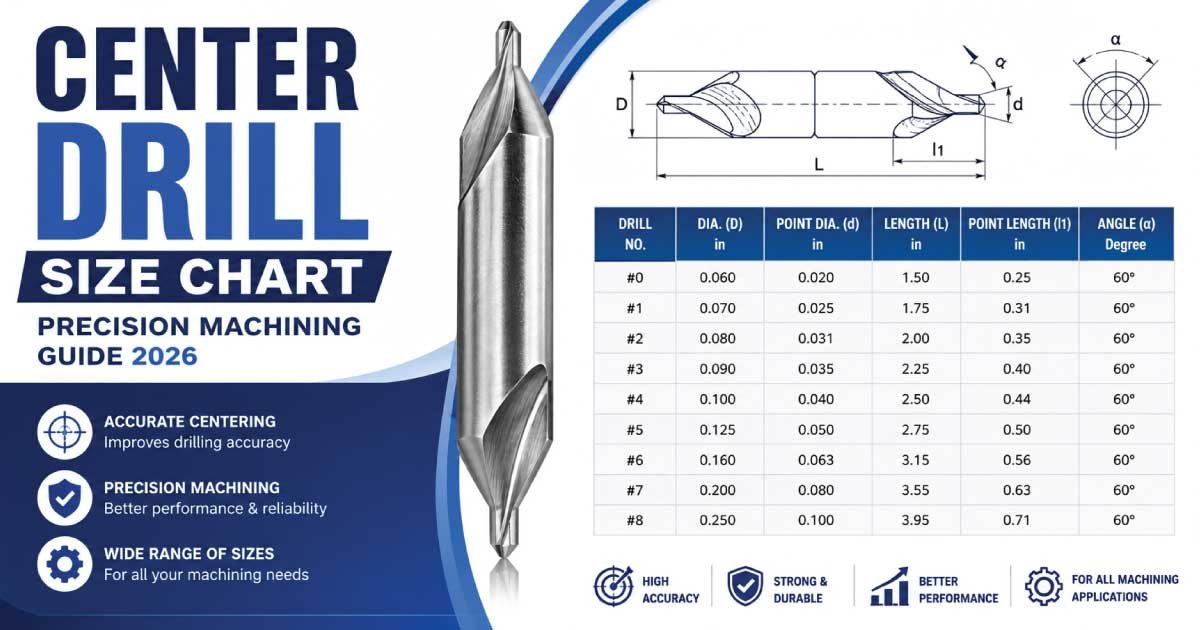
Center drills are small but extremely important tools in machining and metalworking. They are used to create precise starting holes for drilling operations and to ensure accurate alignment of larger drill bits. Without the correct center drill size, you may face misaligned holes, broken drill bits, or poor machining accuracy.
This detailed guide explains everything about the center drill size chart, including standard sizes, types, applications, selection methods, and best practices for machining operations.
What Is a Center Drill?
A center drill is a specialized cutting tool used to create an accurate starting point for drilling operations. It produces a small pilot hole along with a countersink shape, which helps guide larger drill bits and ensures precise alignment during machining processes.
Center drills are commonly used in:
- Lathe machines
- Milling machines
- Drilling operations
- CNC machining
- Tool rooms and workshops
They ensure that the main drill bit does not wander and stays perfectly centered, improving machining accuracy and reducing errors.
Why Center Drill Size Matters
Center drill size plays a critical role in machining accuracy, tool life, and overall production quality. The correct size ensures stable guidance for larger drill bits, while incorrect sizing can lead to serious machining defects and reduced efficiency.
Problems Caused by Incorrect Size
Using the wrong center drill size can negatively impact precision machining operations. It may cause misalignment, tool damage, and poor surface quality, especially in high-speed or CNC applications where accuracy is essential.
Incorrect size can lead to:
- Off-center holes
- Broken drill bits
- Poor surface finish
- Reduced tool life
- Misalignment in assemblies
Correct sizing ensures:
- Accurate hole starting point
- Better machining precision
- Reduced tool wear
- Improved production efficiency
How Center Drill Sizes Are Measured
Center drill sizes are standardized based on specific dimensions that define their cutting capability and application suitability. These measurements ensure consistency and accuracy in machining operations across different industries and tools.
1. Drill Diameter
The drill diameter refers to the size of the pilot hole created by the center drill. It determines the initial guide point for larger drill bits and affects overall drilling accuracy and stability.
2. Countersink Angle
The countersink angle defines the conical shape of the drill tip. Most center drills use a 60° or 90° angle depending on the machining requirement, ensuring proper alignment and smooth tool entry.
3. Body Diameter
The body diameter refers to the thickness of the center drill shank. It determines tool strength, rigidity, and resistance to bending during high-speed or heavy-duty machining operations.
Center drills are standardized into specific numbered sizes for consistent performance and easy selection in industrial applications.
Standard Center Drill Size Chart
Center drill sizes are classified into standard numbers that define their dimensions, strength, and application range. These standardized sizes are widely used in CNC machining, lathe operations, and precision engineering workshops for accurate hole starting and alignment.
Center Drill Size Chart Overview
| Size No. | Pilot Diameter (mm) | Body Diameter (mm) | Common Use |
|---|---|---|---|
| No. 0 | 0.5 mm | 3.15 mm | Small precision parts |
| No. 1 | 0.8 mm | 3.15 mm | Light machining work |
| No. 2 | 1.6 mm | 4.0 mm | General workshop use |
| No. 3 | 2.4 mm | 6.3 mm | Medium-duty machining |
| No. 4 | 3.15 mm | 8.0 mm | Heavy industrial use |
| No. 5 | 4.75 mm | 10.0 mm | Large machining operations |
Each size is selected based on material type, hole depth, and machining precision requirements.
Types of Center Drills
Center drills are available in different types depending on application, material hardness, and machining requirements. Each type is designed to provide stability, accuracy, and durability in different working conditions.
1. Standard Center Drills
Standard center drills are the most commonly used type in general machining. They are suitable for creating precise starting points in metal, plastic, and light engineering materials.
2. Heavy-Duty Center Drills
Heavy-duty center drills are designed for tough materials and industrial applications. They offer higher strength and durability, making them suitable for high-load machining and continuous production environments.
3. Carbide Center Drills
Carbide center drills are made from extremely hard materials for high-speed and precision machining. They provide excellent wear resistance and are commonly used in CNC machines and advanced manufacturing systems.
How to Choose the Right Center Drill Size
Selecting the correct center drill size is essential for achieving accurate machining results, reducing tool wear, and ensuring proper alignment of subsequent drilling operations.
1. Material Type
Hard materials require stronger and more rigid center drills, while soft materials can be machined using standard types without risk of excessive wear or breakage.
2. Drill Diameter Requirement
Choose a size that matches the required pilot hole diameter. A proper match ensures accurate centering and smooth guidance for larger drill bits.
3. Machine Type
CNC machines may require carbide or precision center drills, while manual machines can operate effectively with standard or general-purpose tools.
4. Depth and Precision
Deeper or high-precision holes require stronger center drills with higher rigidity to maintain alignment and prevent deviation during machining.
5. Production Volume
High-volume production environments benefit from durable, wear-resistant center drills that can maintain accuracy over long machining cycles without frequent replacement.
Applications of Center Drills
Center drills are widely used in industrial and manufacturing environments where precision and accuracy are essential for machining operations.
Machining Industry
Center drills are essential in machining processes to ensure accurate hole placement and proper alignment before using larger drill bits.
Applications:
- Lathe operations
- Milling machines
- CNC machining
Tool Rooms and Workshops
In workshops, center drills are used for preparing workpieces and ensuring accurate drilling in metal fabrication and repair tasks.
Applications:
- Metal fabrication
- Tool making
- Repair work
Manufacturing Industry
Center drills are used in mass production environments to maintain consistency and precision in drilled components and assemblies.
Applications:
- Automotive parts
- Industrial components
- Precision assemblies
📏 View Our Detailed Size Chart 👉 Brake Pad Size Chart: Complete Guide + PDF
Advantages of Center Drills
Center drills offer several important advantages that improve machining accuracy, efficiency, and tool life in industrial applications.
- High precision hole starting
- Reduced drill wandering
- Improved tool life
- Better surface finish
- Increased machining efficiency
Maintenance and Safety Tips
Proper care and maintenance of center drills ensure longer tool life and consistent machining performance. Regular inspection helps prevent breakage and improves safety during operations.
What to Check During Use
Regular checks help maintain accuracy and prevent tool failure during high-speed or heavy-duty machining operations.
- Tool wear or dull edges
- Cracks or damage
- Proper alignment in machine
- Heat buildup during operation
Damaged or worn center drills should be replaced immediately to maintain machining accuracy and safety.
Standard Center Drill Size Chart
Below is a commonly used center drill size chart in machining and manufacturing industries. It helps engineers, machinists, and technicians select the correct size for accurate hole starting, improved alignment, and reduced tool wear in drilling operations.
Center Drill Size Chart (Metric & Imperial Reference)
| Center Drill Size | Pilot Drill Diameter (mm) | Body Diameter (mm) | Countersink Angle | Typical Use |
|---|---|---|---|---|
| No. 00 | 0.5 mm | 3.15 mm | 60° | Very small precision parts |
| No. 0 | 0.8 mm | 4.0 mm | 60° | Small electronic components |
| No. 1 | 1.0 mm | 5.0 mm | 60° | Light machining work |
| No. 2 | 1.6 mm | 6.3 mm | 60° | General workshop use |
| No. 3 | 2.5 mm | 8.0 mm | 60° | Medium machining operations |
| No. 4 | 3.15 mm | 10.0 mm | 60° | Heavy-duty machining |
| No. 5 | 4.0 mm | 12.5 mm | 60° | Large industrial components |
| No. 6 | 5.0 mm | 16.0 mm | 60° | Very heavy machining work |
Understanding Center Drill Components
A center drill is made up of three main parts, and each part plays a critical role in ensuring accuracy, stability, and proper guidance during drilling operations in machining and manufacturing processes.
1. Pilot Tip
The pilot tip is the small cutting end of the center drill that creates the initial hole. It ensures accurate positioning and prevents the main drill bit from wandering during the starting phase of drilling operations.
2. Countersink Section
The countersink section forms a conical seat around the pilot hole. This shape helps guide larger drill bits into the correct position, improving alignment, reducing vibration, and increasing overall machining accuracy during drilling processes.
3. Shank
The shank is the part of the center drill that is held in the drill chuck or machine spindle. It provides stability and ensures the tool remains securely fixed during high-speed or heavy-duty machining operations.
Each part works together to ensure precision, stability, and smooth drilling performance.
📏 View Our Detailed Size Chart 👉 AWG Size Chart: Complete Guide + PDF
Types of Center Drills
Center drills are available in different types depending on material hardness, machining requirements, and production needs. Each type is designed to improve accuracy, durability, and efficiency in specific industrial applications.
1. Standard Center Drill
The standard center drill is the most commonly used type in general machining. It features a 60° angle and is suitable for creating accurate starting points in light to medium engineering and workshop applications.
2. Combined Drill and Countersink
This type performs drilling and countersinking in a single operation. It saves time in production processes, improves efficiency, and is widely used in manufacturing environments where speed and accuracy are both important.
3. Heavy-Duty Center Drill
Heavy-duty center drills are designed for large workpieces and high-load machining applications. They feature a stronger body construction, making them suitable for industrial environments where durability and stability are essential.
4. Carbide-Tipped Center Drill
Carbide-tipped center drills offer high wear resistance and long tool life. They are commonly used in CNC machining and hard material applications where precision, heat resistance, and cutting efficiency are required.
Materials Used in Center Drills
Center drills are manufactured from different materials to achieve precision cutting, durability, and performance in various machining conditions. Each material is selected based on hardness, heat resistance, and application requirements in industrial and workshop environments.
High-Speed Steel (HSS)
High-Speed Steel is the most commonly used material for center drills. It offers a good balance between cost, durability, and cutting performance, making it suitable for general-purpose machining and everyday workshop applications.
Cobalt Steel
Cobalt steel center drills provide higher heat resistance and improved hardness compared to standard HSS. They are commonly used for machining tougher metals and maintaining cutting performance under high-temperature conditions.
Carbide
Carbide center drills are extremely hard and durable tools used in CNC machining and high-speed operations. They offer excellent wear resistance and are ideal for precision work on hard materials and continuous production environments.
📏 View Our Detailed Size Chart 👉 Roller Bearing Size Chart: Complete Guide + PDF
How to Choose the Right Center Drill Size
Selecting the correct center drill size is essential for achieving accurate alignment, reducing tool wear, and ensuring smooth drilling operations. The choice depends on material type, machine capability, and the size of the final drilling operation.
1. Workpiece Size
Larger workpieces generally require larger and stronger center drills to ensure proper stability and accurate centering during the drilling process without deflection or misalignment.
2. Main Drill Size
The center drill must be selected according to the main drill diameter. The pilot hole should properly guide the main drill to maintain accuracy and prevent wandering during machining.
3. Material Type
Hard materials require stronger and more wear-resistant center drills such as cobalt or carbide, while soft materials can be machined effectively using standard HSS tools.
4. Machine Type
Different machines require different tool strengths. CNC machines often use carbide center drills for high-speed precision work, while manual machines typically use HSS tools for general applications.
5. Precision Requirement
High-precision machining requires smaller and more accurate center drills to ensure exact positioning and reduce errors during the initial drilling process.
Simple Selection Rule
A general workshop guideline helps simplify center drill selection and ensures consistent results in machining operations across different materials and applications.
- Center drill size should be proportional to the main drill diameter
- Always use a smaller pilot hole than the final drill size
- For deep drilling, use stronger and larger center drills
These rules help improve accuracy, reduce tool damage, and ensure better performance in both manual and CNC machining operations.
Step-by-Step Guide to Using a Center Drill
Using a center drill correctly is essential for precise machining results. Each step must be followed carefully to ensure accurate alignment, reduced tool wear, and smooth drilling performance in metalworking, CNC operations, and workshop environments requiring high accuracy and stability.
Step 1: Secure the Workpiece
Clamp the workpiece firmly using a vise or fixture to prevent movement. A stable setup ensures accurate centering, avoids vibration, and maintains precision during drilling operations, especially when working on metal parts or high-accuracy machining applications.
Step 2: Select Correct Size
Choose the correct center drill size according to material type and required hole diameter. Proper selection ensures accurate pilot formation, reduces tool stress, and improves alignment for the main drill bit during machining processes in workshops or CNC machines.
Step 3: Set Machine Speed
Set the machine to a moderate RPM suitable for the material being drilled. Correct speed improves cutting accuracy, prevents overheating, reduces tool wear, and ensures smooth performance during center drilling in both manual and automated machining operations.
Step 4: Apply Lubrication
Apply cutting oil or lubricant before drilling to reduce heat, friction, and tool wear. Proper lubrication improves cutting efficiency, extends tool life, and ensures smoother surface finish during center drilling in metalworking and manufacturing applications.
Step 5: Start Drilling
Begin drilling slowly to create a shallow conical hole using the center drill. This step ensures accurate positioning and provides a stable guide point for the main drill bit in later machining operations.
Step 6: Follow with Main Drill
Use the created center hole as a guide for the main drill bit. This ensures accurate alignment, prevents wandering, and improves overall machining precision, resulting in cleaner and more consistent hole quality in the final workpiece.
Common Mistakes When Using Center Drills
Mistakes during center drilling can reduce machining accuracy, damage tools, and affect surface quality. Avoiding these errors is essential for maintaining precision, improving tool life, and ensuring consistent performance in mechanical and industrial drilling operations.
1. Using Wrong Size
Using an incorrect center drill size leads to poor alignment and inaccurate hole starting. This affects the main drilling process, reduces precision, and can cause misaligned holes in mechanical components or CNC machining operations.
2. Skipping Lubrication
Not using lubrication increases heat and friction during drilling. This causes rapid tool wear, poor surface finish, and may damage both the center drill and workpiece, especially in metal cutting applications requiring smooth performance.
3. Excessive Pressure
Applying too much force can break the delicate tip of the center drill. Controlled pressure is necessary to maintain accuracy, ensure smooth cutting, and extend tool life during machining operations in workshops and manufacturing industries.
4. Wrong RPM Selection
Incorrect spindle speed reduces machining efficiency and accuracy. High speed causes overheating, while low speed affects cutting performance, leading to poor hole quality and increased tool wear during drilling operations.
5. Reusing Worn Tools
Using worn or damaged center drills reduces accuracy and increases error rates. Sharp tools are essential for precise machining, smooth cutting, and consistent performance in industrial and workshop drilling applications.
Applications of Center Drills
Center drills are widely used in industries where precision and accurate hole starting are essential. They ensure proper alignment and improve machining quality across CNC systems, manual machines, and large-scale manufacturing operations.
⚙️ CNC Machining
Center drills are used in CNC machines for precise hole starting and automated drilling processes. They ensure accuracy, repeatability, and smooth operation in high-speed manufacturing environments requiring tight tolerances.
🔧 Lathe Operations
In lathe machining, center drills help align rotating workpieces and support tailstock drilling. They ensure stable centering, reduce vibration, and improve machining accuracy during turning and shaping processes.
🏭 Manufacturing Industry
Manufacturing industries use center drills for mass production of components. They ensure consistent hole positioning, improve assembly efficiency, and maintain uniform quality across large production batches of mechanical parts.
🛠️ Tool Rooms
Tool rooms use center drills for precision engineering tasks, jig alignment, and fixture setup. They provide accurate starting points for detailed machining operations requiring high precision and reliability.
Advantages of Using Proper Center Drill Size
Using the correct center drill size improves machining performance, reduces errors, and enhances tool life. It ensures better alignment, higher accuracy, and efficient production in industrial and workshop environments requiring precision work.
- Accurate hole positioning and centering
- Improved machining quality and stability
- Reduced risk of tool breakage
- Better surface finish and consistency
- Increased production efficiency and reliability
Maintenance of Center Drills
Proper maintenance ensures longer tool life, consistent accuracy, and safe operation. Regular care prevents damage, improves performance, and maintains efficiency in machining processes used in workshops, CNC machines, and industrial manufacturing systems.
- Clean tools after every use
- Store in protective cases safely
- Avoid dropping or impact damage
- Inspect cutting edges regularly
- Use proper lubrication during operation
Difference Between Center Drill and Regular Drill
Center drills and regular drills serve different purposes in machining operations. Understanding their differences helps in selecting the correct tool for accurate hole starting and proper full-depth drilling applications.
Center Drill
Center drills are short, rigid tools used for starting holes with high precision. They create accurate guide points, prevent drill wandering, and improve alignment for larger drill bits in machining operations.
Regular Drill
Regular drills are longer cutting tools used for making full-depth holes. They are less rigid for starting operations and are best suited for general drilling rather than precise hole centering tasks.
Final Thoughts
The center drill size chart is an essential reference for machinists, engineers, and workshop professionals. Choosing the right center drill ensures accuracy, prevents tool damage, and improves overall machining quality.
While standard charts provide a reliable starting point, always consider:
- Material type
- Hole size requirements
- Machine type
- Precision level needed
A correctly selected center drill is the foundation of precise drilling operations and plays a vital role in every machining project.