
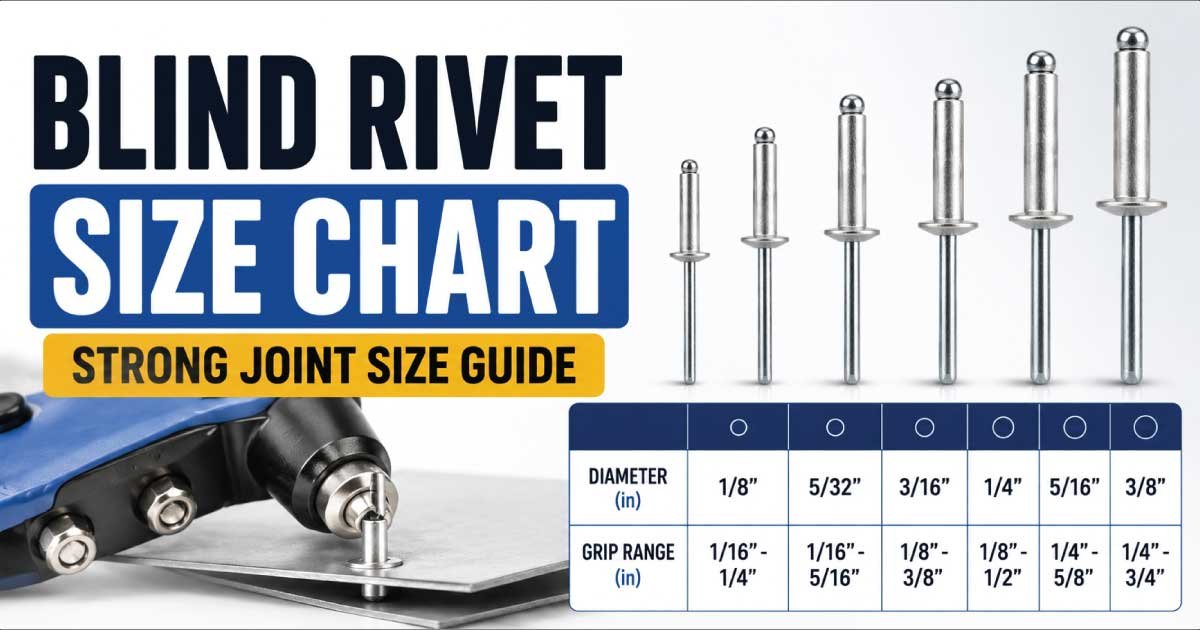
Blind rivets are one of the most widely used fastening solutions in sheet metal fabrication, automotive assembly, construction, HVAC systems, and DIY projects. They are strong, easy to install from one side (hence “blind”), and provide a permanent joint without needing welding or threading.
However, selecting the correct blind rivet size is extremely important. If the rivet is too small, the joint may fail under load. If it is too large, it may damage the material or not set properly. This is why understanding the blind rivet size chart is essential for engineers, technicians, and fabricators.
In this complete guide, you will learn blind rivet sizing, types, measurements, standard size charts, grip range, hole size selection, and practical applications.
What Is a Blind Rivet?
A blind rivet (also called a pop rivet) is a mechanical fastener used to join two or more materials when access is only available from one side. It is widely used in metal fabrication, automotive work, and construction where rear-side access is limited or impossible.
It consists of a rivet body (shell) and a mandrel (pulling pin). When the mandrel is pulled using a rivet gun, the rivet expands and clamps the materials tightly together, creating a strong permanent joint.
Why it is called “blind”
It is called a “blind” rivet because installation is possible from only one side of the workpiece. Unlike bolts or screws, it does not require access to both sides, making it ideal for closed or restricted spaces in assemblies.
Why Blind Rivet Size Matters
Blind rivet size directly affects joint strength, durability, and safety. Selecting the wrong size can weaken the connection, reduce performance, and cause structural failure in mechanical or sheet metal assemblies under stress or vibration.
Problems Caused by Incorrect Size
Incorrect blind rivet sizing can lead to serious installation and performance issues. It may result in weak joints, deformation of materials, or complete fastening failure, especially in high-vibration or load-bearing applications where stability is essential.
Incorrect sizing can cause:
- Loose joints
- Material deformation
- Rivet breakage
- Vibration failure
- Water or air leakage (in sealed applications)
Correct sizing ensures:
- Strong mechanical grip
- Proper load distribution
- Long-lasting fastening
- Vibration resistance
- Professional finish
How Blind Rivet Sizes Are Measured
Blind rivet sizing is based on key dimensions that determine fit, strength, and application suitability. The two most important measurements are diameter and grip range, both of which must match the material thickness and hole size.
1. Diameter (Body Size)
The diameter refers to the thickness of the rivet body that fits into the drilled hole. It determines the hole size required and affects the overall strength of the joint in mechanical assemblies.
Common diameters include:
- 2.4 mm (3/32″)
- 3.2 mm (1/8″)
- 4.0 mm (5/32″)
- 4.8 mm (3/16″)
- 6.4 mm (1/4″)
2. Grip Range
Grip range refers to the total thickness of materials the rivet can securely hold. It is essential for ensuring the rivet expands correctly and maintains a tight, reliable fastening without loosening or failure.
Example:
3.2 mm rivet with 1.5–3.5 mm grip range
If the grip range is incorrect, the rivet will either not set properly or will fail under load.
Standard Blind Rivet Size Chart
The blind rivet size chart is used in industrial, automotive, and workshop applications to select the correct rivet based on diameter, drill size, grip range, and material type for safe and effective fastening.
Blind Rivet Size Chart Overview
This chart provides standard blind rivet sizes in both metric and imperial units. Each size is matched with recommended drill size, grip range, and typical applications for accurate selection in different engineering tasks.
| Rivet Diameter | Inch Size | Recommended Drill Size | Grip Range (mm) | Common Use |
|---|---|---|---|---|
| 2.4 mm | 3/32″ | 2.5 mm | 0.5 – 3.0 | Electronics, thin sheets |
| 3.2 mm | 1/8″ | 3.3 mm | 0.5 – 4.5 | Light sheet metal |
| 4.0 mm | 5/32″ | 4.1 mm | 1.0 – 6.0 | HVAC, aluminum panels |
| 4.8 mm | 3/16″ | 4.9 mm | 1.5 – 8.0 | Automotive, structural work |
| 6.4 mm | 1/4″ | 6.5 mm | 3.0 – 12.0 | Heavy-duty construction |
Understanding Blind Rivet Grip Range
Grip range is one of the most important factors in blind rivet selection. It determines whether the rivet will properly expand and securely hold materials of a specific total thickness.
How Grip Range Works
Grip range refers to the total combined thickness of all materials being joined. If the grip range does not match the material thickness, the rivet will not set correctly and may fail under stress or vibration.
Example:
- Sheet 1 = 2 mm
- Sheet 2 = 3 mm
- Total thickness = 5 mm
You must choose a rivet with a grip range that includes 5 mm.
Key Rule
Always select a rivet where your material thickness falls in the middle of the grip range, not at the extreme limits. This ensures better expansion, stronger grip, and longer-lasting joint performance.
Types of Blind Rivets
Blind rivets are designed in different types to suit various industrial, mechanical, and structural applications. Each type offers specific benefits such as strength, sealing ability, or flexibility depending on material and working conditions.
1. Open-End Blind Rivets
Open-end blind rivets are the most commonly used type in general applications. They are ideal for fastening metal sheets and provide reliable performance in everyday fabrication and assembly work where sealing is not a major requirement.
2. Closed-End Blind Rivets
Closed-end blind rivets are designed for waterproof and airtight applications. They prevent moisture, air, and dust leakage, making them suitable for HVAC systems, marine environments, and sealed structural assemblies requiring high protection.
3. Structural Blind Rivets
Structural blind rivets are high-strength fasteners used in heavy-duty applications. They can replace bolts in some cases and are designed to withstand high loads, vibration, and stress in industrial and structural engineering projects.
4. Multi-Grip Rivets
Multi-grip rivets are designed to cover a wide range of material thicknesses. They reduce the need for multiple rivet sizes, making them cost-effective and practical in applications where material thickness varies or is inconsistent.
5. Peel-Type Rivets
Peel-type rivets are used for soft or delicate materials like plastics and wood. When set, they expand into multiple legs, distributing pressure evenly and preventing damage to fragile surfaces during fastening.
📏 View Our Detailed Size Chart 👉 Water Tank Size Chart: Complete Guide + PDF
Blind Rivet Materials
Blind rivets are manufactured using different materials based on strength requirements, environmental conditions, and application type. Each material provides specific advantages in terms of durability, corrosion resistance, and conductivity.
1. Aluminum Rivets
Aluminum rivets are lightweight and corrosion resistant, making them suitable for general-purpose applications. They are widely used in industries where weight reduction and moderate strength are important factors.
2. Steel Rivets
Steel rivets offer high strength and durability, making them suitable for structural applications. However, they may rust if not properly coated, so they are often used in protected or indoor environments.
3. Stainless Steel Rivets
Stainless steel rivets provide excellent strength and corrosion resistance. They are ideal for marine, outdoor, and high-moisture environments where long-term durability and reliability are essential.
4. Copper Rivets
Copper rivets offer good electrical conductivity and corrosion resistance. They are commonly used in electrical applications where conductivity and stable performance are more important than high mechanical strength.
How to Choose the Right Blind Rivet Size
Selecting the correct blind rivet size is essential for ensuring strong, reliable, and long-lasting fastening. The choice depends on material thickness, load conditions, material type, and correct hole sizing for proper installation.
1. Measure Material Thickness
Start by measuring the total thickness of all materials being joined. Accurate measurement ensures the rivet fits properly and expands correctly during installation for a secure joint.
2. Select Grip Range
Choose a rivet whose grip range fully covers the total material thickness. Proper grip range ensures correct expansion and prevents loose or failed fastening under load or vibration.
3. Choose Diameter
Rivet diameter depends on application strength requirements. Smaller diameters are used for thin sheets, while larger diameters are selected for heavy-load or structural applications requiring higher strength and stability.
4. Check Material Type
Material selection depends on environment and load conditions. Stainless steel is used for outdoor applications, aluminum for lightweight use, and steel for heavy-duty structural applications requiring maximum strength.
5. Consider Hole Size
Correct hole size is critical for proper installation. The drilled hole must match the rivet diameter exactly to ensure tight fitting, strong grip, and proper expansion during fastening.
Blind Rivet Hole Size Chart
Correct hole size ensures strong fastening, proper expansion, and long-term reliability. If the hole is too large or too small, it can weaken the joint or prevent correct installation.
| Rivet Size | Drill Size |
|---|---|
| 2.4 mm | 2.5 mm |
| 3.2 mm | 3.3 mm |
| 4.0 mm | 4.1 mm |
| 4.8 mm | 4.9 mm |
| 6.4 mm | 6.5 mm |
Too large a hole reduces strength, while too small a hole prevents proper installation and can damage the rivet or surrounding material during fitting.
Step-by-Step Blind Rivet Installation
Proper installation of blind rivets is essential for achieving strong, reliable, and long-lasting joints. Each step must be performed carefully using the correct tools and sizes to ensure proper expansion, alignment, and secure fastening between materials.
Step 1: Drill the Hole
Drill a hole using the correct size based on the rivet diameter. Accurate drilling ensures proper fitting, prevents looseness, and allows the rivet to expand correctly during installation for maximum joint strength and stability.
Step 2: Insert Rivet
Insert the blind rivet into the aligned holes of the materials being joined. Ensure it sits properly without tilting, as correct positioning is necessary for even expansion and strong mechanical bonding during fastening.
Step 3: Use Rivet Gun
Place the mandrel into the rivet gun and squeeze the handle. The tool pulls the mandrel, creating force that begins the expansion process of the rivet body inside the drilled hole for secure fastening.
Step 4: Expansion
As the mandrel is pulled, the rivet body expands behind the material. This expansion clamps the sheets tightly together, creating a strong mechanical joint capable of handling load, vibration, and operational stress.
Step 5: Mandrel Breaks
Once the rivet is fully set, the mandrel snaps off automatically. This completes the installation process, leaving a secure, permanent fastening with a clean finish and strong holding capability.
📏 View Our Detailed Size Chart 👉 Angle Iron Size Chart: Complete Guide + PDF
Common Mistakes When Using Blind Rivets
Many installation problems occur due to incorrect selection or poor technique. These mistakes reduce joint strength, durability, and safety, especially in structural or load-bearing applications where proper fastening is critical.
1. Wrong Grip Range
Using a rivet with an incorrect grip range leads to weak or failed joints. The rivet may not expand properly, resulting in loose fastening or complete structural failure under load or vibration.
2. Incorrect Hole Size
Incorrect hole size affects rivet alignment and strength. A hole that is too large reduces grip, while a too-small hole prevents proper insertion and expansion, causing installation issues or material damage.
3. Overloading Small Rivets
Using small rivets for heavy loads can result in structural failure. Each rivet has a load limit, and exceeding it can cause breakage, loosening, or permanent joint damage in mechanical systems.
4. Using Wrong Material
Incorrect material selection can lead to corrosion, rust, or breakage. Environmental conditions must be considered to ensure long-term durability and reliability of the rivet in specific applications.
5. Poor Installation Technique
Improper use of rivet guns or misalignment during installation results in loose or uneven fastening. This reduces joint strength and can cause premature failure under stress or vibration.
Applications of Blind Rivets
Blind rivets are widely used in many industries due to their ease of installation, strong holding capability, and ability to work with one-sided access in complex assemblies.
🚗 Automotive Industry
Blind rivets are used in vehicle manufacturing for joining panels and interior components where welding or bolting is not practical.
Applications:
- Body panels
- Interior fittings
- Trim assembly
🏗️ Construction Industry
In construction, blind rivets are used for securing structural elements and sheet materials in buildings and infrastructure projects.
Applications:
- Steel frames
- Roofing sheets
- HVAC ducting
✈️ Aerospace Industry
Aerospace applications require lightweight and strong fastening solutions, making blind rivets ideal for aircraft assembly and structural components.
Applications:
- Aircraft panels
- Lightweight structures
⚙️ Manufacturing
Blind rivets are widely used in manufacturing for assembling sheet metal parts and industrial equipment efficiently and securely.
Applications:
- Sheet metal fabrication
- Equipment assembly
🏠 Home DIY Projects
Blind rivets are also popular in household repairs and DIY tasks where quick and strong fastening is needed without complex tools.
Applications:
- Furniture repair
- Metal sheet joining
Advantages of Blind Rivets
Blind rivets offer several important advantages that make them widely used in industrial, automotive, and construction applications where efficiency and reliability are required.
- Easy installation with simple tools
- One-sided access required
- Strong and permanent joints
- Low cost and economical solution
- Fast assembly process
- High vibration resistance
📏 View Our Detailed Size Chart 👉 Milling Cutter Size Chart: Complete Guide + PDF
Maintenance and Inspection Tips
Although blind rivets are permanent fasteners, regular inspection is important in safety-critical applications to ensure continued structural integrity and prevent failure over time.
What to Check During Inspection
Routine checks help identify early signs of damage or wear, ensuring safe and reliable performance of riveted joints in mechanical and structural systems.
- Loose rivets
- Corrosion
- Cracks in material
- Deformation around joints
Damaged or failing rivets should always be replaced immediately to maintain structural safety, performance, and long-term reliability of the assembly.
Final Thoughts
The blind rivet size chart is an essential reference for anyone working with sheet metal, fabrication, or mechanical assembly. Choosing the right rivet size ensures strong, durable, and professional-quality fastening.
Remember:
- Match diameter with load requirement
- Match grip range with material thickness
- Always use correct drill size
A properly selected blind rivet improves safety, efficiency, and long-term performance in any project.