
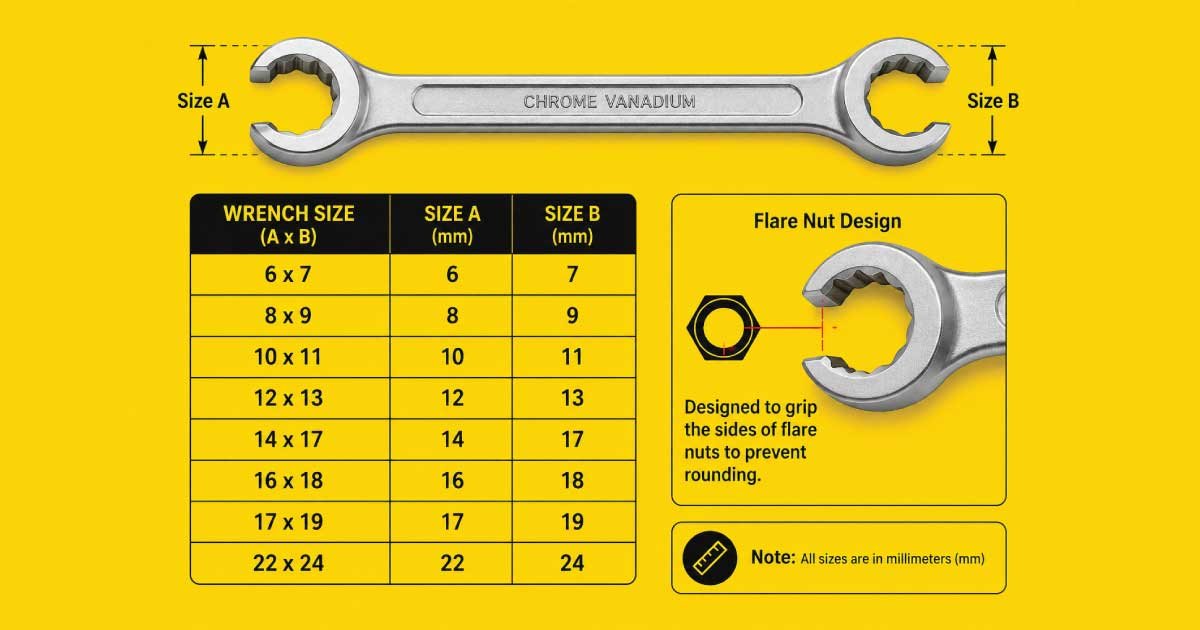
When working on brake lines, fuel lines, hydraulic systems, air conditioning units, or plumbing connections, using the correct wrench is essential. Standard open-end wrenches can easily slip and round off soft fittings, leading to costly repairs and frustrating maintenance work. This is where a flare nut wrench becomes invaluable.
A flare nut wrench is specifically designed to grip more sides of a fitting than a traditional open-end wrench, providing better contact and reducing the risk of damage. Whether you’re a professional mechanic, HVAC technician, plumber, or DIY enthusiast, understanding flare nut wrench sizes can help you choose the right tool for every job.
This complete flare nut wrench size chart guide covers common sizes, applications, wrench types, measurement methods, and expert tips for selecting the proper flare nut wrench.
What Is a Flare Nut Wrench?
A flare nut wrench, sometimes called a line wrench, is a specialized hand tool designed for tightening and loosening flare nuts found on tubing and hydraulic fittings.
Unlike an open-end wrench that contacts only two sides of a fastener, a flare nut wrench surrounds most of the nut while still allowing access to tubing passing through the fitting.
This design provides:
- Better grip
- Reduced slipping
- Less fastener damage
- Improved torque transfer
- Safer operation
Because flare nuts are often made from softer metals such as brass, copper, or aluminum, a flare nut wrench is usually the preferred tool.
Why Use a Flare Nut Wrench?
A flare nut wrench is specially designed for working on soft metal fittings, especially in brake lines, fuel lines, and hydraulic systems. Unlike standard open-end wrenches, it provides a tighter and more secure grip that reduces the risk of damaging delicate fittings. Many technicians realize its importance after experiencing slipping, rounding, or damage caused by using incorrect tools on sensitive connections.
1. Better Grip
A flare nut wrench is designed to grip more surface area of the fitting compared to a standard wrench. It typically has a partially enclosed design that allows it to contact multiple sides of the nut. This improved grip reduces slipping, provides better control, and makes it easier to loosen or tighten fittings without applying excessive force.
2. Prevents Rounded Nuts
One of the most common problems when using incorrect tools is rounding off the edges of nuts or fittings. Once a flare nut becomes rounded, it is extremely difficult to remove and may require cutting or replacement. A flare nut wrench minimizes this risk by distributing force evenly, helping preserve the shape and integrity of the fitting during maintenance work.
3. Improves Safety
Brake and hydraulic systems rely on tightly sealed fittings to maintain pressure and prevent leaks. Damaging these fittings can lead to fluid loss, reduced braking performance, or complete system failure. Using a flare nut wrench helps protect these critical connections, ensuring the system remains safe, reliable, and properly sealed under pressure during operation.
4. Saves Time
Using the correct flare nut wrench significantly reduces repair time because it grips securely and prevents repeated slipping. This makes loosening or tightening fittings faster and easier, especially in tight or hard-to-reach spaces. It also reduces frustration, avoids rework caused by damaged parts, and improves overall efficiency during mechanical repairs and maintenance tasks.
Standard SAE Flare Nut Wrench Size Chart
The following chart shows common SAE flare nut wrench sizes used in automotive and industrial applications.
| Wrench Size | Common Application |
|---|---|
| 1/4″ | Small tubing fittings |
| 5/16″ | Fuel systems |
| 3/8″ | Brake lines |
| 7/16″ | Hydraulic fittings |
| 1/2″ | Fuel and oil lines |
| 9/16″ | Automotive repairs |
| 5/8″ | Hydraulic systems |
| 11/16″ | Industrial equipment |
| 3/4″ | Large tubing systems |
| 7/8″ | Heavy-duty machinery |
These sizes are commonly included in professional flare nut wrench sets.
Metric Flare Nut Wrench Size Chart
Metric fittings are increasingly common in modern vehicles and imported equipment.
| Wrench Size | Common Application |
|---|---|
| 8 mm | Small brake fittings |
| 10 mm | Fuel lines |
| 11 mm | Brake systems |
| 12 mm | Hydraulic lines |
| 13 mm | Engine components |
| 14 mm | Fuel systems |
| 15 mm | Hydraulic equipment |
| 17 mm | Industrial machinery |
| 19 mm | Large fittings |
| 22 mm | Heavy equipment |
Many mechanics keep both metric and SAE flare nut wrench sets to handle a variety of vehicles and machinery.
Most Common Flare Nut Wrench Sizes
Flare nut wrenches are specially designed tools used for gripping soft metal fittings without rounding or damaging them. They are widely used in automotive, hydraulic, and fuel system work where precision and a secure grip are essential. Different sizes are used depending on vehicle type and system requirements.
1. 10 mm Flare Nut Wrench
The 10 mm flare nut wrench is one of the most commonly used metric sizes in automotive repair work. It is especially important for brake and fuel system maintenance in modern and imported vehicles.
Common uses include:
- Brake bleeder screws
- Brake line fittings
- Fuel system components
- Imported vehicles
Most automotive technicians use this size regularly.
2. 11 mm Flare Nut Wrench
The 11 mm size is widely used in brake system servicing and hydraulic connections. It is a standard tool in many professional automotive workshops due to its frequent application.
Applications include:
- Brake line fittings
- Master cylinder connections
- Hydraulic components
Its popularity makes it a staple in automotive repair shops.
3. 3/8 Inch Flare Nut Wrench
The 3/8 inch flare nut wrench is a common SAE size used primarily in older American vehicles and certain industrial systems where imperial measurements are still standard.
Common uses include:
- Brake tubing
- Fuel lines
- Hydraulic fittings
4. 7/16 Inch Flare Nut Wrench
The 7/16 inch flare nut wrench is widely used in fuel, hydraulic, and industrial applications where slightly larger fittings are required.
Widely used in:
- Fuel delivery systems
- Hydraulic equipment
- Industrial machinery
Its versatility makes it one of the most useful SAE flare nut sizes.
Types of Flare Nut Wrenches
Flare nut wrenches come in different designs to suit various mechanical, automotive, and plumbing applications. Each type is built to improve grip, accessibility, and efficiency when working with delicate fittings that can easily be damaged by standard open-end wrenches. Choosing the right type depends on the job conditions and required flexibility.
1. Standard Flare Nut Wrench
The standard flare nut wrench is the most commonly used type in workshops and repair environments. It features a simple, solid design that provides a strong grip on fittings while reducing the risk of rounding soft metal connections.
Benefits include:
- Simple design
- Easy to use
- Affordable
- Available in many sizes
Suitable for most automotive and plumbing tasks.
2. Double-Ended Flare Nut Wrench
The double-ended flare nut wrench features two different sizes on each end, making it a practical and space-saving option for technicians who work with multiple fitting sizes.
Advantages:
- Greater versatility
- Reduced toolbox space
- Convenient for field repairs
Popular among professional mechanics.
3. Ratcheting Flare Nut Wrench
The ratcheting flare nut wrench includes a built-in ratcheting mechanism that allows continuous turning without removing the tool from the fitting, improving speed and efficiency.
Benefits include:
- Faster operation
- Less repositioning
- Improved productivity
Ideal for confined workspaces.
4. Flexible Head Flare Nut Wrench
The flexible head flare nut wrench has a pivoting head that allows access to fasteners at difficult angles, making it highly useful in tight or obstructed areas.
Useful for:
- Tight engine compartments
- HVAC systems
- Hydraulic equipment
These wrenches can save significant time during complex repairs.
Common Applications of Flare Nut Wrenches
Flare nut wrenches are widely used in industries where tubing fittings and soft metal connections require a secure grip without causing damage. Their specialized design allows technicians to work safely on delicate fittings that could easily become rounded when using standard wrenches. These tools are essential in automotive, hydraulic, HVAC, and plumbing applications.
1. Brake Line Repairs
Brake systems are one of the most common applications for flare nut wrenches because brake line fittings can be easily damaged if the wrong tool is used. The wrench provides a stronger grip and reduces the risk of slipping.
Technicians use them to:
- Remove brake lines
- Replace brake hoses
- Service master cylinders
- Repair ABS components
The improved grip helps prevent damage to critical brake fittings.
2. Fuel System Maintenance
Fuel line fittings are often made from softer metals that can be rounded off by standard open-end wrenches. Flare nut wrenches help maintain a secure grip and protect expensive fuel system components during repairs.
Flare nut wrenches help prevent:
- Rounded fittings
- Fuel leaks
- Expensive repairs
3. Hydraulic Systems
Hydraulic systems depend on leak-free connections to maintain pressure and performance. Flare nut wrenches help technicians tighten and loosen fittings safely without damaging precision components.
Common applications include:
- Hydraulic cylinders
- Pumps
- Valves
- Pressure lines
Proper tools help maintain leak-free operation.
4. HVAC and Refrigeration
HVAC and refrigeration technicians regularly use flare nut wrenches when servicing refrigerant lines and cooling system components. These fittings require careful handling to avoid leaks and system inefficiencies.
Applications include:
- Refrigerant lines
- AC compressors
- Condenser units
- Expansion valves
The ability to grip delicate fittings makes these tools essential.
5. Plumbing Work
Plumbers use flare nut wrenches for installing and maintaining various tubing and fitting systems. The design helps prevent damage to soft materials while ensuring secure connections.
Plumbers use flare nut wrenches for:
- Copper tubing
- Gas lines
- Water supply systems
- Compression fittings
The specialized design helps prevent fitting damage during installation and maintenance.
Check Out Our Complete Guide:
How to Choose the Right Flare Nut Wrench Size
Selecting the correct flare nut wrench size is essential for protecting fittings and ensuring efficient repairs. A properly sized wrench provides maximum contact with the fitting, reduces the risk of slipping, and allows better torque application. Whether working on brake lines, fuel systems, or hydraulic connections, taking the time to choose the right size can prevent costly damage and make the job much easier.
1. Measure the Fitting
The first step is to accurately measure the fitting size using a caliper, wrench gauge, or other precision measuring tool. Measuring across the flats of the fitting helps determine the exact wrench size required. Accurate measurements eliminate guesswork, improve tool selection, and help ensure a secure fit that protects delicate fittings from damage during service.
2. Check SAE vs Metric
Always identify whether the fitting uses SAE (inch-based) or metric dimensions before selecting a wrench. Many fittings may appear similar in size, but slight differences can lead to improper engagement. Using the wrong measurement system often results in poor fitment, increased slipping, and potential damage. Matching the correct system ensures better performance and safer operation.
3. Select a Snug Fit
A flare nut wrench should fit tightly around the fitting with little to no movement. The wrench must fully engage the flats of the nut to provide maximum grip and even force distribution. A snug fit minimizes slipping, reduces wear on the fitting, and allows more effective torque transfer, making loosening or tightening tasks safer and more efficient.
4. Consider Accessibility
Some brake, fuel, and hydraulic fittings are located in tight or difficult-to-reach areas where standard flare nut wrenches may be difficult to use. In these situations, a ratcheting flare nut wrench or flexible-head design can provide better access and maneuverability. Choosing the right wrench style for the workspace improves efficiency, reduces frustration, and makes repairs easier to complete.
Flare Nut Wrench vs Open-End Wrench
Many beginners wonder whether a flare nut wrench is truly necessary when a standard open-end wrench is already available. While both tools can turn fasteners, they are designed for different purposes. A flare nut wrench provides a stronger grip on fittings, making it the preferred choice for brake, fuel, hydraulic, and tubing-related applications.
1. Open-End Wrench
An open-end wrench is a versatile and widely used hand tool designed for general-purpose fastening tasks. It works well in many situations but may not provide enough grip for delicate tubing fittings.
Advantages:
- Inexpensive
- Widely available
- General-purpose use
Disadvantages:
- Less contact area
- Greater slipping risk
- Higher chance of rounding fittings
2. Flare Nut Wrench
A flare nut wrench is specifically designed to grip more sides of a fitting than an open-end wrench. This additional contact helps reduce slipping and minimizes the risk of damaging expensive brake, fuel, or hydraulic connections.
Advantages:
- Better grip
- Reduced damage
- Improved torque transfer
- Ideal for tubing connections
Disadvantages:
- More specialized
- Slightly higher cost
For brake, fuel, and hydraulic systems, flare nut wrenches are almost always the better choice because they provide greater control and significantly reduce the risk of fitting damage.
Check Out Our Complete Guide:
Materials Used in Flare Nut Wrenches
The material used in a flare nut wrench plays a major role in its durability, strength, and overall performance. High-quality materials allow the wrench to withstand repeated use, resist wear, and maintain a secure grip on fittings. Professional technicians often choose tools made from premium materials to ensure reliability and long service life.
1. Chrome Vanadium Steel
Chrome vanadium steel is one of the most common materials used in professional-grade flare nut wrenches. It provides an excellent balance of strength, toughness, and corrosion resistance, making it suitable for both automotive and industrial applications.
Benefits include:
- High strength
- Corrosion resistance
- Long service life
Most professional-grade wrenches use chrome vanadium steel.
2. Alloy Steel
Alloy steel is another popular material used in heavy-duty flare nut wrenches. It is designed to handle higher torque loads while resisting bending, cracking, and deformation under pressure.
Offers:
- Excellent durability
- High torque capacity
- Resistance to deformation
Ideal for demanding industrial environments.
3. Chrome Finish
Many flare nut wrenches feature a polished chrome finish that enhances both protection and appearance. This coating helps extend tool life by protecting the metal surface from moisture and corrosion.
Benefits include:
- Prevents rust
- Improves appearance
- Makes cleaning easier
A quality chrome finish helps keep the wrench looking professional while providing additional protection against wear and environmental damage.
Check Out Our Complete Guide:
Safety Tips for Using Flare Nut Wrenches
Using a flare nut wrench safely is just as important as selecting the correct size. These tools are commonly used on brake, fuel, and hydraulic fittings where damage can lead to leaks or system failure. Following proper safety practices helps protect both the technician and the equipment while ensuring repairs are completed efficiently and without unnecessary complications.
1. Inspect the Tool Before Use
Always inspect the flare nut wrench thoroughly before beginning any repair work. Look for cracks, bent handles, worn jaws, corrosion, or other signs of damage that could affect performance. A damaged wrench may slip or break under pressure, creating safety hazards. Replacing worn or defective tools immediately helps maintain safe and reliable operation during maintenance tasks.
2. Use the Correct Size
Never force an oversized or undersized flare nut wrench onto a fitting. An improper fit can damage the nut, cause slipping, and increase the risk of injury. The wrench should fit snugly around the fitting with minimal movement. Using the correct size provides maximum grip, protects the fitting from rounding, and allows safer application of torque.
3. Apply Steady Pressure
When loosening or tightening fittings, apply smooth and steady pressure rather than sudden jerking motions. Rapid force can damage delicate brake, fuel, or hydraulic fittings and may cause the wrench to slip unexpectedly. Controlled pressure improves grip, reduces strain on components, and helps achieve better results while minimizing the risk of equipment damage.
4. Keep Hands Clear
Position your hands carefully before applying force to the wrench. If the tool slips unexpectedly, hands placed too close to nearby components can suffer cuts, bruises, or impact injuries. Maintaining proper hand placement gives better control over the tool and helps prevent accidents, especially when working in confined spaces or on stubborn fittings.
5. Wear Safety Glasses
Always wear safety glasses when working with flare nut wrenches, particularly on brake, fuel, and hydraulic systems. Pressurized fluids, rust particles, dirt, or metal debris can be released during repairs and pose a serious risk to the eyes. Proper eye protection helps prevent injuries and ensures a safer working environment throughout the repair process.
Check Out Our Complete Guide:
Conclusion
A flare nut wrench is one of the most valuable specialty tools for automotive, hydraulic, HVAC, and plumbing work. Its unique design provides superior grip on delicate fittings, reducing the risk of slipping and preventing costly fastener damage.
By using this flare nut wrench size chart, you can quickly identify the correct SAE or metric size for your application. Whether you’re servicing brake lines, repairing fuel systems, maintaining hydraulic equipment, or working on refrigeration systems, the right flare nut wrench helps ensure safer, faster, and more professional results every time.
Check Out Our Complete Guide:
FAQs:
What size flare nut wrench do I need for brake lines?
A 10 mm or 11 mm flare nut wrench is most commonly used for brake line work on modern vehicles. SAE systems often use 3/8 inch or 7/16 inch sizes. The correct size depends on the vehicle type and manufacturer specification. Always measure the fitting before starting to ensure a tight grip and avoid rounding or damaging soft brake line fittings.
Why is a flare nut wrench better than an open-end wrench?
A flare nut wrench provides more contact points around the fitting compared to a standard open-end wrench. This improved grip reduces slipping and prevents rounding of soft metal fittings like brake and fuel lines. Open-end wrenches only touch two sides, making them less secure. Flare nut wrenches distribute force evenly, improving safety, torque transfer, and reducing the risk of costly damage.
How do I choose SAE or metric flare nut wrench sizes?
To choose correctly, first identify whether the vehicle or system uses SAE or metric measurements. American and older machinery typically use SAE sizes, while most modern vehicles use metric fittings. Check manufacturer specifications or measure the fitting across flats using a caliper. Matching the correct system ensures proper fit, prevents slipping, and avoids damage to sensitive tubing connections.
Can I use an adjustable wrench instead of a flare nut wrench?
An adjustable wrench is not recommended for flare nuts because it provides limited contact and can easily slip under torque. This increases the risk of rounding soft fittings and causing leaks in brake or fuel systems. A flare nut wrench is specifically designed to grip more sides of the fitting, offering better control, safety, and reliable torque transfer during repairs.
How do I prevent rounding flare nut fittings?
To prevent rounding, always use the correct size flare nut wrench and ensure it fits snugly on the fitting. Avoid using open-end or worn tools. Apply steady pressure instead of sudden force, and keep the wrench fully seated before turning. Clean fittings before use to improve grip. Proper technique greatly reduces damage and helps maintain safe, leak-free mechanical connections.
What materials are best for flare nut wrenches?
The best flare nut wrenches are made from chrome vanadium steel or high-grade alloy steel. These materials provide excellent strength, durability, and resistance to bending under high torque. Many tools also include a chrome finish to prevent rust and corrosion. High-quality materials ensure long service life, reliable grip, and safe performance in automotive, hydraulic, and industrial applications.
Are ratcheting flare nut wrenches worth using?
Ratcheting flare nut wrenches are highly useful in tight or hard-to-reach areas because they allow continuous turning without removing the tool. This saves time and improves efficiency during complex repairs. They are especially helpful in automotive and HVAC work. However, they are more expensive than standard types, so they are best for professionals or frequent users needing speed and convenience.
How should I maintain flare nut wrenches?
Proper maintenance includes cleaning the wrench after every use to remove oil, grease, and dirt. Store it in a dry toolbox to prevent rust and corrosion. Regularly inspect for wear, cracks, or damage before use. Light lubrication and proper storage improve tool life. Well-maintained flare nut wrenches provide better grip, longer durability, and safer performance during mechanical and automotive work.