
Choosing the right bike wheel size is one of the most important steps in getting a comfortable, safe, and efficient riding experience. Many riders focus only on frame design or brand, but wheel size directly affects balance, speed, control, and comfort.
If you’re confused about which bike wheel size fits your height, this guide will make everything simple. We’ll break down wheel sizes, height charts, bike types, and expert tips so you can confidently pick the right bicycle.
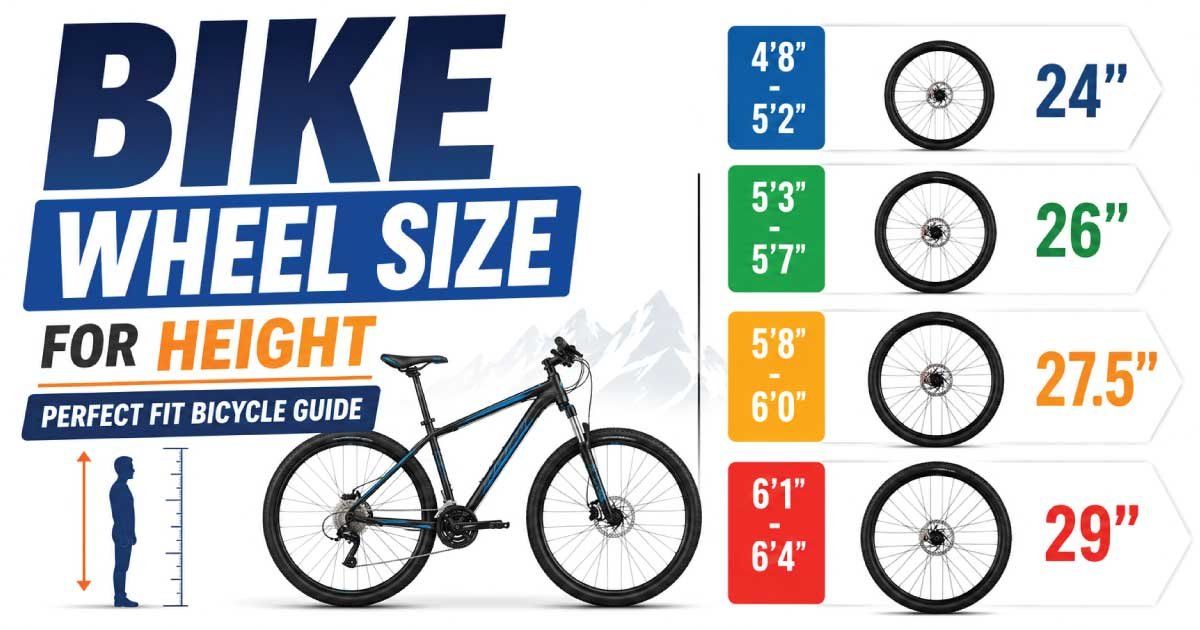
Bike Wheel Size for Height Chart
This chart helps match your height with the recommended wheel size.
| Rider Height | Recommended Wheel Size | Bike Type |
|---|---|---|
| Below 3’5″ (105 cm) | 12 inch | Kids balance bike |
| 3’5″ – 4’0″ (105–122 cm) | 14–16 inch | Kids bike |
| 4’0″ – 4’5″ (122–135 cm) | 18–20 inch | Kids BMX / beginner |
| 4’5″ – 5’0″ (135–152 cm) | 20–24 inch | Teen / small adult |
| 5’0″ – 5’5″ (152–165 cm) | 24–26 inch | Hybrid / mountain bike |
| 5’5″ – 5’10” (165–178 cm) | 26–27.5 inch | Mountain / road bike |
| 5’10” – 6’2″ (178–188 cm) | 27.5–29 inch | Mountain / road bike |
| Above 6’2″ (188+ cm) | 29 inch | Large frame bikes |
How to Choose Bike Wheel Size Based on Height
Choosing the right bike wheel size based on height is essential for comfort, control, and riding efficiency. While height is the main factor, riding style and personal comfort also play an important role in selecting the most suitable wheel size for different cycling conditions.
Step 1: Measure Your Height Accurately
Accurate height measurement is the first step in selecting the correct bike wheel size. Stand barefoot against a wall, keep your body straight, and measure from the floor to the top of your head to ensure a precise reading for proper bike fitting.
Step 2: Decide Your Riding Purpose
Your riding purpose greatly influences wheel size selection. Different terrains and uses require different wheel characteristics for performance, stability, and comfort, so understanding your primary cycling goal is essential before choosing the right wheel size.
Riding purpose guide:
- City commuting → smaller wheels (24–26 inch)
- Mountain biking → 27.5 or 29 inch
- Kids riding → 12–20 inch
Step 3: Match Height with Wheel Size Chart
After measuring height and defining purpose, compare your data with a standard wheel size chart. This helps narrow down suitable options and ensures better comfort, control, and performance by aligning wheel size with your physical build and riding requirements.
Step 4: Test Ride If Possible
A test ride is highly recommended before final selection. Even small differences in wheel size can significantly affect comfort, balance, and handling, so trying different bikes helps you choose the most natural and stable riding experience.
🔧 Explore Our Expert Guide 👉 M Nut Size Chart: Easy Size Guide 2026 + PDF Inside
Wheel Size vs Frame Size (Important Difference)
Many beginners confuse wheel size with frame size, but they are completely different measurements. Understanding this difference is important for choosing the right bike that fits both your body size and riding needs effectively.
What is Wheel Size vs Frame Size?
Wheel size refers to the diameter of the tire and rim, while frame size refers to the height and structure of the bike itself. Both measurements work together but serve different purposes in determining comfort and fit.
- Wheel size = diameter of the tire and rim
- Frame size = height of the bike structure
A 26-inch wheel bike can have multiple frame sizes depending on rider height.
Which Wheel Size is Best for Beginners?
The best wheel size for beginners depends on age, height, and riding confidence. Smaller wheels are easier to control, while medium wheels provide better balance between stability and speed, making them suitable for most new riders.
Beginner recommendations:
- Kids → 12–20 inch wheels
- Teens → 20–24 inch wheels
- Adults → 26 or 27.5 inch wheels
If you are unsure, 26-inch wheels are the safest starting point for most average adults.
Advantages of Different Wheel Sizes
Different wheel sizes offer different advantages depending on riding style, terrain, and experience level. Smaller wheels focus on control, medium wheels balance performance, and larger wheels prioritize speed and stability over long distances.
Small Wheels (12–20 inch)
Small wheels are designed for beginners and young riders. They are easy to control, lightweight, and safer at low speeds, making them ideal for learning balance and basic cycling skills, though they offer limited speed performance.
Medium Wheels (24–26 inch)
Medium wheels provide balanced performance suitable for most riders. They offer good control, moderate speed, and are ideal for city riding, commuting, and light recreational cycling, making them one of the most versatile wheel size options.
Large Wheels (27.5–29 inch)
Large wheels are designed for speed, stability, and long-distance riding. They roll smoothly over obstacles, absorb shocks better, and perform well on rough terrain, although they may feel slightly harder to control at very low speeds.
🔧 Explore Our Expert Guide 👉 Electrical Wire Size Chart: Complete Guide 2026 + PDF
Mountain Bike Wheel Sizes and Height Fit
Mountain biking requires strong control, durability, and stability on uneven terrain. Choosing the correct wheel size based on height improves performance, balance, and safety when riding on trails, hills, and rocky paths.
Recommended sizes:
- 5’0″–5’5″: 26 inch
- 5’5″–5’10”: 27.5 inch
- 5’10″+: 29 inch
Why larger wheels matter off-road
Larger wheels are especially useful in mountain biking because they roll over obstacles more easily, provide better traction, and improve stability on rough and uneven surfaces, making them ideal for off-road adventure riding.
Road Bike Wheel Considerations
Road bikes are designed for speed and efficiency, and they typically use 700c wheels, which are close to 28–29 inch in size. These wheels are optimized for smooth pavement and long-distance riding rather than rough terrain.
Key characteristics of road bike wheels
Road bike wheels are best suited for riders above 5’5″, offering high-speed performance and efficient energy transfer. However, they are less suitable for rough or uneven surfaces due to their narrow design and reduced shock absorption capability.
Common Mistakes When Choosing Wheel Size
Many riders end up with the wrong bike wheel size because they overlook key fitting factors. These mistakes often lead to discomfort, poor handling, and reduced riding efficiency, especially for beginners who choose based on appearance rather than proper measurements and riding needs.
1. Choosing Based on Looks
Many people select bikes simply because larger wheels look more powerful or stylish. However, appearance does not guarantee comfort or performance, and an unsuitable wheel size can negatively affect balance, control, and overall riding experience regardless of how the bike looks.
2. Ignoring Height
Ignoring rider height is one of the most common mistakes when selecting wheel size. A mismatch between height and wheel size can lead to poor posture, discomfort, and difficulty controlling the bike, especially during long rides or challenging terrain conditions.
3. Confusing Frame and Wheel Size
Beginners often confuse wheel size with frame size, but both are different measurements. Wheel size affects rolling performance, while frame size determines riding posture and fit. Both must be correctly matched to ensure comfort, safety, and proper bike handling.
4. Not Considering Riding Purpose
Different riding styles require different wheel sizes. City commuting, mountain biking, and casual riding all demand specific performance characteristics. Ignoring the intended use of the bike can result in poor efficiency, reduced comfort, and an unsuitable riding experience.
Tips for Perfect Bike Fit
Achieving the perfect bike fit ensures better comfort, control, and long-term riding enjoyment. A well-fitted bike reduces fatigue, improves posture, and enhances performance, making every ride smoother and more efficient regardless of distance or terrain.
Expert Tips for Proper Bike Selection
Following expert recommendations helps you choose the right bike size and avoid common fitting mistakes. These tips focus on balancing comfort, safety, and performance rather than just appearance or brand preference.
- Always check both wheel size and frame size
- Test ride before buying if possible
- Consider adjustable seat height
- Don’t choose oversized bikes for “future growth”
- Prioritize comfort over style
🔧 Explore Our Expert Guide 👉 Tapered Bearing Size Chart: Complete Guide 2026 + PDF
What Happens If Wheel Size Is Wrong?
Using the wrong wheel size can significantly affect riding comfort, safety, and overall bike performance. Even small mismatches can lead to physical strain and reduced control, especially during long rides or high-speed cycling situations.
Possible Problems of Incorrect Wheel Size
Incorrect wheel sizing can create multiple physical and mechanical issues that reduce riding efficiency and increase fatigue. Over time, it may also cause discomfort and affect joint health, particularly in the back and knees.
- Back and knee pain
- Poor balance
- Difficulty in braking
- Reduced control at high speed
- Faster fatigue
A properly sized bike makes riding effortless and enjoyable.
Final Thoughts
Selecting the correct bike wheel size for height is essential for safety, comfort, and performance. While height charts provide a strong guideline, the best choice also depends on your riding style and personal comfort.
If you are an adult beginner, a 26-inch or 27.5-inch bike is usually a safe choice. Taller riders will benefit more from 29-inch wheels, while kids and teens should always stick to age-appropriate smaller sizes.
The right wheel size doesn’t just improve your ride—it completely transforms it.