
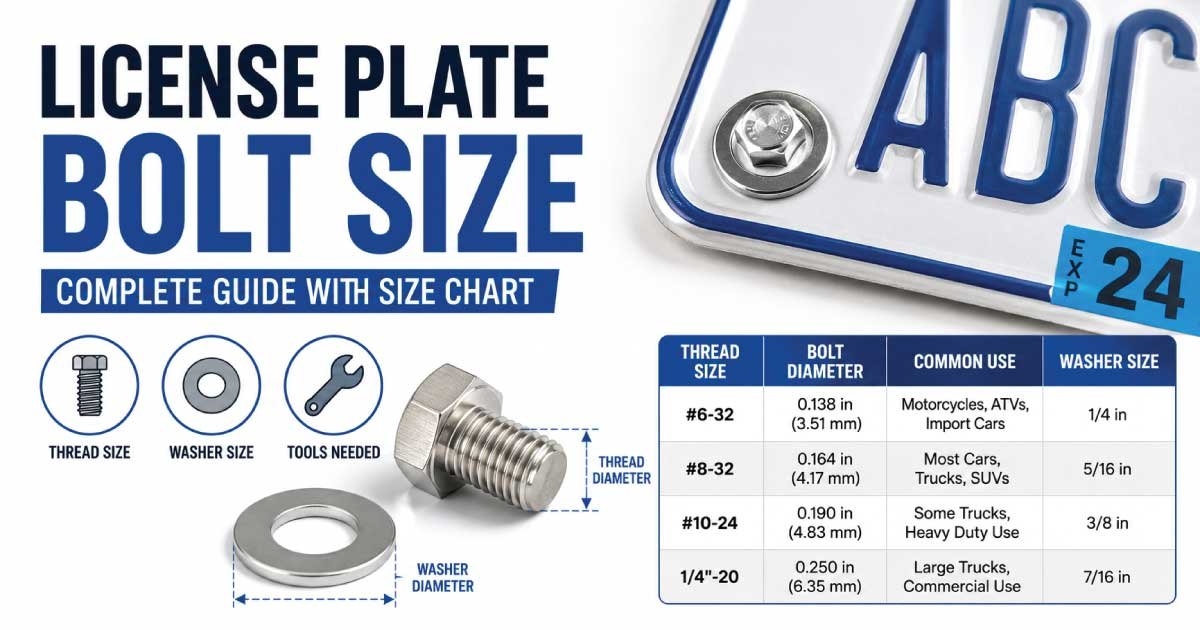
Whether you are replacing rusty license plate screws, installing a new plate frame, or upgrading to stainless steel hardware, knowing the correct license plate bolt size is essential. Although license plate bolts are relatively small, using the wrong size can lead to stripped threads, loose plates, damaged mounting holes, or rattling while driving.
Many vehicle owners assume that all license plate bolts are the same. In reality, bolt size varies depending on the vehicle manufacturer, model year, and whether you’re installing the front or rear license plate. Some vehicles use metric bolts, while others use standard (SAE) thread sizes. In addition, the required bolt length may change if you’re using a decorative license plate frame or a silicone backing.
This complete guide explains everything you need to know about license plate bolt sizes, including standard dimensions, manufacturer-specific sizes, how to measure a bolt, and tips for selecting the right replacement hardware.
What Is a License Plate Bolt?
A license plate bolt is a small but important threaded fastener used to securely attach a vehicle’s license plate to its mounting bracket or directly onto the body panel. Despite its simple design, it plays a key role in keeping the plate stable and properly aligned while driving on rough roads or at high speeds.
These bolts are commonly made from materials such as stainless steel, zinc-plated steel, aluminum, or black-coated steel to resist corrosion. Since license plates are constantly exposed to rain, dust, mud, and road salt, corrosion resistance is essential for long-term durability and reliability.
Most license plate bolts include:
- A threaded shaft for secure fastening
- A Phillips, Torx, Allen, or hex head for installation
- A washer or built-in flange for better load distribution
- A corrosion-resistant coating for outdoor protection
Using the correct bolt ensures the license plate remains firmly attached and prevents loosening or rust-related damage over time.
Standard License Plate Bolt Size
While license plate bolt sizes can vary between manufacturers and vehicle models, there is one commonly accepted standard size used across many modern vehicles worldwide.
| Specification | Standard Size |
|---|---|
| Thread Diameter | M6 (6 mm) |
| Thread Pitch | 1.0 mm |
| Bolt Length | 12–20 mm |
| Head Type | Phillips or Hex |
| Material | Stainless Steel |
The M6 × 1.0 thread size is the most widely used metric standard for license plate bolts. It is compatible with many vehicles from manufacturers such as Toyota, Honda, Nissan, Hyundai, Kia, Mazda, Subaru, Volkswagen, and others.
Complete License Plate Bolt Size Chart
License plate bolt sizes vary depending on vehicle design, region, and manufacturing standards. The table below provides a general reference for common sizes used on passenger vehicles.
| Bolt Size | Thread Pitch | Typical Length | Common Applications |
|---|---|---|---|
| M5 × 0.8 | 0.8 mm | 10–16 mm | Some motorcycles and compact vehicles |
| M6 × 1.0 | 1.0 mm | 12–20 mm | Most passenger cars |
| M8 × 1.25 | 1.25 mm | 16–25 mm | Certain SUVs and trucks |
| 1/4″-20 UNC | 20 TPI | 1/2–3/4 inch | Some older American vehicles |
| 1/4″-28 UNF | 28 TPI | Varies | Limited older applications |
Because manufacturers may change specifications across models and production years, it is always best to verify the exact size before purchasing replacement bolts.
License Plate Bolt Sizes by Vehicle Brand
Different vehicle manufacturers often standardize license plate hardware across many of their models, which makes replacement easier for most owners. However, there are still variations depending on region and model year.
| Vehicle Brand | Common Bolt Size |
|---|---|
| Toyota | M6 × 1.0 |
| Honda | M6 × 1.0 |
| Nissan | M6 × 1.0 |
| Hyundai | M6 × 1.0 |
| Kia | M6 × 1.0 |
| Subaru | M6 × 1.0 |
| Mazda | M6 × 1.0 |
| Volkswagen | M6 × 1.0 |
| Ford | Varies by model (often 1/4″-20 or M6 × 1.0) |
| Chevrolet | Varies by model |
| GMC | Varies |
| Jeep | M6 × 1.0 or 1/4″-20 |
| Tesla | M6 × 1.0 |
| BMW | M6 × 1.0 |
| Mercedes-Benz | M6 × 1.0 |
| Audi | M6 × 1.0 |
Although these are common standards, some vehicles may use different sizes depending on trim level, production year, or regional manufacturing differences. Always confirm compatibility before replacing license plate hardware.
Front vs. Rear License Plate Bolt Size
Some vehicles use the same license plate hardware for both the front and rear plates, while others require different bolt lengths or mounting styles depending on the design of the bumper or body panel. The difference usually comes down to how the plate is mounted rather than the thread size itself.
1. Front License Plate
The front license plate is typically mounted on:
- A plastic mounting bracket
- A bumper insert
- A dealer-installed plate holder
Because these mounting systems are usually thin and pre-designed for easy installation, shorter bolts are often sufficient. The main requirement is proper thread engagement without penetrating too deeply into the bumper structure.
In most cases, standard M6 bolts with shorter lengths are used for front plate installation, especially on vehicles where the bracket already provides support and spacing.
2. Rear License Plate
The rear license plate is often installed directly onto:
- Metal body panels
- Plastic threaded inserts
- Factory-installed clip systems
Since rear mounting points can vary more in depth and structure, bolt length may differ from the front. If a license plate frame, cover, or silicone holder is added, longer bolts are sometimes required to ensure full and secure thread engagement.
Proper length selection is important to avoid:
- Loose plate movement
- Stripped threads in inserts
- Over-tightening damage
How to Measure a License Plate Bolt
Measuring a license plate bolt correctly is essential when replacing old or rusted hardware. Accurate measurement ensures proper fit, secure mounting, and long-term durability.
Step 1: Measure the Diameter
Use a caliper or measuring tool to determine the outside diameter of the threaded section. This is the most important sizing factor for compatibility.
Common diameters include:
- 5 mm
- 6 mm
- 8 mm
- 1/4 inch
Even small differences in diameter can prevent proper threading, so accuracy is important.
Step 2: Measure the Length
Measure the bolt from the bottom of the head to the end of the threaded portion. Do not include the head in your measurement, as this can result in selecting a bolt that is too long or too short.
Correct length ensures:
- Proper tightening without damage
- Secure plate mounting
- Avoidance of over-penetration into mounting surfaces
Step 3: Identify the Thread Pitch
Thread pitch determines how tightly the bolt threads into the mounting hole. It is just as important as diameter when selecting a replacement bolt.
Examples include:
- M6 × 1.0 → 6 mm diameter with 1.0 mm thread pitch
- 1/4″-20 → 1/4-inch diameter with 20 threads per inch (TPI)
If the thread pitch does not match, the bolt may feel like it fits initially but will damage the threads when tightened.
Final Note
Accurate measurement of diameter, length, and thread pitch ensures a perfect replacement fit. Even minor errors can lead to loose plates, stripped threads, or improper installation, so careful checking is always recommended before purchasing new license plate bolts.
Choose the Right Bolt Length
Selecting the correct license plate bolt length is important because it ensures a secure fit without damaging the mounting surface or bottoming out in the threaded hole. The ideal length depends on the total thickness of everything being fastened together.
This includes:
- The license plate itself
- Any decorative frame or cover
- Silicone backing or anti-rattle pads
- Plastic mounting bracket
- Metal or plastic mounting surface
As a general guideline:
- 12 mm bolts work well for standard license plate installations with no additional accessories.
- 16–20 mm bolts are better when using thicker frames, covers, or rubber backing materials.
Using a bolt that is too long can cause it to bottom out before fully tightening the plate, while a bolt that is too short may not engage enough threads, leading to a loose or unstable installation.
Best Materials for License Plate Bolts
The material of a license plate bolt directly affects its durability, corrosion resistance, and appearance. Since these fasteners are exposed to outdoor conditions year-round, choosing the right material is essential for long-term performance.
1. Stainless Steel
Stainless steel is the most popular and reliable choice for license plate bolts.
- Excellent resistance to rust and corrosion
- Long service life even in harsh weather
- Suitable for all climates and environments
It is the best all-around option for most drivers due to its strength and durability.
2. Zinc-Plated Steel
Zinc-plated steel bolts are a budget-friendly alternative.
- Affordable and widely available
- Moderate resistance to rust
- Suitable for mild or dry climates
However, they may corrode faster in areas with heavy rain or road salt exposure.
3. Black Oxide Steel
Black oxide bolts are often chosen for aesthetic reasons.
- Attractive black finish that matches dark license plate frames
- Less corrosion resistance compared to stainless steel
- Commonly used for styling purposes
These bolts are best for appearance-focused installations rather than extreme weather durability.
4. Aluminum
Aluminum bolts are lightweight and corrosion-resistant but softer than steel.
- Naturally resistant to rust
- Very lightweight
- More prone to thread wear or stripping
They are less common but sometimes used in specialty or custom vehicle applications.
For most drivers, stainless steel bolts offer the best balance of strength, appearance, and corrosion resistance, making them the preferred choice for long-term use.
Also Read:  Torque Wrench Size Chart: Complete Guide 2026 + PDF
Common License Plate Bolt Sizes by Vehicle Type
Although many modern vehicles share similar hardware standards, bolt size can still vary depending on vehicle type, mounting design, and manufacturer preferences. Understanding these patterns can help you quickly identify the correct replacement.
1. Passenger Cars
Most passenger vehicles use standard metric hardware for simplicity and compatibility.
Typical size:
- M6 × 1.0 × 12–20 mm
- Phillips or hex head design
This includes sedans, hatchbacks, and compact SUVs, which generally use lightweight mounting systems.
2. SUVs and Light Trucks
Larger vehicles often require slightly longer or stronger fasteners due to increased vibration and heavier-duty mounting points.
Typical size:
- M6 × 1.0 × 16–25 mm
- In some heavy-duty applications, M8 × 1.25 may be used
These vehicles often experience more road stress, so reinforced mounting hardware is common.
3. Motorcycles
Motorcycle license plate bolts are generally smaller due to compact mounting designs.
Typical size:
- M5 × 0.8 × 10–16 mm
- Occasionally M6 for aftermarket brackets
Because motorcycles experience constant vibration, locking washers or thread-locking compounds are often recommended for added security.
4. Older American Vehicles
Older vehicles often use SAE (imperial) thread standards instead of metric sizing.
Common sizes include:
- 1/4″-20 UNC (most common)
- 1/4″-28 UNF (less common)
These systems require matching threaded holes or compatible nuts, and mixing metric with SAE threads should always be avoided to prevent damage.
Common Problems with Wrong License Plate Bolts
Using incorrect license plate bolts may seem like a minor issue, but it can lead to serious installation and maintenance problems over time. Many drivers only notice these issues when damage has already occurred or the plate becomes loose while driving.
1. Stripped Threads
If the bolt thread pitch does not match the mounting hole exactly, the bolt may force itself in and damage the internal threads. Once stripped, the mounting point can lose its holding strength and may require repair inserts or replacement brackets.
2. Loose or Vibrating Plate
Incorrect bolt diameter or length can prevent proper tightening. Over time, this leads to a loose license plate that may vibrate, rattle, or even detach partially while driving, especially on rough roads or at high speeds.
3. Rust and Corrosion
Low-quality or uncoated bolts can rust quickly when exposed to rain, snow, or coastal air. This not only weakens the bolt but also makes future removal difficult, often causing the bolt to seize inside the mounting hole.
4. Damaged Bumper Inserts
Over-tightening oversized bolts can crack plastic mounting points or threaded inserts inside the bumper. Once damaged, these inserts may no longer hold bolts securely, leading to repeated installation issues.
Anti-Theft License Plate Bolts
Anti-theft license plate bolts are designed to provide extra security and prevent unauthorized removal of license plates or frames. These are commonly used in areas where theft or vandalism is more frequent.
These special bolts may include:
- Tamper-resistant heads (Torx security, pin-in hex, etc.)
- One-way removal designs that cannot be unscrewed easily
- Unique key or patterned drive systems
They are designed to protect against:
- License plate theft
- Plate frame removal
- Vandalism or tampering
Anti-theft kits are especially recommended for vehicles parked in public areas, urban environments, or high-traffic parking zones where security risks are higher.
How to Install License Plate Bolts Correctly
Proper installation ensures the license plate remains secure, aligned, and free from vibration or damage. Following the correct steps helps avoid stripped threads and mounting issues.
Step 1: Align the Plate
Position the license plate along with any frame, cover, or gasket in the correct mounting location. Ensure all holes line up properly before inserting bolts.
Step 2: Insert Bolts by Hand
Start threading each bolt manually to prevent cross-threading. This ensures the bolt engages correctly with the threads before applying any tool-based tightening.
Step 3: Tighten Gradually
Use a screwdriver, socket wrench, or appropriate tool to tighten the bolts evenly. Avoid over-tightening, especially when mounting into plastic inserts or lightweight brackets.
Step 4: Check Stability
After installation, gently test the plate for movement. A properly installed license plate should be firm, secure, and free from rattling or bending.
Read our newest article here: Pipe Wrench Size Chart: Complete Guide 2026 + PDF
Common Installation Mistakes
Even simple installations can go wrong if proper care is not taken. Many drivers unknowingly make mistakes that lead to long-term damage or loose fittings.
Common mistakes include:
- Using power tools that over-tighten bolts
- Mixing metric and SAE thread types
- Ignoring correct thread pitch selection
- Using bolts that are too long and bottom out
- Installing rusted or damaged fasteners
Avoiding these errors helps maintain both the license plate and the vehicle’s mounting system in good condition.
Maintenance Tips for License Plate Bolts
Regular maintenance helps extend the life of license plate bolts and prevents long-term issues such as rust, loosening, or thread damage.
Best practices include:
- Cleaning bolts periodically to remove dirt and road salt
- Applying a light anti-seize lubricant if needed
- Inspecting for rust or corrosion every few months
- Replacing damaged or worn bolts immediately
- Avoiding harsh chemicals that may damage protective coatings
Stainless steel bolts generally require the least maintenance and are the most reliable choice for long-term use.
When to Replace License Plate Bolts
License plate bolts should be replaced as soon as signs of wear or damage appear. Ignoring these warning signs can lead to mounting failure or damage to the vehicle’s attachment points.
Replace bolts if you notice:
- Visible rust or corrosion
- Stripped or damaged threads
- Loose fit or vibration during driving
- Cracked or worn plastic inserts
- Difficulty tightening or removing bolts
Early replacement helps prevent further damage and ensures the license plate remains securely attached at all times.
Conclusion
Choosing the correct license plate bolt size is a small but important detail that ensures your license plate remains secure, stable, and free from damage. While the most common size is M6 × 1.0, variations exist depending on vehicle brand, model, and mounting system.
By understanding bolt sizes, thread types, materials, and installation methods, you can easily select the right hardware for your vehicle. Whether you’re replacing rusty bolts or upgrading to stainless steel or anti-theft options, the right choice will improve durability, prevent vibration, and protect your license plate setup for years to come.
A properly installed license plate not only looks better but also ensures compliance and safety on the road.
Read our newest article here: Hammer Size Chart: Detailed Guide With PDF
FAQs:
What is the most common license plate bolt size?
The most common license plate bolt size is M6 × 1.0 with a length between 12 mm and 20 mm. This size is used by many modern vehicles from Asian and European manufacturers. However, always verify your vehicle’s specifications before purchasing replacement bolts to ensure a proper fit.
Can I use any bolt for my license plate?
No. The replacement bolt must have the correct thread diameter, thread pitch, and length to match your vehicle’s mounting holes. Using the wrong bolt can damage the threaded insert, prevent proper installation, or cause the license plate to become loose while driving.
Are front and rear license plate bolts the same?
In many vehicles, the front and rear license plate bolts are the same size and thread type. However, some vehicles use different mounting brackets or bumper designs, particularly for the front plate. Always inspect both mounting locations or consult your owner’s manual before purchasing replacements.
What material is best for license plate bolts?
Stainless steel is the best material for license plate bolts because it offers excellent resistance to rust, corrosion, and weather exposure. It is durable, requires little maintenance, and helps keep your license plate securely attached for years, making it an ideal choice for most climates.
Do license plate bolts fit all cars?
No. Although M6 × 1.0 bolts are the most common, license plate bolt sizes are not universal. Some older American vehicles and certain trucks use different thread sizes or mounting systems. Always check your vehicle’s specifications or measure the existing bolts before purchasing replacements to ensure compatibility.