
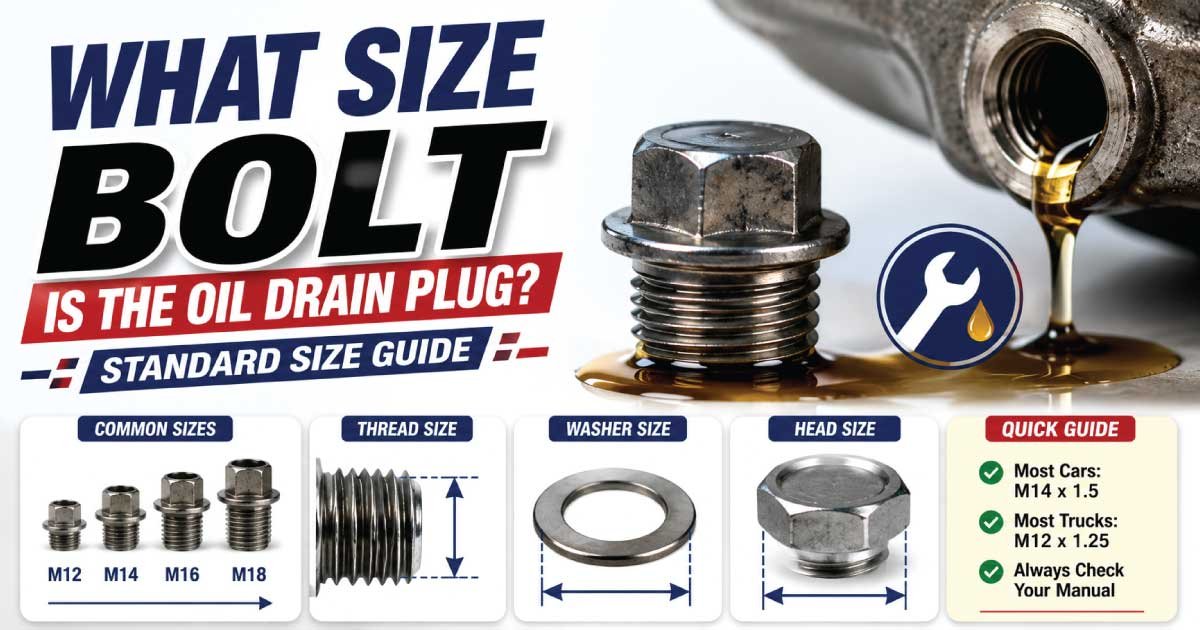
Changing your engine oil is one of the simplest and most important maintenance tasks you can perform on your vehicle. However, before you can drain the old oil, you need to remove the oil drain plug. One of the most common questions DIY mechanics ask is, “What size bolt is the oil drain plug?”
The answer isn’t as straightforward as you might think. Oil drain plug sizes vary depending on the vehicle’s manufacturer, engine type, and model year. There is no universal oil drain plug size that fits every car or truck.
In this guide, you’ll learn how oil drain plug sizes are determined, the most common sizes used by different manufacturers, how to identify the correct size for your vehicle, and tips to avoid damaging the drain plug during an oil change.
What Is an Oil Drain Plug?
An oil drain plug is a threaded bolt located at the bottom of the engine’s oil pan. Its primary purpose is to seal the engine oil inside the oil pan while allowing easy drainage during routine oil changes.
When it’s time to change your engine oil, you simply remove the drain plug, let the old oil drain completely, replace the crush washer if necessary, and reinstall the plug using the correct torque specification.
Because the drain plug is removed repeatedly throughout the life of the vehicle, it’s important to use the correct socket size and avoid overtightening.
Is There a Standard Oil Drain Plug Size?
No.
Unlike many fasteners used in manufacturing, oil drain plugs are not standardized across all vehicles, which means there is no single universal size that fits every engine. Each manufacturer designs its own specifications based on engineering needs and durability requirements.
Oil drain plug size depends on several factors:
- Engine design
- Oil pan material
- Oil pan thickness
- Vehicle size
- Manufacturing standards
- Thread strength requirements
Even vehicles from the same manufacturer can use different drain plug sizes depending on engine type or model year. This is why checking specifications before maintenance is always necessary.
For example:
- A compact sedan may use an M12 drain plug
- A pickup truck may use an M14 drain plug
- A diesel engine may use an even larger size
These differences ensure proper sealing strength and resistance to oil pressure and heat.
Common Oil Drain Plug Thread Sizes
Most passenger vehicles use a limited range of common thread sizes. These sizes are widely seen in cars, motorcycles, SUVs, and light trucks.
| Thread Size | Common Applications |
|---|---|
| M10 × 1.25 | Small cars and motorcycles |
| M12 × 1.25 | Compact vehicles |
| M12 × 1.5 | Many Japanese vehicles |
| M14 × 1.25 | European vehicles |
| M14 × 1.5 | Many domestic vehicles |
| M16 × 1.5 | Trucks and SUVs |
| 1/2″-20 | Older American vehicles |
| 1/2″-13 | Heavy-duty applications |
The “M” indicates metric threading, which is based on millimeters. The first number shows the bolt diameter, while the second number represents the thread pitch, which determines how tightly the threads are spaced.
Common Oil Drain Plug Socket Sizes
A very common mistake during oil changes is confusing thread size with socket size. These two are completely different measurements.
For example:
A drain plug may have:
- M12 thread
- 17 mm hex head
This means the socket size is based on the head of the bolt, not the thread diameter.
Common socket sizes include:
- 13 mm
- 14 mm
- 15 mm
- 16 mm
- 17 mm
- 19 mm
- 21 mm
Some vehicles also use alternative designs such as:
- Allen (hex) sockets
- Torx sockets
- Square-drive drain plugs
Always verify the socket type and size before attempting removal to avoid stripping or damaging the bolt head.
Typical Oil Drain Plug Sizes by Manufacturer
Although there is no universal standard, many manufacturers tend to follow consistent patterns across their vehicle lineup. However, variations still exist depending on engine design and model year.
1. Toyota
Toyota commonly uses:
- M12 × 1.25
- 14 mm socket
- 17 mm socket
Popular models include:
- Corolla
- Camry
- RAV4
- Tacoma
Some newer Toyota engines may use different sizes depending on oil pan design and engine upgrades. Always confirm with the specific model.
2. Honda
Many Honda vehicles use:
- M14 × 1.5
- 17 mm socket
Common models include:
- Civic
- Accord
- CR-V
- Pilot
Honda often recommends replacing the aluminum crush washer during every oil change to ensure a proper oil seal and prevent leaks.
3. Ford
Ford vehicles commonly use:
- M14 × 1.5
- 16 mm
- 17 mm
- 19 mm sockets
Some EcoBoost engines use specialized drain plug designs that may differ from standard fasteners, especially in newer models.
4. Chevrolet (GM)
GM vehicles frequently use:
- M12 × 1.75
- M14 × 1.5
Socket sizes usually include:
- 13 mm
- 15 mm
- 16 mm
Because GM produces a wide range of engines, drain plug sizes can vary significantly between trucks, sedans, and SUVs. Always check engine-specific data.
5. Nissan
Common Nissan drain plug sizes include:
- M12 × 1.25
- 14 mm socket
Popular models include:
- Altima
- Sentra
- Rogue
- Frontier
These sizes are commonly used across both older and newer Nissan engines, though exceptions still exist.
6. Hyundai and Kia
Hyundai and Kia vehicles commonly use:
- M14 × 1.5
- 17 mm socket
Many models also require:
- Replacement of the crush washer during service
This ensures proper sealing and prevents oil leakage after installation. These brands often follow similar specifications across multiple models for consistency.
How to Find the Correct Oil Drain Plug Size
Finding the correct oil drain plug size is important for preventing leaks, thread damage, and costly repairs. Since there is no universal standard, you must identify the exact specification for your vehicle before replacing or reinstalling it. Fortunately, there are several reliable methods that make this process easier and more accurate.
1. Check the Owner’s Manual
The owner’s manual is the most reliable and manufacturer-approved source of information. It usually contains all essential details needed for maintenance tasks.
It often lists:
- Drain plug size
- Torque specification
- Washer type
- Oil capacity
This method is especially useful because it removes guesswork and ensures you are using factory-recommended specifications. If available, always refer to the manual first before attempting any measurements or replacements.
2. Measure the Existing Plug
If the drain plug has already been removed, you can directly measure it for accurate identification. This is one of the most practical methods used in workshops and DIY maintenance.
You should measure:
- Thread diameter
- Thread pitch
- Overall length
- Head size
Using proper tools ensures better accuracy:
- Digital caliper for diameter and length
- Thread pitch gauge for spacing
This method is highly reliable because it provides real physical data from the actual component being replaced, reducing the chances of mismatch.
3. Use the Vehicle Identification Number (VIN)
The Vehicle Identification Number (VIN) is a unique code assigned to every vehicle. It contains detailed manufacturing information that can be used to identify exact replacement parts.
Auto parts stores and dealerships can use your VIN to find:
- Correct drain plug size
- Compatible washer type
- Engine-specific variations
This is one of the safest methods because it eliminates human error and ensures you get a factory-matching replacement part without needing physical measurements.
4. Consult a Parts Catalog
Automotive parts catalogs are widely used by mechanics and online retailers. They allow you to search for parts based on vehicle details.
You can search using:
- Year
- Make
- Model
- Engine size
The catalog will then display:
- Correct oil drain plug
- Matching sealing washer
- Related specifications
This method is especially helpful when working on multiple vehicles or when the owner’s manual is not available. It ensures compatibility across different trims and engine variations.
Also Read:
Understand The Thread Pitch
Thread pitch is one of the most critical aspects of oil drain plug identification. Even if the diameter matches, incorrect pitch will prevent proper fitting and can cause severe damage to the oil pan threads.
For example:
Both of these are M14 bolts:
- M14 × 1.25
- M14 × 1.5
Although they share the same diameter, the thread spacing is different. One is tighter, while the other is slightly wider.
Installing the wrong thread pitch can lead to:
- Cross-threading
- Oil leaks
- Permanent damage to the oil pan
This is why pitch must always be confirmed before installation, not just diameter.
Oil Drain Plug Washers
Oil drain plug washers are small but extremely important components that ensure a proper oil seal. They sit between the drain plug and oil pan, preventing leaks and maintaining pressure.
Common types include:
1. Aluminum Crush Washers
These are the most commonly used washers in modern vehicles. They are designed to deform under pressure, creating a tight seal.
- Compress when tightened
- Designed for one-time use
- Should be replaced at every oil change
Because they deform permanently, reusing them increases the risk of oil leakage.
2. Copper Washers
Copper washers provide strong sealing performance and are sometimes preferred in performance or heavy-duty applications.
- Excellent sealing ability
- Can sometimes be reused if undamaged
- Replacement is still recommended for best results
Copper is durable but can harden over time, reducing effectiveness.
3. Rubber-Sealed Washers
These washers include an integrated rubber gasket that helps create a leak-resistant seal.
- Built-in rubber sealing layer
- Highly effective against leaks
- Common in modern drain plug designs
They are especially useful in applications requiring vibration resistance and long-term sealing.
4. Fiber Washers
Fiber washers are found mostly in older vehicles and legacy engine designs.
- Made from compressed fiber material
- Less common in modern engines
- Typically replaced rather than reused
Although simple in design, they are not as durable or reliable as modern alternatives.
How Tight Should an Oil Drain Plug Be?
One of the most common mistakes in oil changes is overtightening the drain plug. Applying too much force can strip threads, damage the oil pan, or cause future leaks.
Most passenger vehicles require a torque range of:
- 20 to 35 ft-lb (27–47 Nm)
However, the exact specification depends on:
- Engine type
- Oil pan material (aluminum or steel)
- Drain plug size
- Manufacturer recommendations
Aluminum oil pans are especially sensitive and can be easily damaged by excessive torque.
Always use a torque wrench whenever possible to ensure accurate tightening. Proper torque ensures a secure seal without stressing the threads, helping maintain long-term engine reliability and preventing costly repairs.
What Happens If You Use the Wrong Size?
Using the wrong oil drain plug size is one of the most damaging mistakes in basic vehicle maintenance. Because the oil pan threads are soft (especially in aluminum pans), even a small mismatch can create long-term mechanical issues.
Installing an incorrect drain plug can lead to serious problems:
- Oil leaks
- Cross-threaded oil pan
- Stripped threads
- Engine damage
- Complete oil loss
- Expensive repairs
When threads are damaged, the oil pan often cannot be repaired easily. In many cases, the entire oil pan must be replaced, which is far more costly than simply using the correct drain plug from the beginning.
Also Read:
Signs Your Drain Plug Needs Replacement
Oil drain plugs are durable, but they are still exposed to heat, pressure, and repeated maintenance cycles. Over time, wear and damage can reduce their effectiveness.
Replace the plug if you notice:
- Rounded bolt head
- Damaged threads
- Rust
- Oil leaks around the plug
- Bent bolt body
- Missing magnetic tip (if originally present)
- Worn sealing surface
A damaged drain plug may not always fail immediately, but it increases the risk of gradual oil leakage. Fortunately, drain plugs are inexpensive and widely available, making replacement a simple preventive measure.
Magnetic Oil Drain Plugs
Magnetic oil drain plugs are an upgraded aftermarket option designed to improve engine protection. They contain a strong magnet at the tip that attracts and traps fine metal particles circulating in the engine oil.
Benefits include:
- Collect metal particles from oil
- Reduce engine contamination
- Help monitor internal engine wear
- Extend engine life
- Improve maintenance inspection feedback
These plugs are especially popular among performance enthusiasts and mechanics because they provide early warning signs of engine wear. If excessive metal debris is found on the magnet, it may indicate internal engine issues that need attention.
Can You Reuse an Oil Drain Plug?
In most cases, yes. The drain plug itself is designed for repeated use as long as it remains in good condition and is not physically damaged.
However, before reusing it, you should carefully inspect for:
- Thread damage
- Corrosion or rust
- Deformation or bending
- Rounded edges on the head
If any of these issues are present, replacement is recommended to avoid sealing problems or thread failure during installation.
The sealing washer, however, is a different story. It is often designed for single use and should usually be replaced every time the plug is removed to ensure a proper oil-tight seal.
Tips for Removing an Oil Drain Plug Safely
Removing an oil drain plug correctly is important to avoid damage to the oil pan or surrounding components. A careful approach ensures smooth maintenance and prevents costly mistakes.
Before removing the drain plug:
- Allow the engine to cool slightly
- Position an oil drain pan underneath
- Use the correct socket size
- Turn the plug counterclockwise
- Avoid adjustable wrenches if possible
- Clean threads before reinstalling
- Replace the sealing washer
- Tighten to manufacturer torque specification
Taking these steps helps prevent stripped threads, reduces mess, and ensures the plug can be reused safely if still in good condition. Proper technique is especially important for aluminum oil pans, which are more sensitive to over-tightening and cross-threading.
Common Mistakes to Avoid
Many oil drain plug issues are caused by simple maintenance errors. Avoiding these mistakes can significantly extend the life of your oil pan and prevent leaks.
1. Using the Wrong Socket
Using an incorrect or loose-fitting socket can easily round off the bolt head. Once the head is damaged, removing the plug becomes difficult and may require special extraction tools.
Always use the exact socket size for a secure grip and proper torque application.
2. Overtightening
Applying excessive force is one of the most common and costly mistakes. Overtightening can:
- Strip oil pan threads
- Crack aluminum oil pans
- Damage the drain plug itself
Always follow manufacturer torque specifications instead of relying on “feel.”
3. Reusing a Damaged Washer
A worn or crushed washer may no longer provide an effective seal. This often leads to slow oil leaks that worsen over time.
Replacing the washer during every oil change is a low-cost way to prevent future leakage issues.
4. Installing the Wrong Thread Pitch
Even if a bolt appears to fit, incorrect thread pitch will not properly engage with the oil pan threads. This can cause:
- Cross-threading
- Permanent oil pan damage
- Immediate oil leakage
Thread pitch must always be verified before installation.
5. Ignoring Torque Specifications
Torque specifications are designed to balance sealing pressure and thread safety. Ignoring them can result in either loose fittings or damaged components.
Using a torque wrench ensures the drain plug is tightened correctly, preventing both leaks and mechanical damage over time.
Also Read:
Final Thoughts
So, what size bolt is the oil drain plug? The answer depends entirely on your vehicle. There is no universal drain plug size, as manufacturers use a variety of thread diameters, pitches, and bolt head sizes. The safest approach is to consult your owner’s manual, use your vehicle’s VIN, or measure the existing drain plug before purchasing a replacement.
Using the correct oil drain plug and sealing washer not only prevents leaks but also protects the oil pan from thread damage and helps ensure your engine remains properly lubricated. Whether you’re performing your first oil change or replacing a worn drain plug, taking a few extra minutes to verify the correct size can save you time, money, and costly repairs in the future.
FAQs:
Is every oil drain plug the same size?
No. Oil drain plug sizes are not universal and vary by vehicle manufacturer, engine type, model, and production year. Even different engines from the same brand may use different drain plug sizes. Always consult your owner’s manual or measure the plug before purchasing a replacement to ensure the correct fit.
What socket size removes most oil drain plugs?
Most oil drain plugs can be removed using a 14 mm, 17 mm, or 19 mm socket, although some vehicles require different sizes. The correct socket depends on the drain plug design and manufacturer specifications. Using the proper socket size helps prevent rounding the bolt head and makes removal easier.
Can I replace the drain plug myself?
Yes. Replacing an oil drain plug is a simple DIY maintenance task if you have the correct replacement plug, a matching socket or wrench, and a torque wrench. Follow the manufacturer’s recommended torque specification to avoid overtightening or damaging the oil pan threads during installation.
Do I need to replace the washer every oil change?
Yes. For most vehicles, replacing the crush washer or sealing washer at every oil change is highly recommended. A new washer creates a proper seal, helps prevent oil leaks, and ensures the drain plug tightens correctly. Reusing an old washer can reduce sealing performance and increase the risk of leaks.