
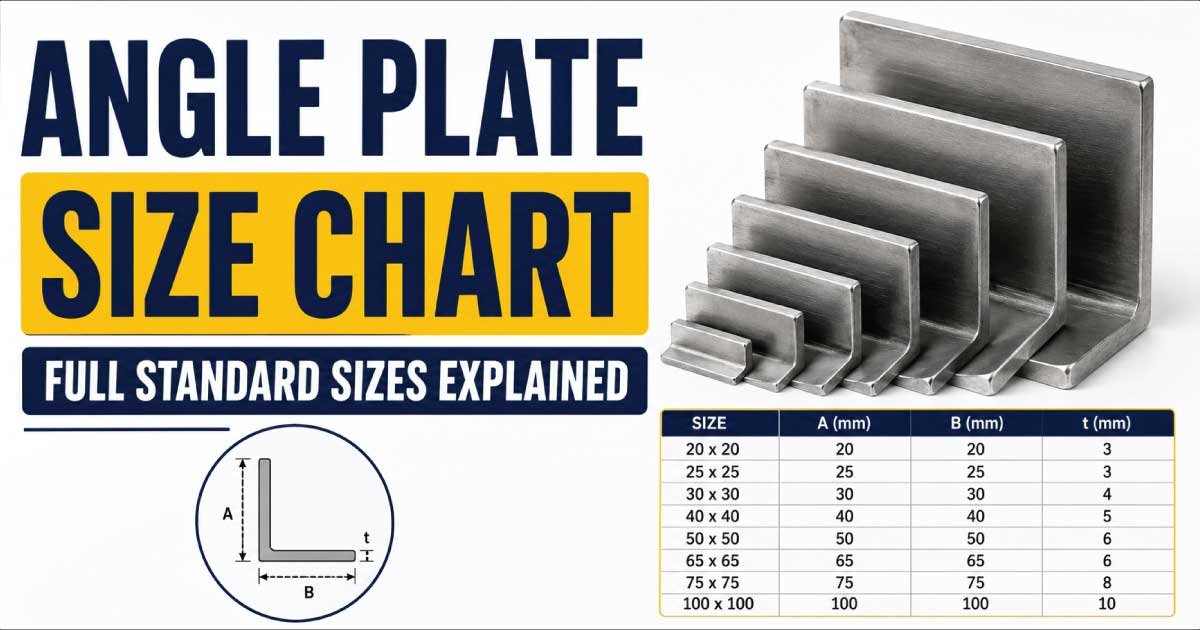
An angle plate is one of the most essential workholding tools used in machining, metalworking, inspection, and fabrication workshops. It provides a perfectly square reference surface, allowing engineers and machinists to clamp, measure, and machine components accurately at 90-degree angles.
Understanding the angle plate size chart is important for selecting the right plate for your workpiece, ensuring stability, precision, and safety during machining operations.
In this complete guide, you will learn what angle plates are, how they are sized, standard size charts, types, applications, and how to choose the right one for your workshop.
What Is an Angle Plate?
An angle plate is a precision engineering tool made from cast iron or steel, designed with two flat surfaces fixed at a perfect 90-degree angle. It is used to securely hold workpieces in vertical or horizontal positions during machining, inspection, and fabrication processes.
Angle plates are commonly used in:
- Milling machines
- Drilling machines
- Surface plates
- Inspection setups
- Welding and fabrication
They ensure the workpiece remains square, stable, and accurately positioned while machining or measuring operations are performed.
Why Angle Plate Size Matters
Angle plate size plays a key role in machining accuracy, stability, and operator safety. Using an incorrect size can lead to poor support, misalignment, or instability during cutting, inspection, or fabrication processes in industrial environments.
Importance of Correct Size
Choosing the right size ensures proper handling of different workpiece dimensions. It improves machining performance, reduces errors, and helps maintain consistent accuracy in both light-duty and heavy-duty industrial applications.
Correct sizing ensures:
- Proper workpiece support
- High machining accuracy
- Reduced vibration during cutting
- Safety for operators
- Better alignment during inspection
In short, the right size improves both precision and productivity.
How Angle Plates Are Measured
Angle plates are measured based on their physical dimensions and load capacity. These measurements determine their suitability for different machining tasks, from light workshop use to heavy industrial applications requiring strong support and stability.
Key Measurement Dimensions
Angle plate sizing mainly depends on length, width, and thickness. Each dimension contributes to strength, rigidity, and the ability to hold workpieces securely during machining or inspection operations.
- Length (L): Vertical height of the plate
- Width (W): Horizontal base width
- Thickness (T): Material thickness for strength
Load Classification
Manufacturers also categorize angle plates based on strength and application type. This helps users select the correct plate for specific workloads and machining environments.
- Light duty
- Medium duty
- Heavy duty
These classifications help determine load capacity and application suitability.
Standard Angle Plate Size Chart
The angle plate size chart helps users select the correct dimensions for different machining and industrial tasks. It ensures proper support, stability, and accuracy during operations involving workpiece positioning and inspection.
Angle Plate Size Chart (Metric & Inch Reference)
| Length (mm) | Width (mm) | Thickness (mm) | Approx. Size Category |
|---|---|---|---|
| 100 × 100 | 75 | 10–12 | Small / Light Duty |
| 150 × 150 | 100 | 12–15 | Small-Medium |
| 200 × 200 | 125 | 15–18 | Medium |
| 250 × 250 | 150 | 18–22 | Medium |
| 300 × 300 | 200 | 20–25 | Medium-Heavy |
| 400 × 400 | 250 | 25–30 | Heavy Duty |
| 500 × 500 | 300 | 30–40 | Heavy Industrial |
| 600 × 600 | 350 | 40–50 | Extra Heavy Duty |
Types of Angle Plates
Angle plates are manufactured in different types to suit machining, inspection, and fabrication needs. Each type provides specific levels of strength, rigidity, and flexibility, helping machinists choose the right support tool for accurate workpiece positioning and industrial operations.
1. Solid Angle Plate
Solid angle plates are made from a single piece of cast iron, offering maximum rigidity and strength. They are commonly used in heavy-duty machining where stable support, vibration resistance, and accurate 90-degree positioning are required.
2. Slotted Angle Plate
Slotted angle plates contain machined slots that allow flexible clamping of workpieces in different positions. They are widely used in machining setups where adjustable positioning and multi-directional workholding are needed for various industrial operations and machining tasks.
3. Box Angle Plate
Box angle plates are hollow, box-shaped structures designed for extra rigidity and strength. They support heavy components efficiently while reducing weight, making them suitable for precision engineering applications requiring stability and minimal deformation during machining.
4. Adjustable Angle Plate
Adjustable angle plates allow variation in angle settings for specialized machining tasks. They offer versatility for non-standard setups but provide slightly less rigidity compared to solid types, making them suitable where flexibility is more important than fixed accuracy.
📏 View Our Detailed Size Chart 👉 Drain Pipe Size Chart: Complete Guide + PDF
Material Used in Angle Plates
Angle plates are made from durable materials that provide stability, strength, and resistance to wear. The material choice depends on application requirements, load capacity, precision level, and working conditions in machining, inspection, or fabrication environments.
1. Cast Iron
Cast iron is the most widely used material for angle plates due to its excellent vibration damping, rigidity, and stability. It is ideal for heavy machining and general workshop applications requiring accurate and stable workpiece positioning.
2. Steel
Steel angle plates are strong and durable, making them suitable for heavy-duty industrial applications. They offer high load-bearing capacity and resistance to deformation, ensuring reliable performance in demanding machining and fabrication environments.
3. Granite (Inspection Plates)
Granite angle plates are used in precision inspection and metrology work. They provide exceptional stability, wear resistance, and flatness accuracy, making them ideal for quality control and measurement tasks in engineering laboratories and inspection rooms.
How to Choose the Right Angle Plate Size
Selecting the correct angle plate size is essential for achieving stability, accuracy, and safe machining operations. The right choice depends on workpiece dimensions, load conditions, machine type, precision requirements, and available clamping space in industrial or workshop environments.
1. Workpiece Size
The angle plate should always be slightly larger than the workpiece to ensure proper support and stability. This prevents imbalance, improves alignment, and allows safe machining operations without risk of slipping or inaccurate positioning.
2. Load Capacity
Heavier workpieces require thicker and larger angle plates to handle stress and vibration. Proper load capacity selection ensures durability, reduces deformation risk, and maintains accurate positioning during heavy machining and fabrication processes.
3. Machine Type
Different machines such as lathe, milling, or drilling machines require specific angle plate setups. Choosing the right size ensures compatibility with machine tables, improves setup efficiency, and enhances machining accuracy during operations.
4. Accuracy Requirement
Precision machining tasks require highly rigid and well-machined angle plates. Higher accuracy reduces errors, improves alignment, and ensures consistent results in inspection, manufacturing, and engineering applications where tight tolerances are required.
5. Clamping Space
Adequate clamping space is necessary for securely fixing the workpiece. Proper spacing ensures clamps and fixtures operate effectively without obstruction, improving safety, stability, and efficiency during machining or assembly operations.
Simple Thumb Rule for Selection
A general workshop guideline helps simplify angle plate selection for different applications, ensuring stability, proper support, and improved machining performance in both light-duty and heavy-duty industrial environments.
- Angle plate height should be at least 1.5 times the height of the workpiece
- Thickness should increase with load requirements
- Larger plates are preferred for stability over portability
📏 View Our Detailed Size Chart 👉 Stainless Steel Pipe Size Chart: All Dimensions Guide + PDF
Applications of Angle Plates
Angle plates are widely used in engineering and manufacturing industries where accurate workholding, alignment, and stability are required for machining, fabrication, and inspection tasks across different production environments.
🏗️ Machining Operations
Angle plates are used in machining processes to hold components securely during milling, drilling, and boring operations. They ensure precise alignment and improve accuracy during metal cutting and shaping tasks.
Applications:
- Holding parts during milling
- Drilling at precise angles
- Boring operations
🔧 Fabrication Workshops
In fabrication workshops, angle plates are essential for alignment and assembly tasks. They help maintain correct positioning during welding and structural fabrication processes, ensuring strong and accurate joints.
Applications:
- Welding alignment
- Assembly setups
- Structural fabrication
📏 Inspection & Measurement
Angle plates are used in inspection and quality control processes to check squareness and accuracy. They provide a stable reference surface for calibration and measurement tasks in engineering environments.
Applications:
- Checking squareness
- Calibration tasks
- Quality control processes
⚙️ Tool Rooms
In tool rooms, angle plates are used for precise jig and fixture alignment. They support accurate machining setups and help maintain consistency in high-precision manufacturing operations.
Features of High-Quality Angle Plates
High-quality angle plates are designed to provide maximum accuracy, durability, and stability during machining and inspection operations. They are manufactured with precision standards to ensure reliable performance under different load and industrial conditions.
Key Features
A good angle plate must meet strict engineering requirements to ensure long-term usability, precision, and structural stability in machining and fabrication environments.
- Perfect 90° accuracy
- Ground working surfaces
- High rigidity
- Minimal deformation under load
- Proper stress relief treatment
- T-slot or clamping slots (optional)
Common Mistakes When Selecting Angle Plates
Many users select angle plates without considering critical factors such as size, thickness, and accuracy, which can lead to poor machining results and reduced workholding stability in industrial applications.
1. Using Undersized Plates
Using a small angle plate for large workpieces leads to instability, poor support, and inaccurate machining results due to imbalance and insufficient surface contact during operations.
2. Ignoring Thickness
Thin angle plates cannot withstand heavy loads and may bend under pressure, causing alignment errors and reducing machining accuracy in demanding industrial or fabrication tasks.
3. Poor Surface Quality
Low-quality or rough surfaces affect workpiece alignment, reduce precision, and can lead to inaccurate measurements during machining, inspection, or assembly processes in engineering environments.
4. Not Checking Squareness Tolerance
Even minor deviations from perfect 90° accuracy can significantly impact machining precision, causing misalignment, poor fitment, and rejection of finished components in quality control processes.
5. Overloading the Plate
Exceeding the load capacity of an angle plate can cause permanent deformation, reducing its accuracy, stability, and long-term usability in machining or industrial applications.
📏 View Our Detailed Size Chart 👉 Pipe Fitting Size Chart: Complete Guide + PDF
Maintenance of Angle Plates
Proper maintenance is essential to preserve accuracy, extend lifespan, and ensure consistent performance of angle plates in machining, inspection, and fabrication environments.
Maintenance Tips
Regular care prevents rust, damage, and loss of precision, ensuring reliable performance in industrial applications over time.
- Clean after every use
- Apply oil coating to prevent rust
- Store in a dry environment
- Avoid dropping or striking surfaces
- Regularly check squareness accuracy
Difference Between Light and Heavy Duty Angle Plates
Angle plates are classified based on their strength, thickness, and application type. Light-duty and heavy-duty versions serve different industrial needs depending on load and precision requirements.
1. Light Duty
Light-duty angle plates are used for small components and precision setups in tool rooms. They are lightweight, easy to handle, and suitable for low-load machining and inspection tasks.
2. Heavy Duty
Heavy-duty angle plates have thick, rigid structures designed for large machining jobs. They offer high load capacity, excellent stability, and are widely used in industrial workshops and heavy manufacturing environments.
Importance of Accuracy in Angle Plates
Accuracy is the most critical factor in angle plates because even small deviations from 90° can cause serious machining and assembly errors in engineering applications.
Inaccurate angle plates may lead to:
- Incorrect machining results
- Misaligned parts
- Assembly issues
- Product rejection in quality control
For this reason, precision-ground angle plates are preferred in professional machining, inspection, and manufacturing environments where high accuracy and reliability are required.
Final Thoughts
The angle plate size chart is an essential reference for machinists, engineers, and fabrication professionals. While standard sizes help in selection, the final choice depends on workpiece size, load conditions, and machining requirements.
A properly selected angle plate ensures:
- High accuracy
- Stable workholding
- Safe machining operations
- Long-term durability
Whether you are working in a small workshop or a large industrial facility, choosing the right angle plate size is key to achieving precision and efficiency.