
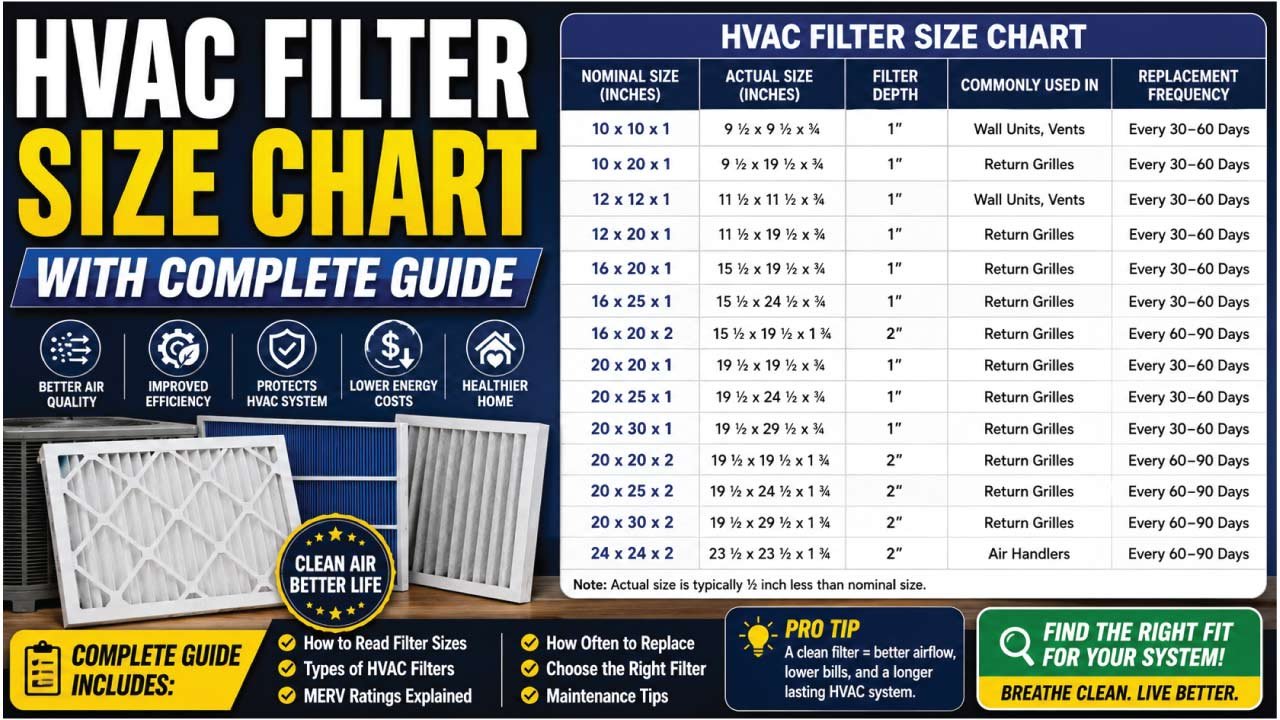
HVAC filters are one of the most important components of any heating and cooling system. They help maintain indoor air quality, protect HVAC equipment, and improve airflow efficiency throughout homes and commercial buildings. Choosing the correct HVAC filter size is essential because the wrong filter can reduce airflow, increase energy costs, and even damage the HVAC system over time.
Many homeowners replace filters without understanding filter dimensions, MERV ratings, or actual sizing differences. This complete HVAC filter size chart guide explains standard filter sizes, thickness options, measurement methods, filtration ratings, and maintenance tips to help you select the right HVAC air filter for your system.
What Is an HVAC Filter?
An HVAC filter is a filtration component installed inside heating, ventilation, and air conditioning systems. Its main purpose is to trap airborne contaminants before they enter the HVAC equipment and circulate through indoor spaces.
HVAC filters capture:
- Dust
- Dirt
- Pollen
- Pet dander
- Mold spores
- Smoke particles
- Lint
- Airborne allergens
These filters improve indoor air quality while protecting HVAC components such as blower motors, evaporator coils, and duct systems.
Why HVAC Filter Size Matters
Selecting the correct HVAC filter size is essential for maintaining system efficiency, improving indoor air quality, and ensuring long-term equipment performance. An improperly sized filter can reduce airflow, increase energy usage, and shorten the lifespan of your HVAC system.
1. Proper Airflow
Correctly sized HVAC filters allow smooth and balanced airflow through the system. When the filter fits properly, air can pass without restriction, helping the system maintain consistent heating and cooling performance throughout the building.
2. Better Indoor Air Quality
A properly fitted filter prevents air from bypassing around the edges, which is a common issue with incorrect sizes. This ensures that dust, allergens, and other airborne particles are effectively trapped, resulting in cleaner and healthier indoor air.
3. Improved Energy Efficiency
When airflow is not restricted, the HVAC system does not need to work harder than necessary. This improves overall energy efficiency, reduces electricity consumption, and helps maintain stable temperature control without overloading system components.
4. Longer HVAC System Life
Correct filter sizing reduces strain on key HVAC components such as fans, motors, and compressors. With smoother airflow and less resistance, the system experiences less wear and tear, ultimately extending its operational lifespan.
5. Reduced Maintenance Costs
Properly sized filters help reduce dust accumulation inside the HVAC system. This minimizes the need for frequent cleaning and repairs, lowers maintenance costs, and keeps the system running efficiently for a longer period.
Understanding HVAC Filter Sizes
HVAC filter sizes are typically displayed using three dimensions:
Length × Width × Thickness
Example sizes include:
- 16 × 20 × 1
- 20 × 25 × 1
- 20 × 25 × 4
- 24 × 24 × 1
These measurements are generally listed in inches.
Standard HVAC Filter Size Chart
Below is a common residential HVAC filter size chart.
| Nominal Size | Actual Size (Approx.) |
|---|---|
| 10 × 20 × 1 | 9.75 × 19.75 × 0.75 |
| 12 × 12 × 1 | 11.75 × 11.75 × 0.75 |
| 12 × 24 × 1 | 11.75 × 23.75 × 0.75 |
| 14 × 20 × 1 | 13.75 × 19.75 × 0.75 |
| 14 × 25 × 1 | 13.75 × 24.75 × 0.75 |
| 16 × 20 × 1 | 15.75 × 19.75 × 0.75 |
| 16 × 25 × 1 | 15.75 × 24.75 × 0.75 |
| 18 × 20 × 1 | 17.75 × 19.75 × 0.75 |
| 20 × 20 × 1 | 19.75 × 19.75 × 0.75 |
| 20 × 25 × 1 | 19.75 × 24.75 × 0.75 |
| 20 × 25 × 4 | 19.5 × 24.5 × 3.75 |
| 24 × 24 × 1 | 23.75 × 23.75 × 0.75 |
| 25 × 25 × 1 | 24.75 × 24.75 × 0.75 |
How to Measure HVAC Filter Size
Measuring HVAC filter size correctly is essential when the original label is missing or unreadable. Proper measurement ensures the filter fits tightly, maintains airflow efficiency, and protects the HVAC system from dust and debris while avoiding performance issues caused by incorrect sizing.
1. Step 1: Turn Off the HVAC System
Before removing the filter, always switch off the HVAC system completely. This prevents air from pulling dust into the system and ensures your safety while handling internal components. Turning off the system also helps avoid pressure changes that could dislodge debris during filter removal.
2. Step 2: Remove the Existing Filter
Carefully slide the filter out of its compartment without bending or damaging it. Handle it gently, as a damaged filter can lead to inaccurate measurements. Keeping the filter intact also helps you compare its condition and confirm the correct replacement type later.
3. Step 3: Measure Width
Measure the shorter side of the filter using a measuring tape. This is considered the width in HVAC sizing. Take precise measurements to avoid errors, as even small differences can affect fit, airflow efficiency, and overall system performance when installing a new filter.
4. Step 4: Measure Length
Next, measure the longer side of the filter, known as the length. Ensure the tape is straight and aligned properly for accuracy. This dimension is critical because HVAC filter sizes are typically labeled using length first, followed by width in standard sizing formats.
5. Step 5: Measure Thickness
Measure the depth or thickness of the filter carefully. This dimension determines how snugly the filter fits into the HVAC slot. Incorrect thickness can lead to air leakage, reduced filtration efficiency, and improper system performance, especially in high-demand heating or cooling conditions.
6. Step 6: Round to Nominal Size
HVAC filters are sold in standard nominal sizes, not exact measurements. After measuring, round your dimensions to the nearest standard size for compatibility. This ensures you can easily find replacement filters that fit properly and maintain optimal airflow and system efficiency.
Example:
Actual size: 15.75 × 24.75 × 0.75
Nominal size: 16 × 25 × 1
Common HVAC Filter Thicknesses
HVAC filters are available in several thickness options.
| Thickness | Typical Application |
|---|---|
| 1 inch | Standard residential systems |
| 2 inch | Improved airflow systems |
| 4 inch | High-efficiency HVAC systems |
| 5 inch | Advanced filtration systems |
| 6 inch | Commercial HVAC systems |
Benefits of Thick HVAC Filters
Thicker HVAC filters are designed to provide improved performance and longer service life compared to standard thin filters. They offer better dust-holding capacity and enhanced filtration efficiency, but they must always match the HVAC system’s design to ensure proper airflow and safe operation.
1. Better Airflow
Thicker HVAC filters often have a larger surface area, which allows air to pass through more easily with reduced resistance. This helps maintain balanced airflow in the system, improving heating and cooling efficiency while reducing strain on the blower motor during operation.
2. Longer Lifespan
Due to their increased depth and filtration media, thicker filters typically last longer than standard filters. They can operate effectively for several months without needing replacement, depending on usage conditions, which reduces maintenance frequency and helps maintain consistent system performance over time.
3. Higher Dust Capacity
Thicker filters can trap and hold a larger amount of dust, dirt, and airborne particles before becoming clogged. This higher dust-holding capacity makes them ideal for environments with heavy dust levels, ensuring cleaner air circulation and more stable HVAC system performance between replacements.
4. Improved Filtration
With more filter media available, thicker HVAC filters provide better particle capture and improved indoor air quality. They can trap smaller contaminants more effectively, including allergens and fine dust, resulting in a healthier indoor environment and cleaner airflow throughout the space.
5. System Compatibility Requirement
Despite their advantages, thicker HVAC filters are not suitable for all systems. The HVAC unit must be designed to accommodate the additional thickness to avoid airflow restriction or installation issues. Always verify compatibility before upgrading to ensure safe and efficient system operation.
MERV Ratings Explained
MERV stands for Minimum Efficiency Reporting Value. It measures filter efficiency.
| MERV Rating | Filtration Level |
|---|---|
| 1–4 | Basic dust protection |
| 5–8 | Standard residential use |
| 9–12 | Improved allergy filtration |
| 13–16 | Hospital-grade filtration |
| 17–20 | Cleanroom filtration |
Best MERV Rating for Home HVAC Systems
Most residential HVAC systems work best with:
- MERV 6–8 for standard homes
- MERV 9–12 for allergies and pets
- MERV 13 for advanced filtration systems
Very high MERV filters can restrict airflow if the HVAC system is not designed for them.
Signs Your HVAC Filter Needs Replacement
A clogged or dirty HVAC filter can significantly reduce system efficiency, affect indoor air quality, and increase energy consumption. Recognizing early warning signs helps you replace the filter on time and maintain smooth HVAC performance.
1. Weak Airflow
When the HVAC filter becomes dirty, airflow from vents noticeably decreases. The system struggles to push air through the clogged filter, resulting in weak or uneven airflow throughout the building, which reduces overall comfort and efficiency.
2. Increased Energy Bills
A blocked filter forces the HVAC system to work harder to maintain the desired temperature. This extra effort increases electricity usage, leading to higher energy bills. Regular filter replacement helps maintain energy efficiency and reduces unnecessary operating costs.
3. Dusty Indoor Air
If you notice more dust accumulating on furniture, floors, or around vents, it may indicate a clogged filter. A dirty filter fails to trap airborne particles effectively, allowing dust to circulate freely inside the indoor environment.
4. Allergy Symptoms
Poor filtration can lead to increased exposure to allergens such as pollen, dust, and pet dander. This may worsen allergy symptoms, causing discomfort like sneezing, coughing, or irritated eyes, especially in sensitive individuals or enclosed indoor spaces.
5. Frozen Evaporator Coils
Restricted airflow due to a dirty filter can cause the evaporator coil to become too cold and freeze. This issue reduces cooling performance and may lead to system shutdowns or costly repairs if not addressed promptly.
6. Longer HVAC Cycles
When airflow is restricted, the HVAC system takes longer to reach the desired temperature. This results in extended heating or cooling cycles, putting additional strain on components and reducing overall system efficiency and lifespan.
Explore Our Latest Article:
How Often Should HVAC Filters Be Changed?
Replacement schedules depend on filter type and home conditions.
| Filter Type | Recommended Replacement |
|---|---|
| Fiberglass Filters | Every 30 days |
| Pleated Filters | Every 60–90 days |
| HEPA Filters | Every 6–12 months |
| Washable Filters | Clean monthly |
| Thick Media Filters | Every 6–12 months |
Homes with pets, smokers, or high dust levels may require more frequent replacement.
HVAC Filter Installation Guide
Proper HVAC filter installation is essential for maintaining good airflow, system efficiency, and indoor air quality. Installing the filter correctly ensures that the HVAC system operates smoothly and prevents dust or debris from damaging internal components.
1. Step 1: Turn Off HVAC System
Before replacing the filter, always switch off the HVAC system completely. This ensures safety during installation and prevents the system from pulling in dust or debris while the filter compartment is open.
2. Step 2: Remove Old Filter
Carefully slide out the old or dirty filter from its slot. Avoid shaking or damaging it too much, as trapped dust can spread into the air. Proper removal helps keep the surrounding area clean and prepares the slot for the new filter.
3. Step 3: Check Airflow Direction Arrow
Most HVAC filters include an airflow direction arrow printed on the frame. This arrow indicates the correct direction of air movement. Checking this step is important because incorrect alignment can reduce filtration efficiency and restrict system performance.
4. Step 4: Insert New Filter
Place the new filter into the slot with the airflow arrow pointing in the correct direction. Ensure it fits snugly without gaps or bending. Proper installation allows air to pass evenly through the filter media for maximum dust and particle capture.
5. Step 5: Close Filter Access Panel
After inserting the filter, securely close the access panel or cover. Make sure it seals properly to prevent air leakage around the edges, which could reduce filtration efficiency and allow unfiltered air to circulate through the HVAC system.
6. Step 6: Restart HVAC System
Once everything is properly installed and secured, turn the HVAC system back on. Check airflow from vents to ensure normal operation. Correct installation helps maintain efficient performance, cleaner air, and long-term system protection.
Common HVAC Filter Problems
HVAC filter issues can reduce system efficiency, increase energy consumption, and negatively affect indoor air quality. Understanding these common problems helps you maintain proper airflow and ensure your HVAC system operates smoothly.
1. Wrong Filter Size
Using the incorrect filter size can create gaps between the filter and the slot, allowing unfiltered air to bypass the system. This reduces filtration efficiency and lets dust and allergens circulate inside the building, lowering overall air quality and system performance.
2. Dirty Filters
When filters become clogged with dust and debris, airflow is significantly restricted. This forces the HVAC system to work harder, reducing efficiency and increasing energy usage. Dirty filters can also cause overheating, poor temperature control, and potential system damage over time.
3. Incorrect MERV Rating
A filter with too high a MERV rating may restrict airflow excessively, putting unnecessary strain on the HVAC system. While higher filtration improves air quality, it must be balanced with system compatibility to avoid reduced performance and increased wear on components.
4. Poor Installation
Incorrect filter installation, especially wrong airflow direction, reduces filtration effectiveness. When the filter is installed backward, it cannot properly capture particles, leading to poor air quality and reduced system efficiency. Proper alignment is essential for optimal performance.
5. Damaged Filter Frames
Bent or damaged filter frames can create gaps in the filter housing. These gaps allow unfiltered air to pass through, reducing efficiency and allowing dust to enter the HVAC system. A properly sealed and undamaged frame is necessary for effective filtration.
Explore Our Latest Article:
HVAC Filter Sizes for Different Systems
HVAC filter sizes vary depending on the type of system being used. Residential, commercial, and industrial systems each have different airflow demands, filtration requirements, and installation designs, which influence the size and thickness of the filters required for optimal performance.
1. Residential HVAC Systems
Residential HVAC systems typically use standard-sized filters designed for home furnaces and air conditioners. Common sizes include 16 × 20 × 1, 20 × 20 × 1, 20 × 25 × 1, and 20 × 25 × 4. These filters are designed to balance airflow efficiency with effective dust and allergen removal in household environments.
2. Commercial HVAC Systems
Commercial HVAC systems require larger and often thicker filters compared to residential units. These systems handle higher airflow volumes and larger spaces such as offices, malls, and schools. The filters used are designed for better dust-holding capacity and longer service life under continuous operation conditions.
3. Industrial HVAC Systems
Industrial HVAC systems use specialized or custom-sized filters based on specific operational needs. These environments often involve heavy dust, chemicals, or high-temperature conditions. As a result, filtration systems are designed for maximum durability, high efficiency, and compatibility with unique industrial airflow and safety requirements.
Washable vs Disposable HVAC Filters
HVAC filters come in two main types: washable (reusable) filters and disposable (replaceable) filters. Each type has its own advantages and disadvantages depending on maintenance needs, indoor air quality requirements, and long-term cost considerations. Choosing the right filter type helps improve HVAC efficiency and maintain a cleaner indoor environment.
1. Washable Filters
Washable HVAC filters are designed to be cleaned and reused multiple times instead of being replaced. They are typically made from durable materials such as aluminum mesh or synthetic fibers.
Advantages:
- Reusable for long-term use
- Eco-friendly and reduces waste
- Lower long-term cost compared to frequent replacements
Disadvantages:
- Require regular cleaning and maintenance
- May provide lower filtration efficiency than high-quality disposable filters
- Performance can decrease if not cleaned properly
2. Disposable Filters
Disposable HVAC filters are single-use filters that must be replaced once they become dirty or clogged. They are available in different materials, thicknesses, and MERV ratings for various applications.
Advantages:
- Better filtration performance for capturing dust and allergens
- Convenient and easy to replace
- Available in a wide range of MERV ratings for different air quality needs
Disadvantages:
- Ongoing replacement cost over time
- Produces waste after each use
Washable filters are suitable for users looking for reusable and cost-saving options, while disposable filters are ideal for better air quality, convenience, and consistent performance. The best choice depends on system requirements and indoor air quality needs.
Explore Our Latest Article:
Choosing the Right HVAC Filter
Selecting the correct HVAC filter is important for maintaining good airflow, system efficiency, and indoor air quality. The right filter ensures your HVAC system operates smoothly while protecting components from dust and debris buildup.
1. Check Existing Filter Label
Most HVAC filters have size and specification details printed on the frame. Checking this label is the easiest way to identify the correct replacement. It provides quick guidance on dimensions, helping you avoid installation errors and ensuring proper fit.
2. Verify Actual Dimensions
If the label is missing or unclear, always measure the filter manually. Small differences in size can affect airflow and performance. Accurate measurements ensure a proper seal inside the filter slot and help prevent air leakage or system inefficiency.
3. Match HVAC Specifications
Every HVAC system has manufacturer-recommended filter requirements. Following these specifications ensures compatibility and prevents strain on the system. Using the correct filter type helps maintain balanced airflow, efficient operation, and long-term system reliability without unnecessary wear.
4. Choose Proper Thickness
Filter thickness must match the design of the HVAC system. Installing a filter that is too thick or too thin can cause airflow restrictions or poor sealing. Ensuring the correct depth improves filtration efficiency and maintains consistent system performance.
5. Consider Air Quality Needs
Air quality requirements play a major role in filter selection. Higher MERV-rated filters capture smaller particles and improve indoor air quality, making them ideal for allergy sufferers. However, they must still be compatible with the HVAC system to avoid airflow restrictions.
HVAC Filter Maintenance Tips
Proper HVAC filter maintenance is essential for keeping your system efficient, reducing energy costs, and maintaining healthy indoor air quality. Regular care ensures smooth airflow, prevents system strain, and extends the overall lifespan of HVAC components.
1. Inspect Filters Monthly
Regular inspection of HVAC filters helps identify dirt buildup before it becomes a serious issue. Checking them every month ensures you catch early signs of clogging, maintain proper airflow, and keep your system running efficiently without unnecessary strain on motors or fans.
2. Replace Filters on Time
Timely replacement of HVAC filters is crucial for maintaining system performance. Waiting too long allows dust and debris to accumulate, reducing airflow and efficiency. Following a proper replacement schedule helps maintain clean air circulation and prevents damage to internal HVAC components.
3. Keep Vents Clean
Clean air vents are important for maintaining smooth airflow throughout the system. Dust and debris buildup in vents can restrict air movement and reduce overall efficiency. Regular cleaning ensures balanced air distribution and helps the HVAC system perform effectively in all areas.
4. Seal Air Leaks
Air leaks around the filter or duct system can allow unfiltered air to bypass the filtration process. Sealing these leaks ensures that all air passes through the filter properly, improving filtration efficiency, maintaining indoor air quality, and reducing unnecessary system workload.
5. Schedule HVAC Maintenance
Professional HVAC maintenance plays a key role in system performance and longevity. Regular servicing helps identify hidden issues, optimize efficiency, and ensure all components are functioning properly. This preventive care reduces breakdown risks and keeps the system operating smoothly throughout the year.
Energy Efficiency and HVAC Filters
Clean HVAC filters play a major role in improving overall system efficiency and performance. When airflow is unrestricted, the heating and cooling system can operate smoothly without extra strain, resulting in better energy use and improved comfort levels inside the building.
Benefits Include:
- Lower energy bills due to improved airflow efficiency
- Better and more consistent airflow throughout the system
- Faster heating and cooling performance
- Reduced wear and tear on HVAC components
- Improved indoor comfort and temperature balance
Dirty or clogged filters force HVAC systems to work harder to move air, which increases electricity consumption and reduces overall efficiency.
Indoor Air Quality Benefits
HVAC filters are essential for maintaining clean and healthy indoor air by trapping airborne particles before they circulate through the system. High-quality filtration significantly improves indoor living conditions.
Common Pollutants Reduced:
- Dust
- Pollen
- Pet hair and dander
- Mold spores
- Smoke particles
- Airborne allergens
Cleaner air is especially important for children, elderly individuals, and people with allergies or respiratory conditions, helping create a healthier indoor environment.
Custom HVAC Filter Sizes
Some HVAC systems require non-standard or custom filter sizes when regular sizes do not fit properly. These filters are manufactured based on exact measurements to ensure proper airflow and sealing.
Common Applications for Custom Filters:
- Older residential homes with non-standard systems
- Commercial buildings with specialized HVAC setups
- Industrial ventilation systems
- Custom or modified HVAC installations
Custom filters are typically ordered using precise width, length, and thickness measurements to ensure perfect compatibility with the system.
Best HVAC Filter Sizes for Residential Homes
Residential HVAC systems commonly use standard filter sizes that are widely available and easy to replace. The correct size depends on the HVAC system design, filter slot dimensions, and airflow requirements.
Popular Residential Sizes:
- 16 × 20 × 1
- 16 × 25 × 1
- 20 × 20 × 1
- 20 × 25 × 1
- 20 × 25 × 4
Choosing the correct size is essential to ensure proper sealing, efficient airflow, and effective filtration performance in home HVAC systems.
Conclusion
Understanding HVAC filter sizes is essential for maintaining efficient heating and cooling performance, clean indoor air, and long equipment life. Properly sized filters improve airflow, reduce energy consumption, and help prevent expensive HVAC repairs.
Using an HVAC filter size chart makes it easier to identify common dimensions and choose the right replacement filter for your system. Always verify actual measurements, select the proper thickness, and choose an appropriate MERV rating based on your indoor air quality needs.
Regular filter replacement and proper HVAC maintenance help create a cleaner, healthier, and more energy-efficient indoor environment while extending the life of your heating and cooling system.
Explore Our Latest Article: