
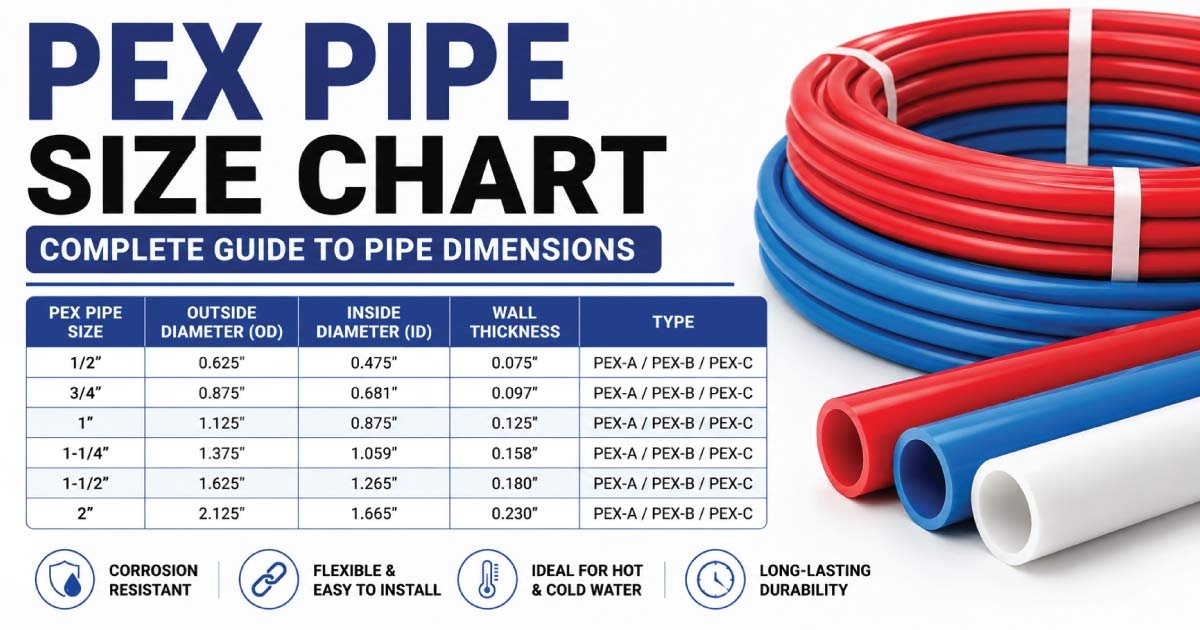
PEX (cross-linked polyethylene) piping has become one of the most popular choices for modern plumbing systems. It is flexible, durable, corrosion-resistant, and much easier to install compared to traditional metal pipes. Whether you are working on residential plumbing, radiant heating, or water supply systems, understanding PEX pipe sizes is essential for choosing the right fit.
This guide explains the complete PEX pipe size chart, dimensions, types, applications, and how to select the correct size for your project.
What Is PEX Pipe?
PEX pipe is a flexible plastic tubing made from cross-linked polyethylene. The “cross-linking” process improves its strength, temperature resistance, and durability.
PEX is widely used in:
- Residential water supply systems
- Radiant floor heating
- Hot and cold water distribution
- Hydronic heating systems
Its flexibility allows long continuous runs with fewer fittings, reducing the chances of leaks and installation time.
Why PEX Pipes Are Popular
PEX piping has replaced many traditional materials like copper and galvanized steel in modern plumbing systems because of its advantages:
- Highly flexible and easy to bend
- Resistant to corrosion and scale buildup
- Faster and cheaper installation
- Suitable for hot and cold water
- Long lifespan (often 40–50 years)
- Freezing resistance (expands slightly instead of bursting)
Because of these benefits, PEX is now standard in many residential plumbing codes.
How PEX Pipe Sizes Are Measured
PEX pipe sizing can be confusing for beginners because its labeling does not directly reflect the exact internal diameter. Instead, PEX follows a standardized system based on nominal sizing and copper tubing dimensions. Understanding how it is measured helps ensure correct fitting selection and proper water flow in plumbing systems.
1. Nominal Size (Trade Size)
PEX pipes are commonly labeled using nominal or trade sizes such as 1/2″, 3/4″, and 1″. These sizes are not exact physical measurements but standard identifiers used in plumbing. They help plumbers and engineers quickly match pipes with compatible fittings and system requirements without focusing on precise internal dimensions.
2. Outside Diameter (OD)
PEX tubing follows the Copper Tube Size (CTS) standard, meaning its outside diameter is designed to match copper pipes of the same nominal size. For example, a 1/2″ PEX pipe has an outside diameter similar to a 1/2″ copper pipe. This standardization ensures compatibility with copper-based fittings and plumbing systems.
3. Inside Diameter (ID)
The inside diameter of PEX pipe varies depending on wall thickness, which differs by manufacturer and pressure rating. The ID is important because it determines the actual water flow capacity. A thicker wall reduces the inside diameter slightly, which can affect flow rate in high-demand plumbing systems.
4. Key Rule to Remember
The most important rule for PEX sizing is that it follows the Copper Tube Size (CTS) system. This means PEX pipe sizes correspond to copper pipe nominal sizes rather than exact measurements. Understanding this standard helps prevent sizing mistakes and ensures proper system design and installation.
PEX Pipe Size Chart (Standard Dimensions)
Below is a detailed PEX pipe size chart showing nominal size, outside diameter, and approximate inside diameter.
| Nominal Size | Outside Diameter (OD) | Approx. Inside Diameter (ID) |
|---|---|---|
| 3/16″ | 1/4 in (0.25″) | ~0.17″ |
| 1/4″ | 0.375″ | ~0.28″ |
| 3/8″ | 0.500″ | ~0.35″ |
| 1/2″ | 0.625″ | ~0.475″ |
| 5/8″ | 0.750″ | ~0.60″ |
| 3/4″ | 0.875″ | ~0.75″ |
| 1″ | 1.125″ | ~0.95″ |
| 1-1/4″ | 1.375″ | ~1.20″ |
| 1-1/2″ | 1.625″ | ~1.40″ |
| 2″ | 2.125″ | ~1.85″ |
These are the most commonly used PEX pipe sizes in residential and light commercial plumbing systems.
Types of PEX Pipe
PEX piping is manufactured using different methods, which result in variations in flexibility, strength, and performance. The three main types—PEX-A, PEX-B, and PEX-C—are all widely used in plumbing and heating systems, but each type is suited for specific installation needs and budgets.
1. PEX-A (Engel Method)
PEX-A is considered the highest quality and most flexible type of PEX pipe. It is manufactured using the Engel cross-linking method, which gives it superior elasticity and durability. This makes it ideal for demanding plumbing systems where bending, expansion, and reliability are important.
Features:
- Highest flexibility
- Can be expanded and repaired easily
- Best freeze resistance
- Most expensive type
Common Uses:
- Residential plumbing
- Radiant heating systems
- Retrofit installations
PEX-A is preferred when flexibility and performance are top priorities, especially in complex installations where tight bends and freeze protection are required.
2. PEX-B (Silane Method)
PEX-B is the most commonly used type of PEX pipe in modern plumbing systems. It is produced using the silane method, which makes it slightly stiffer than PEX-A but still strong and reliable. It is widely chosen because it offers a good balance between affordability and performance.
Features:
- Slightly stiffer than PEX-A
- Good pressure resistance
- More affordable
- Resistant to chlorine
Common Uses:
- Water supply lines
- Home plumbing systems
- Commercial buildings
PEX-B offers the best balance between cost and performance, making it the most popular choice for general plumbing applications.
3. PEX-C (Electron Beam Method)
PEX-C is produced using electron beam processing, which results in a more rigid structure compared to other PEX types. While it is less flexible, it still provides good strength and is suitable for specific installations where flexibility is not a major requirement.
Features:
- Least flexible
- More prone to kinking
- Cost-effective
- High strength
Common Uses:
- Short plumbing runs
- Industrial systems
- Specific repair applications
PEX-C is best suited for simpler or shorter piping systems where budget and strength are more important than flexibility.
How PEX Pipe Size Affects Water Flow
PEX pipe size controls how much water can move through the system and how much pressure is maintained at fixtures. Larger pipes carry more water with less resistance, while smaller pipes are used for limited flow points and individual connections.
Key Flow Insights
- 1/2″ PEX → Standard fixture supply (sink, toilet)
- 3/4″ PEX → Main branch lines in houses
- 1″ PEX → Main water supply line
- 1/4″–3/8″ PEX → Appliance or low-flow connections
Larger diameter = higher flow capacity and lower pressure loss.
PEX Pressure Ratings
PEX pipes are designed to withstand different pressure levels depending on water temperature. As temperature increases, the pressure capacity decreases to ensure safe and reliable operation in plumbing systems.
Typical Ratings
- 160 PSI at 73°F (cold water)
- 100 PSI at 180°F (hot water)
- 80 PSI at 200°F (maximum operating temperature)
This makes PEX suitable for both hot and cold water systems while maintaining safety under varying temperature conditions.
PEX Pipe vs Copper Pipe
PEX and copper are both commonly used in plumbing systems, but they differ in cost, flexibility, and installation requirements. Each material has its own advantages depending on application and budget.
PEX Advantages
- Flexible installation
- Lower cost
- Resistant to freezing
- Faster installation
Copper Advantages
- Higher heat resistance
- Rigid structure
- Long-standing industry trust
PEX is generally preferred for residential plumbing due to its affordability, flexibility, and easier installation process.
Choose the Right PEX Pipe Size
Selecting the correct PEX pipe size is important for maintaining proper water pressure, flow efficiency, and system performance. If the size is too small, it can reduce water flow and pressure. If it is too large, it may increase costs unnecessarily. Proper selection depends on demand, distance, and system design.
1. Water Demand
Water demand is one of the most important factors in choosing PEX pipe size. Systems with high usage, such as multiple bathrooms or kitchens, require larger diameter pipes to ensure consistent flow. Lower demand systems can function efficiently with smaller sizes, helping to reduce material and installation costs.
2. Distance of Pipe Run
The length of the pipe run directly affects water pressure. Longer distances cause more friction loss, which can reduce flow at the endpoint. To compensate, larger diameter PEX pipes are often used in long runs to maintain stable pressure and ensure efficient water delivery throughout the system.
3. Number of Fixtures
The number of fixtures connected to the system also influences pipe sizing. Homes or buildings with multiple sinks, showers, or appliances require higher flow capacity. Using the correct pipe size ensures that all fixtures receive adequate water supply without pressure drops when multiple outlets are used simultaneously.
4. System Type
Different plumbing systems require different PEX sizes. Hot water lines may need slightly different sizing considerations due to temperature effects on pressure. Cold water lines typically maintain more stable pressure. In radiant heating systems, proper sizing is critical to ensure even heat distribution and system efficiency.
5. Building Codes
Local plumbing codes and regulations must always be followed when selecting PEX pipe sizes. These codes ensure safety, efficiency, and compliance with approved standards. Ignoring them can lead to installation issues, failed inspections, or system inefficiency. Always verify requirements before starting any plumbing project.
Installation Benefits of PEX
PEX installation is much simpler compared to traditional metal piping systems, making it a popular choice for modern plumbing. Its flexibility reduces labor work and speeds up project completion while maintaining strong performance and reliability.
Advantages
- Fewer fittings required
- Faster installation time
- Flexible routing around obstacles
- Can be installed in long continuous lengths
- Reduced leak points
This makes it ideal for both professionals and DIY plumbers.
Common Mistakes When Choosing PEX Sizes
Incorrect pipe sizing can lead to poor water pressure, uneven flow, and system inefficiency. Many plumbing issues occur when proper sizing rules and system design are not followed during installation.
Avoid These Mistakes
- Using 1/2″ pipe for main water supply
- Ignoring pressure drop in long runs
- Mixing incompatible fittings
- Overusing small-diameter pipes
- Not following plumbing codes
Proper planning ensures long-lasting performance and prevents costly repairs.
PEX Pipe Standards
PEX pipes are manufactured under strict quality and safety standards to ensure durability, performance, and safe drinking water use. These standards regulate material quality, pressure ratings, and overall system reliability.
Important Standards
- ASTM F876 (dimensions and material requirements)
- ASTM F877 (performance requirements)
- NSF/ANSI 61 (drinking water safety)
- CSA B137.5 (Canadian standards)
These standards guarantee reliable and safe plumbing systems for residential and commercial use.
Conclusion
Understanding the PEX pipe size chart is essential for designing efficient plumbing and heating systems. Since PEX follows the Copper Tube Size (CTS) standard, selecting the right diameter becomes easier once you understand nominal sizing, outside diameter, and flow requirements.
From 1/2″ residential supply lines to 1″ main water lines, choosing the correct size ensures proper water pressure, system efficiency, and long-term durability.
Whether you are a professional plumber or a DIY installer, mastering PEX pipe dimensions will help you build safer and more efficient water systems.
Also Read: 👉 A pipe size mismatch can cause leaks, poor water flow, pressure issues, and installation problems. This guide explains how to fix pipe size mismatch using the right fittings, adapters, and sizing techniques. Learn how to identify incompatible pipe dimensions, choose correct connections, and ensure a reliable plumbing system. Read the full post for practical solutions, expert tips, and step-by-step guidance.