
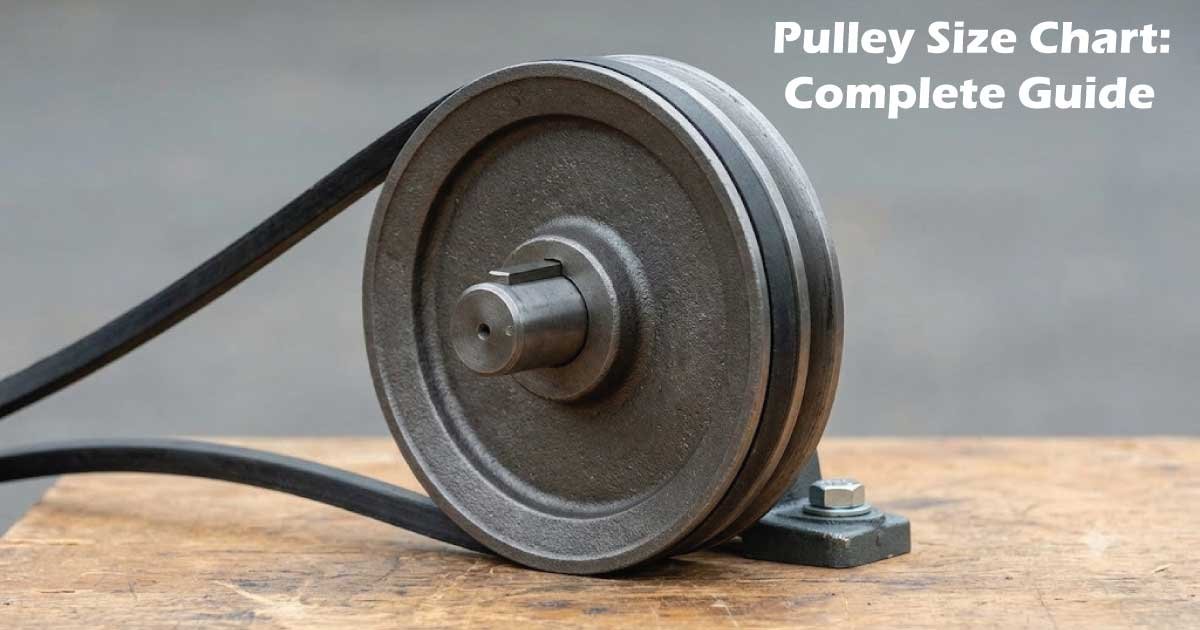
Pulleys are among the most important power transmission components used in mechanical systems. From industrial machinery and conveyor systems to automotive engines, HVAC equipment, and agricultural machinery, pulleys help transfer motion and power efficiently between shafts.
Selecting the correct pulley size is critical for achieving proper speed ratios, maximizing efficiency, reducing belt wear, and extending equipment life. A pulley that is too large or too small can cause performance problems, excessive vibration, belt slippage, and premature component failure.
This complete pulley size chart guide explains common pulley sizes, pulley dimensions, types, applications, speed calculations, and expert tips for choosing the right pulley for your project.
Standard Pulley Size Chart
The following chart shows common pulley diameters used in industrial and mechanical applications.
| Pulley Diameter | Common Applications |
|---|---|
| 2 Inch | Small motors and light-duty equipment |
| 3 Inch | Fans and blowers |
| 4 Inch | Pumps and compressors |
| 5 Inch | Agricultural equipment |
| 6 Inch | Conveyor systems |
| 8 Inch | Industrial machinery |
| 10 Inch | Heavy-duty drives |
| 12 Inch | Manufacturing equipment |
| 14 Inch | Large conveyor systems |
| 16 Inch | Industrial power transmission |
These sizes represent some of the most commonly used pulley diameters across various industries.
Metric Pulley Size Chart
Metric pulleys are widely used in modern machinery and imported equipment.
| Pulley Diameter | Common Use |
|---|---|
| 50 mm | Small motors |
| 75 mm | HVAC systems |
| 100 mm | Pumps |
| 125 mm | Compressors |
| 150 mm | Conveyor drives |
| 200 mm | Manufacturing machinery |
| 250 mm | Heavy-duty systems |
| 300 mm | Industrial equipment |
| 350 mm | Large machinery |
| 400 mm | Material handling systems |
Metric sizing is especially common in European and Asian machinery.
Pulley Speed Ratio Chart
The speed ratio is determined by the relationship between the driver and driven pulley diameters.
| Driver Pulley | Driven Pulley | Speed Ratio |
|---|---|---|
| 2″ | 4″ | 1:2 |
| 3″ | 6″ | 1:2 |
| 4″ | 8″ | 1:2 |
| 5″ | 10″ | 1:2 |
| 4″ | 12″ | 1:3 |
| 6″ | 12″ | 1:2 |
| 8″ | 16″ | 1:2 |
These ratios help determine output speed and torque.
Pulley Speed Formula
N1D1=N2D2N_1 D_1 = N_2 D_2
Understanding the Formula
Where:
- N₁ = Driver RPM
- D₁ = Driver pulley diameter
- N₂ = Driven RPM
- D₂ = Driven pulley diameter
This formula shows the inverse relationship between pulley speed and diameter. When pulley size increases, speed decreases, and when pulley size decreases, speed increases.
Example
If:
- Driver pulley = 4 inches
- Driver speed = 1800 RPM
- Driven pulley = 8 inches
Then:
Driven Speed = (1800 × 4) ÷ 8 = 900 RPM
Key Concept
The larger pulley reduces speed while increasing torque, making it useful in systems where more power and control are needed rather than high rotational speed.
Types of Pulleys
Different pulley designs are used depending on the application, power requirements, and level of precision needed. Each type of pulley is engineered to handle specific mechanical conditions such as speed, load, and alignment. Choosing the right pulley type improves efficiency, reduces wear, and ensures reliable power transmission.
1. V-Belt Pulleys
V-belt pulleys are the most widely used type in industrial and mechanical systems. Their V-shaped grooves help the belt grip tightly, reducing slippage and improving power transfer efficiency.
Benefits include:
- Excellent grip
- High power transmission
- Reduced slipping
- Long service life
Common applications:
- Pumps
- Compressors
- Industrial machinery
2. Timing Belt Pulleys
Timing pulleys use toothed belts that mesh with matching grooves on the pulley, ensuring precise synchronization without slippage. This makes them ideal for systems requiring accurate motion control.
Advantages:
- No slippage
- Accurate positioning
- High efficiency
Often used in:
- CNC machines
- Robotics
- Automation systems
3. Flat Belt Pulleys
Flat belt pulleys are designed for use with flat belts and are commonly used in systems requiring smooth and quiet operation at higher speeds.
Benefits include:
- Smooth operation
- High-speed capability
- Low noise
4. Multi-Groove Pulleys
Multi-groove pulleys feature several grooves to accommodate multiple belts, allowing them to handle higher loads and distribute stress more evenly.
Advantages:
- Increased power capacity
- Better load distribution
- Improved reliability
Common in automotive serpentine belt systems and heavy-duty machinery where multiple components are driven simultaneously.
Also Read This:
Common Pulley Materials
Material selection plays a key role in determining a pulley’s strength, durability, weight, and performance. Different operating conditions such as load, speed, and environment require different materials to ensure efficient power transmission and long service life. Choosing the right material helps reduce wear and improve system reliability.
1. Cast Iron Pulleys
Cast iron is one of the most commonly used materials for pulleys due to its excellent balance of strength, durability, and cost-effectiveness. It performs well in heavy-duty applications where consistent performance is required under load.
Benefits include:
- High strength
- Durability
- Wear resistance
- Cost-effectiveness
2. Steel Pulleys
Steel pulleys are designed for demanding industrial environments where higher strength and load capacity are required. They can handle extreme stress and are suitable for continuous heavy-duty operation.
Provide:
- Greater strength
- High load capacity
- Excellent durability
3. Aluminum Pulleys
Aluminum pulleys are lightweight and corrosion-resistant, making them ideal for applications where reducing rotational mass is important. They are commonly used in high-speed systems.
Advantages include:
- Lightweight design
- Corrosion resistance
- High-speed operation
4. Plastic Pulleys
Plastic pulleys are cost-effective and lightweight, offering smooth and quiet operation. They are generally used in low-load or light-duty applications where high strength is not required.
Benefits include:
- Low cost
- Corrosion resistance
- Quiet operation
Suitable for light-duty applications such as small machines and consumer devices.
Also Read This:
Common Applications of Pulleys
Pulleys are widely used in mechanical and industrial systems because they efficiently transfer power, change motion direction, and control speed. Their simple design makes them suitable for both heavy-duty machinery and everyday equipment. Different industries rely on pulley systems to improve performance, reduce effort, and maintain smooth operation.
1. Industrial Machinery
Factories use pulley systems to transfer power from motors to different machines. This helps maintain synchronized movement across production lines and improves overall efficiency in manufacturing operations.
Examples include:
- Conveyor systems
- Packaging equipment
- Production machinery
2. Automotive Systems
In vehicles, pulleys are essential components that drive multiple engine accessories. They help distribute engine power efficiently to ensure smooth operation of various systems.
Used in:
- Alternators
- Water pumps
- Power steering systems
- Air conditioning compressors
3. HVAC Equipment
Heating, ventilation, and air conditioning systems rely on pulleys for airflow and temperature control. They help operate fans and blowers efficiently in commercial and residential environments.
Applications include:
- Air handlers
- Ventilation fans
- Blowers
4. Agricultural Equipment
Agricultural machines depend heavily on pulley systems for transferring power to different working components. These systems help improve productivity in farming operations.
Examples:
- Tractors
- Harvesters
- Balers
- Feed processing equipment
5. Fitness Equipment
Many gym machines use pulley systems to create resistance and guide movement. This allows users to perform controlled and smooth exercises for strength and conditioning training.
Also Read This:
How to Choose the Right Pulley Size
Selecting the correct pulley size is essential for achieving the desired speed, efficiency, and durability in any belt-driven system. The right choice ensures smooth power transmission, reduces wear on components, and improves overall machine performance. Several factors must be considered carefully before final selection to avoid slippage, vibration, or mechanical failure.
1. Determine Required Speed
The first step is to calculate the required output speed (RPM) of the driven system. Pulley diameter directly affects rotational speed, so understanding your target RPM helps you choose the correct pulley combination. Proper calculation ensures the machine operates at the desired speed while maintaining efficiency and stability in performance.
2. Consider Load Requirements
Load plays a major role in pulley selection. Heavier loads require larger pulleys and wider belts to distribute force more effectively. If the pulley system is undersized, it may lead to belt slippage, overheating, or premature wear. Choosing the right size ensures the system can handle stress without compromising durability or safety.
3. Match Belt Type
Different pulley designs are made for specific belt types, so proper matching is essential. Common belt types include V-belts, timing belts, flat belts, and multi-rib belts. Each has unique groove shapes and performance characteristics. Using the correct pulley for the belt type ensures proper grip, reduces slippage, and improves overall transmission efficiency.
4. Verify Shaft Size
The pulley bore must match the shaft diameter precisely to ensure secure mounting and proper alignment. A loose fit can cause vibration and slippage, while a tight fit may damage components during installation. Correct shaft-to-bore matching ensures stable operation, efficient torque transfer, and longer service life of both pulley and shaft.
5. Check Space Constraints
Physical space is an important consideration when selecting a pulley. Larger pulleys require more clearance for installation and operation. Before finalizing the size, always check available space within the machine or system layout. Proper clearance prevents interference with nearby components and ensures safe, smooth, and uninterrupted system performance.
Common Pulley Problems
Pulley systems are generally reliable, but they can develop issues over time due to wear, poor installation, or incorrect sizing. Identifying these problems early helps prevent system failure, reduce maintenance costs, and improve overall efficiency in mechanical and industrial applications.
1. Belt Slippage
Belt slippage occurs when the belt fails to maintain proper grip on the pulley, leading to reduced power transmission and inefficient system performance. It often results in loss of speed and increased wear on both belt and pulley surfaces.
Possible causes:
- Incorrect pulley size
- Insufficient tension
- Worn belts
2. Excessive Vibration
Excessive vibration in pulley systems can reduce performance and cause long-term damage to connected components. It often indicates mechanical imbalance or improper installation.
May result from:
- Misalignment
- Damaged pulleys
- Improper installation
3. Bearing Wear
Improper pulley sizing or excessive load can place additional stress on bearings, leading to premature wear and potential system failure. This affects smooth rotation and overall machine efficiency.
4. Noise
Unusual or excessive noise in a pulley system is often a warning sign of underlying mechanical issues. It may indicate misalignment, worn components, or improper belt tension, all of which require immediate attention to prevent further damage.
Advantages of Using Properly Sized Pulleys
Using correctly sized pulleys is essential for achieving efficient and reliable power transmission in mechanical systems. Proper pulley selection ensures that belts operate under optimal conditions, reducing stress on components and improving overall machine performance. It also helps extend equipment life and minimize unexpected breakdowns.
Key benefits include:
- Improved efficiency
- Better speed control
- Increased torque transmission
- Reduced maintenance costs
- Longer belt life
- Lower operating noise
- Enhanced equipment reliability
Why Proper Sizing Matters
Correct pulley sizing ensures that the belt operates smoothly without excessive tension or slippage. This balance reduces mechanical wear, prevents overheating, and improves energy transfer between connected components. As a result, machinery runs more efficiently and requires less frequent maintenance.
These advantages contribute directly to lower operating costs, improved productivity, and longer service life of both belts and pulley systems in industrial, automotive, and mechanical applications.
Conclusion
A pulley size chart is an essential reference for engineers, mechanics, maintenance technicians, and equipment operators. Understanding pulley diameters, speed ratios, belt compatibility, and material options helps ensure optimal system performance.
Whether you’re designing a conveyor system, maintaining industrial machinery, repairing agricultural equipment, or building an automation project, selecting the correct pulley size improves efficiency, reduces wear, and extends equipment life. By using the charts and guidelines in this guide, you can confidently choose the right pulley for virtually any mechanical application.
FAQs:
1. What is a pulley and why is it used?
A pulley is a mechanical device with a grooved wheel used to transfer motion and power between shafts using a belt or rope. It is widely used in machinery, engines, and industrial systems to change speed, direction, or torque. Pulleys improve efficiency, reduce manual effort, and allow smooth transmission of mechanical energy in different applications.
2. How does pulley size affect speed and torque?
Pulley size directly controls speed and torque in mechanical systems. A larger pulley reduces speed but increases torque, while a smaller pulley increases speed but reduces torque. This relationship helps engineers adjust machine performance based on application needs. Proper sizing ensures efficient power transfer, smooth operation, and prevents mechanical stress or system imbalance during use.
3. What happens if I use the wrong pulley size?
Using the wrong pulley size can cause serious mechanical problems such as belt slippage, vibration, overheating, and reduced efficiency. It may also lead to premature wear of belts and bearings. Incorrect sizing disrupts speed ratios and increases system stress. Over time, this can result in equipment failure and higher maintenance or replacement costs.
4. What is the difference between pitch diameter and outside diameter?
Pitch diameter is the effective diameter where the belt actually rides, and it determines speed ratio and power transmission. Outside diameter is the total outer measurement of the pulley. While OD is used for general sizing, pitch diameter is more critical for performance calculations because it directly affects speed, torque, and system efficiency.
5. Which material is best for pulleys?
The best pulley material depends on application. Cast iron is strong and commonly used in industrial systems. Steel offers higher strength for heavy-duty use. Aluminum is lightweight and ideal for high-speed systems. Plastic is used for light-duty applications. Choosing the right material improves durability, reduces wear, and ensures long-lasting mechanical performance under load.
6. How do I calculate pulley speed ratio?
Pulley speed ratio is calculated by dividing the driver pulley diameter by the driven pulley diameter. A larger driven pulley reduces speed, while a smaller one increases it. The formula helps determine RPM changes in systems. Correct calculation ensures proper performance, energy efficiency, and balanced torque distribution in industrial and mechanical power transmission systems.
7. Where are pulleys commonly used?
Pulleys are widely used in industrial machinery, automotive engines, HVAC systems, agricultural equipment, conveyor belts, and fitness machines. They help transfer power efficiently and control speed or direction. Their simple design makes them essential in many mechanical systems where smooth, reliable motion and energy transfer are required for continuous operation and performance.
8. How do I choose the right pulley size?
To choose the right pulley size, you must consider required speed, load capacity, belt type, shaft size, and available space. Proper selection ensures efficient power transfer, reduces wear, and prevents slippage. Always match pulley dimensions with system requirements to maintain balance, improve performance, and extend the life of belts and mechanical components.