
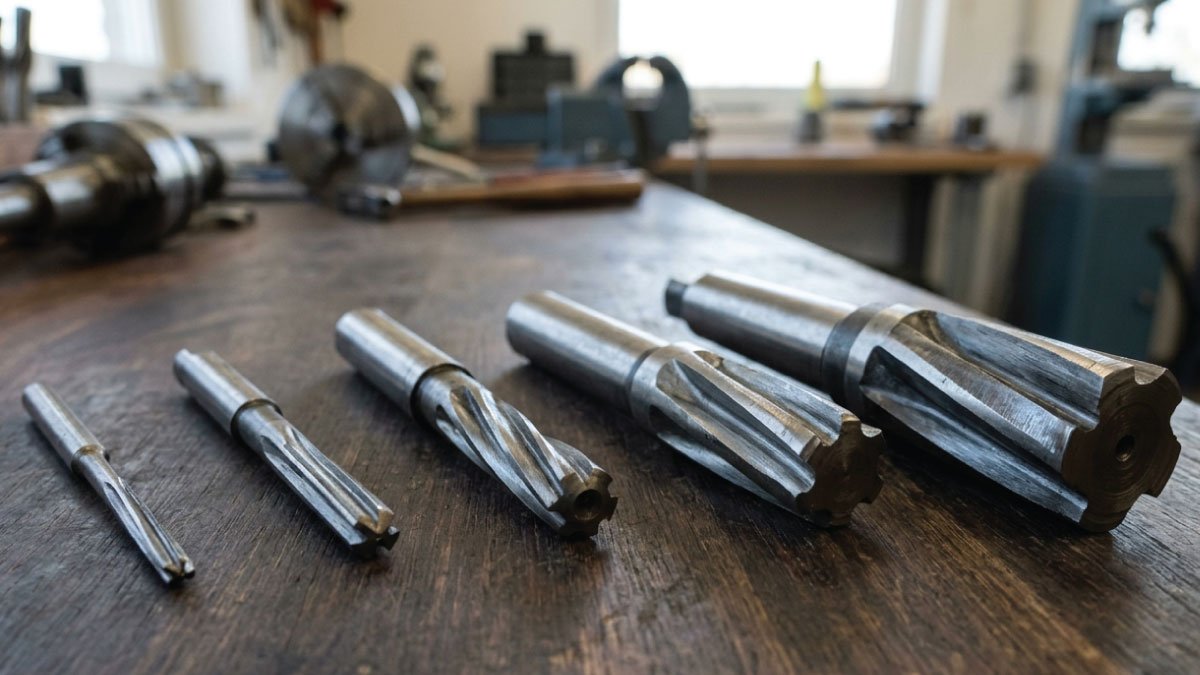
If you have ever worked on metal fabrication, automotive repairs, or precision engineering, you’ve likely encountered reamers.
These specialized cutting tools are essential for finishing holes to exact diameters with smooth surfaces. Unlike drills, which remove large amounts of material, reamers provide precision sizing and a professional finish.
In this guide, I will share my personal experiences, a complete reamer tool size chart for metric and inch systems, and practical tips for accurate usage.
Reamer Tool Guide: A Workshop Story About Precision Hole Finishing
The first time I truly understood the importance of precision tools was on a quiet evening in my workshop. I was working on a small metal bracket for a shaft assembly, confident that everything would fit perfectly. But when I tried to insert the shaft, it simply wouldn’t go in. The hole looked right, measured almost perfectly, yet something was off—and that small error stopped the entire project.
I remember feeling frustrated, thinking the problem was minor. I tried adjusting the fit manually, even considered redrilling, but nothing worked without risking damage to the part. That’s when I reached for a reamer for the first time with real intention. Slowly, carefully, I worked it through the hole, applying light pressure and proper lubrication. Within moments, the difference was clear.
When I tried fitting the shaft again, it slid in smoothly—no force, no resistance, just a perfect, precise fit. That small success completely changed how I approached machining work. It taught me that accuracy isn’t just about measurements—it’s about the right tools and the right technique.
Since then, reamers have become an essential part of my workflow, especially when precision truly matters.
What is a Reamer?
A reamer is a rotary cutting tool used to enlarge or finish holes with a high degree of accuracy. While drills are designed for rough hole making, reamers are used to achieve precise diameters and smooth finishes.
From my own experience, I learned the value of reamers during a project where I was installing a shaft in a metal bracket. The drilled hole was slightly undersized, and the shaft would not fit.
Using a precision reamer allowed me to achieve the exact diameter, making the assembly smooth and secure. That moment made me realize that a reamer isn’t just a tool—it’s an investment in precision.
Why Reamer Sizes Matter
Selecting the correct reamer size is crucial because:
Precision Fit: A slightly oversized or undersized hole can compromise mechanical integrity.
Surface Finish: The right reamer ensures a smooth, burr-free surface, reducing wear and friction.
Safety: Misfitted components in machinery or vehicles can cause failures and accidents.
I remember working on a homemade gearbox where the bushing was slightly tight. Without a reamer, the fit was imperfect, causing uneven rotation and increased friction.
Using the correct reamer size solved the problem and improved the performance dramatically.
How to Choose the Right Reamer Size
Choosing the correct reamer size depends on:
Hole Size: Measure the hole with a caliper or micrometer to determine the target diameter.
Tolerance: Determine the acceptable range of variation. High-precision applications require tight tolerances.
Material: Harder metals require slower feeds and proper lubrication.
From my experience, it’s always better to start with a slightly smaller reamer and gradually adjust to achieve the perfect fit. Reaming too much in one pass can damage the hole and the reamer.
Reamer Tool Size Chart
Here’s a comprehensive reamer tool size chart for both metric and inch measurements. This chart will help you select the right reamer for any project.
Metric Reamer Chart
| Hole Size (mm) | Standard Reamer Size (mm) | Tolerance (mm) | Typical Applications |
|---|---|---|---|
| 3.0 | 3.0 | ±0.01 | Small bolts, electronics, light machinery |
| 4.0 | 4.0 | ±0.01 | Small fasteners, bike parts |
| 5.0 | 5.0 | ±0.02 | Automotive components |
| 6.0 | 6.0 | ±0.02 | Machinery, brackets |
| 8.0 | 8.0 | ±0.02 | Shafts, bushings |
| 10.0 | 10.0 | ±0.03 | Engine parts, structural metal |
| 12.0 | 12.0 | ±0.03 | Industrial fittings |
| 14.0 | 14.0 | ±0.03 | Heavy machinery |
| 16.0 | 16.0 | ±0.04 | Construction equipment |
| 20.0 | 20.0 | ±0.05 | Large shafts, bushings |
Inch Reamer Chart
| Hole Size (inch) | Standard Reamer Size (inch) | Tolerance (inch) | Typical Applications |
|---|---|---|---|
| 1/8 | 0.125 | ±0.001 | Small bolts, precision work |
| 3/16 | 0.1875 | ±0.001 | Small fasteners |
| 1/4 | 0.25 | ±0.002 | Automotive, machinery |
| 5/16 | 0.3125 | ±0.002 | Shafts, brackets |
| 3/8 | 0.375 | ±0.002 | Engine components |
| 7/16 | 0.4375 | ±0.003 | Structural metal |
| 1/2 | 0.5 | ±0.003 | Bushings, large bolts |
| 5/8 | 0.625 | ±0.004 | Heavy machinery |
| 3/4 | 0.75 | ±0.004 | Industrial components |
| 1 | 1.0 | ±0.005 | Large shafts, construction |
💡 Pro Tip: Always check both the diameter and tolerance before choosing a reamer. The perfect fit is often in the hundredths of a millimeter or thousandths of an inch.
Read More:
Personal Experience With Reamers
Over the years, I have used reamers for a variety of projects, from repairing old machinery to fabricating custom parts. One of my most memorable projects was creating bushings for a DIY motorized cart.
I drilled the holes slightly smaller than the shaft diameter and used a hand reamer to achieve a perfect fit. The result? Smooth rotation and minimal play, making the cart safer and more efficient.
Another experience involved reaming engine cylinder heads. Machine reamers allowed me to finish multiple holes quickly, achieving consistent diameters critical for proper assembly.
From these experiences, I learned that patience, proper lubrication, and correct sizing are key to effective reaming.
How to Use a Reamer Properly
Using a reamer correctly is just as important as choosing the right type or size. Proper technique ensures smooth, accurate hole finishing, extends tool life, and prevents costly mistakes, especially when working with metal components or precision parts.
1- Select the Right Size:
Always start by choosing the correct reamer size based on your requirement. Refer to a size chart and measure both the existing hole and the tool carefully to ensure a proper fit, avoiding over-sizing or insufficient finishing.
2- Lubricate:
Applying cutting oil or a suitable lubricant is essential to reduce friction and heat buildup during the reaming process. Proper lubrication not only improves surface finish but also protects the tool from premature wear and damage.
3- Align Carefully:
Make sure the reamer is perfectly aligned with the hole before starting. Even a slight misalignment can cause uneven enlargement, poor surface finish, or tool breakage, especially when working on precision engineering components.
4- Use Proper Speed:
Maintaining the correct speed is crucial for effective reaming. Hand reamers should be rotated slowly and steadily, while machine reamers require speed adjustments depending on the material hardness and machining conditions.
5- Remove Chips Frequently:
During the process, metal chips can accumulate and affect the cutting performance. It is important to pull the reamer out occasionally to clear debris, ensuring smoother operation and preventing scratches or damage inside the hole.
From personal experience, one of the biggest mistakes is rushing the process or applying too much force. I once ruined a 12mm reamer by forcing it through a hardened steel hole without proper lubrication—an expensive lesson that taught me patience and proper technique matter most.
Read More:
Common Mistakes to Avoid
Even experienced users can make mistakes:
Using the Wrong Reamer Size: Can damage the workpiece or the tool.
Skipping Lubrication: Leads to overheating and rough finishes.
Misalignment: Results in tapered or uneven holes.
Excessive Pressure: The reamer should cut gradually; forcing it breaks edges.
I have found that double-checking measurements and taking time during the reaming process avoids these issues every time.
Maintenance Tips for Reamers
Proper maintenance of reamers is essential to ensure long-lasting performance and consistent precision. Taking a little time to care for your tools not only extends their lifespan but also helps maintain accuracy, surface finish quality, and overall efficiency in your machining or workshop tasks.
Clean After Use: Remove metal chips and oil residue.
Proper Storage: Keep reamers in cases or holders to prevent damage.
Avoid Dropping: Even a small impact can ruin precision edges.
Sharpen When Needed: Dull reamers produce rough surfaces and inaccurate diameters.
I maintain a small collection of both metric and inch reamers in a padded toolbox. Proper organization has saved me countless hours searching for the right tool.
Read More:
Applications of Reamers in Real Life
Reamers play a crucial role in many real-world applications where precision and smooth hole finishing are required. From heavy industrial use to small DIY projects, they help achieve accurate dimensions, better alignment, and professional-quality results.
1- Automotive Work:
Reamers are widely used in automotive applications such as cylinder heads, bushings, and shafts. They ensure precise hole sizing for proper fitting of engine components, improving performance, reducing wear, and maintaining smooth mechanical operation over time.
2- Metal Fabrication:
In metal fabrication, reamers are essential for creating accurate and clean holes in brackets, panels, and frames. They help maintain tight tolerances, which is critical when assembling structures that require strong, stable, and perfectly aligned connections.
3- Industrial Machinery:
Reamers are heavily used in industrial machinery for finishing holes in bearings, shafts, and other precision fittings. Their role is vital in ensuring components fit correctly, reducing vibration, enhancing durability, and maintaining the efficiency of complex mechanical systems.
4- DIY Projects:
For DIY enthusiasts, reamers are useful tools for making custom rods, bushings, and mechanical assemblies. They allow hobbyists to achieve professional-level precision at home, especially when working on metal-based creative or repair projects.
From my personal projects, reamers have been incredibly useful for restoring old engines, fabricating metal furniture, and even building small robotics parts. They make a noticeable difference when accuracy matters, turning rough work into clean, reliable results.
Conclusion
A reamer is more than just a finishing tool—it’s a precision instrument that ensures mechanical integrity and smooth operation. Understanding the reamer tool size chart, choosing the correct size, and following proper technique are essential for accurate results.
From my personal experience, investing in high-quality reamers and using them carefully has saved me time, improved the fit of components, and reduced frustration in both professional and DIY projects.
Whether you’re working with metric or inch systems, keeping a complete reamer size chart handy ensures every hole you finish meets the highest standards.
🛠 Pro Tip: Keep both metric and inch reamer charts in your workshop. Always measure twice, lubricate, and work slowly for precision results.