
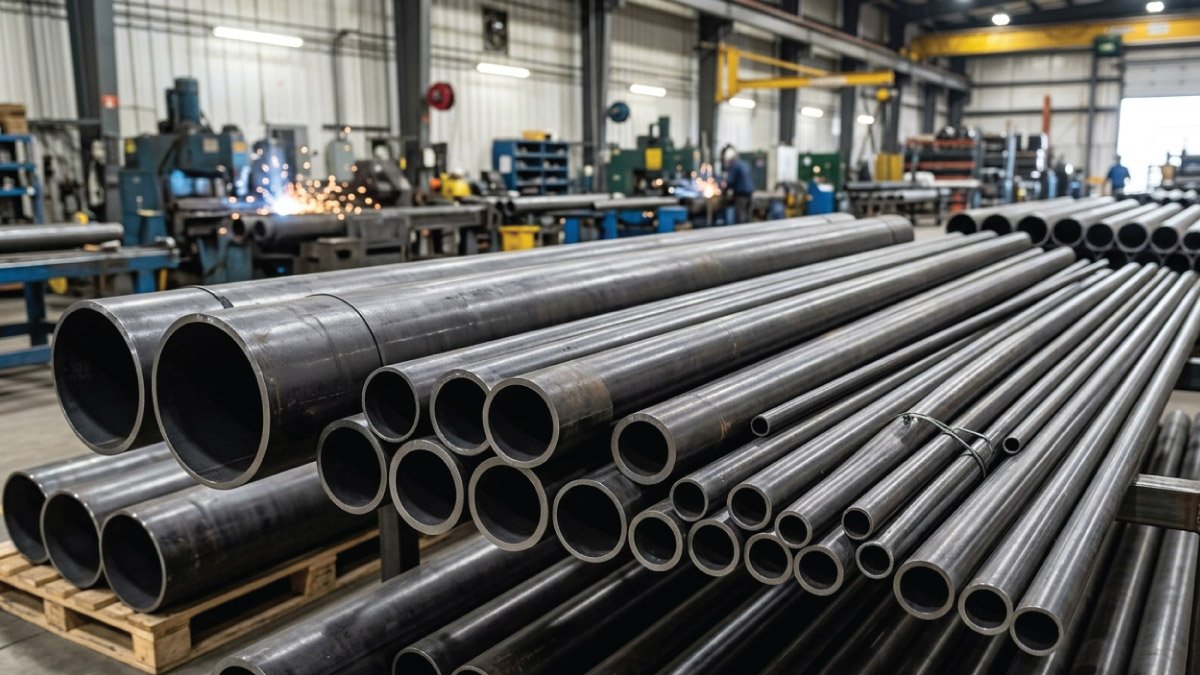
Seamless pipes are a backbone of many industries, from construction to chemical plants. If you’ve ever wondered about seamless pipe sizes and how to choose the right one for your project, this guide will give you a clear and practical understanding.
We will explore standard sizes, materials, and applications while helping you decode seamless pipe charts without any confusion.
My First Experience Working with Seamless Pipes: Lessons from the Field
I still remember the first time I walked onto a construction site where seamless pipes were being installed. I was tasked with helping the engineers select the right pipe sizes for a high-pressure water system, and honestly, I felt overwhelmed. There were dozens of pipes lined up—carbon steel, stainless steel, alloy steel—each with different diameters and wall thicknesses.
As I observed, I realized that choosing the correct seamless pipe wasn’t just about picking the biggest or most expensive option. The engineers carefully measured the outer diameter, inner diameter, and wall thickness, checking the pressure ratings against the project requirements. They explained that even a small miscalculation could lead to leaks or system failure. That was when I truly appreciated the importance of understanding seamless pipe dimensions and schedules.
I also got hands-on experience reading a seamless pipe size chart, matching Nominal Pipe Sizes with wall thickness schedules like SCH 40 and SCH 80. Watching the pipes being installed, I noticed how material mattered—stainless steel was used for corrosive environments, while carbon steel handled the high-pressure lines.
By the end of the day, I realized that seamless pipes are more than just metal tubes—they are the backbone of safe and efficient industrial systems. That experience taught me the importance of precision, material knowledge, and proper maintenance, lessons I’ve carried into every project since.
What Are Seamless Pipes?
Seamless pipes are cylindrical tubes made from a solid piece of metal, without any welded seams. Unlike welded pipes, which are formed by rolling and welding a metal sheet, seamless pipes are created through extrusion or rotary piercing methods. This process ensures uniformity, strength, and the ability to handle high pressure and temperature.
Because of these characteristics, seamless pipes are widely used in industries such as oil and gas, power generation, chemical processing, and water supply systems. They are preferred where reliability and safety are crucial.
Understand Seamless Pipe Dimensions
Choosing the right seamless pipe is not just about picking a size off a chart; it involves understanding the dimensions that define its strength, flow capacity, and suitability for your specific application.
Each measurement plays a crucial role in ensuring safety, efficiency, and performance, whether in high-pressure industrial pipelines or everyday plumbing systems.
When selecting a seamless pipe, there are three key dimensions to consider:
Outer Diameter (OD): This is the external measurement across the pipe.
Wall Thickness (WT): The thickness of the pipe’s walls. Thicker walls handle higher pressure.
Inner Diameter (ID): The internal measurement, calculated by subtracting twice the wall thickness from the outer diameter.
All these dimensions affect the flow capacity, strength, and suitability of a pipe for specific applications.
Standard Seamless Pipe Sizes
Seamless pipes are manufactured in a range of standard sizes to meet industry requirements. These sizes are usually given in Nominal Pipe Size (NPS) or Diameter Nominal (DN) and measured in inches or millimeters.
Here’s a simplified seamless pipe size chart for common reference:
| Nominal Pipe Size (NPS) | Outer Diameter (inches) | Wall Thickness (inches) |
|---|---|---|
| 1/2″ | 0.840 | 0.109 – 0.147 |
| 3/4″ | 1.050 | 0.113 – 0.154 |
| 1″ | 1.315 | 0.133 – 0.179 |
| 1 1/4″ | 1.660 | 0.140 – 0.191 |
| 1 1/2″ | 1.900 | 0.145 – 0.200 |
| 2″ | 2.375 | 0.154 – 0.218 |
| 2 1/2″ | 2.875 | 0.203 – 0.276 |
| 3″ | 3.500 | 0.216 – 0.300 |
| 4″ | 4.500 | 0.237 – 0.337 |
| 6″ | 6.625 | 0.280 – 0.432 |
| 8″ | 8.625 | 0.322 – 0.500 |
| 10″ | 10.750 | 0.365 – 0.593 |
| 12″ | 12.750 | 0.406 – 0.687 |
Note: Wall thickness varies according to the schedule (SCH) number. Common schedules include SCH 10, SCH 40, SCH 80, and SCH 160. Higher schedule numbers indicate thicker walls.
Also Read:
Seamless Pipe Schedules Explained
The “schedule” of a pipe refers to its wall thickness. It determines how much pressure a pipe can safely handle. Here’s a quick guide to the most common pipe schedules:
- SCH 10: Thin wall, suitable for low-pressure applications.
- SCH 40: Standard wall thickness, widely used for general applications.
- SCH 80: Thicker wall, ideal for higher pressure systems.
- SCH 160: Heavy-duty wall, used in high-pressure and critical applications.
Understanding schedules is crucial because two pipes with the same outer diameter can have vastly different pressure ratings depending on wall thickness.
Materials for Seamless Pipes
Seamless pipes are available in a variety of materials, each chosen for specific mechanical properties, corrosion resistance, and application requirements. Selecting the right material ensures durability, safety, and efficiency in different industries, from construction to chemical processing. Here’s an overview of the most commonly used materials:
1. Carbon Steel
Carbon steel is the most widely used material for seamless pipes due to its strength and cost-effectiveness. It provides excellent resistance to wear and pressure, making it suitable for both industrial and infrastructure applications, where reliability and longevity are essential.
- Most widely used material for seamless pipes.
- Offers good strength, durability, and resistance to pressure.
- Commonly used in oil and gas pipelines, construction, and water supply.
2. Stainless Steel
Stainless steel seamless pipes are known for their exceptional corrosion resistance and ability to withstand extreme temperatures. They are ideal for industries where hygiene and chemical resistance are critical, providing both safety and long-term performance in demanding environments.
- Resistant to corrosion, rust, and extreme temperatures.
- Ideal for chemical, food, and pharmaceutical industries.
- Often used in sanitary and hygienic applications.
3. Alloy Steel
Alloy steel pipes combine multiple metals to enhance strength, toughness, and heat resistance. These pipes are preferred for high-stress environments, such as high-pressure systems and elevated temperatures, ensuring safe operation in power plants, chemical processing, and heavy engineering projects.
- Combines different metals to achieve enhanced mechanical properties.
- Used in high-temperature and high-pressure systems, such as power plants and chemical processing.
4. Copper and Copper Alloys
Copper and its alloys are valued for excellent thermal and electrical conductivity, making them essential for applications that require efficient heat or electricity transfer. They are highly durable and corrosion-resistant, commonly found in plumbing, refrigeration, and HVAC systems.
- Excellent thermal and electrical conductivity.
- Commonly used in plumbing, HVAC, and refrigeration systems.
5. Nickel and Nickel Alloys
Nickel-based seamless pipes provide superior resistance to corrosion, oxidation, and chemical damage. They are often used in specialty industries, including marine, chemical, and high-performance engineering, where standard materials cannot withstand the harsh environmental conditions.
- High corrosion resistance, especially in chemical and marine environments.
- Used in specialty industries where extreme resistance is required.
Also Read:
How to Read a Seamless Pipe Size Chart
Reading a seamless pipe size chart can be tricky for beginners, but it becomes straightforward once you understand the layout. Most charts will show:
- Nominal Pipe Size (NPS): Standardized diameter.
- Outer Diameter (OD): Actual outside measurement.
- Wall Thickness / Schedule: Thickness of the pipe walls.
- Inner Diameter (ID): Calculated by subtracting wall thickness.
Example: A 2-inch NPS SCH 40 carbon steel seamless pipe has:
- OD: 2.375 inches
- WT: 0.154 inches
- ID: 2.375 – (2 × 0.154) = 2.067 inches
This pipe can handle medium-pressure fluid flow applications and is commonly used in water and gas pipelines.
Also Read:
Applications of Seamless Pipes
Seamless pipes are highly versatile and essential in many industries due to their uniform structure, strength, and resistance to high pressure and temperature. Their reliability and durability make them the preferred choice for critical systems where failure is not an option. Some common uses include:
Oil and Gas Industry
Seamless pipes are extensively used in the oil and gas industry to transport crude oil, natural gas, and refined products safely over long distances. Their seamless design ensures durability, reduces the risk of leaks, and allows them to withstand high-pressure environments in pipelines and refineries.
- Seamless pipes transport crude oil, natural gas, and refined products under high pressure. Their durability prevents leaks and ruptures.
Chemical and Petrochemical Industry
In chemical and petrochemical plants, seamless stainless steel pipes are preferred because they resist corrosion from aggressive chemicals and maintain structural integrity under extreme temperatures. Their use ensures safe handling of hazardous materials and long-term operational reliability.
- Seamless stainless steel pipes resist corrosion from harsh chemicals and maintain integrity in high-temperature processes.
Power Plants
Seamless pipes play a crucial role in power generation, where boilers, heat exchangers, and turbines operate under high pressure and temperature. Their uniform strength and resistance to thermal expansion make them suitable for critical components in both conventional and nuclear power plants.
- High-pressure boilers and heat exchangers rely on seamless pipes to handle intense temperatures and pressure.
Construction Industry
The construction sector uses seamless pipes for structural support, water supply systems, and HVAC installations. Their strength and reliability ensure safe, long-lasting frameworks, while corrosion-resistant materials like stainless steel provide added durability in both indoor and outdoor applications.
- Used for structural applications, water supply, and HVAC systems.
Automotive and Mechanical Engineering
In automotive and mechanical engineering, seamless pipes are utilized in hydraulic systems, fuel lines, and exhaust systems due to their strength and ability to handle vibration, heat, and high pressure. Their precision manufacturing ensures efficient and safe performance in vehicles and machinery.
- Seamless pipes are employed in hydraulic systems, fuel lines, and exhaust systems due to their strength and reliability.
Also Read:
Choose the Right Seamless Pipe Size
Selecting the correct seamless pipe size is critical for safety, efficiency, and performance. Multiple factors, including pressure, temperature, flow requirements, and material compatibility, must be carefully considered to ensure optimal functionality and long-term reliability.
Pressure and Temperature Requirements
Pipes that carry high-pressure fluids or operate in elevated temperatures require thicker walls and higher schedules. Choosing the right thickness ensures the pipe can withstand operational stress without deformation, leaks, or safety hazards.
- Higher pressure and temperature systems require pipes with thicker walls (higher schedule).
Fluid Type and Flow Rate
The type of fluid—whether liquid, gas, or viscous—affects the pipe diameter selection. Proper inner diameter calculation ensures smooth flow, reduces friction losses, and prevents blockages or system inefficiencies.
- Viscous fluids or gases require careful calculation of the inner diameter for proper flow without excessive friction.
Material Compatibility
The pipe material must be compatible with the transported fluid to avoid chemical reactions or corrosion. Correct material selection enhances durability, reduces maintenance costs, and ensures safe operation under varying industrial conditions.
- Ensure the material of the pipe is compatible with the fluid to prevent corrosion or chemical reactions.
Industry Standards
Adhering to industry standards such as ASTM, ASME, and API ensures the pipe meets safety, performance, and quality requirements. Compliance is crucial for regulatory approval, reliability, and consistent manufacturing practices.
- Adhere to standards such as ASTM, ASME, and API, which ensure consistent quality and safety.
Also Read:
Tips for Maintaining Seamless Pipes
Even the most durable seamless pipes require proper maintenance to maximize lifespan and maintain operational efficiency. Regular checks, correct installation, and protective measures help prevent leaks, corrosion, and performance issues in the long term.
Regular Inspection
Inspect pipes frequently for signs of corrosion, wear, or cracks. Early detection allows timely repairs, prevents failures, and ensures safe operation in high-pressure or critical industrial systems.
- Check for corrosion, wear, or cracks.
Proper Installation
Ensure proper installation of joints, bends, and supports. Correct alignment, secure fittings, and appropriate handling prevent stress points, leaks, and potential structural failures over time.
- Ensure joints, supports, and bends are installed correctly.
Corrosion Protection
Use protective coatings or corrosion-resistant materials, especially when transporting aggressive fluids. This step prolongs pipe life, reduces maintenance costs, and safeguards operational reliability.
- Apply coatings or use corrosion-resistant materials when handling aggressive fluids.
Cleaning
Regularly flush pipes to prevent scaling, clogging, or sediment buildup. Clean pipes maintain efficient flow, reduce energy consumption, and extend the overall service life of the piping system.
- Regularly flush pipes to prevent clogging and scale buildup.
Also Read:
Conclusion
A seamless pipe size chart is an essential tool for engineers, contractors, and anyone working with pipelines. Understanding pipe sizes, schedules, and materials helps you select the right pipe for your project, ensuring safety and efficiency.
From carbon steel to stainless steel, from SCH 10 to SCH 160, the variety of seamless pipes means there is a solution for almost every industrial need. By learning how to read a pipe chart and considering your project requirements, you can make informed decisions and avoid costly mistakes.
Whether you’re designing a high-pressure pipeline, installing HVAC systems, or constructing a structural framework, seamless pipes are the reliable choice you can trust.