
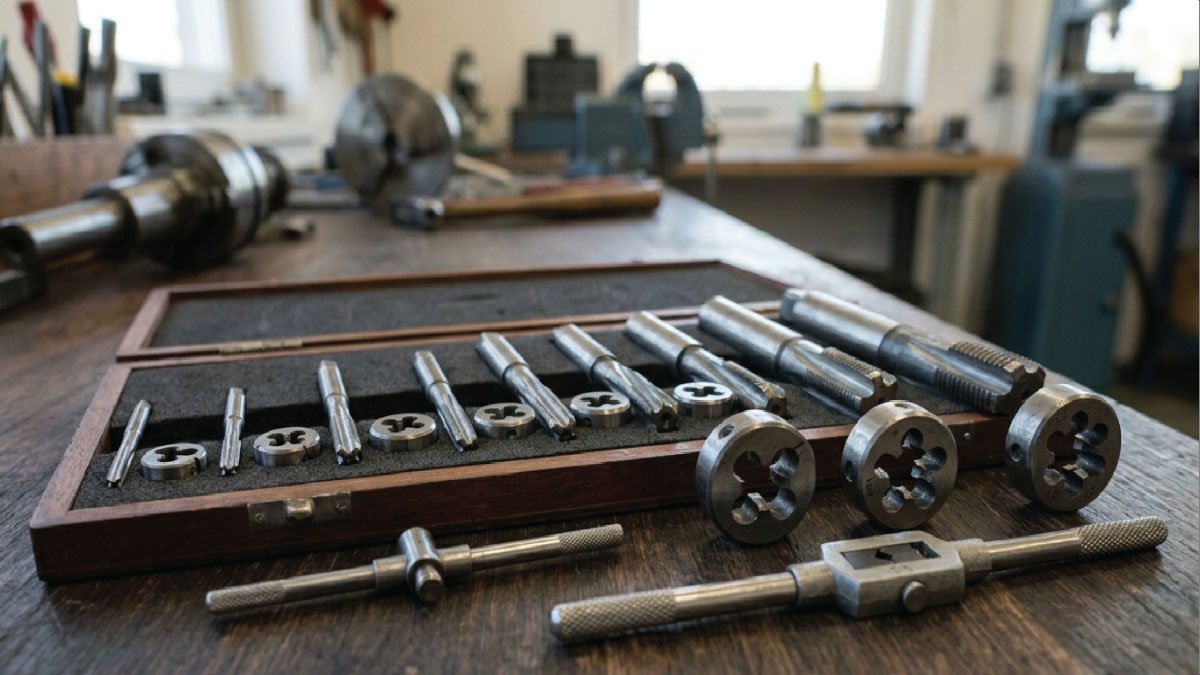
If you work with mechanical components, fasteners, or DIY projects, you’ve likely encountered taps and dies. These tools are essential for creating or repairing threaded holes and bolts, ensuring a secure fit.
However, choosing the right size and understanding threading charts can be tricky, especially for beginners.
In this detailed guide, I will share my personal experiences, a complete tap and die set size chart, and practical tips for precise threading work.
Tap and Die Set Guide: A Beginner’s Story of Threading Mistakes and Precision Learning
The first time I picked up a tap and die set, I honestly thought it would be one of the easiest jobs in my workshop. I was working on a small DIY metal frame and needed to create a custom threaded hole and matching bolt. In my mind, it was simple—cut the threads, fit the bolt, and move on. But that one project quickly turned into a lesson I would never forget.
Without checking any chart or measurements, I grabbed a tap that looked close enough and started threading the hole. At first, everything seemed fine, but I noticed the resistance wasn’t smooth. Still, I continued, thinking it would work out. When I finally tried inserting the bolt, it jammed halfway. The threads were rough, slightly off, and completely unusable.
Frustration kicked in because I had already spent time shaping the metal piece. I tried forcing the bolt, which only made things worse by damaging the threads further. At that moment, I realized I had skipped the most important step—accuracy.
So I stepped back and started over, this time doing things properly. I measured the bolt diameter carefully, checked the thread pitch, and referred to a tap and die size chart. I drilled the correct hole size, applied cutting oil, and began tapping slowly. I followed a steady rhythm—turning forward, then slightly backward to clear chips.
This time, everything felt right. The tap moved smoothly, and when I tested the bolt, it threaded in perfectly without any force. That small success completely changed my approach to threading work.
From that day on, I understood that taps and dies are not just tools—they demand precision and patience. Now, whether I’m repairing old machinery or working on DIY projects, I always rely on proper measurements and charts before starting.
What Are Taps and Dies?
Taps and dies are specialized tools used to cut threads on metal parts:
- Taps: Used to cut or clean internal threads in holes. For example, creating threads in a metal block to accept a bolt.
- Dies: Used to cut or clean external threads on rods or bolts.
I remember my first experience with a tap and die set—it was during a home project where I wanted to create a custom bolt for a small metal frame.
I quickly learned that using the wrong tap size can ruin the hole, and the die must match the bolt diameter perfectly for a smooth thread.
Since then, using the right threading chart has saved me countless hours of trial and error.
Why Tap and Die Sizes Matter
Using the correct tap or die size is crucial because:
Precision Matters: Too small or too large a tap can strip threads or create loose connections.
Safety: Mis-threaded bolts can fail under load, risking accidents in machinery or vehicles.
Efficiency: Correct sizing reduces wasted material and tool wear.
For example, I once attempted to tap a hole for an M8 bolt using a slightly smaller tap. The bolt didn’t fit, and I had to drill and re-tap, losing both time and material.
After that experience, I always refer to a threading chart before starting any project.
Types of Tap and Die Sets
Before choosing the right tap and die set, it’s important to understand the different types available. Each set is designed for specific measurement systems and applications, helping you handle threading tasks efficiently across automotive, mechanical, and DIY projects.
1- Metric Tap and Die Set:
Metric tap and die sets are standardized using millimeters, such as M4, M6, and M8 sizes. They are widely used in modern automotive work, machinery, and general DIY projects around the world due to their universal compatibility and easy sizing system.
2- Imperial Tap and Die Set:
Imperial tap and die sets use inch-based measurements like 1/4″-20 or 3/8″-16. These are commonly found in the United States and are often required when working on older equipment, vintage machinery, or imported parts that follow imperial standards.
3- Combination Sets:
Combination tap and die sets include a variety of taps, dies, and accessories in one kit, making them highly versatile. They are perfect for users who handle different threading tasks and need flexibility across multiple sizes and applications.
From my personal workshop experience, keeping both metric and imperial sets has been extremely useful, especially when working on imported vehicles or older machines where mixed standards can create unexpected challenges.
How to Choose the Right Tap and Die Size
Selecting the correct size requires knowing the following:
Bolt or Rod Diameter: Check the nominal size of the bolt or rod.
Thread Pitch: The distance between threads. Metric bolts are usually measured in millimeters, while imperial bolts use threads per inch (TPI).
Tap Drill Size: The diameter of the hole that must be drilled before tapping. Using the wrong drill size can ruin the threading process.
Here’s a practical tip from my experience: always double-check the bolt size and thread pitch before drilling. Even one millimeter off can lead to stripped threads or bolts that won’t fit.
Tap and Die Set Size Chart
Here’s a comprehensive tap and die set size chart including common metric and imperial sizes:
Metric Tap and Die Chart
| Bolt Size (Metric) | Thread Pitch (mm) | Tap Drill Size (mm) | Die Size (mm) |
|---|---|---|---|
| M3 | 0.5 | 2.5 | 3 |
| M4 | 0.7 | 3.3 | 4 |
| M5 | 0.8 | 4.2 | 5 |
| M6 | 1.0 | 5.0 | 6 |
| M8 | 1.25 | 6.8 | 8 |
| M10 | 1.5 | 8.5 | 10 |
| M12 | 1.75 | 10.2 | 12 |
| M14 | 2.0 | 12.0 | 14 |
| M16 | 2.0 | 14.0 | 16 |
| M20 | 2.5 | 17.5 | 20 |
Imperial Tap and Die Chart
| Bolt Size (Inch) | TPI (Threads per Inch) | Tap Drill Size (inch) | Die Size (inch) |
|---|---|---|---|
| 1/4″-20 | 20 | 0.201 | 1/4″ |
| 5/16″-18 | 18 | 0.257 | 5/16″ |
| 3/8″-16 | 16 | 0.312 | 3/8″ |
| 7/16″-14 | 14 | 0.377 | 7/16″ |
| 1/2″-13 | 13 | 0.425 | 1/2″ |
| 5/8″-11 | 11 | 0.562 | 5/8″ |
| 3/4″-10 | 10 | 0.675 | 3/4″ |
| 7/8″-9 | 9 | 0.777 | 7/8″ |
| 1″-8 | 8 | 0.875 | 1″ |
💡 Pro Tip: Always carry both charts in your workshop or have a laminated copy handy. It saves time and ensures accuracy.
Read More:
My Personal Experience With Tap and Die Sets
When I first started mechanical projects, I often struggled with mis-sized taps. One notable project was repairing a stripped bolt on an old motorbike.
Using the wrong tap initially worsened the threads, and I had to resort to drilling and re-tapping. Since then, I always follow these steps:
- Measure the bolt or hole carefully.
- Identify the correct thread pitch.
- Refer to the tap and die chart before cutting threads.
- Lubricate the tap or die for smooth cutting.
- Work slowly and carefully to avoid misalignment.
Using these steps, I have saved numerous bolts and threaded parts, avoiding costly replacements.
How to Use a Tap
Using a tap correctly is essential to create precise internal threads:
Drill the Correct Hole: Use the tap drill size from the chart.
Lubricate the Tap: Apply cutting oil to reduce friction.
Start Slowly: Begin the tap straight into the hole to avoid cross-threading.
Turn Forward and Back: Turn the tap clockwise 2–3 turns, then back off half a turn to clear chips.
Clean Threads: Remove metal shavings with a brush.
From my experience, rushing the process is the fastest way to break a tap. Always take your time—precision is more important than speed.
How to Use a Die
Dies are used for external threads, like bolts or rods:
Secure the Rod: Clamp the rod in a vice.
Lubricate the Die: Cutting oil is essential.
Align Properly: Start the die straight on the rod.
Turn Slowly: Rotate forward 2–3 turns, then reverse slightly to clear chips.
Check Threads: Test with a nut to ensure proper fit.
I once cut threads on a custom-length bolt for a trailer using a die set. Proper lubrication and slow, steady motion made all the difference, resulting in perfectly fitting threads.
Read More:
Common Mistakes to Avoid
Even experienced DIYers make mistakes when using taps and dies:
Wrong Size: Using a mismatched tap or die can ruin threads.
Skipping Lubrication: Causes excessive wear and broken taps.
Misalignment: Threads must be straight; angled taps or dies will damage the workpiece.
Excessive Force: Let the tool do the cutting; don’t force it.
Following these precautions has saved me from many broken taps and wasted materials over the years.
Maintenance Tips for Tap and Die Sets
Proper care ensures long-lasting accuracy:
Clean After Use: Remove metal shavings and debris.
Lubricate: Lightly oil taps and dies for storage.
Store Properly: Keep in a protective case to prevent damage.
Check for Wear: Replace worn taps or dies to maintain precision.
I keep my tap and die sets in a dedicated toolbox with compartments for each size. Organization not only protects the tools but also saves time searching for the right size.
Read More:
Practical Applications of Tap and Die Sets
Tap and die sets are versatile tools for many mechanical tasks:
Automotive Repairs: Stripped threads on engine parts, bolts, or suspension components.
Bicycles and Motorcycles: Custom bolts, frame repairs, and handlebar mounts.
DIY Metal Projects: Creating threaded rods or repairing frames and furniture.
Industrial Machinery: Threaded fasteners on machinery or assembly lines.
In my personal projects, I frequently use the tap and die set for repairing old machinery and customizing fasteners. The ability to restore or create threads without buying new parts is incredibly satisfying and cost-effective.
Conclusion
A tap and die set is one of the most useful tools in any workshop. From my personal experience, having the correct tap and die sizes, understanding thread pitch, and following the chart ensures precision, safety, and efficiency.
Whether you are a beginner or an experienced DIYer, using a tap and die set size chart is essential for accurate threading. Always select the right size, lubricate properly, and work carefully to achieve professional-quality results.
🔩 Pro Tip: Keep both metric and imperial charts in your workshop. A small investment in quality taps and dies, combined with proper knowledge, will save you time, money, and frustration.