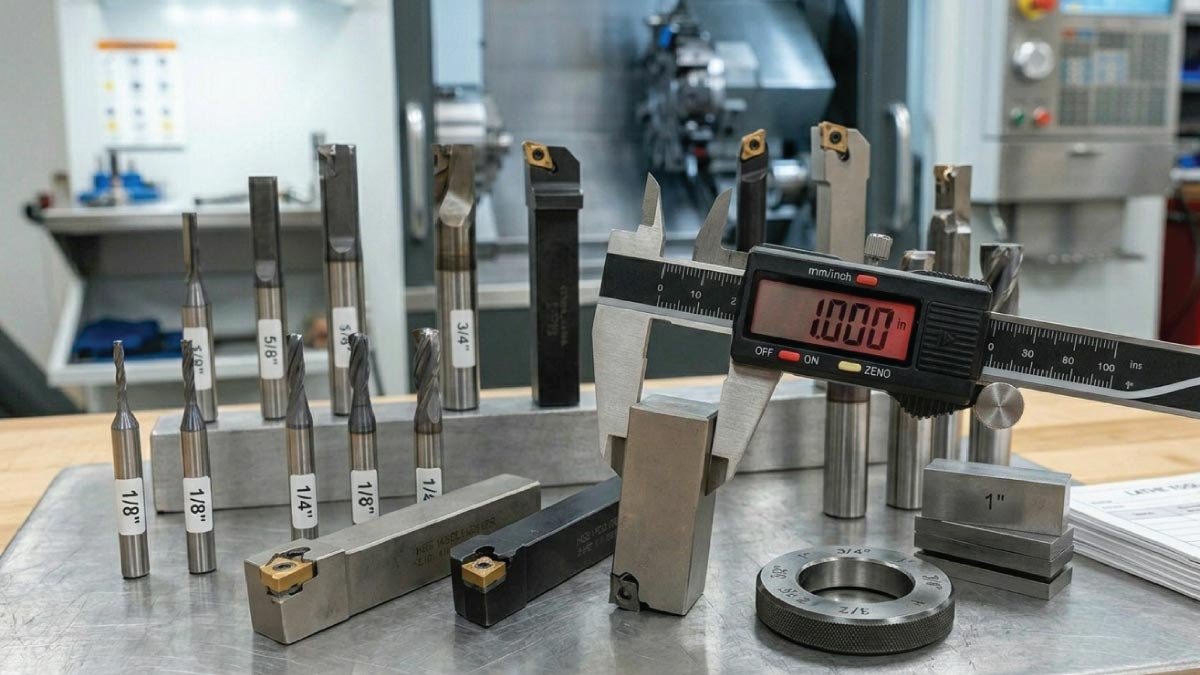
Selecting the correct CNC lathe tool size is one of the most important decisions in machining operations. The tool size directly affects surface finish, cutting speed, tool life, machining stability, and dimensional accuracy. If the tool is too large or too small for the job, it can lead to vibration, poor surface quality, or even tool breakage.
In CNC turning operations, tool selection is not random—it is based on material type, workpiece diameter, depth of cut, and machine capability. This guide will explain how to choose CNC lathe tool size step-by-step and provide a practical size chart used in real machining environments.
What Is a CNC Lathe Tool?
A CNC lathe tool is a precision cutting insert or tool holder used in CNC turning machines to shape, cut, and remove material from a rotating workpiece. In lathe operations, the tool remains fixed while the workpiece rotates at high speed, allowing controlled material removal.
CNC lathe tools are used for:
- Turning external diameters
- Facing operations
- Grooving and parting
- Threading
- Boring internal holes
Lathe tools are designed in various geometries, sizes, and insert shapes depending on machining requirements. Factors such as insert size, nose radius, tool holder type, and cutting edge geometry all influence performance and surface finish quality.
The correct tool size must always match both machine capability and workpiece dimensions to ensure stable cutting, accurate machining, and long tool life during operation.
Why CNC Lathe Tool Size Matters
Selecting the correct CNC lathe tool size is extremely important because it directly influences machining efficiency, accuracy, and the final surface quality of the product. Incorrect sizing can lead to vibration, poor finish, tool wear, and dimensional errors.
1. Surface Finish Quality
The nose radius and tool size strongly affect the surface finish of the machined part. Smaller nose radius tools create finer, smoother finishes, while larger tools are more suitable for rough cutting operations where speed matters more than surface precision.
2. Cutting Stability
Proper tool sizing ensures stable cutting action during machining. A correctly selected tool reduces vibration, chatter, and instability, especially when machining harder materials or operating at higher cutting speeds.
3. Tool Life
Correct lathe tool size reduces unnecessary stress on the cutting edge. This minimizes tool wear, prevents early breakage, and significantly increases overall tool life, improving cost efficiency in production environments.
4. Material Removal Rate
Larger lathe tools are capable of removing more material per pass, making them ideal for rough machining operations. This increases productivity and reduces overall machining time in bulk production setups.
5. Dimensional Accuracy
Incorrect tool selection can lead to oversized or undersized components. Proper tool size ensures accurate material removal and helps maintain tight tolerances required in precision engineering applications.
👉 In CNC turning, the golden rule is:
Use the largest tool that safely fits the job while maintaining required precision.
CNC Lathe Tool Size Chart (Practical Reference)
Below is a real-world CNC lathe tool size chart used widely in machining workshops and industrial environments. It helps machinists select the right insert size based on operation type, material, and cutting load requirements.
CNC Lathe Tool Size Chart
| Insert Size | Nose Radius | Best Use Case | Material Suitability |
|---|
| 06 (6 mm) | 0.2–0.4 mm | Fine finishing | Aluminum, plastic |
| 08 (8 mm) | 0.4–0.8 mm | General turning | Aluminum, mild steel |
| 11 (11 mm) | 0.4–1.2 mm | Balanced operations | Steel, stainless |
| 16 (16 mm) | 0.8–1.6 mm | Heavy roughing | Steel, cast iron |
| 22 (22 mm) | 1.2–2.4 mm | High material removal | Hard steels |
This chart is widely used in CNC machining to match tool strength with cutting load and material type.
How to Select CNC Lathe Tool Size (Step-by-Step)
Selecting the correct CNC lathe tool size is a structured engineering process that requires evaluating workpiece geometry, material properties, machine capability, and cutting conditions. Each step plays an important role in ensuring stable machining, accurate dimensions, and long tool life while avoiding vibration, tool breakage, or poor surface finish.
Step 1: Check Workpiece Diameter
The first and most important step is analyzing the diameter of the workpiece being machined. The size of the job directly influences the stability of the cutting tool and determines how large or small the tool should be for safe operation.
Smaller workpieces require smaller tools to maintain control and avoid excessive cutting forces, while larger workpieces can support bigger tools with higher material removal rates.
- Small diameter workpieces → smaller tools
- Large diameter workpieces → larger tools
👉 Rule:
Tool should not exceed 1/3 of workpiece diameter for stable cutting.
Example: If workpiece diameter is 30 mm → use tool ≤ 10 mm for stable machining and reduced vibration risk.
Step 2: Identify Operation Type
Different CNC lathe operations require different tool geometries, sizes, and cutting strengths. Choosing the correct tool based on the operation ensures efficiency and prevents unnecessary tool stress or poor machining quality.
Each operation demands a balance between cutting strength and precision requirements, depending on whether the focus is rough material removal or fine finishing.
- Rough turning → large tools
- Finishing → small tools
- Grooving → specialized narrow tools
- Threading → profile-specific tools
Each operation requires a carefully balanced tool selection approach to achieve optimal machining performance and surface quality.
Step 3: Match Material Type
Material selection plays a critical role in determining lathe tool size because different materials offer varying levels of hardness, toughness, and cutting resistance. A mismatch between tool size and material can lead to rapid tool wear or machining failure.
Soft materials allow larger tools and faster cutting speeds, while harder materials require stronger, more rigid tool setups.
Aluminum
- Medium to large tools
- High-speed machining possible
Mild steel
- Balanced tool sizes
- Moderate cutting speed
Stainless steel
- Strong tools required
- Smaller depth of cut
Cast iron
- Stable tools with strong inserts
👉 Harder materials require stronger tools with more rigidity to maintain cutting stability and prevent tool damage.
Step 4: Consider Nose Radius
The nose radius of a lathe tool significantly affects both surface finish quality and tool strength. It determines how the cutting edge interacts with the material during machining and influences chip formation behavior.
A smaller nose radius produces sharper cuts and finer finishes, while a larger radius increases tool strength but may reduce surface smoothness.
- Small nose radius → better finish, lower strength
- Large nose radius → stronger cutting edge, rough finish
👉 Rule:
Use the largest nose radius possible for the required finish quality while maintaining dimensional accuracy.
Step 5: Check Machine Power and Rigidity
Machine capability is one of the most important factors in lathe tool selection. Even a correctly chosen tool will fail if the machine does not have sufficient rigidity or spindle power to support it.
A weak or lightweight CNC lathe cannot handle large cutting forces, which leads to vibration, chatter, and poor machining results.
- Small CNC lathe → smaller inserts (06–08)
- Medium CNC lathe → 08–11 inserts
- Industrial CNC lathe → 11–22 inserts
👉 Weak machines cause vibration and tool chatter if oversized tools are used, reducing both accuracy and tool life significantly.
Step 6: Decide Depth of Cut
Depth of cut determines how much material is removed in each pass and has a direct impact on tool size selection and machining safety. Larger tools are required for heavy cuts, while smaller tools are suitable for finishing passes.
Using the wrong tool size for a given cutting depth can cause tool breakage or excessive wear.
- Light finishing cuts → small tools
- Heavy roughing cuts → large tools
Important: Too deep a cut with a small tool increases stress, leading to breakage, vibration, and poor machining quality.
Step 7: Select Tool Holder Compatibility
Proper compatibility between the lathe tool insert and tool holder is essential for stable and vibration-free machining. Even the best tool will underperform if it is not properly supported by the correct holder.
Correct fitting ensures that cutting forces are evenly distributed and that the tool remains secure during operation.
- Ensure insert size matches holder
- Check clamping strength
- Avoid oversized inserts in small holders
Proper compatibility ensures stable machining, improved accuracy, reduced vibration, and significantly longer tool life.
Also Read:
Practical Rules for CNC Lathe Tool Selection
Experienced machinists do not rely on guesswork when selecting CNC lathe tools. Instead, they follow proven industrial rules that ensure stable cutting, better surface finish, longer tool life, and efficient machining performance. These practical guidelines help reduce errors and improve productivity in real workshop environments.
Rule 1: Use largest stable tool
One of the most important rules in CNC lathe machining is to always use the largest tool that can be safely supported by the job and machine setup. Larger tools provide better rigidity and distribute cutting forces more effectively during operation.
- Bigger tools improve rigidity
- Reduce machining time
- Increase stability during cutting
Using a larger stable tool also minimizes vibration and allows higher material removal rates, making the entire machining process faster and more efficient without compromising accuracy.
Rule 2: Avoid unnecessary small tools
Small lathe tools should only be used when absolutely required for detailed work or tight geometries. Using them unnecessarily in general machining operations leads to inefficiency and increased risk of tool failure.
- Small tools are fragile
- Increase machining time
- Higher breakage risk
While small tools are useful for finishing and fine detailing, relying on them for general cutting operations reduces productivity and increases production costs due to slower feed rates and frequent tool replacements.
Rule 3: Match tool to operation
Each CNC lathe operation requires a specific type of tool designed for that purpose. Using the wrong tool for the wrong operation can lead to poor results, tool wear, or even machine damage.
- Never use finishing tools for roughing operations
Roughing tools are designed for heavy material removal, while finishing tools focus on surface quality. Matching the correct tool to the operation ensures efficiency, accuracy, and longer tool life in machining processes.
Rule 4: Maintain proper nose radius
The nose radius of a lathe tool has a direct influence on surface finish quality and cutting strength. Selecting the correct radius is essential for balancing smooth finishing and tool durability.
- Directly affects finish quality
- Impacts tool strength and stability
A larger nose radius provides stronger cutting edges and better tool life, while a smaller radius produces finer surface finishes. Proper selection ensures optimal balance between precision and durability in machining operations.
Rule 5: Consider machine rigidity
Machine rigidity plays a major role in determining safe and effective tool selection. Even high-quality tools cannot perform well on unstable or underpowered machines.
- Weak machines require conservative tool selection
Machines with low rigidity or power should use smaller and lighter cutting tools to avoid vibration and chatter. Strong industrial machines, on the other hand, can handle larger tools and heavier cutting loads with better stability.
Also Read:
Common Mistakes in Lathe Tool Selection
Many beginners in CNC machining make predictable mistakes when selecting lathe tool sizes. These errors often result in poor surface finish, tool breakage, inaccurate dimensions, and reduced machining efficiency. Understanding these mistakes helps improve decision-making and machining outcomes.
1. Using oversized tools on small parts
One common mistake is selecting a tool that is too large for a small workpiece. This creates instability during cutting and leads to poor machining accuracy.
- Leads to vibration
- Causes poor accuracy
Oversized tools cannot properly engage small workpieces, resulting in chatter, dimensional errors, and sometimes even damage to the part or machine setup.
2. Using small tools for roughing
Another frequent mistake is using small tools for heavy roughing operations. This puts excessive load on the tool and increases the chance of failure.
- Causes breakage
- Slow machining process
Small tools are not designed for high material removal rates, so using them for roughing significantly reduces productivity and increases tool replacement frequency.
3. Ignoring material type
Material properties directly affect cutting behavior, tool wear, and heat generation. Ignoring material type often leads to incorrect tool selection and poor machining performance.
- Results in poor tool life
- Causes overheating
Harder materials require stronger, more rigid tools, while softer materials allow faster cutting. Ignoring this balance reduces efficiency and increases operational costs.
4. Wrong nose radius selection
Selecting an incorrect nose radius can negatively impact both surface finish and tool strength. This is a critical factor in lathe tool performance.
- Affects surface finish quality
A small nose radius improves finishing quality but reduces tool strength, while a large radius increases strength but may leave a rougher surface. Incorrect selection leads to unbalanced machining results.
5. Ignoring machine limits
Every CNC lathe machine has physical limits in terms of power, rigidity, and stability. Ignoring these limits leads to poor performance and unsafe cutting conditions.
- Leads to chatter
- Causes unstable cutting
Even the best tools will fail if the machine cannot support the cutting forces. Matching tool size to machine capability is essential for safe and efficient machining.
Also Read:
Material-Based Lathe Tool Recommendations
Selecting the correct CNC lathe tool size depends heavily on the type of material being machined. Each material has different hardness, chip formation behavior, and heat resistance, which directly affects tool performance, wear rate, and surface finish quality.
Understanding material-based recommendations helps machinists choose tools that deliver stable cutting, longer tool life, and better machining efficiency.
1- Aluminum
Aluminum is a soft, ductile material that allows high-speed machining with relatively low cutting resistance. However, it can cause chip sticking if the tool is not properly selected, so sharp cutting edges are essential.
- Best tool size: 06–11 inserts
- High-speed machining
- Sharp cutting edges required
Aluminum machining benefits from medium-sized tools that balance precision and fast material removal. Proper chip evacuation and sharp inserts help achieve smooth surface finishes and efficient production cycles.
2- Mild Steel
Mild steel is stronger than aluminum and requires more balanced machining conditions. It is commonly used in general engineering applications, so tool selection must focus on stability and durability.
- Best tool size: 08–16 inserts
- Balanced feed and speed
Medium to larger tool sizes work best for mild steel because they provide the necessary rigidity to handle moderate cutting forces while maintaining good surface quality and tool life.
3- Stainless Steel
Stainless steel is a tough and heat-resistant material that generates higher cutting resistance and heat during machining. Tool selection must prioritize strength and wear resistance.
- Best tool size: 08–11 inserts
- Strong inserts needed
Smaller to medium-sized tools with strong cutting edges are preferred to maintain control and reduce tool wear. Proper cooling and controlled cutting parameters are also essential for stable machining.
4- Cast Iron
Cast iron is a brittle material that produces abrasive chips during cutting. It requires stable machining conditions and strong tooling to handle continuous cutting loads.
- Best tool size: 11–22 inserts
- Stable cutting preferred
Larger and more rigid tools are ideal for cast iron because they provide stability and resist wear from abrasive particles, ensuring consistent performance and longer tool life.
Advanced Tip: Roughing vs Finishing Strategy
Professional CNC machinists always separate machining into two distinct stages: roughing and finishing. This approach improves efficiency, tool life, and final part quality by optimizing tool selection for each operation.
1- Roughing
Roughing is the initial stage of machining where large amounts of material are removed quickly. The focus is on speed and efficiency rather than surface finish.
- Large tool size
- High material removal
- Lower precision
Using larger tools during roughing allows faster cutting and reduces overall machining time. It also minimizes tool stress by distributing cutting forces more effectively.
2- Finishing
Finishing is the final machining stage where accuracy and surface quality become the primary focus. Smaller tools are used to achieve precise dimensions and smooth surfaces.
- Smaller tool size
- High precision
- Smooth surface finish
Finishing operations require careful control of feed rate and cutting parameters to ensure dimensional accuracy and excellent surface quality.
👉 This combination improves efficiency and final product quality by optimizing both speed and precision in CNC machining workflows.
Final Thoughts
Selecting CNC lathe tool size is not a random choice—it is a technical engineering decision based on material properties, machine capability, cutting operation, and required precision. Proper selection ensures efficient machining and consistent production results.
When done correctly, it ensures:
- Better surface finish
- Longer tool life
- Faster machining
- Higher accuracy
Simple rule to remember:
👉 “Use the largest tool that fits the job without compromising stability.”
This principle is widely used in CNC machining to achieve optimal balance between productivity, tool safety, and machining precision.
Views: 275