
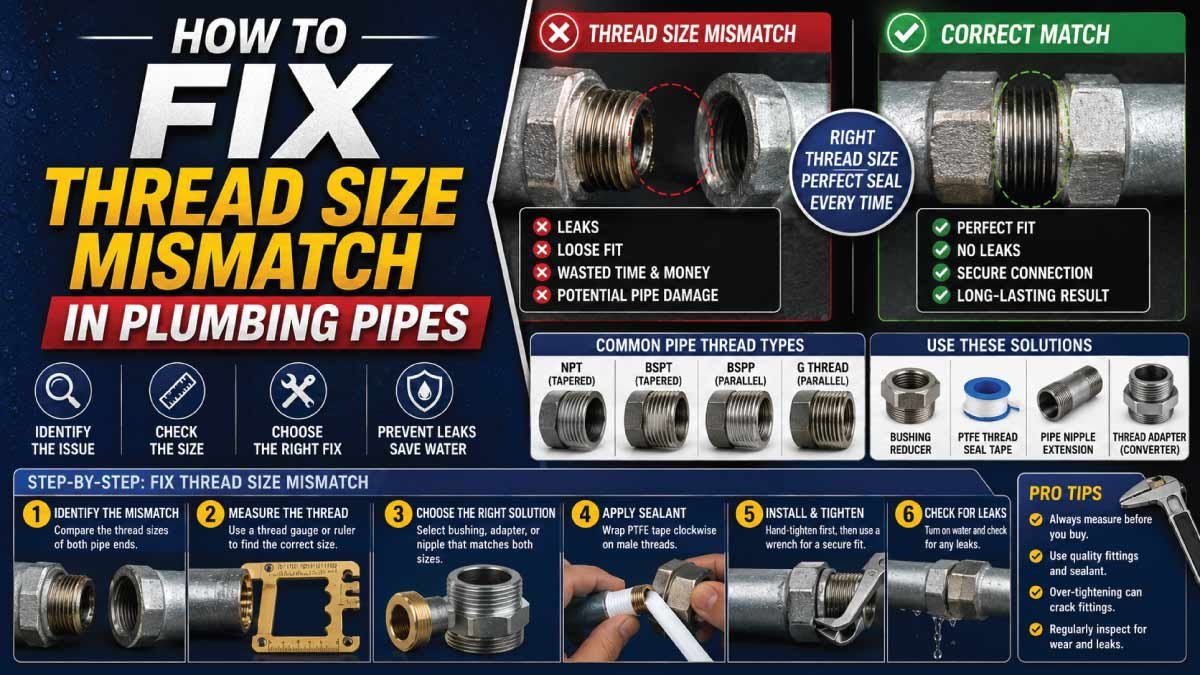
Thread size mismatch is one of the most frustrating and common problems in plumbing systems. Whether you are working on household water lines, irrigation systems, or industrial piping, mismatched threads can cause leaks, weak joints, and complete connection failure.
Many people assume that if two pipes “almost fit,” they can be tightened together—but this often leads to damaged threads and costly repairs.
In this detailed guide, you will learn what thread size mismatch is, why it happens, and how to fix it step by step using proper tools and techniques.
What Is Thread Size Mismatch in Plumbing?
Thread size mismatch occurs when two threaded pipe components, such as pipes, fittings, or valves, fail to properly align due to differences in thread diameter, pitch, or standard type. Even if they appear similar in size, they cannot form a tight seal, which often results in leakage or loose connections.
Thread mismatch can include differences in:
- Thread diameter
- Thread pitch (distance between threads)
- Thread angle
- Thread standard (BSP vs NPT)
- Male vs female thread compatibility
In simple terms, thread mismatch means the threads cannot properly engage or seal, which leads to leakage or loose connections.
Even a small mismatch can prevent a watertight seal, especially in pressurized plumbing systems.
Why Thread Size Mismatch Happens
Thread size mismatch usually happens due to poor selection, lack of technical knowledge, or mixing different plumbing standards. Many beginners assume all pipe threads are the same, but in reality, even slight differences in measurement or design can prevent proper sealing and cause long-term plumbing issues.
Understanding the causes of thread mismatch helps you avoid repeating the same mistakes in future installations.
1. Mixing Thread Standards
One of the most common reasons for thread mismatch is using different thread standards together, such as BSP and NPT. These systems have different thread angles and sealing methods, so they cannot properly fit or seal even if the size looks identical.
BSP → parallel or tapered threads
NPT → tapered threads only
👉 These are not directly compatible.
2. Incorrect Size Selection
Incorrect size selection happens when pipes or fittings are chosen based on visual appearance instead of proper measurement. Even small differences in diameter or pitch can lead to improper engagement, making the connection weak, unstable, or completely unable to form a proper seal.
Similar-looking threads may have different sizes
3. Wrong Thread Type (Male vs Female)
Using the wrong combination of male and female threads can prevent proper alignment and sealing. Male threads are external, while female threads are internal, and both must match correctly in size and type to ensure a secure, leak-free plumbing connection without stress or misalignment.
Male thread = external threads
Female thread = internal threads
4. Worn or Damaged Threads
Threads that are old, rusted, or physically damaged often lose their original shape and precision. This makes it difficult for them to engage properly with matching fittings, resulting in weak connections, leaks, or complete failure to tighten during installation or repair work.
Rust and wear affect thread engagement
5. Lack of Measurement Tools
Many plumbing issues happen simply because proper measuring tools are not used during installation. Relying on guesswork instead of accurate tools like thread gauges or calipers leads to incorrect fittings, mismatched sizes, and repeated trial-and-error that wastes both time and materials.
Leads to incorrect fittings
Common Problems Caused by Thread Mismatch
Thread mismatch can lead to serious functional and safety problems in plumbing systems, especially when water is flowing under pressure. Even a slight incompatibility between threads prevents proper sealing, which gradually affects system efficiency, increases maintenance costs, and can cause long-term damage to pipes and fittings.
Thread mismatch creates serious issues in plumbing systems, especially when under pressure.
1. Water Leakage
Water leakage is the most common problem caused by thread mismatch. When threads do not properly engage, small gaps remain between connections, allowing water to continuously drip or escape. Over time, this not only wastes water but can also damage surrounding structures and increase utility costs.
Poor thread engagement causes continuous dripping or leaking.
2. Weak Connections
Weak connections occur when mismatched threads fail to lock tightly. This makes the joint unstable and unable to withstand normal or high water pressure. As a result, fittings may loosen over time, increasing the risk of sudden pipe failure or system breakdown during operation.
Loose fittings may fail under pressure.
3. Thread Damage
Thread damage happens when incompatible fittings are forced together. This excessive pressure distorts the thread shape, making future connections difficult or impossible. Once damaged, the fitting often cannot be reused, leading to unnecessary replacement costs and reduced lifespan of plumbing components.
Forcing mismatched threads permanently damages fittings.
4. Pressure Loss
Pressure loss occurs when leaks develop due to improper sealing between mismatched threads. Even small leaks can reduce overall system pressure, affecting water flow and efficiency. This becomes a major issue in systems that require consistent pressure for proper functioning.
Leaks reduce system efficiency.
5. Frequent Repairs
Frequent repairs are required when thread mismatch is not properly identified during installation. Poor fitting selection leads to recurring leaks, loosening, and failures, forcing repeated maintenance work. This increases labor costs, wastes time, and reduces the reliability of the entire plumbing system.
Improper fittings require repeated fixing.
Also Read:
Types of Thread Mismatch in Plumbing
Thread mismatch can occur in different forms depending on size, design, standard, or material differences. Understanding these types helps plumbers and technicians identify compatibility issues more accurately and choose the correct fittings for long-term durability and leak-free plumbing performance.
Understanding the type of mismatch helps you choose the correct solution.
1. Size Mismatch
Size mismatch occurs when two threaded components have different diameters, even if they appear similar. This prevents proper engagement between male and female threads, leading to loose fitting, leakage, or complete inability to connect the parts securely in a plumbing system.
Threads have different diameters.
2. Pitch Mismatch
Pitch mismatch happens when threads have different spacing between each ridge. Even if the diameter matches, incorrect pitch prevents smooth engagement, causing cross-threading or partial connection. This often results in weak sealing and increases the risk of leakage under pressure.
Threads have different spacing.
3. Standard Mismatch
Standard mismatch occurs when different threading systems like BSP and NPT are used together. These standards differ in thread angle and sealing method, making them incompatible. Even though they may look similar, they cannot form a proper leak-free connection without adapters.
BSP vs NPT incompatibility.
4. Parallel vs Tapered Threads
Parallel and tapered threads differ in how they seal. Parallel threads require additional sealing materials like washers or tape, while tapered threads create a seal by tightening. Mixing these two types often results in poor sealing and weak plumbing connections.
Parallel threads need sealing washers, while tapered threads seal by tightening.
5. Material Mismatch
Material mismatch occurs when different materials, such as plastic and metal, are used together. These materials expand and contract differently under pressure and temperature changes, leading to loose fittings, cracking, or leakage over time if not properly matched or sealed.
Plastic and metal threads behave differently.
Thread Size Chart (Quick Reference)
A thread size chart helps plumbers and technicians quickly compare different thread standards and select the correct fitting size. It is especially useful when working with BSP and NPT systems, which often look similar but have small dimensional differences that can affect sealing and compatibility in real plumbing applications.
| Nominal Size | Outer Diameter |
|---|---|
| 1/8″ | 9.7 mm |
| 1/4″ | 13.1 mm |
| 3/8″ | 16.6 mm |
| 1/2″ | 20.9 mm |
| 3/4″ | 26.4 mm |
| 1″ | 33.3 mm |
NPT Thread Sizes
NPT (National Pipe Thread) is widely used in North America and follows a tapered design system for sealing. These sizes differ slightly from BSP threads in both diameter and thread angle. Because of these differences, direct connection between NPT and BSP fittings usually results in leakage or improper engagement.
| Nominal Size | Outer Diameter |
|---|---|
| 1/8″ | 10.3 mm |
| 1/4″ | 13.7 mm |
| 3/8″ | 17.1 mm |
| 1/2″ | 21.3 mm |
| 3/4″ | 26.7 mm |
| 1″ | 33.5 mm |
👉 Small differences in diameter and thread angle make them incompatible without adapters.
Also Read:
How to Fix Thread Size Mismatch (Step-by-Step)
Fixing thread size mismatch requires a careful and systematic approach to avoid damaging fittings and ensuring a proper seal. Each step helps identify the correct thread type, size, and compatibility before making a secure connection. Following the correct process reduces leakage risks and improves long-term plumbing system performance.
Step 1: Identify Thread Type
The first step is to clearly identify the type of thread you are working with. Different systems like BSP, NPT, metric, or imperial threads have unique designs. You also need to confirm whether the fitting is male or female to avoid incorrect pairing and connection issues.
BSP or NPT
Metric or imperial
Male or female
👉 Look for markings or use a thread gauge.
Step 2: Measure Thread Diameter
Accurate measurement of thread diameter is essential for proper fitting selection. Using a caliper, measure the outer diameter across the threads carefully. Then compare the reading with a standard thread chart to determine the exact size and ensure compatibility with the connecting pipe or fitting.
Measure across threads
Compare with chart
This helps identify the correct size.
Step 3: Check Thread Pitch
Thread pitch refers to the distance between threads and plays a critical role in compatibility. Even if two fittings have the same diameter, different pitch sizes can prevent proper engagement. A thread gauge helps measure spacing accurately to ensure both parts match correctly.
Use thread gauge
Compare spacing
Even same diameter threads may not match if pitch differs.
Step 4: Use Thread Adapters
Thread adapters are the safest and most effective solution for fixing mismatch problems. They allow connection between different systems such as BSP to NPT or male-to-female configurations. Using adapters prevents direct forcing of incompatible threads, protecting fittings from damage and ensuring a secure connection.
BSP to NPT adapter
Male-to-female adapter
Reducer fittings
These allow proper connection without damaging threads.
Step 5: Apply Thread Sealant
Applying thread sealant is essential for creating a leak-free joint after connection. PTFE tape or thread seal paste fills small gaps between threads and improves sealing efficiency. It is important to wrap tape in the correct direction to ensure proper tightening and prevent leakage under pressure.
Use PTFE (Teflon) tape
Apply thread seal paste
👉 Wrap tape in thread direction.
Step 6: Tighten Properly
Proper tightening ensures the connection is secure without damaging the threads. Over-tightening can strip or crack fittings, while under-tightening may cause leaks. Always use the correct tools and apply steady, controlled pressure to achieve a balanced and durable connection.
Use correct tools
Apply steady pressure
Too much force damages threads.
Step 7: Test the Connection
After completing installation, testing is necessary to confirm proper sealing. Run water through the system and check for any leaks or pressure drops. Carefully inspect all joints to ensure the connection is stable, secure, and functioning correctly under normal operating conditions.
Check for leaks
Run water pressure
Inspect joints
Common Mistakes to Avoid
Avoiding common mistakes during thread repair or installation is essential for achieving durable, leak-free, and reliable plumbing connections. Most plumbing failures are not caused by complex issues but by small errors such as poor handling, wrong assumptions, or lack of proper tools and measurement. When these mistakes are understood clearly, it becomes much easier to improve accuracy, reduce damage, and avoid repeated repair costs in the system.
1. Forcing threads together
Forcing mismatched or misaligned threads together is one of the most damaging mistakes in plumbing work. It destroys the natural thread shape and permanently weakens the fitting. Once damaged, the connection loses its ability to seal properly, often leading to leakage and complete replacement of parts.
2. Ignoring thread standards
Ignoring thread standards such as BSP, NPT, or metric types often leads to incorrect fitting selection. Even when the sizes appear similar, differences in thread angle and pitch prevent proper engagement. This mismatch usually results in leakage, poor performance, and frequent maintenance problems.
3. Skipping measurement
Skipping proper measurement is a major cause of thread mismatch and installation failure. Without checking diameter, pitch, and compatibility, there is a high chance of choosing the wrong fitting. This leads to poor alignment, weak sealing, and unnecessary damage during repeated installation attempts.
4. Overusing seal tape
Using excessive PTFE tape can create unwanted buildup on threads, which prevents fittings from tightening properly. Instead of improving sealing, it causes uneven pressure and weak joints. In some cases, it can even damage fine threads or plastic fittings during tightening.
5. Using low-quality fittings
Low-quality fittings wear out quickly and often fail under pressure or temperature changes. They may not follow accurate thread standards, which increases the risk of leaks and system breakdowns. Using poor materials reduces durability and leads to more frequent repairs and replacements.
Also Read:
Professional Tips for Thread Matching
Professional thread matching requires accuracy, proper tools, and consistent attention to detail. Experienced plumbers follow simple but effective practices to ensure strong and long-lasting connections. These tips not only improve installation quality but also save time and reduce the risk of future failures in plumbing systems.
Tip 1: Always measure twice
Measuring more than once helps confirm accuracy before selecting fittings. It reduces human error and ensures correct identification of thread size, pitch, and compatibility. This simple habit prevents costly mistakes and improves the success rate of installation work.
Tip 2: Use standard adapters
Standard adapters are useful when connecting different thread types without forcing mismatched parts. They provide a safe transition between incompatible systems such as BSP and NPT, preventing damage and ensuring a secure, leak-free connection.
Tip 3: Keep thread chart handy
A thread chart is a practical reference tool that helps quickly identify correct sizes and standards. Keeping it nearby during work saves time, reduces confusion, and ensures accurate fitting selection, especially when dealing with multiple pipe systems.
Tip 4: Replace damaged threads
Damaged threads should never be reused because they weaken the sealing ability of the joint. Replacing them ensures a proper fit, improves reliability, and prevents leaks that could damage the entire plumbing system over time.
Tip 5: Avoid mixing materials
Mixing different pipe materials without proper compatibility checks can lead to corrosion, weak joints, and poor thread engagement. Each material reacts differently under pressure and temperature, so using compatible materials ensures stronger, longer-lasting, and more stable connections.
Why Thread Accuracy Matters
Thread accuracy plays a very important role in ensuring safe, efficient, and reliable plumbing systems. When threads are manufactured and selected correctly, they create tight, leak-free joints that can withstand pressure. Even a small inaccuracy can disrupt sealing, reduce performance, and lead to long-term system instability and damage.
Incorrect threads can cause:
Leakage
Pressure loss
System failure
Costly repairs
Proper threading ensures strong, leak-proof connections.
Final Thoughts
Fixing thread size mismatch in plumbing pipes is not just a simple repair task—it requires proper knowledge of thread standards, accurate measurement, and the right tools. Many plumbing failures happen due to rushing or forcing incompatible parts instead of checking compatibility first.
By following the right steps, using adapters where needed, and measuring carefully, most thread mismatch issues can be resolved safely and effectively without damaging fittings or reducing system performance.
Simple rule to remember:
👉 “If threads don’t match, don’t force—adapt.”