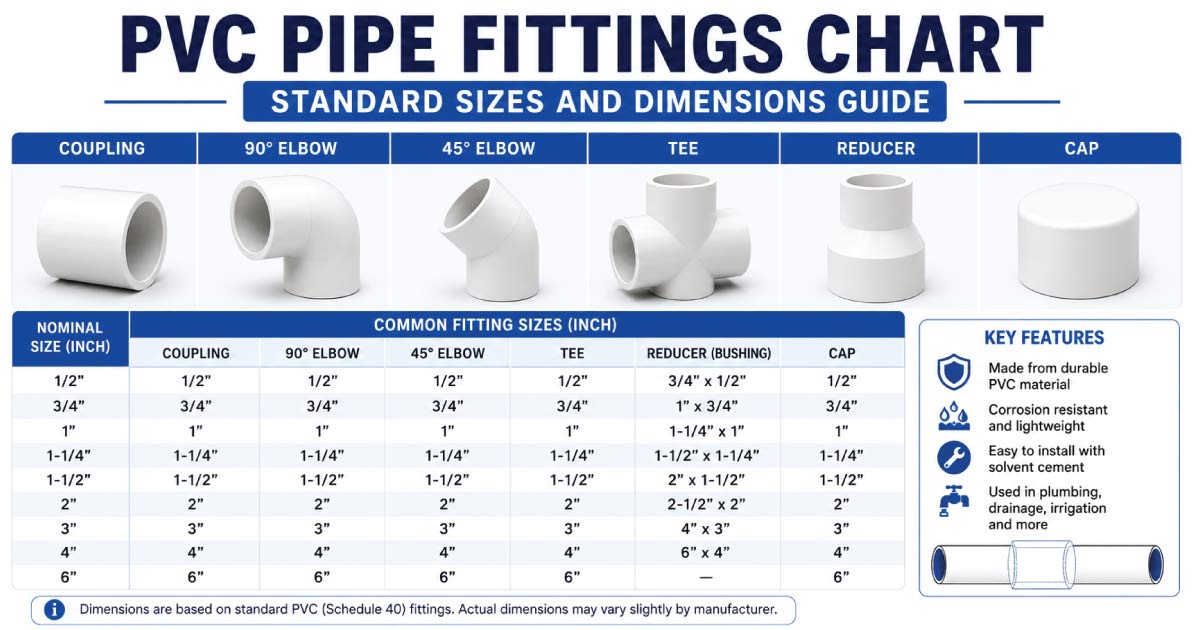
PVC pipe fittings are essential components in plumbing, irrigation, drainage, and industrial piping systems. They connect pipes, change flow direction, regulate flow, and help build complete piping networks. Understanding PVC pipe fittings sizes and dimensions is crucial for ensuring leak-free and efficient systems.
In this detailed guide, you will learn about PVC pipe fittings charts, standard sizes, types, dimensions, and how to choose the right fittings for your project.
What Are PVC Pipe Fittings?
PVC pipe fittings are connector components used with PVC pipes to build complete piping systems. They are made from polyvinyl chloride (PVC), a strong, lightweight, and corrosion-resistant plastic.
PVC fittings are used to:
- Connect pipes together
- Change direction of flow
- Reduce or increase pipe size
- Close pipe ends
- Control or regulate flow
These fittings are widely used because they are affordable, durable, and easy to install.
Why PVC Fittings Are Important
Without fittings, a piping system cannot function properly. PVC fittings ensure:
- Leak-free connections
- Flexible system design
- Easy maintenance and repair
- Efficient water or fluid flow
- Long-lasting piping networks
They are a key part of both residential and industrial piping systems.
Standard PVC Pipe Sizes (Quick Overview)
PVC fittings are designed to match standard pipe sizes. Below are the most common PVC pipe sizes:
- 1/2 inch
- 3/4 inch
- 1 inch
- 1-1/4 inch
- 1-1/2 inch
- 2 inch
- 2-1/2 inch
- 3 inch
- 4 inch
- 6 inch
- 8 inch
- 10 inch
- 12 inch
These sizes are based on nominal pipe size (NPS), not exact internal diameter.
PVC Pipe Fittings Size Chart (Standard Dimensions)
The following chart shows standard PVC pipe fitting sizes and their approximate dimensions.
| Nominal Size | Outside Diameter (OD) | Approx. Inside Diameter (ID) |
|---|---|---|
| 1/2″ | 0.840″ | 0.602″ |
| 3/4″ | 1.050″ | 0.804″ |
| 1″ | 1.315″ | 1.029″ |
| 1-1/4″ | 1.660″ | 1.360″ |
| 1-1/2″ | 1.900″ | 1.590″ |
| 2″ | 2.375″ | 2.047″ |
| 2-1/2″ | 2.875″ | 2.469″ |
| 3″ | 3.500″ | 3.068″ |
| 4″ | 4.500″ | 4.026″ |
| 6″ | 6.625″ | 6.065″ |
| 8″ | 8.625″ | 7.942″ |
| 10″ | 10.750″ | 10.020″ |
| 12″ | 12.750″ | 11.938″ |
These dimensions follow Schedule 40 PVC standards, which are the most commonly used in plumbing systems.
Types of PVC Pipe Fittings
PVC fittings are components used to connect, redirect, or control the flow inside piping systems. They are designed for durability, leak prevention, and easy installation. Different fittings serve specific purposes in plumbing, irrigation, drainage, and industrial piping networks depending on system layout and pressure needs.
1. PVC Elbow Fittings
PVC elbow fittings are one of the most commonly used fittings in piping systems. They allow pipes to change direction smoothly without bending or damaging the pipe structure. These fittings are essential for routing pipelines around corners, walls, and structural obstacles in both residential and industrial setups.
Common Angles:
- 90-degree elbow
- 45-degree elbow
Applications:
- Plumbing corners
- Irrigation systems
- Drainage piping
Elbows help route pipes around obstacles without bending the pipe itself.
2. PVC Tee Fittings
PVC tee fittings are essential components used to split or combine fluid flow within a piping system. They form a “T” shape that allows one main pipeline to connect with a branch line. These fittings are widely used in plumbing, irrigation, and industrial systems where controlled flow distribution is required.
Types:
- Equal tee (same size all sides)
- Reducing tee (different branch size)
Applications:
- Water distribution systems
- Irrigation branching
- Industrial piping networks
Tee fittings make it easy to divide flow from a main pipe into multiple directions without reducing system efficiency or requiring complex pipe modifications.
3. PVC Couplings
PVC couplings are straight connectors used to join two pipe sections together securely. They are commonly used in plumbing and irrigation systems where a continuous pipeline is required. Couplings ensure a tight, leak-free joint while maintaining smooth flow and structural strength across the connected pipes.
Features:
- Simple connection
- Strong seal
- Available in slip or threaded types
Applications:
- Pipe extensions
- Repair work
- System expansion
Couplings are ideal for extending pipelines or replacing damaged sections without disturbing the overall system layout.
4. PVC Reducers
PVC reducers are fittings used to connect pipes of different diameters, allowing smooth transition between varying flow capacities. They are essential in systems where pressure control or flow adjustment is required. Reducers help maintain efficiency while adapting pipe sizes within a single pipeline system.
Types:
- Concentric reducer
- Eccentric reducer
Applications:
- Pressure systems
- Flow control systems
- Plumbing transitions
Reducers help maintain proper flow when pipe sizes change by reducing turbulence and pressure loss.
5. PVC End Caps
PVC end caps are fittings used to close the end of a pipe securely. They are designed to stop flow completely and protect the pipeline from dust, debris, or contamination. End caps are widely used in both temporary and permanent piping setups.
Uses:
- Temporary sealing
- Permanent pipe closure
- System pressure testing
They prevent leaks and contamination, ensuring the pipeline remains clean and safe when not in use or during maintenance.
6. PVC Adapters
PVC adapters are fittings used to connect PVC pipes with other materials or different connection types. They provide flexibility in mixed piping systems and are commonly used where transitions between plastic and metal pipes are required in plumbing and mechanical installations.
Examples:
- Male adapter
- Female adapter
Applications:
- Transition between PVC and metal pipes
- Equipment connections
Adapters ensure compatibility between different piping systems, making installations more flexible and practical.
7. PVC Union Fittings
PVC union fittings are special connectors designed to join two pipes in a way that allows easy disconnection without cutting the pipe. They are highly useful in systems that require regular maintenance, inspection, or replacement of components.
Benefits:
- Easy maintenance
- Reusable connection
- Leak-resistant seal
Union fittings provide convenience in repair and maintenance work by allowing quick separation and reconnection of pipelines without damage.
Understanding PVC Schedule Ratings
PVC fittings are classified by schedule, which determines wall thickness.
Common Schedules:
- Schedule 40 (most common)
- Schedule 80 (thicker, stronger)
Key Differences:
| Feature | Schedule 40 | Schedule 80 |
|---|---|---|
| Wall Thickness | Standard | Thicker |
| Strength | Moderate | High |
| Pressure Rating | Lower | Higher |
| Cost | Cheaper | More expensive |
Schedule 40 is widely used in homes, while Schedule 80 is used in industrial systems.
How PVC Fitting Sizes Work
PVC fitting sizes are standardized to make pipes and fittings compatible across different systems and manufacturers. They are based on a system called nominal pipe size, which does not represent the exact physical measurement of the pipe. Instead, it provides a reference size used in plumbing, irrigation, and industrial piping systems for easy matching and installation.
PVC fittings follow a sizing system that is designed for consistency and interchangeability. This means a pipe and fitting labeled with the same nominal size will generally fit together, even if their exact dimensions are slightly different. The actual measurement depends on the pipe’s outer diameter, which is the key factor in ensuring a proper connection.
- A 1-inch fitting fits a 1-inch pipe
- Actual measurements differ slightly
- Compatibility is based on outside diameter
This standard ensures interchangeability between pipes and fittings, making installation easier, reducing errors, and allowing different brands of PVC products to work together in the same piping system.
Common Applications of PVC Fittings
PVC fittings are widely used across multiple industries because they are lightweight, corrosion-resistant, and easy to install. They play an important role in controlling, directing, and connecting fluid flow in both simple and complex piping systems. From homes to large industrial setups, PVC fittings provide reliable performance in many environments.
1. Residential Plumbing
In residential buildings, PVC fittings are commonly used to create safe and efficient water and drainage systems. They help manage clean water supply and wastewater removal while ensuring leak-free performance. Their durability makes them suitable for long-term household plumbing installations.
- Water supply lines
- Drainage systems
- Bathroom piping
2. Irrigation Systems
PVC fittings are widely used in agriculture and landscaping for efficient water distribution. They help farmers and gardeners control water flow to crops, lawns, and plants. These fittings are ideal for outdoor systems due to their resistance to weather and moisture conditions.
- Agricultural watering
- Garden sprinklers
- Landscape irrigation
3. Industrial Systems
In industrial applications, PVC fittings are used for handling fluids that do not require metal piping. They are suitable for chemical handling, wastewater management, and cooling systems. Their resistance to corrosion makes them useful in demanding industrial environments.
- Chemical transport
- Wastewater systems
- Cooling systems
4. Construction Projects
PVC fittings are essential in construction for creating reliable building infrastructure systems. They are used in both above-ground and underground installations for efficient water and waste management. Their lightweight nature also makes them easy to install on large construction sites.
- Building drainage
- Vent systems
- Underground piping
Advantages of PVC Pipe Fittings
PVC fittings offer many benefits:
- Lightweight and easy to install
- Corrosion and rust resistant
- Low maintenance
- Affordable compared to metal fittings
- Long service life
- Chemical resistance
These advantages make PVC a top choice in modern plumbing systems.
How to Choose the Right PVC Fitting Size
Choosing the correct PVC fitting size is essential for ensuring a secure, leak-free, and efficient piping system. The right fitting helps maintain proper flow, pressure balance, and structural stability. Incorrect sizing can lead to poor performance, joint failure, or system inefficiency, especially in plumbing, irrigation, and industrial applications.
1. Pipe Size Compatibility
The most important factor is matching the fitting size with the nominal pipe size. PVC fittings are designed to connect with specific pipe diameters, so even small mismatches can cause leakage or weak joints. Always check manufacturer specifications to ensure the fitting and pipe are fully compatible before installation.
2. Flow Requirements
Flow rate plays a key role in selecting fitting sizes. Systems that carry higher volumes of water or fluid may require larger diameter fittings to reduce resistance and pressure loss. Proper sizing ensures smooth flow throughout the system and prevents clogging or performance issues in high-demand applications.
3. Pressure Conditions
The pressure level inside the system determines the strength of fittings required. High-pressure systems should use Schedule 80 fittings because they have thicker walls and greater durability. For low to medium pressure applications, Schedule 40 fittings are usually sufficient and more cost-effective while still maintaining reliable performance.
4. Application Type
Different applications require different fitting standards. Schedule 40 fittings are commonly used in residential plumbing and irrigation systems due to their affordability and ease of use. Schedule 80 fittings, on the other hand, are preferred in industrial environments where higher strength, chemical resistance, and pressure handling are necessary for safe operation.
5. System Layout
The overall piping layout also influences fitting selection. Systems with multiple bends, branches, or directional changes require a variety of fittings such as elbows, tees, and couplings. Proper planning ensures smooth flow transitions and reduces stress on the piping system, improving long-term efficiency and reliability.
Common Mistakes When Choosing PVC Fittings
Avoid these mistakes during installation:
- Mixing incompatible pipe schedules
- Ignoring pressure ratings
- Using wrong fitting type (e.g., tee instead of reducer)
- Improper solvent welding
- Not checking alignment before bonding
Proper planning ensures a leak-free system.
Installation Tips for PVC Fittings
Follow these tips for best results:
- Clean pipe ends before joining
- Use proper PVC primer and cement
- Allow curing time before pressure testing
- Avoid over-tightening threaded fittings
- Support long pipe runs properly
Good installation increases system durability.
PVC Pipe vs Other Materials
PVC pipes are commonly compared with other piping materials such as metal, copper, and steel due to their widespread use in plumbing, irrigation, and drainage systems. Each material has its own strengths, but PVC is often preferred because of its balance between performance, cost, and ease of use in non-high-temperature applications.
1. PVC Advantages
PVC pipes are widely used because they offer several practical benefits for residential, agricultural, and industrial systems. They are especially popular in modern installations where affordability and durability are important.
- Lightweight
- Cost-effective
- Corrosion resistant
2. Compared to Metal Pipes
When compared with metal pipes such as steel or iron, PVC offers easier handling and installation. It eliminates many long-term maintenance issues commonly associated with metal systems, making it a more convenient choice for many applications.
- Easier installation
- No rust issues
- Lower maintenance
PVC pipes, however, have one limitation: they offer lower heat resistance than metal pipes, which makes them unsuitable for very high-temperature applications like steam or hot industrial fluids.
Conclusion
PVC pipe fittings are essential components in any piping system. Understanding the PVC pipe fittings chart helps ensure correct sizing, proper installation, and long-lasting performance.
From elbows and tees to reducers and couplings, each fitting plays a specific role in building efficient plumbing and irrigation systems. By choosing the right size, schedule, and type, you can create a reliable and leak-free piping network for residential, commercial, or industrial use.
Also Read: 👉 Choosing the correct chimney pipe size is essential for safe ventilation and efficient appliance performance. This Chimney Pipe Size Chart guide explains standard chimney pipe dimensions, sizing recommendations, and common applications for wood stoves, fireplaces, and heating systems. Learn how proper sizing improves draft and safety. Read the full post for detailed charts, specifications, and expert tips on selecting the right chimney pipe.