
A 12-inch PVC pipe is one of the largest standard sizes used in drainage, industrial piping, and municipal water systems. Because of its large diameter, it is commonly used for high-flow applications where smaller pipes cannot handle the required capacity.
Understanding the exact dimensions, wall thickness, pressure ratings, and specifications of a 12-inch PVC pipe is essential for engineers, plumbers, and contractors working on large-scale systems.
In this guide, we break down the complete 12-inch PVC pipe size chart, including dimensions, schedules, applications, and technical details.
What Is a 12-Inch PVC Pipe?
A 12-inch PVC pipe refers to a nominal pipe size (NPS) with an approximate internal diameter of 12 inches depending on the schedule.
Despite being called “12-inch,” the actual dimensions vary based on wall thickness and schedule rating.
These pipes are made from polyvinyl chloride (PVC), a strong, lightweight, and corrosion-resistant plastic widely used in water systems.
Standard 12-Inch PVC Pipe Dimensions
The most important thing to understand is that PVC pipe sizes are based on nominal sizing, not exact internal measurements.
Below are the standard dimensions for a 12-inch PVC pipe:
Basic Size Data
- Nominal Size: 12 inches
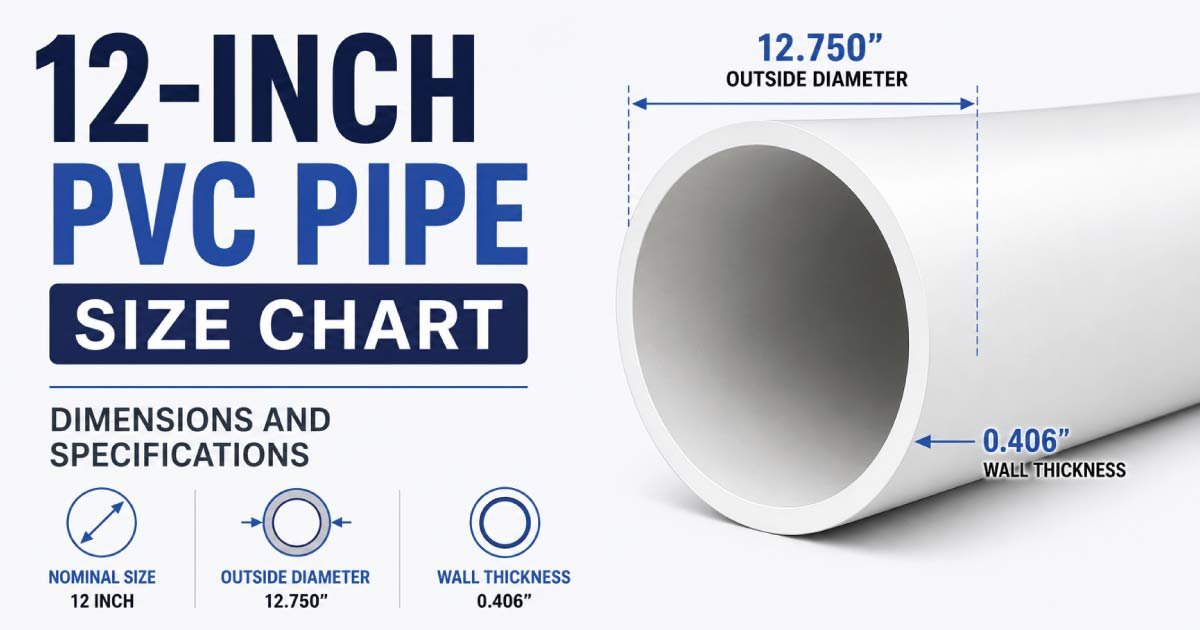
- Outside Diameter (OD): 12.75 inches (324 mm)
- Inside Diameter (ID): Varies by schedule
- Material: PVC (Polyvinyl Chloride)
- Standard: ASTM D1785 / ASTM D3034
12-Inch PVC Pipe Size Chart (Schedule Comparison)
The following chart shows how wall thickness affects the inside diameter of a 12-inch PVC pipe.
| Schedule | Outside Diameter (in) | Wall Thickness (in) | Inside Diameter (in) |
|---|---|---|---|
| Schedule 40 | 12.75 | 0.406 | ~11.94 |
| Schedule 80 | 12.75 | 0.500 | ~11.75 |
| SDR 35 | 12.75 | 0.365 | ~12.02 |
| SDR 26 | 12.75 | 0.490 | ~11.78 |
As the schedule number increases, wall thickness increases and inside diameter decreases.
Wall Thickness of 12-Inch PVC Pipe
Wall thickness is one of the most important design factors in 12-inch PVC pipes because it directly affects strength, durability, and pressure-handling capability. A thicker wall provides more structural stability, while a thinner wall allows for greater internal flow capacity. Choosing the correct thickness depends entirely on the application requirements.
Typical Wall Thickness Range
Different PVC pipe classifications come with different wall thicknesses, which are standardized for performance consistency.
- SDR 35: ~0.365 inches
- Schedule 40: ~0.406 inches
- Schedule 80: ~0.500 inches
Each increase in wall thickness improves pressure resistance but reduces the internal diameter slightly, which can affect flow rate in large-scale systems.
Thicker pipes are generally used in industrial or high-stress environments, while thinner walls are suitable for drainage and low-pressure applications.
Impact of Wall Thickness
Wall thickness directly influences how the pipe performs under stress.
- Thicker walls provide higher mechanical strength and impact resistance
- Thinner walls allow better flow efficiency due to larger internal space
- Increased thickness improves durability in buried or high-load environments
- Reduced thickness helps lower material cost and weight
Engineers must balance flow capacity and strength when selecting pipe thickness for large 12-inch systems.
Pressure Ratings of 12-Inch PVC Pipe
Pressure ratings indicate how much internal force a pipe can safely handle. These ratings vary depending on pipe schedule, material quality, and operating temperature. PVC pipes are commonly used in water systems, but pressure limits must always be respected to avoid failure.
Approximate Pressure Ratings
- Schedule 40: ~130 PSI (at 73°F)
- Schedule 80: ~200 PSI (at 73°F)
- SDR 35: Not pressure-rated (drainage use only)
These values are based on standard room temperature conditions and may vary slightly depending on manufacturer specifications.
Effect of Temperature on Pressure
Temperature plays a major role in PVC pipe performance.
- As temperature increases, pressure rating decreases
- Hot water systems significantly reduce safe operating limits
- Cold temperatures generally maintain or slightly improve rigidity
For this reason, PVC pipes are not recommended for high-temperature industrial fluid systems unless specifically rated.
Safety Considerations
To ensure safe operation:
- Always follow manufacturer pressure charts
- Avoid exceeding rated PSI limits
- Use Schedule 80 for high-pressure applications
- Never use SDR 35 for pressurized systems
Proper selection prevents pipe bursts, leaks, and system failure.
Weight of 12-Inch PVC Pipe
The weight of a 12-inch PVC pipe depends mainly on its wall thickness and schedule type. Compared to metal pipes, PVC remains significantly lighter, making it easier to handle in transportation and installation.
Approximate Weights
- Schedule 40: ~12–14 lbs per foot
- Schedule 80: ~15–18 lbs per foot
- SDR 35: ~10–12 lbs per foot
These values may vary slightly depending on manufacturer formulation and production methods.
Advantages of Lightweight PVC
- Easier manual handling without heavy machinery
- Lower transportation costs
- Faster installation on-site
- Reduced structural load on supports
Despite being lightweight, PVC still provides reliable performance in non-metallic piping systems when used correctly.
Types of 12-Inch PVC Pipes
12-inch PVC pipes come in different types, each designed for specific pressure conditions and applications. The selection depends on whether the system requires high pressure handling or simple drainage functionality.
Schedule 40 PVC Pipe
Schedule 40 is the most commonly used PVC pipe type for general plumbing and water systems.
Features:
- Medium wall thickness
- Balanced strength and flexibility
- Widely available and cost-effective
- Suitable for moderate pressure systems
Applications:
- Water distribution networks
- Agricultural irrigation systems
- Residential and commercial plumbing
- Light industrial fluid transport
Schedule 40 offers a strong balance between affordability and performance, making it the most popular choice for general use.
Schedule 80 PVC Pipe
Schedule 80 PVC pipes are designed for higher pressure and more demanding environments. They have thicker walls compared to Schedule 40.
Features:
- High mechanical strength
- Dark gray color for easy identification
- Greater pressure resistance
- Reduced internal diameter due to thicker walls
Applications:
- Industrial piping systems
- Chemical processing plants
- High-pressure water systems
- Corrosive fluid transport
Schedule 80 is preferred in environments where safety and pressure resistance are critical factors.
SDR 35 PVC Pipe
SDR 35 pipes are primarily designed for non-pressure applications and are widely used in drainage systems.
Features:
- Smooth interior surface for efficient flow
- Lightweight and easy to install
- Large diameter flow capacity
- Lower cost compared to pressure-rated pipes
Applications:
- Sewer and wastewater systems
- Stormwater drainage lines
- Underground gravity flow systems
- Municipal drainage infrastructure
SDR 35 is not suitable for pressurized systems but performs very well in gravity-flow applications.
Applications of 12-Inch PVC Pipe
12-inch PVC pipe is designed for large-scale and heavy-duty applications where high flow capacity and durability are essential. Its large diameter allows it to efficiently transport significant volumes of water or wastewater, making it suitable for municipal, industrial, agricultural, and infrastructure projects.
1. Municipal Water Systems
In urban infrastructure, 12-inch PVC pipes are commonly used as main distribution lines for supplying water across cities and towns. They help transport large volumes of clean water efficiently and maintain consistent pressure in municipal water supply networks, supporting residential, commercial, and public services.
2. Sewer and Drainage Systems
This pipe size is widely used in sewer and stormwater drainage systems due to its ability to handle high flow rates. It efficiently carries wastewater and rainwater away from populated areas, reducing the risk of flooding and water accumulation in urban and industrial environments.
3. Industrial Systems
In industrial applications, 12-inch PVC pipes are used for transporting non-corrosive fluids over long distances. Their resistance to chemical damage and smooth internal surface make them suitable for processing plants, cooling systems, and other large-scale fluid handling operations where reliability is important.
4. Irrigation Networks
Large agricultural fields and farming operations use 12-inch PVC pipes to distribute water across extensive areas. Their high capacity ensures efficient irrigation, reducing water loss and improving crop productivity. They are especially useful in systems requiring consistent and large-volume water delivery.
5. Construction Projects
In construction and infrastructure development, these pipes are used in major drainage and utility systems. They support effective stormwater management and underground drainage solutions, helping maintain structural safety and preventing water-related damage in large-scale projects such as highways, bridges, and commercial developments.
Advantages of 12-Inch PVC Pipe
PVC is widely preferred in large-diameter piping systems because it offers a combination of durability, affordability, and ease of handling compared to traditional materials like steel or concrete.
1. Corrosion-Resistant
PVC does not rust or corrode when exposed to water or most chemicals. This makes it especially suitable for underground and moisture-rich environments where metal pipes would degrade over time.
2. Lightweight Compared to Metal Pipes
Despite its large diameter, PVC is significantly lighter than steel or concrete alternatives. This reduces transportation costs and simplifies handling during installation.
3. Easy Installation
PVC pipes are designed for quick assembly using solvent welding or gasketed joints. This reduces labor time and overall project complexity, especially in large infrastructure systems.
4. Long Service Life (50+ Years)
When properly installed and maintained, PVC pipes can last several decades. Their resistance to corrosion and chemical damage helps ensure long-term performance.
5. Low Maintenance Requirements
PVC systems require minimal maintenance because they do not corrode, scale, or accumulate rust deposits inside the pipe walls. This reduces operational costs over time.
6. Cost-Effective for Large Systems
Compared to metal or concrete alternatives, PVC provides a more affordable solution for large-scale piping projects without compromising performance.
Limitations of 12-Inch PVC Pipe
Although PVC offers many advantages, it also has certain limitations that must be considered during system design and installation.
1. Lower Temperature Resistance
PVC is not suitable for high-temperature fluid transport. Exposure to elevated temperatures can weaken the material and reduce its structural integrity.
2. Not Suitable for High-Heat Applications
Because of its thermal limitations, PVC should not be used in systems carrying hot water, steam, or industrial high-heat fluids.
3. Can Become Brittle in Extreme Cold
In very low temperatures, PVC may lose flexibility and become more prone to cracking under impact or stress.
4. Limited UV Resistance Without Protection
Prolonged exposure to sunlight can degrade PVC over time unless it is coated, buried, or protected with UV-resistant materials.
5. Importance of Proper Installation
Most limitations can be reduced by correct installation practices, such as proper support spacing, protection from sunlight, and avoiding extreme operating conditions.
Installation Tips for 12-Inch PVC Pipe
Installing 12-inch PVC pipes requires careful planning due to their large size and weight. Proper techniques ensure long-term performance and prevent structural or flow issues.
Best Practices
- Use proper pipe supports to prevent sagging or misalignment
- Avoid over-tightening joints to prevent cracking
- Ensure accurate alignment before applying solvent cement
- Use PVC primer and cement correctly for strong bonding
- Allow sufficient curing time before pressure testing the system
Handling Considerations
Large-diameter PVC pipes often require mechanical equipment such as lifts or rollers during installation. Manual handling is usually not practical due to size and rigidity.
Proper handling reduces the risk of damage during transportation and assembly.
PVC Pipe Standards
To ensure safety, performance, and compatibility, 12-inch PVC pipes must comply with established industry standards. These standards regulate dimensions, material quality, and application suitability.
Key Standards
- ASTM D1785: Covers pressure-rated PVC pipes used in water distribution systems
- ASTM D3034: Specifies requirements for sewer and drainage PVC pipes
- NSF Certification: Ensures pipes are safe for potable (drinking) water systems
Importance of Standards
These standards ensure:
- Consistent pipe dimensions and performance
- Compatibility with fittings and connectors
- Safe use in potable and industrial water systems
- Long-term durability and reliability
Following these guidelines is essential for preventing system failures and ensuring regulatory compliance.
PVC vs Other Large-Diameter Pipes
When selecting large-diameter piping, PVC is often compared with concrete and steel due to its performance characteristics and cost advantages.
PVC Advantages
- Lightweight and easy to transport
- Simple and fast installation process
- Cost-effective for large-scale systems
- Resistant to corrosion and chemical damage
Compared to Concrete Pipes
PVC offers several improvements over concrete piping systems:
- Easier transportation and handling due to lower weight
- Smoother internal surface, improving flow efficiency
- Better resistance to corrosion and chemical exposure
- Reduced installation time and labor requirements
Compared to Steel Pipes
When compared to steel, PVC provides different operational benefits:
- No rusting or corrosion issues
- Lower overall material and maintenance costs
- Reduced need for protective coatings or treatments
- Easier long-term maintenance and replacement
While steel and concrete pipes are still used in heavy-duty infrastructure, PVC remains the preferred option in many modern systems due to its balance of performance, cost, and ease of installation.
Conclusion
The 12-inch PVC pipe is a critical component in large-scale water, sewer, and industrial systems. Understanding its size chart, including outside diameter, wall thickness, and schedule ratings, helps ensure proper selection and installation.
Whether used for municipal water distribution, drainage systems, or industrial applications, 12-inch PVC pipes offer durability, efficiency, and long service life when installed correctly.
By choosing the right schedule and understanding specifications, you can build a reliable and high-performance piping system for long-term use.
Also Read: 👉 A thread size mismatch in plumbing pipes can lead to leaks, poor connections, and costly repairs. This guide explains how to fix thread size mismatch in plumbing pipes, identify incompatible fittings, and choose the correct pipe thread sizes for a secure fit. Learn practical plumbing solutions and troubleshooting tips to ensure leak-free connections. Read the full post for step-by-step instructions and expert advice.