
PVC pipes are among the most widely used piping materials in residential, commercial, agricultural, and industrial applications. Their durability, corrosion resistance, lightweight construction, and affordability make them a popular choice for water distribution, drainage systems, irrigation networks, and plumbing projects.
Among the various pipe sizes available, the 6-inch PVC pipe is commonly used for high-flow applications where larger volumes of water or fluids need to be transported efficiently.
Understanding the dimensions and specifications of a 6-inch PVC pipe is essential for selecting the correct pipe, fittings, and installation methods. This guide explains everything you need to know about 6-inch PVC pipe sizes, schedules, dimensions, specifications, and applications.
What Is a 6-Inch PVC Pipe?
A 6-inch PVC pipe refers to a pipe with a Nominal Pipe Size (NPS) of 6 inches.
Many people assume a 6-inch pipe has an actual outside diameter of exactly 6 inches. However, pipe sizing follows industry standards where the nominal size serves as a designation rather than an exact measurement.
For a standard 6-inch PVC pipe:
- Nominal Pipe Size (NPS): 6 inches
- Nominal Diameter (DN): DN150
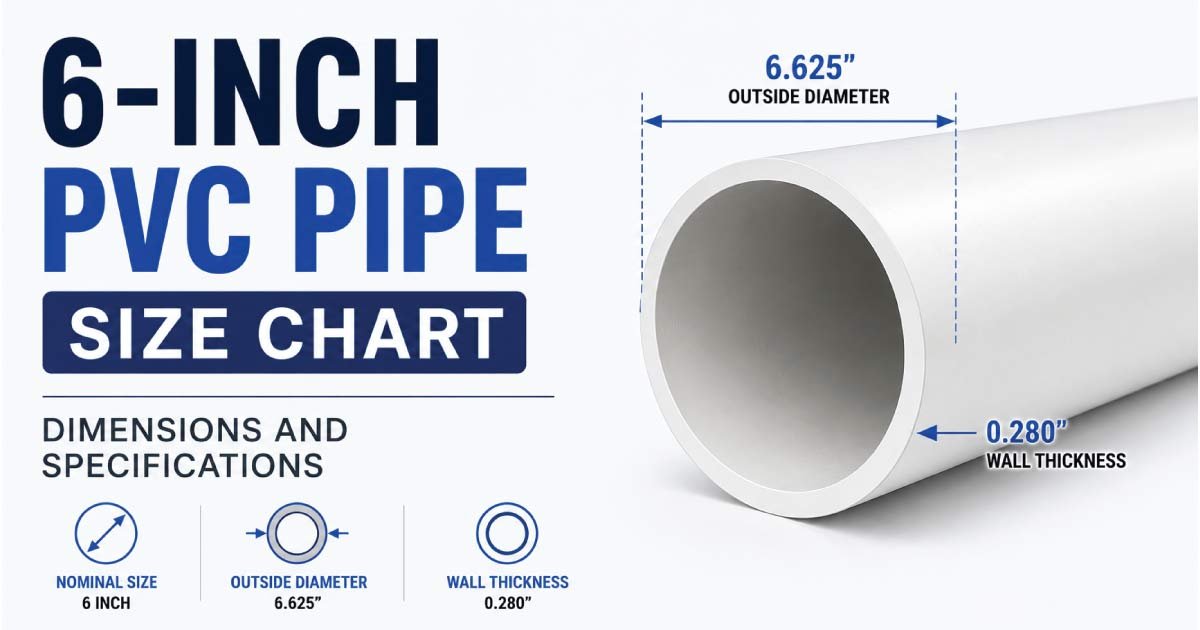
- Outside Diameter (OD): 6.625 inches (168.3 mm)
The actual inside diameter varies depending on the pipe schedule.
Understanding PVC Pipe Dimensions
Before using a size chart, it’s important to understand the measurements used to classify PVC pipes.
Nominal Pipe Size (NPS)
NPS is the standard sizing designation used in North America.
A 6-inch pipe designation does not represent the actual outside diameter.
Outside Diameter (OD)
The outside diameter remains constant regardless of pipe schedule.
For all standard 6-inch PVC pipes:
- OD = 6.625 inches
- OD = 168.3 mm
Wall Thickness
Wall thickness changes according to pipe schedule.
Thicker walls provide higher pressure ratings.
Inside Diameter (ID)
Inside diameter depends on wall thickness.
As wall thickness increases, the inside diameter decreases.
6-Inch PVC Pipe Size Chart
The following chart shows standard dimensions for common 6-inch PVC pipe schedules.
| Pipe Schedule | Outside Diameter (OD) | Wall Thickness | Inside Diameter (ID) |
|---|---|---|---|
| Schedule 40 | 6.625″ | 0.280″ | 6.065″ |
| Schedule 80 | 6.625″ | 0.432″ | 5.761″ |
Metric dimensions:
| Pipe Schedule | OD (mm) | Wall Thickness (mm) | ID (mm) |
|---|---|---|---|
| Schedule 40 | 168.3 | 7.11 | 154.1 |
| Schedule 80 | 168.3 | 10.97 | 146.3 |
These dimensions are based on industry-standard PVC pipe specifications.
6-Inch PVC Schedule 40 Dimensions
Schedule 40 PVC is the most commonly used PVC pipe type.
Specifications
| Property | Value |
|---|---|
| Nominal Size | 6 inches |
| Outside Diameter | 6.625 inches |
| Wall Thickness | 0.280 inches |
| Inside Diameter | 6.065 inches |
| Metric OD | 168.3 mm |
| Metric Wall Thickness | 7.11 mm |
Advantages of Schedule 40
- Lightweight
- Cost-effective
- Easy installation
- Good flow capacity
- Suitable for moderate pressure systems
6-Inch PVC Schedule 80 Dimensions
Schedule 80 PVC provides thicker walls and greater pressure resistance.
Specifications
| Property | Value |
|---|---|
| Nominal Size | 6 inches |
| Outside Diameter | 6.625 inches |
| Wall Thickness | 0.432 inches |
| Inside Diameter | 5.761 inches |
| Metric OD | 168.3 mm |
| Metric Wall Thickness | 10.97 mm |
Advantages of Schedule 80
- Higher pressure ratings
- Increased strength
- Better impact resistance
- Longer service life in demanding environments
How to Calculate Inside Diameter
The inside diameter can be calculated using:
ID = OD − (2 × Wall Thickness)
For a 6-inch Schedule 40 PVC pipe:
ID = 6.625 − (2 × 0.280)
ID = 6.065 inches
This measurement is important because it directly affects fluid flow capacity.
Pressure Ratings of 6-Inch PVC Pipes
Pressure ratings vary based on schedule and operating temperature.
Typical pressure ratings include:
| Pipe Type | Approximate Pressure Rating |
|---|---|
| Schedule 40 | 180 PSI |
| Schedule 80 | 280 PSI |
Actual pressure ratings may vary by manufacturer and operating conditions.
Always verify specifications before installation.
Weight of 6-Inch PVC Pipe
PVC pipes are significantly lighter than steel pipes.
Approximate weights for Schedule 40 PVC:
| Length | Approximate Weight |
|---|---|
| 10 Feet | 27 lbs |
| 20 Feet | 54 lbs |
This lightweight construction simplifies transportation and installation.
Common Applications of 6-Inch PVC Pipe
A 6-inch PVC pipe is used in many industries because it provides substantial flow capacity.
Drainage Systems
Used for:
- Stormwater drainage
- Sewer systems
- Wastewater transport
Municipal Water Systems
Used for:
- Water distribution networks
- Public infrastructure projects
Agricultural Irrigation
Suitable for:
- Large-scale irrigation systems
- Water transport networks
Industrial Processing
Used for:
- Chemical transport
- Cooling water systems
- Process piping
Construction Projects
Commonly installed in:
- Commercial buildings
- Residential developments
- Infrastructure projects
6-Inch PVC Pipe vs Steel Pipe
Many projects require choosing between PVC and steel piping.
| Feature | PVC Pipe | Steel Pipe |
|---|---|---|
| Weight | Lightweight | Heavy |
| Corrosion Resistance | Excellent | Moderate |
| Cost | Lower | Higher |
| Installation | Easier | More Complex |
| Pressure Resistance | Moderate | Higher |
| Maintenance | Low | Higher |
The best choice depends on application requirements.
Industry Standards for PVC Pipes
PVC pipes are manufactured under strict industry standards to ensure safety, durability, and consistent performance. These standards define dimensions, pressure ratings, and material quality, making PVC pipes suitable for a wide range of applications such as water supply, drainage, and irrigation systems.
1. ASTM D1785
ASTM D1785 specifies the requirements for Schedule 40 and Schedule 80 PVC pressure pipes. It defines pipe dimensions, wall thickness, and pressure ratings. This standard is commonly used in plumbing and industrial systems where accurate sizing and reliable pressure handling are essential for safe operation.
2. ASTM D2241
ASTM D2241 covers pressure-rated PVC pipes used in water distribution and irrigation systems. It focuses on pipes designed to handle internal pressure efficiently. This standard ensures that PVC pipes maintain strength and performance under continuous water flow and varying pressure conditions in different environments.
3. AWWA Standards
AWWA standards are widely used in municipal water supply systems. They ensure that PVC pipes meet the requirements for safe and efficient drinking water distribution. These standards focus on durability, pressure resistance, and long-term reliability, making them suitable for large-scale public water infrastructure projects.
4. NSF Certification
NSF certification ensures that PVC pipes are safe for potable (drinking) water applications. It verifies that the material does not release harmful substances into the water supply. This certification is essential for systems where water quality and human safety are top priorities.
Compliance with these standards ensures that PVC pipes deliver consistent quality, reliable performance, and compatibility across different plumbing and infrastructure systems.
How to Select the Right 6-Inch PVC Pipe
Choosing the correct 6-inch PVC pipe is important for ensuring safe performance, efficiency, and long service life. The right selection depends on system requirements such as pressure, fluid type, temperature, and regulatory standards. Evaluating these factors carefully helps avoid failures, leaks, and unnecessary maintenance in plumbing and irrigation systems.
1. Operating Pressure
The operating pressure of the system is a key factor when selecting PVC pipe. If the system carries high-pressure fluids, Schedule 80 PVC is often preferred due to its thicker walls and higher strength. For low to medium pressure applications, Schedule 40 is usually sufficient and more cost-effective.
2. Fluid Type
Different fluids react differently with piping materials, so chemical compatibility must always be checked. PVC is resistant to many acids, bases, and salts, but not all chemicals. Ensuring compatibility helps prevent pipe degradation, leaks, or structural failure, especially in industrial and agricultural applications where chemicals may be present.
3. Temperature Conditions
PVC performs best within a specific temperature range, typically for cold to moderately warm fluids. Exposure to excessive heat can weaken the pipe and reduce its pressure rating. Therefore, it is important to consider environmental and fluid temperatures before selecting PVC pipes for long-term reliability.
4. Flow Requirements
The internal diameter of the pipe directly affects flow rate and system efficiency. A 6-inch PVC pipe provides high flow capacity, making it suitable for drainage, irrigation, and water distribution systems. Proper sizing ensures smooth fluid movement without excessive pressure loss or blockages.
5. Local Codes and Regulations
Building codes and plumbing regulations vary by region and must always be followed when selecting PVC pipes. These standards ensure safety, quality, and compliance with legal requirements. Using approved pipe types helps prevent installation issues and ensures the system meets inspection and certification standards.
Common Installation Mistakes
Avoid these common errors:
- Choosing the wrong schedule.
- Ignoring pressure requirements.
- Using incompatible fittings.
- Improper solvent cement application.
- Failing to account for thermal expansion.
- Incorrect pipe support spacing.
Proper installation helps maximize system performance and lifespan.
Conclusion
A 6-inch PVC pipe is a reliable and cost-effective solution for water distribution, drainage, irrigation, and industrial applications. With a standard outside diameter of 6.625 inches (168.3 mm), its inside diameter varies according to schedule, affecting both flow capacity and pressure ratings.
By understanding the dimensions, wall thickness, pressure ratings, and specifications of 6-inch PVC pipes, engineers, contractors, and homeowners can confidently choose the right pipe for their projects. Whether you’re installing a municipal water line, agricultural irrigation system, or drainage network, selecting the proper PVC pipe dimensions is essential for long-term performance and reliability.
Also Read: 👉 Understanding stainless steel pipe sizes is essential for selecting the right pipe for industrial, construction, and plumbing applications. This Stainless Steel Pipe Size Chart provides standard pipe dimensions, schedules, and sizing information to help you make informed decisions. Learn how to choose the correct pipe size for your project and avoid costly mistakes. Read the full post for detailed charts, specifications, and expert sizing guidance.