
Choosing the right bicycle frame size is one of the most important decisions you can make when buying a new bike. A properly sized frame improves comfort, pedaling efficiency, handling, and overall riding performance. Whether you’re commuting to work, riding mountain trails, training on the road, or enjoying weekend adventures, the correct frame size helps prevent discomfort and reduces the risk of injuries.
Many cyclists focus on features like gears, suspension, or wheel size, but frame size has an even greater impact on how a bicycle feels. A bike that’s too small can make you feel cramped and uncomfortable, while a frame that’s too large may be difficult to control and inefficient to ride.
This complete guide explains bicycle frame sizes, how to measure yourself correctly, frame size charts for different bike types, and tips for selecting the perfect fit.
What Is Bicycle Frame Size?
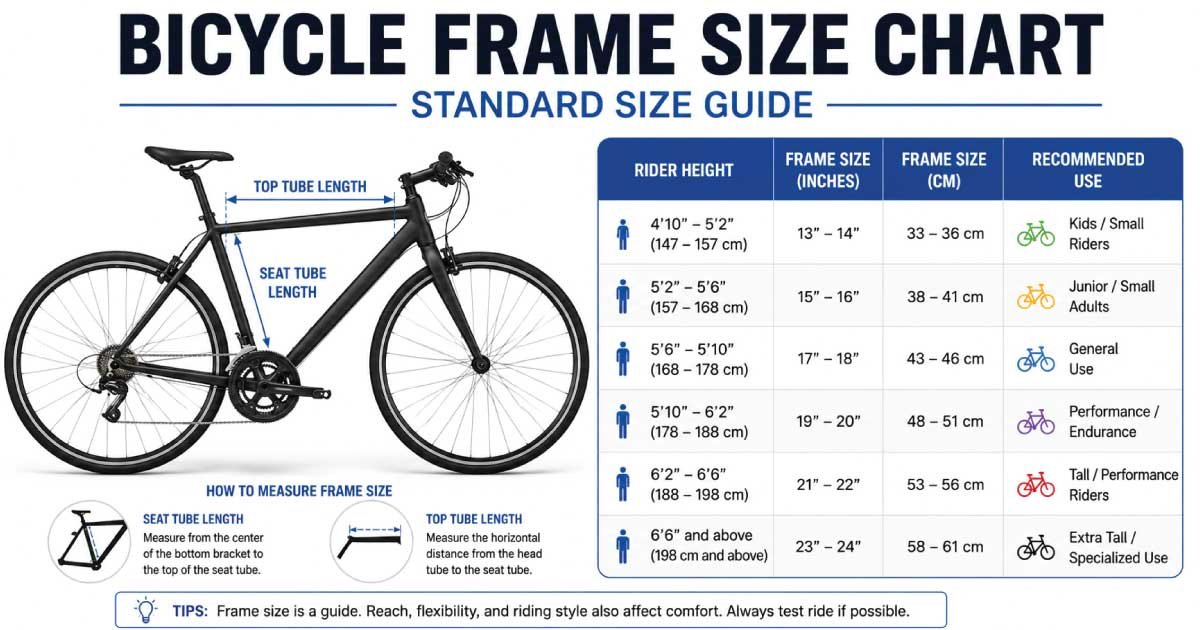
Bicycle frame size refers to the measurement of a bike’s main structure, which directly determines how well the bike fits the rider. It is typically measured from the center of the bottom bracket to the top of the seat tube, although some manufacturers may use slightly different measurement methods depending on the bike design.
Frame sizes are commonly displayed in different units or formats, including:
- Centimeters (cm)
- Inches (in)
- Small (S), Medium (M), Large (L), Extra Large (XL)
Road bikes usually use centimeters because of their precise geometry, while mountain bikes often use inches or general size labels for easier classification.
Why Choosing the Correct Frame Size Matters
Selecting the correct bicycle frame size is essential for both comfort and performance. A properly fitted bike allows the rider to maintain better control and ride more efficiently, especially over long distances or rough terrain.
Key benefits include:
- Improved riding comfort and posture
- Better power transfer while pedaling
- More efficient climbing ability
- Easier handling and maneuverability
- Enhanced balance and stability
- Reduced strain on the back, neck, shoulders, and knees
- Lower risk of fatigue during long rides
Even a small mismatch in frame size can significantly impact performance, making the ride uncomfortable and less efficient over time.
Bicycle Frame Size Chart by Rider Height
The chart below provides general frame size recommendations based on rider height. These values serve as a starting point, but personal preference and riding style may also influence the final choice.
| Rider Height | Frame Size (cm) | Frame Size (inches) | General Size |
|---|---|---|---|
| 4’10″–5’1″ (147–155 cm) | 47–49 cm | 13–14″ | XS |
| 5’1″–5’4″ (155–163 cm) | 50–52 cm | 15–16″ | S |
| 5’4″–5’7″ (163–170 cm) | 53–55 cm | 16–17″ | M |
| 5’7″–5’10” (170–178 cm) | 56–58 cm | 17–18″ | M/L |
| 5’10″–6’1″ (178–185 cm) | 58–60 cm | 18–19″ | L |
| 6’1″–6’4″ (185–193 cm) | 60–62 cm | 19–21″ | XL |
| Over 6’4″ (193 cm+) | 62 cm+ | 21″+ | XXL |
These recommendations are general guidelines, and actual sizing may vary slightly between different bicycle brands and frame geometries.
Road Bike Frame Size Chart
Road bikes are designed for speed, efficiency, and smooth riding on paved surfaces. Because of their aerodynamic riding position, frame sizing is typically more precise compared to other bike types.
| Rider Height | Road Bike Frame Size |
|---|---|
| 5’0″–5’3″ | 49–50 cm |
| 5’3″–5’6″ | 51–53 cm |
| 5’6″–5’9″ | 54–56 cm |
| 5’9″–6’0″ | 57–58 cm |
| 6’0″–6’3″ | 58–60 cm |
| 6’3″+ | 61–63 cm |
Choosing the correct road bike size is especially important because even small differences can affect aerodynamics, comfort, and long-distance riding performance.
Mountain Bike Frame Size Chart
Mountain bikes prioritize control, stability, and durability on rough and uneven terrain. Because of this, they are often sized slightly differently compared to road bikes.
| Rider Height | Mountain Bike Frame |
|---|---|
| 4’10″–5’2″ | 13–14″ (XS) |
| 5’2″–5’6″ | 15–16″ (S) |
| 5’6″–5’10” | 17–18″ (M) |
| 5’10″–6’1″ | 19–20″ (L) |
| 6’1″–6’4″ | 21–22″ (XL) |
| Over 6’4″ | 23″+ (XXL) |
Mountain bikes often use slightly smaller frames than road bikes to improve agility and control on technical trails, steep climbs, and uneven surfaces.
Hybrid Bike Frame Size Chart
Hybrid bikes are designed as a balance between road bikes and mountain bikes, offering comfort, versatility, and ease of use for commuting, fitness riding, and light off-road paths. Because of this hybrid design, manufacturers often use simple letter-based sizing instead of precise measurements in centimeters or inches.
| Rider Height | Hybrid Bike Frame |
|---|---|
| 5’0″–5’3″ | Small |
| 5’3″–5’7″ | Medium |
| 5’7″–6’0″ | Large |
| Over 6’0″ | Extra Large |
These sizes are general guidelines, and actual fit may vary slightly depending on the bike brand, frame geometry, and riding style. Hybrid bikes are typically more forgiving in sizing compared to road bikes, making them easier for beginners to choose.
How to Measure Your Inseam
Your inseam measurement is one of the most accurate ways to determine the correct bicycle frame size. It reflects your leg length, which directly affects saddle height, pedaling efficiency, and overall riding comfort.
Step 1
Stand barefoot with your back straight against a wall. Keep your feet slightly apart in a natural standing position, similar to how you would stand while riding a bike.
Step 2
Place a book or similar flat object between your legs, pushing it upward until it lightly touches your crotch area. This simulates the pressure and position of a bicycle saddle.
Step 3
Measure the distance from the floor to the top edge of the book using a measuring tape. Make sure the tape is straight and not angled for accurate results.
Step 4
Record the measurement in centimeters. This inseam value is essential for calculating the most suitable frame size and ensuring proper riding posture and comfort.
Read our newest article here: How to Calculate Any Size: A Complete Guide
Calculating Bicycle Frame Size
Once you know your inseam measurement, you can estimate the correct bicycle frame size using simple formulas. These formulas provide a useful starting point, although actual sizing may vary depending on brand geometry and bike design.
1. Road Bike Formula
Road Bike Frame (cm) = Inseam × 0.67
This formula is commonly used for road bikes because it helps determine a frame size that supports an efficient and aerodynamic riding position, especially for longer rides.
2. Mountain Bike Formula
Mountain Bike Frame (inches) = Inseam (cm) × 0.226
Mountain bike sizing focuses more on control and stability rather than speed. This formula helps estimate a frame size that allows better handling on rough terrain, climbs, and technical trails.
While these formulas are helpful, it is always recommended to consider riding style, flexibility, and manufacturer-specific geometry before making a final decision.
Wheel Size vs. Frame Size
Many cyclists confuse wheel size with frame size, but they refer to completely different parts of a bicycle. Understanding this difference is essential for choosing the right bike and achieving proper comfort and performance.
Wheel size refers to the diameter of the wheels, while frame size refers to the overall size of the bicycle frame and rider fit. A bike can have the same wheel size but still feel very different depending on its frame geometry.
Common wheel sizes include:
- 26-inch wheels
- 27.5-inch wheels
- 29-inch wheels
- 700C wheels
These measurements only describe how large the wheels are, not how big or small the bike is for the rider. Two bicycles with identical wheel sizes can have very different frame sizes, riding positions, and comfort levels.
Signs Your Bicycle Frame Is Too Small
A bicycle frame that is too small can negatively affect comfort, posture, and long-term riding performance. Riders often notice discomfort after short or medium rides.
Common signs include:
- Bent elbows and knees during normal riding position
- Limited leg extension while pedaling
- A cramped or compressed riding posture
- Lower back discomfort after riding
- Reduced pedaling efficiency and power output
- Knee pain during longer rides or climbs
A small frame forces the body into a restricted position, which can lead to fatigue and discomfort over time, especially during extended cycling sessions.
Read our newest article here: Measurement Units Explained: A Complete Guide
Signs Your Bicycle Frame Is Too Large
A frame that is too large can be just as problematic as one that is too small. It reduces control and makes the bike harder to handle safely and efficiently.
Common signs include:
- Difficulty reaching the handlebars comfortably
- Reduced control and slower response during steering
- Inability to stand over the top tube comfortably
- A stretched-out or overextended riding position
- Feeling unstable or off-balance while riding
- Constantly sliding forward on the saddle
A large frame forces the rider into an overextended posture, which can affect both safety and riding confidence, especially in traffic or technical terrain.
Additional Factors That Affect Bike Fit
While frame size is the foundation of a proper bike fit, it is not the only factor that determines comfort and performance. Several other adjustments play an important role in fine-tuning your riding position.
Key factors include:
- Saddle height
- Saddle fore-aft position (forward or backward adjustment)
- Stem length (affects reach to handlebars)
- Handlebar width (impacts control and comfort)
- Crank arm length (affects pedaling efficiency)
- Reach and stack measurements (overall bike geometry)
Making small adjustments to these components can significantly improve comfort, reduce strain on the body, and enhance overall cycling performance. A properly adjusted bike feels more natural, efficient, and easier to control across different riding conditions.
Tips for Choosing the Right Bicycle Frame
Choosing the correct bicycle frame size is essential for comfort, control, and long-term riding performance. A well-fitted bike reduces fatigue, improves efficiency, and makes riding more enjoyable whether you’re commuting or riding for fitness.
1. Measure both your height and inseam before buying
Start by measuring your total height and inseam length accurately. Height gives a general size estimate, while inseam provides a more precise indication of leg extension and standover clearance. Using both measurements together helps you avoid sizing mistakes and ensures a more accurate frame selection.
2. Consult the manufacturer’s sizing chart
Always check the specific sizing chart provided by the bicycle brand you are considering. Different manufacturers use different frame geometries, even for the same size label. A “medium” frame from one brand may feel slightly different from another, so relying on charts ensures better accuracy.
3. If you are between sizes, consider your riding style
When your measurements fall between two frame sizes, your riding preference becomes important in making the final decision.
- Choose the smaller size for more agile handling, quicker turns, and a sportier feel, especially useful for technical or urban riding.
- Choose the larger size for greater stability, comfort, and smoother performance on long-distance rides or highway cycling.
Your riding purpose should guide your final choice more than the numbers alone.
4. Test ride the bike whenever possible
A test ride is one of the most reliable ways to confirm fit. It allows you to feel how the bike responds to your body position, reach, and pedaling comfort. Even a short ride can reveal issues that numbers alone cannot show, such as stiffness, reach discomfort, or handling balance.
5. Make final fit adjustments after purchase
After selecting the correct frame, fine-tune the fit using adjustable components. Adjust the saddle height, handlebar position, and stem angle to match your body posture. These small changes can significantly improve comfort, reduce strain, and help you achieve an efficient riding position tailored to your needs.
Conclusion
Selecting the correct bicycle frame size is essential for comfort, safety, and performance. By measuring your height and inseam, consulting a reliable bicycle frame size chart, and understanding the differences between road, mountain, and hybrid bike sizing, you can choose a bike that fits your body and riding style. A properly fitted bicycle not only makes every ride more enjoyable but also improves efficiency, reduces fatigue, and gives you greater confidence on the road or trail.
Read our newest article here: Ball Bearing Size Chart: Complete Guide 2026