
Buying a new bicycle is an exciting investment, whether you’re commuting to work, exploring mountain trails, improving your fitness, or enjoying weekend rides. However, choosing the right bike size is just as important as selecting the right type of bike. A bicycle that fits properly provides better comfort, improved control, greater pedaling efficiency, and reduces the risk of injuries caused by poor riding posture.
Many first-time buyers mistakenly choose a bike based solely on wheel size or appearance. In reality, the correct bike size depends on your height, inseam length, riding style, and the type of bicycle you plan to ride. Manufacturers also use different sizing systems, including centimeters, inches, and letter sizes such as Small (S), Medium (M), and Large (L), which can make the process confusing.
This complete bike size guide explains everything you need to know, including bike size charts, frame measurements, wheel sizes, how to measure yourself correctly, and practical tips for finding the perfect bicycle.
Why Bike Size Matters
A properly fitted bicycle plays a major role in both comfort and performance. When a bike is too large or too small, it can negatively affect your posture, balance, and overall riding experience. Over time, an incorrect fit may lead to discomfort and even physical strain.
Riding the wrong size bike can cause issues such as back pain, knee strain, shoulder discomfort, poor handling, and reduced pedaling efficiency. These problems often become more noticeable during longer rides or regular cycling routines.
Choosing the correct bike size provides several important benefits:
- Improved riding comfort
- Better balance and stability
- Increased pedaling efficiency
- Easier and more responsive bike handling
- Better power transfer from legs to pedals
- Reduced fatigue on long rides
- Lower risk of injury or joint strain
Whether you cycle for fitness, commuting, or sport, selecting the right bike size ensures a safer, smoother, and more enjoyable riding experience.
Complete Bike Size Chart
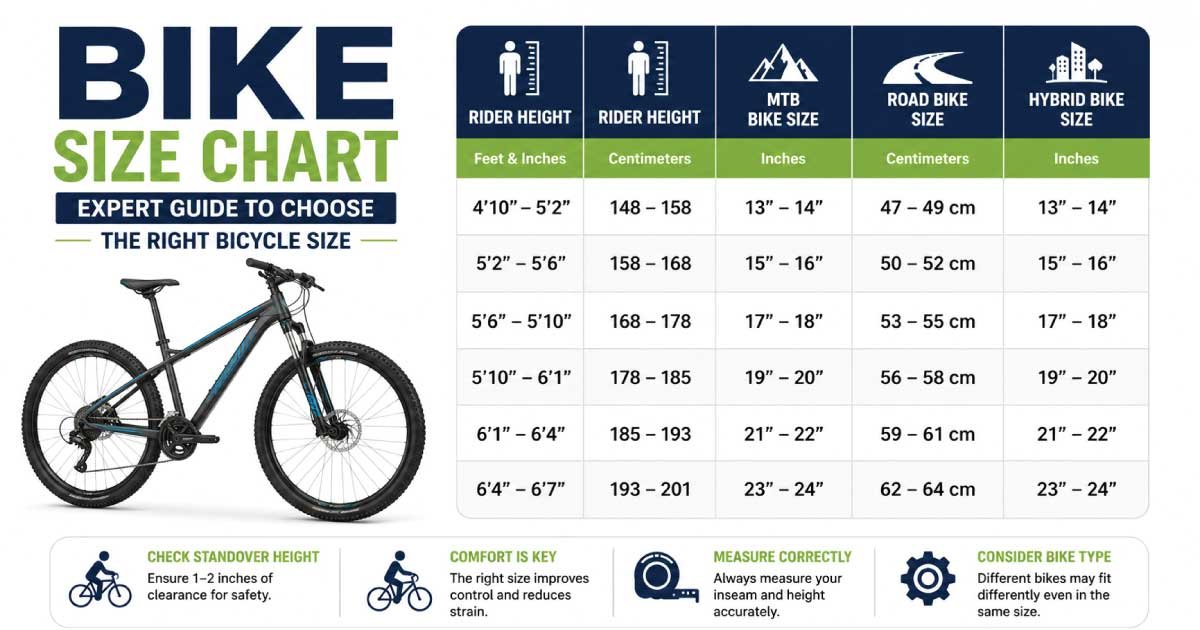
The following chart provides general bicycle sizing recommendations based on rider height. These values are commonly used as a starting reference when selecting a frame size.
| Rider Height | Frame Size (cm) | Frame Size (inches) | General Size |
|---|---|---|---|
| 4’10″–5’1″ (147–155 cm) | 47–49 cm | 13–14″ | XS |
| 5’1″–5’4″ (155–163 cm) | 50–52 cm | 15–16″ | S |
| 5’4″–5’7″ (163–170 cm) | 53–55 cm | 16–17″ | M |
| 5’7″–5’10” (170–178 cm) | 56–58 cm | 17–18″ | M/L |
| 5’10″–6’1″ (178–185 cm) | 58–60 cm | 18–19″ | L |
| 6’1″–6’4″ (185–193 cm) | 60–62 cm | 19–21″ | XL |
| Over 6’4″ (193 cm+) | 62 cm+ | 21″+ | XXL |
These guidelines provide a general framework, but actual sizing may vary depending on the bicycle brand, frame geometry, and intended riding style. Always compare your measurements with the manufacturer’s official sizing chart before making a purchase.
Road Bike Size Chart
Road bikes are specifically designed for speed, efficiency, and smooth performance on paved surfaces. Because riders typically maintain a more aerodynamic and stretched riding position, proper sizing is especially important for comfort and control.
| Rider Height | Recommended Frame Size |
|---|---|
| 5’0″–5’3″ | 49–50 cm |
| 5’3″–5’6″ | 51–53 cm |
| 5’6″–5’9″ | 54–56 cm |
| 5’9″–6’0″ | 57–58 cm |
| 6’0″–6’3″ | 58–60 cm |
| Over 6’3″ | 61–63 cm |
Road bikes require a more precise fit compared to other bike types because even small differences in frame size can significantly affect aerodynamics, efficiency, and long-term riding comfort.
Mountain Bike Size Chart
Mountain bikes are designed for off-road riding, where control, stability, and maneuverability are more important than speed. Because of this, their frame sizing is often slightly different from road bikes, even for the same rider height.
| Rider Height | Frame Size |
|---|---|
| 4’10″–5’2″ | 13–14″ (XS) |
| 5’2″–5’6″ | 15–16″ (S) |
| 5’6″–5’10” | 17–18″ (M) |
| 5’10″–6’1″ | 19–20″ (L) |
| 6’1″–6’4″ | 21–22″ (XL) |
| Over 6’4″ | 23″+ (XXL) |
Many riders prefer choosing the smaller of two possible sizes in mountain biking. A slightly smaller frame offers quicker handling, better control on technical trails, and easier maneuvering through tight or rocky terrain.
Hybrid Bike Size Chart
Hybrid bikes combine features of both road and mountain bikes, making them ideal for commuting, fitness riding, and casual recreation. They are designed for comfort, stability, and versatility on mixed terrain.
| Rider Height | Bike Size |
|---|---|
| 5’0″–5’3″ | Small |
| 5’3″–5’7″ | Medium |
| 5’7″–6’0″ | Large |
| Over 6’0″ | Extra Large |
Hybrid bikes generally offer a more relaxed riding position compared to road bikes, making them easier for beginners and everyday riders to handle over longer distances and varied road conditions.
Kids’ Bike Size Chart
Children’s bicycles are usually sized based on wheel diameter rather than frame measurements. This makes it easier to match bikes with a child’s height and riding ability as they grow.
| Child Height | Approximate Age | Wheel Size |
|---|---|---|
| 2’10″–3’4″ | 2–4 years | 12″ |
| 3’1″–3’7″ | 3–5 years | 14″ |
| 3’7″–4’0″ | 5–7 years | 16″ |
| 4’0″–4’5″ | 7–9 years | 20″ |
| 4’5″–4’9″ | 9–11 years | 24″ |
| Over 4’9″ | 11+ years | Adult XS |
While age is often used as a quick reference, height and inseam measurements are far more accurate for selecting the correct bike size. Choosing the right fit helps children ride more safely, confidently, and comfortably.
How to Measure Yourself for the Right Bike Size
Getting the correct bike size starts with accurate body measurements. While height gives a general idea, inseam measurement is more important because it directly relates to leg extension, saddle height, and overall riding comfort.
1. Measure Your Height
Stand barefoot with your back straight against a wall. Keep your heels together and your posture natural, without slouching or stretching.
Place a flat object, such as a book or ruler, on top of your head and mark the point where it touches the wall. Then measure from the floor to that mark using a measuring tape. This gives you your total body height, which helps in selecting a general bike size category.
2. Measure Your Inseam
Stand upright with your feet about 6 inches (15 cm) apart. This stance mimics a natural riding position and ensures a more accurate measurement.
Place a hardcover book firmly between your legs, pushing it upward until it comfortably simulates a bicycle saddle. Make sure the book is level and stable against your body.
Measure from the floor to the top of the book using a measuring tape. This distance represents your inseam, which is one of the most reliable indicators for determining the correct bike frame size.
Record the measurement in centimeters for easier comparison with standard bike sizing charts.
Why Inseam Matters More Than Height
Your inseam measurement plays a crucial role in bike fitting because it directly affects how high your saddle should be and how much clearance you have when standing over the bike. Unlike height, which only provides a general estimate, inseam ensures a more precise and comfortable frame selection.
Using inseam-based sizing helps you avoid common issues like poor leg extension, discomfort during pedaling, and inefficient riding posture, making it the most important factor in choosing the right bicycle size.
Bike Frame Size vs. Wheel Size
Many beginners confuse bike frame size with wheel size, but they describe two completely different aspects of a bicycle.
Frame size refers to the overall geometry of the bicycle frame and determines how well the bike fits your body. It affects your posture, reach, and overall riding comfort.
Wheel size, on the other hand, refers only to the diameter of the wheels. Common wheel sizes include:
- 26-inch
- 27.5-inch
- 29-inch
- 700C
Two bicycles can have the same wheel size but completely different frame sizes. For example, both a small and large mountain bike may use 29-inch wheels, but their fit and handling will feel very different. This is why frame size is far more important for rider comfort than wheel size alone.
Read our newest article here: Copper Pipe Size Chart: A Complete Guide
How to Choose Between Two Bike Sizes
If your body measurements place you between two frame sizes, the final decision depends on your riding style and comfort preference.
Choose the smaller size if you want a more agile, responsive bike. Smaller frames are easier to control, especially in tight turns, technical terrain, or urban riding conditions.
Choose the larger size if you prefer stability, comfort, and a more relaxed riding position. Larger frames are often better for long-distance rides and steady cruising.
You can also refine your fit after choosing a size by adjusting key components such as saddle height, stem length, and handlebar position. These adjustments help fine-tune comfort and riding efficiency.
Common Bike Sizing Mistakes
Many riders make avoidable mistakes when selecting a bike size, which can lead to discomfort and poor performance.
Common errors include:
- Buying based only on wheel size instead of frame size
- Ignoring inseam measurements and relying only on height
- Assuming all brands use identical sizing standards
- Choosing a larger bike because it “looks better” or more professional
- Skipping a test ride before purchasing whenever possible
Taking accurate body measurements and comparing them with brand-specific sizing charts can help you avoid these issues and choose the right bike the first time.
Additional Bike Fit Considerations
Even if you choose the correct frame size, overall comfort depends on proper bike fitting and adjustments. Small changes in bike setup can significantly improve riding performance and reduce body strain.
Important fit factors include:
- Saddle height
- Saddle position (forward or backward adjustment)
- Handlebar height
- Stem length
- Reach (distance to handlebars)
- Stack height (vertical frame position)
- Crank arm length
For riders who cycle regularly or cover long distances, a professional bike fitting can provide even better results. It ensures optimal posture, reduces injury risk, and maximizes pedaling efficiency for long-term comfort and performance.
Tips for Buying the Right Bike
Buying a bicycle is not just about picking a design or brand—it’s about getting the correct fit and components that match your body and riding needs. A well-chosen bike improves comfort, performance, and safety, while a poor choice can lead to discomfort and inefficient riding.
1. Measure Your Height and Inseam Accurately
Start by measuring your height and inseam correctly because these two measurements form the foundation of proper bike sizing.
Height gives a general idea of frame size, while inseam is more precise for determining how the bike fits your leg extension and standover height. Even a small measurement error can lead to selecting the wrong frame size.
2. Use the Manufacturer’s Size Chart
Every bike brand has its own geometry, so sizing can vary between manufacturers even for the same height range.
Always check the official size chart for the specific bike model you are interested in. This helps you match your body measurements with the correct frame size and avoid guesswork when choosing between Small, Medium, or Large options.
3. Consider Your Riding Style and Terrain
Your riding style plays a major role in choosing the right bike. Different bikes are designed for different purposes such as road cycling, mountain trails, commuting, or hybrid use.
If you prefer speed and long-distance rides, a road bike may be better. For rough terrain and control, a mountain bike is ideal. Commuters often benefit from hybrid bikes that balance comfort and efficiency.
4. Test Ride the Bike Whenever Possible
A test ride is one of the most reliable ways to confirm if a bike fits you properly.
Pay attention to how the bike feels when you sit, pedal, and steer. Check for comfort in your back, arms, and legs. If anything feels strained or awkward, the frame size may not be right for you.
5. Choose Quality Components in Addition to Frame Size
Frame size is important, but bike components also affect performance and comfort.
Look for quality parts such as:
- Reliable gears and shifting systems
- Strong and responsive brakes
- Comfortable saddle
- Durable wheels and tires
A properly sized bike with poor components will still feel disappointing, so balance both fit and quality when making your decision.
6. Don’t Hesitate to Ask a Bike Shop for Sizing Advice
Professional bike shops have experience helping riders find the correct size and setup.
They can measure you, recommend suitable models, and make adjustments for better comfort. Asking for expert advice can prevent costly mistakes and ensure you get a bike that truly fits your body and riding goals.
Read our newest article here: Stud Bolt Size Chart: A Complete Guide
Conclusion
Choosing the right bike size is one of the most important steps toward enjoying comfortable, efficient, and safe cycling. By measuring your height and inseam, understanding the differences between frame size and wheel size, and using the appropriate bike size chart, you can confidently select a bicycle that matches your body and riding style. Whether you’re purchasing a road bike, mountain bike, hybrid bike, or children’s bicycle, the correct fit will improve performance, reduce fatigue, and make every ride more enjoyable.
Frequently Asked Questions
Is rider height enough to choose a bike?
Height is a helpful starting point when selecting a bike, but inseam length is often a more accurate measurement for determining the correct frame size. Your arm reach, torso length, and riding style also influence overall comfort. Using multiple body measurements helps you choose a bike that fits properly.
What happens if my bike is too small?
A bike that is too small can cause a cramped riding position, reduced pedaling efficiency, and unnecessary strain on your knees, back, shoulders, and wrists. It may also affect handling and stability, making longer rides less comfortable and increasing fatigue over time.
Can I adjust a bike that doesn’t fit perfectly?
Yes, small fit issues can often be corrected by adjusting the saddle height, saddle position, handlebar height, or stem length. However, these adjustments have limits and cannot fully compensate for a frame that is significantly too large or too small for the rider.
Are bike sizes the same across all brands?
No. Bike sizes vary between manufacturers because each brand uses different frame geometry, tube lengths, and sizing standards. A medium frame from one brand may fit differently than a medium from another. Always compare your measurements with the manufacturer’s official sizing chart before buying a bike.
Read our newest article here: Tire Size Chart: A Complete Guide