
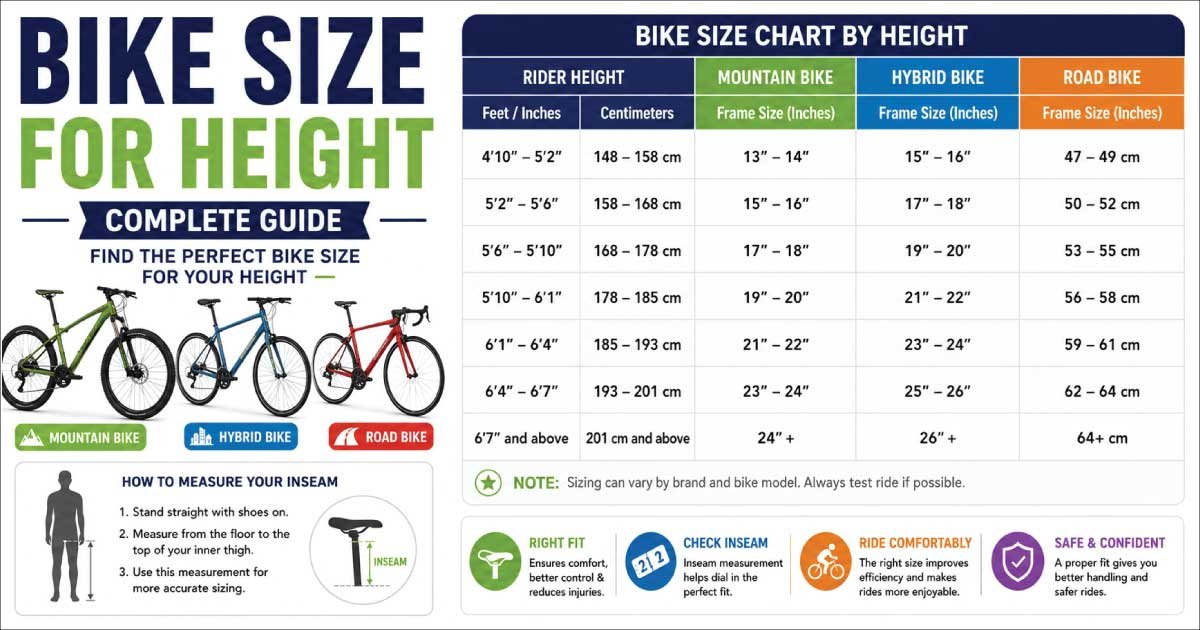
Choosing the right bike size is one of the most important decisions you’ll make before buying a bicycle. Whether you’re shopping for a mountain bike, road bike, hybrid bike, or city bike, selecting the correct frame size can significantly improve your comfort, efficiency, and safety.
Many new riders focus on features like gears, brakes, or suspension, but even the best bicycle won’t feel comfortable if it’s the wrong size. A bike that’s too small can leave you cramped and uncomfortable, while one that’s too large can be difficult to control and increase the risk of injury.
This complete guide explains how to choose the correct bike size based on your height, inseam measurement, riding style, and bike type. It also includes easy-to-follow bike size charts for adults, kids, mountain bikes, road bikes, and hybrid bikes.
Why Bike Size Matters
Choosing the correct bike size is one of the most important steps in ensuring a comfortable, safe, and efficient riding experience. A properly fitted bike aligns your body position with the frame geometry, allowing smoother movement and better control. Even a high-quality bicycle can feel uncomfortable or unsafe if the size is not matched to the rider’s height and proportions.
A properly sized bike offers several advantages:
- Better comfort on long rides
- Improved pedaling efficiency
- Easier handling and control
- Reduced strain on your knees and back
- Increased riding confidence
- Better overall performance
Each of these benefits contributes to a smoother riding experience, especially during longer distances or varied terrain conditions. Proper sizing also reduces the risk of injury and ensures that energy is used efficiently while pedaling.
Riding the correct size bike also helps prevent fatigue and improves safety by maintaining a natural posture, reducing unnecessary pressure on joints, and allowing better balance and stability in different riding conditions.
Adult Bike Size Chart by Height
The following chart provides general recommendations for adult riders. These sizes are widely used as a starting point for selecting the correct frame, but slight variations may occur depending on brand design and bike geometry.
| Rider Height | Frame Size (cm) | Frame Size (inches) | Typical Wheel Size |
|---|---|---|---|
| 4’10″–5’1″ (147–155 cm) | 47–49 cm | 13–14″ | 26″ |
| 5’1″–5’5″ (155–165 cm) | 50–52 cm | 15–16″ | 26″ / 27.5″ |
| 5’5″–5’8″ (165–173 cm) | 53–55 cm | 17–18″ | 27.5″ |
| 5’8″–5’11” (173–180 cm) | 56–58 cm | 19–20″ | 27.5″ / 29″ |
| 5’11″–6’2″ (180–188 cm) | 58–60 cm | 21–22″ | 29″ |
| 6’2″–6’5″ (188–196 cm) | 61–63 cm | 23–24″ | 29″ |
| Over 6’5″ (196+ cm) | 64 cm+ | 25″+ | 29″ |
These measurements are general guidelines and may vary slightly between manufacturers. Factors such as frame geometry, riding style, and intended use can also influence the ideal bike size for each rider.
Mountain Bike Size Chart
Mountain bikes are typically measured in inches and are designed for off-road performance, requiring better control and maneuverability on rough and uneven terrain. Proper sizing is especially important for stability during climbs and descents.
| Rider Height | Frame Size |
|---|---|
| 4’10″–5’2″ | 13–14″ (XS) |
| 5’2″–5’6″ | 15–16″ (S) |
| 5’6″–5’10” | 17–18″ (M) |
| 5’10″–6’1″ | 19–20″ (L) |
| 6’1″–6’4″ | 21–22″ (XL) |
| 6’4″+ | 23″+ (XXL) |
Mountain bikes often feature smaller, more compact frames to improve maneuverability on rough trails, technical paths, and steep terrain. A slightly smaller frame is often preferred for better control and responsiveness during off-road riding.
Road Bike Size Chart
Road bike frames are commonly measured in centimeters and are designed for speed, efficiency, and long-distance riding on paved surfaces. Proper fit ensures aerodynamic posture and reduces fatigue during extended rides.
| Rider Height | Road Bike Frame Size |
|---|---|
| 4’10″–5’1″ | 47–49 cm |
| 5’1″–5’4″ | 50–52 cm |
| 5’4″–5’7″ | 53–54 cm |
| 5’7″–5’10” | 55–56 cm |
| 5’10″–6’1″ | 57–58 cm |
| 6’1″–6’4″ | 59–61 cm |
| 6’4″+ | 62 cm+ |
Road bikes prioritize speed and efficient riding posture, meaning correct sizing is essential for maintaining comfort while keeping aerodynamic positioning. Even small sizing errors can affect pedaling efficiency and long-term riding comfort.
Hybrid Bike Size Chart
Hybrid bikes combine features of both road and mountain bikes, offering a balanced riding experience suitable for commuting, fitness, and casual riding. Their sizing is generally more flexible and focused on comfort.
| Rider Height | Frame Size |
|---|---|
| 4’10″–5’2″ | Small |
| 5’2″–5’6″ | Medium |
| 5’6″–5’10” | Large |
| 5’10″–6’2″ | XL |
| 6’2″+ | XXL |
Hybrid bikes provide a comfortable upright riding position for commuting and recreational rides. They are designed to offer stability and ease of handling, making them a popular choice for everyday use across different terrains.
Kids’ Bike Size Chart
Children’s bikes are mainly sized using wheel diameter instead of frame size because kids grow quickly and need simpler sizing standards. Wheel size gives a more practical and easy-to-understand way to match a child’s height and riding ability with the right bicycle.
Proper sizing is very important for children because it affects balance, confidence, and safety while riding. A correctly sized bike helps kids learn faster and reduces the risk of falls or discomfort during use.
Kids Bike Size Chart
| Child Height | Approximate Age | Wheel Size |
|---|---|---|
| 2’10″–3’4″ | 2–4 years | 12″ |
| 3’4″–3’9″ | 4–6 years | 14″ |
| 3’9″–4’4″ | 5–8 years | 16″ |
| 4’0″–4’5″ | 6–9 years | 20″ |
| 4’5″–4’9″ | 8–11 years | 24″ |
| Over 4’9″ | 11+ years | 26″ or Adult XS |
Height is generally a better guide than age because children grow at different rates. Two children of the same age may require different bike sizes depending on their leg length and overall body proportions. Choosing based on height ensures a safer and more comfortable riding experience.
How to Measure Your Height for Bike Sizing
Accurate height measurement is the first step in selecting the correct bike size. It helps match the rider’s body proportions with the appropriate frame or wheel size, ensuring better comfort and control.
Follow these simple steps:
- Stand barefoot against a wall.
- Keep your heels together.
- Look straight ahead.
- Place a book flat on your head.
- Mark the wall.
- Measure from the floor to the mark.
This method provides a precise measurement that can be used with any bike size chart. Always measure carefully, as even small errors can affect bike fit and riding comfort.
Use this measurement with the bike size chart for a starting point when selecting a suitable bicycle. It is especially important for growing children and beginner riders.
Read our newest article here: I Bolt Size Chart: Complete Guide for 2026 With Pdf
Measure Your Inseam
Inseam measurement is just as important as height when determining the correct bike size. It provides a more accurate indication of how well a rider will fit on the bike, especially when it comes to stand-over height and pedaling comfort.
Steps:
- Stand barefoot.
- Place a book firmly between your legs.
- Measure from the floor to the top of the book.
- Record the measurement in centimeters.
Inseam length helps determine whether the rider can comfortably reach the pedals and safely stand over the bike frame. It is often used by professional bike fitters because it gives a more precise fit than height alone.
Using both height and inseam measurements together ensures better accuracy, improved comfort, and safer riding performance, especially for children and new cyclists.
How Bike Frame Size Is Measured
Bike frame sizing follows a standardized method that helps manufacturers and riders determine the correct fit for different body types. Proper measurement ensures comfort, control, and efficiency while riding, especially over long distances or rough terrain.
Most bike manufacturers measure the frame from:
- Center of the bottom bracket
- To the top of the seat tube
This measurement represents the effective frame size and is used as a reference for selecting the correct bike. However, different bike types may express sizing differently depending on design standards.
Road bikes generally use centimeters to indicate frame size, providing more precise measurements for performance-focused riding. Mountain bikes, on the other hand, often use inches or general size labels such as S, M, L, and XL. These variations help simplify selection based on riding style and terrain requirements.
Understanding how frame size is measured helps riders choose a bike that matches their body proportions, ensuring better posture, pedaling efficiency, and overall riding comfort.
Choosing Between Two Bike Sizes
It is common for riders to fall between two bike sizes based on height and inseam measurements. In such cases, personal riding style, comfort preference, and intended use should guide the final decision.
Consider these general guidelines:
- Choose the smaller frame if you:
- Prefer easier handling
- Ride technical trails
- Want a more upright position
- Choose the larger frame if you:
- Ride longer distances
- Prefer stability
- Have longer arms or legs
The smaller frame offers greater maneuverability, making it ideal for tight turns and technical riding conditions. The larger frame provides more stability and efficiency, especially for long-distance cycling and smoother rides.
If possible, test ride both sizes before buying. A short test ride can reveal differences in comfort, reach, and control that are not always obvious from charts alone.
Read our newest article here: T Bolt Size Chart: Complete Guide 2026 + Pdf
Signs Your Bike Is Too Small
A bike that is too small can negatively affect posture, comfort, and pedaling efficiency. It may also lead to unnecessary strain on the knees, back, and shoulders during extended use.
Your bike may be too small if:
- Knees hit the handlebars
- Back feels cramped
- Saddle is raised excessively
- Handling feels twitchy
- You feel crowded while pedaling
When a bike is undersized, the rider often compensates by adjusting the seat or posture, which can lead to discomfort and poor riding mechanics. Over time, this may reduce performance and increase fatigue, especially during longer rides.
Signs Your Bike Is Too Large
A bike that is too large can be difficult to control and may reduce rider confidence, especially for beginners. It can also cause strain due to overreaching and improper posture.
A bike may be too large if:
- You struggle to reach the handlebars.
- You cannot comfortably stand over the frame.
- Steering feels slow or difficult.
- Mounting and dismounting are awkward.
- You experience shoulder or lower back discomfort.
Oversized bikes often force the rider into an extended position, which reduces control and increases fatigue. This can make riding unsafe, particularly in stop-and-go traffic or technical terrain.
Choosing the correct frame size ensures better balance, smoother handling, and a more enjoyable riding experience overall.
Tips for Getting the Perfect Bike Fit
Even if you choose the correct frame size, small adjustments are often needed to achieve a truly comfortable and efficient riding position. A proper bike fit improves pedaling efficiency, reduces fatigue, and prevents strain on your knees, back, and shoulders during long rides.
You can improve comfort by adjusting:
- Saddle height
- Saddle position
- Handlebar height
- Stem length
- Crank length
- Tire pressure
Each of these adjustments plays an important role in refining your riding posture. For example, saddle height affects leg extension and pedaling efficiency, while handlebar position influences upper-body comfort and steering control. Small changes can make a significant difference in overall riding experience.
A professional bike fitting can further improve comfort and performance, especially for long-distance riders or cyclists with specific physical needs. Expert fitting ensures that every component is adjusted according to your body geometry, riding style, and flexibility, leading to better efficiency and reduced injury risk.
Read our newest article here: Tap and Die Drill Chart: Complete Guide + Pdf
Common Bike Size Mistakes
Choosing the wrong bike size or ignoring proper fitting adjustments can lead to discomfort, poor performance, and even injury. Many riders make simple but avoidable mistakes when selecting or setting up their bike.
Avoid these common errors:
- Buying a bike based only on wheel size
- Ignoring inseam measurements
- Assuming all brands size bikes the same
- Choosing a larger frame “to grow into”
- Skipping a test ride
- Not adjusting the saddle after purchase
Each of these mistakes can negatively impact riding comfort and safety. For example, relying only on wheel size can result in a poor frame fit, while ignoring inseam measurements may lead to improper leg extension and knee strain. Similarly, skipping a test ride prevents you from identifying real-world comfort issues before purchase.
Proper attention to sizing and adjustments ensures a safer, more comfortable, and more enjoyable cycling experience, whether for commuting, fitness, or recreational riding.
Final Thoughts
Choosing the correct bike size based on your height is the first step toward a comfortable and enjoyable riding experience. While height charts provide a helpful starting point, inseam length, riding style, and personal preferences also play important roles in achieving the perfect fit. Whether you’re buying a road bike, mountain bike, hybrid bike, or children’s bicycle, taking the time to select the right frame size will improve comfort, handling, efficiency, and safety for every ride.
Frequently Asked Questions
What size bike do I need if I’m 5’8″?
Most riders who are 5’8″ (173 cm) fit a 17–18-inch mountain bike, a 56 cm road bike, or a Large hybrid bike. However, the ideal size depends on the bike’s geometry, your inseam length, and the manufacturer’s sizing recommendations. Always compare your measurements with the brand’s size chart.
Is wheel size the same as bike size?
No. Wheel size and bike frame size are two different measurements. Frame size determines how well the bike fits your body and affects riding comfort, while wheel size influences handling, stability, rolling efficiency, and terrain performance. Both should be considered when selecting the right bicycle.
Can I ride a bike that’s one size too big?
Although you can ride a bike that’s one size too large, it is generally not recommended. An oversized frame may reduce handling, make mounting and stopping more difficult, and cause discomfort during longer rides. Choosing the correct frame size provides better control, safety, and overall riding efficiency.
How often should I check my bike fit?
Review your bike fit whenever you replace components such as the saddle, handlebars, stem, or pedals, or if your flexibility, fitness level, or riding style changes. Periodically checking your fit helps maintain comfort, improves pedaling efficiency, and reduces the risk of pain or overuse injuries during cycling.