
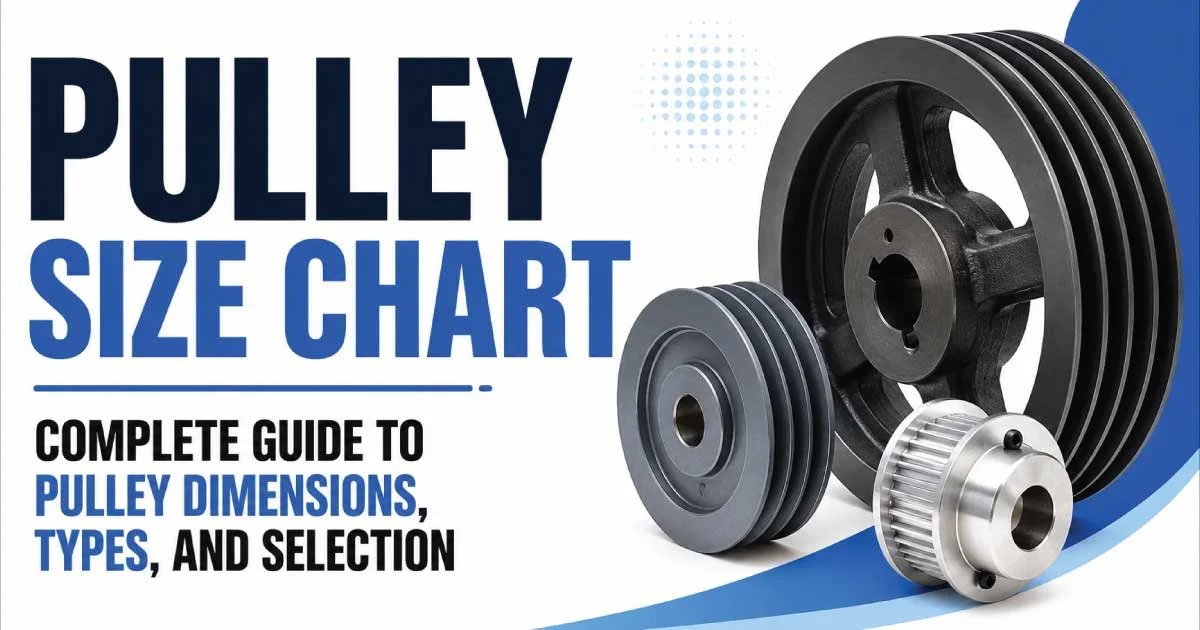
Pulleys are important mechanical components used to transmit power, change the direction of force, and control movement in machines and lifting systems. They are commonly used in engines, conveyors, industrial equipment, elevators, fitness machines, and belt-driven systems. Selecting the correct pulley size is essential because pulley diameter, groove type, bore size, and belt compatibility directly affect speed, torque, and overall system performance.
A pulley size chart helps engineers, mechanics, and technicians identify the correct pulley dimensions for different applications. This complete guide explains pulley sizes, types, measurements, materials, and how to choose the right pulley for your mechanical system.
What Is a Pulley?
A pulley is a rotating wheel with a groove or channel designed to guide a rope, cable, chain, or belt. It transfers mechanical force and helps move loads or transmit power between rotating components.
Pulleys can reduce the amount of force required to lift heavy objects or adjust the speed and torque of rotating machinery.
Common pulley applications include:
- Industrial conveyors
- Automotive engines
- Cranes and lifting equipment
- Agricultural machinery
- Fitness machines
- Garage door systems
- Manufacturing equipment
Pulley Size Chart
Pulley sizes are usually determined by outside diameter, bore diameter, belt type, and groove dimensions. The correct pulley size depends on the required speed ratio, load capacity, and operating conditions.
| Pulley Size | Outside Diameter | Bore Diameter Range | Common Applications |
|---|---|---|---|
| Small Pulley | 20 mm – 75 mm | 5 mm – 20 mm | Small machines, motors |
| Medium Pulley | 75 mm – 200 mm | 15 mm – 50 mm | Industrial equipment |
| Large Pulley | 200 mm – 500 mm | 40 mm – 100 mm | Heavy machinery |
| Extra Large Pulley | 500 mm+ | 75 mm+ | Mining and large systems |
The exact pulley dimensions vary depending on belt size, manufacturer standards, and application requirements.
Types of Pulleys and Their Sizes
Different pulley designs are used depending on the type of belt, load, and mechanical requirements.
V-Belt Pulley Size Chart
V-belt pulleys are commonly used in power transmission systems because they provide efficient grip and reliable performance.
| V-Belt Pulley Size | Diameter Range | Applications |
|---|---|---|
| Small V Pulley | 50 mm – 100 mm | Small motors |
| Medium V Pulley | 100 mm – 300 mm | Industrial drives |
| Large V Pulley | 300 mm – 800 mm | Heavy machinery |
V-belt pulley selection depends on belt profile, groove size, and required speed ratio.
Timing Pulley Size Chart
Timing pulleys are designed for toothed belts and provide accurate power transmission without slipping.
| Timing Pulley Size | Belt Type | Common Uses |
|---|---|---|
| Small Timing Pulley | 2 mm – 5 mm pitch | Precision equipment |
| Medium Timing Pulley | 5 mm – 10 mm pitch | Automation systems |
| Large Timing Pulley | 10 mm+ pitch | Industrial machines |
Timing pulleys are commonly used in robotics, CNC machines, and manufacturing equipment where precise movement is required.
Flat Pulley Size Chart
Flat pulleys are designed for flat belts and are commonly used in older and specialized machinery.
| Pulley Diameter | Belt Width Range | Applications |
|---|---|---|
| 50 mm – 150 mm | 10 mm – 30 mm | Light machinery |
| 150 mm – 500 mm | 30 mm – 100 mm | Industrial systems |
| 500 mm+ | 100 mm+ | Heavy equipment |
Flat pulleys provide smooth operation and are suitable for applications requiring continuous belt movement.
Also Read: Master Sheet Metal Screws: Sizes, Types & DIY Tips
How to Measure a Pulley Size
Accurate measurement is important when replacing or selecting a pulley. Several dimensions must be considered.
Measure Pulley Outside Diameter
The outside diameter is the total measurement across the pulley wheel. It affects belt speed and system performance.
A larger pulley diameter generally produces lower speed and higher torque, while a smaller pulley increases speed.
Measure Bore Diameter
The bore diameter is the hole in the center of the pulley where the shaft fits.
Important bore measurements include:
- Shaft diameter
- Keyway size
- Bore depth
- Mounting style
Measure Groove Size
For belt-driven pulleys, the groove must match the belt profile. An incorrect groove size can cause belt slipping, wear, or poor power transfer.
Measure Pulley Width
Pulley width determines belt support and load capacity. Wider pulleys are usually used for heavier applications.
Pulley Speed Ratio and Size Selection
Pulley size directly affects the speed and torque relationship between connected shafts.
When two pulleys are connected by a belt:
- A smaller driving pulley creates higher driven pulley speed.
- A larger driven pulley reduces speed and increases torque.
- Equal pulley sizes maintain the same speed.
The correct pulley ratio helps machines operate efficiently and prevents unnecessary stress on motors and components.
Pulley Materials
Pulleys are manufactured from different materials depending on load requirements, environment, and operating conditions.
Steel Pulleys
Steel pulleys are commonly used in heavy-duty applications because they provide excellent strength and durability.
Advantages include:
- High load capacity
- Long service life
- Resistance to wear
- Suitable for industrial use
Steel pulleys are often found in factories, construction equipment, and large machinery.
Aluminum Pulleys
Aluminum pulleys are lightweight and corrosion-resistant.
Benefits include:
- Reduced weight
- Good corrosion resistance
- Easy installation
- Smooth operation
They are commonly used in automotive and lightweight mechanical systems.
Plastic Pulleys
Plastic pulleys are suitable for low-load applications where quiet operation and corrosion resistance are important.
Common uses include:
- Small machines
- Office equipment
- Consumer products
Also Read: Wood Screw Size Basics: Lengths, Gauges & Best Uses
Pulley Standards and Specifications
Pulleys are manufactured according to different industry standards to ensure compatibility with belts and mechanical systems.
Common specifications include:
- Belt profile
- Groove dimensions
- Bore size
- Keyway specifications
- Outside diameter
- Material grade
When selecting a pulley, consider:
- Belt type
- Shaft size
- Required speed ratio
- Load capacity
- Operating environment
- Machine design
Common Pulley Problems
Incorrect pulley selection or poor maintenance can lead to mechanical issues.
Belt Slipping: A pulley with incorrect groove dimensions may not grip the belt properly, causing reduced power transmission.
Pulley Wear: Continuous operation can wear pulley grooves and reduce efficiency.
Misalignment: Improper pulley alignment can cause uneven belt wear and vibration.
Bearing Stress: An incorrect pulley size can place additional stress on shafts and bearings.
Also Read: Pipe Thread Size Chart 2026 : Simple Guide + PDF
How to Choose the Right Pulley Size
Selecting the correct pulley requires understanding the machine requirements and operating conditions.
Consider these factors:
- Shaft diameter
- Belt type
- Pulley diameter
- Required speed
- Torque requirements
- Load capacity
- Operating environment
For high-speed systems, smaller pulleys may be suitable. Heavy-duty applications usually require larger pulleys designed for higher loads.
Pulley Installation Tips
Proper installation improves pulley performance and extends belt life.
Follow these steps:
- Check pulley and shaft dimensions before installation.
- Ensure proper alignment between pulleys.
- Install the correct belt size.
- Adjust belt tension according to manufacturer recommendations.
- Inspect grooves for damage or wear.
Incorrect installation can reduce efficiency and cause premature failure of belts and pulleys.
Final Thoughts on Pulley Sizes
A pulley size chart provides an essential reference for selecting the correct pulley for mechanical and power transmission applications. Understanding pulley diameter, bore size, belt compatibility, and material options helps ensure smooth and reliable operation.
Whether used in automotive systems, industrial machinery, lifting equipment, or manufacturing applications, choosing the correct pulley size improves efficiency, reduces wear, and extends equipment life. Always verify pulley specifications and manufacturer recommendations before installation for the best performance.