
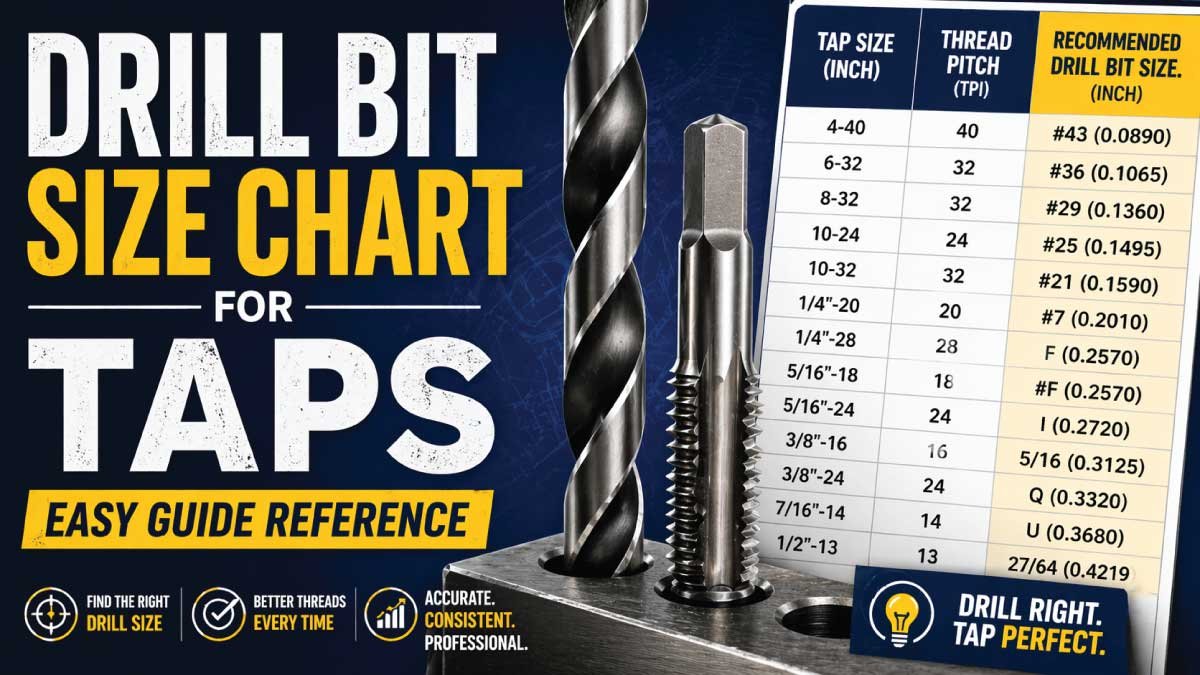
When you cut internal threads using a tap, the most important step is choosing the correct drill bit size before tapping. This is where most beginners make mistakes and it directly affects thread strength, tool life, and accuracy.
A tap drill hole is not random. It is carefully sized so the tap removes just enough material to form strong threads without breaking.
This guide gives you a simple drill bit size chart for taps plus an easy explanation so you can use it as a quick workshop reference.
What is a Tap Drill Size?
A tap drill size refers to the precise hole diameter that must be drilled before cutting internal threads with a tap. This step is essential because it prepares the material so the tap can form accurate, strong, and properly aligned threads without excessive resistance or looseness.
Simple flow:
Drill hole (tap drill size)
Cut threads (tap tool)
Insert bolt or screw
👉 If the drill size is wrong, the tap will fail or produce weak threads.
Why Correct Tap Drill Size is Important
Thread quality depends on how much material is removed before tapping. The correct drill size ensures the tap cuts smoothly and forms threads with proper depth and strength. Even a small deviation can significantly affect performance and durability.
❌ Wrong drill size causes:
- Tap breakage
- Weak threads
- Loose bolts
- Poor fit
✔ Correct drill size gives:
- Strong thread engagement
- Smooth tapping process
- Longer tool life
- Professional finish
Simple Tap Drill Formula (Quick Method)
When a chart is not available, engineers often use a simple formula to estimate the correct tap drill size. This helps in quick decision-making during fieldwork or workshops.
D ₍drill₎ = D ₍tap₎ − P
Where:
D_drill = drill bit diameter
D_tap = nominal thread diameter
P = thread pitch
👉 This formula gives a quick approximation, but for best accuracy, a standard tap drill chart should always be used.
Metric Tap Drill Size Chart (Easy Reference)
This metric chart is one of the most widely used references in machining, fabrication, and mechanical workshops. It helps ensure accurate hole preparation before tapping, which results in strong, clean, and properly formed threads.
🛠️ Metric Tap Drill Size Chart
| Tap Size | Pitch | Drill Bit Size |
|---|---|---|
| M3 | 0.5 | 2.5 mm |
| M4 | 0.7 | 3.3 mm |
| M5 | 0.8 | 4.2 mm |
| M6 | 1.0 | 5.0 mm |
| M8 | 1.25 | 6.8 mm |
| M10 | 1.5 | 8.5 mm |
| M12 | 1.75 | 10.2 mm |
| M14 | 2.0 | 12.0 mm |
| M16 | 2.0 | 14.0 mm |
UNC Tap Drill Size Chart (Coarse Threads)
This chart is used in the Unified National Coarse (UNC) system, mainly in the United States. It is commonly applied in automotive, construction, and general engineering work where strong, coarse threads are required.
🛠️ UNC Tap Drill Chart
| Tap Size | Drill Bit Size |
|---|---|
| #6-32 | #36 (4.1 mm) |
| #8-32 | #29 (4.8 mm) |
| #10-24 | #25 (5.0 mm) |
| #10-32 | #21 (5.2 mm) |
| 1/4-20 | #7 (5.3 mm) |
| 5/16-18 | F (6.5 mm) |
| 3/8-16 | 5/16 (7.9 mm) |
| 1/2-13 | 27/64 (10.7 mm) |
UNF Tap Drill Size Chart (Fine Threads)
The Unified National Fine (UNF) system is used when higher precision and tighter fastening are required. It is common in automotive assemblies and machinery where vibration resistance is important.
🛠️ UNF Tap Drill Chart
| Tap Size | Drill Bit Size |
|---|---|
| 1/4-28 | #3 (5.0 mm) |
| 5/16-24 | F (6.5 mm) |
| 3/8-24 | 5/16 (7.9 mm) |
| 1/2-20 | 29/64 (11.5 mm) |
Quick Rule for Beginners
If you don’t want to memorize full charts, you can use a simple engineering shortcut to estimate the correct drill size.
✔ Simple rule:
👉 Drill size ≈ Tap diameter − pitch
Examples:
M6 × 1.0 → 5 mm drill
M8 × 1.25 → 6.8 mm drill
M10 × 1.5 → 8.5 mm drill
This quick method is useful for rough calculations, but for best accuracy and professional results, always refer to standard tap drill charts.
Also Read:
Step-by-Step Tapping Process (Simple Workshop Guide)
Tapping is the process of creating internal threads inside a drilled hole so that bolts can fit securely. A proper tapping process ensures strong threads, smooth fitting, and long tool life. Follow these steps carefully for clean and professional results.
Step 1: Identify Tap Size
Start by identifying the correct tap size you need. Check whether it is metric (like M6, M10) or imperial (like 1/4-20, 3/8-16). Knowing the correct thread type ensures compatibility with the bolt and prevents mismatched or weak connections.
Step 2: Select Drill Bit
Choose the correct drill bit using a tap drill chart or standard formula. The hole must be slightly smaller than the final thread size so the tap can cut properly. Accurate drill selection is essential for strong, well-formed internal threads.
Step 3: Drill Hole
Now drill the hole carefully:
- Keep the drill perfectly straight
- Use steady and controlled speed
- Avoid overheating by not forcing the bit
A clean and accurate hole is the foundation for smooth and successful tapping.
Step 4: Apply Cutting Fluid
Apply cutting fluid or oil before starting the tapping process. It reduces friction, lowers heat buildup, and prevents tap damage. This step is especially important when working with metals like steel or aluminum, where resistance is higher.
Step 5: Start Tapping
Insert the tap into the hole and begin turning it slowly clockwise. Maintain straight alignment throughout the process. After every few turns, reverse slightly to break metal chips. This prevents jamming and ensures smooth thread cutting.
Step 6: Clean Threads
Once tapping is complete, remove all metal chips from the hole using air, a brush, or a cloth. Clean threads allow proper bolt fitting and improve the strength and reliability of the final assembly.
Common Mistakes in Tap Drilling
Even in workshops with experienced users, small mistakes during tap drilling can lead to broken tools, poor threads, and weak joints. Avoiding these errors is important for safe, accurate, and professional results.
❌ Wrong Drill Size
Using the incorrect drill size is the most common mistake in tapping work. If the hole is too small, the tap can jam and break due to excess pressure. If it is too large, the threads become weak and loose. Always use a proper tap drill chart for correct sizing.
❌ No Lubrication
Skipping lubrication increases friction and heat during tapping. This not only makes cutting harder but also reduces tool life and increases the risk of tap breakage. Cutting oil helps the tap move smoothly and produces cleaner, stronger internal threads.
❌ Not Clearing Chips
Failing to remove metal chips during tapping can cause the tap to jam inside the hole. These chips build up quickly and increase resistance. Regular back-off movement and proper chip removal ensure smooth cutting and prevent tool damage.
❌ Using Dull Tools
Dull taps and drill bits reduce accuracy and create rough, uneven threads. They also require more force, increasing the chance of mistakes or breakage. Sharp tools ensure clean cutting, better alignment, and higher-quality threading results.
Also Read:
Material-Based Adjustments
Different materials react differently during drilling and tapping, so adjusting your technique is important for strong, accurate, and safe threads. Small changes in drill size, speed, and tool selection can greatly improve results and prevent damage.
🟦 Aluminum / Soft Metals
Soft metals like aluminum are easy to machine, so they require careful control to avoid over-cutting. A slightly tighter hole helps improve thread grip because the material is soft and easily deforms. This ensures stronger holding power while maintaining smooth tapping performance.
🟥 Steel
Steel requires precise drilling with exact measurements. Even a small error can affect thread strength or cause tap breakage. Using the correct drill size ensures proper thread formation and reduces stress on the tap during cutting, making the process more stable and reliable.
🟩 Stainless Steel
Stainless steel is harder and generates more heat during machining. It is recommended to use cobalt drill bits and operate at a slow speed. This helps control heat buildup, improves cutting efficiency, and reduces wear on both drill bits and taps.
🟨 Plastic
Plastic is sensitive to cracking and deformation, so a slightly larger hole is preferred. This reduces stress during tapping or screw insertion and prevents material splitting. Careful handling ensures clean holes and smooth assembly without damaging the workpiece.
Best Drill Bits for Tapping
Choosing the right drill bit improves accuracy, tool life, and overall tapping performance. Different materials require different bit types.
🔩 HSS (High-Speed Steel)
HSS drill bits are commonly used for general-purpose drilling. They are ideal for beginners and work well on wood, aluminum, and mild steel. They offer a good balance of durability, performance, and affordability for everyday workshop tasks.
🔩 Cobalt Bits
Cobalt drill bits are designed for harder materials like stainless steel and high-strength alloys. They resist heat better than standard bits and maintain sharpness longer, making them ideal for heavy-duty and precision work.
🔩 Carbide Bits
Carbide drill bits are used in industrial applications where extreme hardness and wear resistance are required. They are very durable but more brittle, so they are best suited for high-precision machining with stable setups.
Also Read:
Pro Tips for Perfect Threading
Following these expert tips ensures clean, accurate, and long-lasting threaded holes.
✔ Always Check Pitch Before Drilling
Thread pitch must be confirmed before drilling. For example, M8 × 1.25 and M8 × 1.0 require different drill sizes. Mixing them can result in poor fitting or weak threads.
✔ Use Drill Press if Possible
A drill press provides better stability and alignment compared to handheld drilling. This improves accuracy, reduces human error, and ensures perfectly straight holes for tapping.
✔ Drill Slightly Deeper Than Required
Drilling slightly deeper allows space for chip accumulation during tapping. This prevents clogging, reduces tool stress, and makes tapping smoother and safer.
✔ Use Proper Tapping Speed
Speed control is very important:
Steel → slow speed for control and safety
Aluminum → faster speed for smooth cutting
Correct speed prevents overheating and improves thread quality.
Final Thoughts
A drill bit size chart for taps is an essential reference for anyone involved in mechanical work, automotive repair, or fabrication. It helps ensure that drilled holes match the tap requirements precisely, which directly impacts the strength, durability, and accuracy of threaded connections. Using a proper chart also reduces errors, saves materials, and improves overall workmanship quality.
Key takeaway:
👉 Always match tap size + pitch before drilling
👉 Use correct drill size from chart or formula
👉 Never guess—precision is critical
With this reference guide, you can confidently perform accurate thread cutting with professional results every time.
Also Read: