
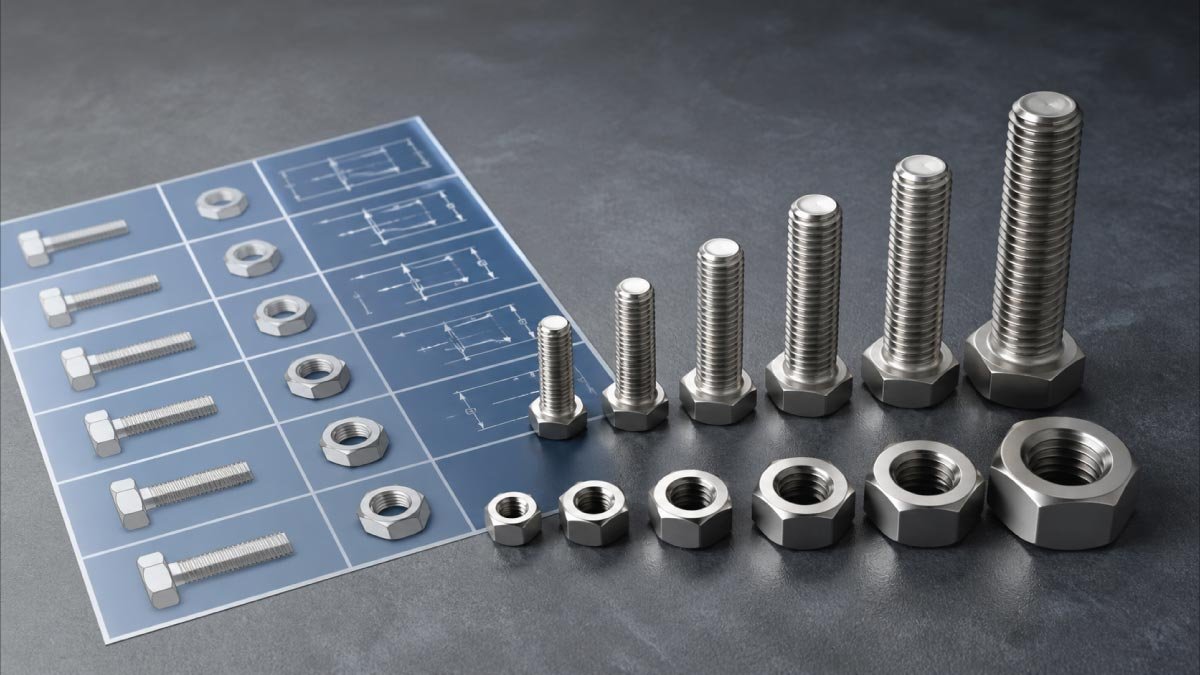
Matching the correct bolt and nut size is one of the most fundamental skills in mechanical work, construction, automotive repair, DIY projects, and industrial maintenance. Yet, it’s also one of the most common sources of confusion—especially when dealing with different measurement systems, thread standards, and size charts.
Using the wrong nut or bolt can lead to loose joints, stripped threads, structural failure, or costly repairs. This guide will walk you through everything you need to know about how to match bolt and nut sizes using a size chart, even if you’re a beginner.
By the end of this article, you’ll understand bolt and nut measurements, thread types, size charts, and how to confidently select compatible fasteners for any project.
Why Correct Bolt and Nut Matching Matters
Correctly matched bolts and nuts work together as a complete fastening system rather than individual parts. Proper compatibility allows threads to engage smoothly, distributes load evenly across the connection, and maintains the designed mechanical strength. This helps assemblies resist vibration, pressure, fatigue, and long-term wear while remaining secure and reliable during operation.
- Threads engage smoothly and fully
- Load is distributed evenly
- Fasteners maintain strength under stress
- Assemblies stay secure over time
1. Risks of Using Mismatched Bolts and Nuts
When bolts and nuts are not properly matched, even small differences in thread size, pitch, or strength rating can create major mechanical problems. Poor compatibility weakens the fastening connection, reduces holding power, and increases the chances of loosening, thread damage, or complete fastener failure during use.
2. When They Don’t Match, You Risk
Using incorrect combinations of bolts and nuts can damage threads, reduce clamping force, and compromise overall assembly strength. These issues may lead to unsafe installations, equipment damage, or expensive repairs, especially in automotive, industrial, and construction applications where secure fastening is critical.
- Cross-threading
- Reduced clamping force
- Premature loosening
- Bolt or nut failure
Using a size chart eliminates guesswork and ensures mechanical reliability.
Understand the Basic Bolt and Nut Terminology
Before using a bolt and nut size chart, it is essential to understand the basic terminology that defines fastener dimensions. These terms describe how bolts and nuts are measured, identified, and matched, helping ensure correct selection, proper fit, and reliable mechanical performance in any assembly or application.
1. Bolt Diameter
Bolt diameter refers to the thickness of the threaded portion of the bolt and is one of the primary identifiers of fastener size. It is measured across the outer edges of the threads and must match the nut exactly to ensure proper engagement, load distribution, and joint strength.
- Metric bolts are measured in millimeters (e.g., M8 = 8 mm diameter)
- Imperial (inch) bolts are measured in fractions or decimals (e.g., 1/4″, 3/8″)
2. Thread Pitch
Thread pitch describes the spacing of the threads along the bolt and determines how tightly the nut advances when tightened. Matching thread pitch is critical, as even identical diameters will not fit correctly if the pitch differs, leading to damage or failure during installation.
- Metric: measured in millimeters (e.g., 1.25 mm)
- Imperial: measured in threads per inch (TPI), such as 20 TPI
3. Bolt Length
Bolt length indicates how far the bolt extends into the assembly and ensures sufficient thread engagement with the nut. While length does not determine nut compatibility, incorrect length can result in weak joints, stripped threads, or interference with surrounding components.
- Measured from the bottom of the head (for hex bolts)
- Measured from the top of the head (for countersunk bolts)
4. Nut Size
Nut size must correspond precisely to the bolt it is paired with to maintain structural integrity. Proper matching ensures full thread engagement, correct clamping force, and resistance to loosening, especially in applications involving vibration, load cycling, or long-term service.
- The bolt diameter
- The thread pitch
- The thread type (metric or imperial)
Metric vs Imperial Fasteners
How to Read a Bolt and Nut Size Chart
A bolt and nut size chart presents critical fastener information in a structured, easy-to-reference format. It helps users quickly identify compatible bolts and nuts, confirm thread specifications, and choose the correct wrench or socket size for installation. Learning how to read each section of the chart reduces fastening mistakes, improves assembly accuracy, and ensures stronger, safer mechanical connections in automotive, construction, industrial, and household applications.
- Bolt diameter
- Thread pitch or TPI
- Matching nut size
- Wrench or socket size
- Common applications
1. Bolt Diameter
Bolt diameter refers to the thickness of the bolt’s threaded shaft and is one of the most important sizing measurements. In metric systems, it is measured in millimeters, while SAE fasteners use inches. Correct diameter selection ensures proper fitment, load distribution, and compatibility with matching nuts and drilled holes.
2. Thread Pitch or TPI
Thread pitch describes the distance between threads in metric fasteners, while TPI (threads per inch) is used for imperial bolts. This measurement determines how tightly the threads engage with the nut. Matching the correct pitch or TPI is essential to prevent thread damage, poor fastening strength, and installation problems.
3. Matching Nut Size
The chart also identifies the exact nut size designed for a specific bolt. Nuts must match both the bolt diameter and thread pitch to create secure thread engagement. Using the wrong nut size can lead to loose fittings, stripped threads, vibration-related failures, and weakened structural performance during operation.
4. Wrench or Socket Size
Most bolt and nut charts include the recommended wrench or socket size required for tightening and loosening the fastener. This measurement refers to the width across the flats of the bolt head or nut. Using the correct tool size prevents slipping, rounding, and unnecessary damage during maintenance or assembly work.
5. Common Applications
Many size charts also mention typical applications for different bolt and nut sizes. Smaller fasteners are often used in electronics and machinery, while larger sizes are common in automotive, structural, and industrial equipment. Understanding application examples helps users select the most suitable fastener size for specific projects and load requirements.
Let’s Break This Down Further
Understanding each section of a bolt and nut size chart makes fastener selection much easier and more accurate. Once you learn how diameter, thread pitch, nut compatibility, and tool sizes work together, you can confidently choose the correct hardware for repairs, fabrication, maintenance, and mechanical assembly tasks without risking mismatched components.
Metric Bolt and Nut Size Chart
This chart helps you quickly match a metric bolt with the correct nut and tool size. By following the steps in order, you can ensure proper thread compatibility, full engagement, and correct tightening without damaging the fastener or the assembly.
| Bolt Size | Thread Pitch | Nut Size (Hex) | Wrench Size |
|---|---|---|---|
| M4 | 0.7 mm | M4 | 7 mm |
| M5 | 0.8 mm | M5 | 8 mm |
| M6 | 1.0 mm | M6 | 10 mm |
| M8 | 1.25 mm | M8 | 13 mm |
| M10 | 1.5 mm | M10 | 17 mm |
| M12 | 1.75 mm | M12 | 19 mm |
How to Use It
- Identify the bolt diameter (e.g., M8)
- Check the thread pitch (1.25 mm is standard)
- Select an M8 nut with the same pitch
- Use the listed wrench size
Imperial (SAE) Bolt and Nut Size Chart
| Bolt Diameter | Threads Per Inch | Nut Size | Wrench Size |
|---|---|---|---|
| 1/4″ | 20 (UNC) | 1/4″ | 7/16″ |
| 5/16″ | 18 (UNC) | 5/16″ | 1/2″ |
| 3/8″ | 16 (UNC) | 3/8″ | 9/16″ |
| 1/2″ | 13 (UNC) | 1/2″ | 3/4″ |
| 5/8″ | 11 (UNC) | 5/8″ | 15/16″ |
UNC refers to Unified National Coarse, while UNF refers to Unified National Fine. The nut must match the same thread series.
Also Read:
Step-by-Step: Matching a Bolt and Nut Using a Size Chart
Correctly matching a bolt and nut requires more than simply comparing their appearance. Proper identification of the measurement system, diameter, and thread pitch ensures accurate thread engagement, strong clamping force, and long-term reliability. Following a systematic process helps prevent thread damage, loose fittings, and unsafe mechanical connections.
Step 1: Identify the Measurement System
Start by determining whether the bolt uses the metric or imperial measurement system. This is one of the most important steps because metric and imperial fasteners are not interchangeable. Using the wrong system can damage threads, weaken the joint, and create unsafe fastening conditions.
Metric bolts are commonly marked with an “M” designation, while imperial bolts use inch-based fractions or decimal measurements. Identifying the correct system first makes it much easier to select the proper matching nut from a size chart.
- Metric bolts are labeled with “M”
- Imperial bolts use fractions or decimals
Step 2: Measure the Bolt Diameter
Measure the outside diameter of the bolt’s threaded section using a caliper, micrometer, or ruler. This measurement determines the main fastener size and helps narrow down compatible nut options. Accurate diameter measurement is essential because even small size differences can prevent proper thread engagement.
When measuring, always check the widest part of the bolt threads to obtain the correct major diameter. Comparing this measurement with a size chart ensures more reliable fastener selection.
Step 3: Determine Thread Pitch
Thread pitch refers to the distance between individual threads and is critical for compatibility. Even if two fasteners have the same diameter, mismatched thread pitch can prevent proper engagement and damage both components during tightening.
A thread gauge provides the most accurate method for identifying thread pitch, but reference charts can also help. For imperial fasteners, the number of threads per inch must be counted to identify the correct thread series.
- Use a thread gauge for accuracy
- Compare threads against a size chart
- Count threads per inch for imperial bolts
Step 4: Find the Matching Nut
Once the bolt diameter and thread pitch have been identified, use a bolt and nut size chart to locate the correct matching nut. The nut must match the same measurement system, diameter, and thread pitch to ensure safe and reliable fastening performance.
Properly matched nuts distribute loads evenly, maintain clamping force, and reduce the risk of loosening or thread damage during operation. Always double-check specifications before final installation.
Step 5: Test the Fit
Before tightening tools are used, test the nut by threading it onto the bolt by hand. A properly matched fastener pair should engage smoothly without resistance, wobbling, binding, or excessive looseness. Hand testing confirms compatibility before final assembly.
If the nut feels tight immediately or refuses to engage smoothly, stop and recheck the size and thread pitch. Never force mismatched fasteners together because this can permanently damage the threads.
The Nut Should
A correctly matched nut and bolt combination should feel smooth, secure, and properly aligned during installation. Proper engagement ensures the fastener connection will maintain strength, stability, and long-term mechanical reliability under load and vibration.
- Thread on smoothly by hand
- Not wobble or bind
- Fully engage without force
Also Read:
Fine Thread vs Coarse Thread
Thread type plays a major role in fastener performance, installation ease, and application suitability. Although coarse and fine threads may share the same bolt diameter, their thread spacing and mechanical behavior are different. Understanding these differences helps ensure correct bolt and nut matching for strength, durability, and reliable assembly performance.
1. Coarse Threads
Coarse threads have deeper and wider-spaced thread patterns that make fasteners easier to install and remove. They are commonly used in general-purpose applications because they engage quickly, tolerate dirt and damage better, and perform well in softer materials such as aluminum, wood, and plastic.
Their stronger thread depth also reduces the risk of stripping during assembly, especially in field conditions where precision tools may not always be available. Coarse threads are widely used in construction, automotive repair, and heavy equipment applications.
- Deeper threads
- Easier to assemble
- Better for soft materials
- More resistant to dirt and damage
2. Fine Threads
Fine threads use shallower thread profiles with more threads per inch, creating a tighter and more precise fastening connection. This design increases clamping force and improves resistance to vibration, making fine threads ideal for high-stress mechanical and automotive applications where secure fastening is critical.
However, fine threads require careful alignment during installation because they are more sensitive to damage and cross-threading. Proper matching and precise handling are necessary to maintain thread integrity and ensure safe operation.
- Shallower, more threads per inch
- Higher clamping force
- Better for vibration resistance
- Require precise matching
A coarse-thread bolt will not work with a fine-thread nut, even if the diameter is the same.
Also Read:
Common Mistakes to Avoid When Matching Bolts and Nuts
Correct bolt and nut matching is essential for creating strong, secure, and long-lasting mechanical connections. Even small mistakes can damage threads, reduce holding strength, or cause fasteners to fail under pressure and vibration. Understanding the most common errors helps improve safety, prevents costly repairs, and ensures fasteners perform properly in automotive, construction, industrial, and household applications.
1. Forcing Mismatched Threads
One of the most common fastening mistakes is forcing a bolt into a nut that does not thread smoothly by hand. This can damage the threads, weaken the fastener connection, and make future removal difficult. Always stop if resistance feels unusual and double-check the thread size, pitch, and standard before tightening.
2. Mixing Metric and Imperial Sizes
Metric and imperial fasteners may appear similar in diameter, but their thread spacing and measurements are different. Using them together can strip threads or create weak joints that fail under load. Always confirm whether your fasteners follow metric or SAE standards before assembly or repair work.
3. Ignoring Thread Pitch
Many people focus only on bolt diameter and forget to verify thread pitch. Two bolts can share the same diameter while having completely different thread spacing. Incorrect pitch matching prevents proper engagement, reduces holding strength, and may permanently damage both the bolt and the nut during installation.
4. Assuming All Nuts Are the Same
Different nut types are designed for specific purposes, including vibration resistance, load distribution, and locking performance. Lock nuts, flange nuts, and nylon-insert nuts still require the correct thread size and pitch to function properly. Assuming any nut will fit can lead to unsafe and unreliable connections in mechanical assemblies.
Tools That Help With Bolt and Nut Matching
Proper tools make bolt and nut matching faster, more accurate, and far less prone to errors. Instead of guessing sizes or forcing fittings, these simple measuring and checking tools help identify diameter, thread pitch, and compatibility instantly. Using them ensures correct selection, saves time, and prevents damage to fasteners and assemblies.
Calipers – Measure diameter accurately
Thread pitch gauge – Identify pitch or TPI
Nut and bolt size checker – Quickly test fit
Size charts – Printed or digital reference
Having these tools on hand can save time and prevent costly mistakes.
Also Read:
Special Considerations
When selecting bolts and nuts, correct size matching is always important, but material type, coatings, and application conditions can also affect installation performance and long-term reliability. Understanding these additional factors helps prevent thread damage, improper tightening, corrosion issues, and structural failures in demanding mechanical environments.
1. Stainless Steel vs Carbon Steel
Material choice does not usually change bolt and nut sizing, but it can affect how fasteners behave during assembly and operation. Stainless steel fasteners offer excellent corrosion resistance, making them ideal for outdoor and wet environments, while carbon steel fasteners are commonly used for general mechanical strength and durability.
Stainless steel fasteners are more likely to experience galling, where threads seize during tightening due to friction and heat buildup. Proper lubrication and careful installation help reduce this problem and ensure smoother thread engagement without damaging the fasteners.
- Material does not affect size matching
- Stainless steel is more prone to galling
- Always ensure correct sizing and consider lubrication
2. Coated Fasteners
Protective coatings such as zinc plating improve corrosion resistance and extend fastener life in harsh environments. However, coated bolts and nuts may sometimes feel tighter during installation because the added coating slightly changes thread friction. This does not mean the fastener size is incorrect.
Forcing coated fasteners can damage the protective layer or threads, reducing corrosion protection and weakening the connection. Properly matched sizes and controlled tightening are important for safe and reliable assembly.
- Zinc-plated or coated bolts may feel tighter
- Always match size exactly
3. Structural and Load-Bearing Applications
In structural, industrial, and heavy load-bearing applications, fastener selection becomes extremely important for safety and performance. Correct sizing alone is not enough because engineering standards, material grades, and torque specifications must also be followed to ensure the joint can safely handle operational loads and stress.
Using incorrect fasteners or improper torque in critical structures may lead to loosening, fatigue, or catastrophic mechanical failure. Always follow manufacturer and engineering guidelines when working on high-load assemblies.
- Always follow engineering specifications
- Follow correct torque requirements
When to Replace a Nut or Bolt
Even when a nut and bolt appear to match correctly by size, condition plays a critical role in safety and performance. Fasteners are designed to maintain precise thread engagement and clamping force, and any damage or wear can weaken the entire assembly, increasing the risk of failure under load or vibration.
- Threads are stripped or damaged
- The nut spins freely without tightening
- The bolt shows corrosion or deformation
- Threads feel rough or inconsistent
Using damaged fasteners can compromise safety.
Final Thoughts
Matching bolt and nut sizes correctly is an essential skill for anyone working with mechanical fasteners, whether for home repairs, automotive work, construction, or industrial applications. Once you understand basic fastener terminology and learn how to read a bolt and nut size chart, selecting compatible components becomes faster, safer, and much more reliable.
Correct matching ensures proper thread engagement, strong clamping force, and long-term assembly stability. It also helps prevent damaged threads, loose connections, and costly mechanical failures that can occur when incompatible fasteners are forced together during installation.
Always Remember
Following a few simple fastening principles can greatly improve installation accuracy and mechanical reliability. Using proper size charts and checking compatibility before tightening helps create safer, stronger, and longer-lasting assemblies in both light-duty and heavy-duty applications.
- Match diameter, thread pitch, and system type
- Use charts as a reliable reference
- Never force mismatched threads
- Test fit by hand before tightening
Whether you’re assembling furniture, repairing machinery, or working on an industrial installation, proper bolt and nut matching ensures strength, safety, and long-term performance.
Also Read:
FAQ:
Why is correct bolt and nut matching important?
Correct bolt and nut matching is important because it ensures proper thread engagement, strong clamping force, and long-term joint stability. When both parts fit accurately, load is distributed evenly and the connection resists vibration, pressure, and wear. This prevents loosening, structural failure, and costly repairs in mechanical, automotive, and construction applications.
What happens if bolt and nut sizes do not match?
If bolt and nut sizes do not match, the threads may not engage properly, leading to cross-threading, reduced strength, and loosening under load. Even slight mismatches can damage both parts and weaken the joint. Over time, this increases failure risk, safety hazards, and repair costs in any mechanical system or structure.
How do I identify bolt diameter correctly?
Bolt diameter is identified by measuring the outer threaded section of the bolt using a caliper or ruler. This measurement is called the major diameter. It determines the bolt’s size in metric or imperial units. Accurate diameter identification is essential because even small errors can lead to incorrect nut selection and poor fitting.
What is thread pitch and why is it important?
Thread pitch refers to the distance between threads in metric bolts or threads per inch in imperial bolts. It is important because bolts and nuts must have the same pitch to fit correctly. If the pitch is wrong, the nut will not engage properly, causing stripping, weak fastening, or complete joint failure.
How do I read a bolt and nut size chart?
A bolt and nut size chart shows diameter, thread pitch, nut size, and wrench size in a structured format. First, identify the bolt size and system type, then match the pitch and nut specification. Finally, check the tool size. This ensures accurate selection and prevents fastening errors during installation or repair work.
What is the difference between metric and SAE fasteners?
Metric fasteners are measured in millimeters and use “M” labeling, while SAE fasteners use inches and threads per inch. They are not interchangeable even if sizes appear similar. Mixing them can damage threads and weaken joints. Each system must be used separately to ensure proper fit, strength, and mechanical reliability.
Why is thread pitch mismatch dangerous?
A thread pitch mismatch prevents proper engagement between bolt and nut, even if diameters match. This can cause cross-threading, stripped threads, and weak connections. In mechanical systems, this reduces load capacity and increases failure risk. Always matching pitch ensures secure fastening, proper torque application, and long-term durability of the assembly.
When should I replace a bolt or nut?
A bolt or nut should be replaced when threads are stripped, corroded, or deformed, or when it no longer tightens properly. If a nut spins freely or a bolt feels rough during threading, it is unsafe to reuse. Damaged fasteners weaken joints and increase the risk of mechanical failure or accidents.