
If you work with tools—whether in automotive repair, machinery maintenance, or home DIY projects—you’ve probably come across SAE wrench sizes. At first glance, they can feel confusing, especially if you’re used to metric measurements. But once you understand the pattern, SAE sizing becomes surprisingly easy to work with.
This guide gives you a clear SAE wrench size chart for quick reference, plus practical explanations so you can choose the right wrench without guessing.
What Does SAE Mean in Wrench Sizes?
SAE stands for Society of Automotive Engineers. SAE wrench sizes are measured in inches, not millimeters. These wrench standards are commonly used in the United States for automotive, industrial, and mechanical applications. SAE tools are designed to fit inch-based nuts and bolts accurately for safe and effective fastening work.
These sizes are commonly used in:
- American-made vehicles
- Older mechanical systems
- Industrial equipment in the USA
- Some construction tools and hardware
👉 In simple terms:
If the tool is “SAE,” you’re working with inch-based measurements.
Why SAE Wrench Sizes Matter
Using the correct SAE wrench size is important because proper tool fit improves safety, prevents fastener damage, and allows better mechanical performance during repairs or assembly work. A correctly sized wrench grips the bolt securely, making tightening and loosening easier while reducing unnecessary strain on tools and hardware components.
- Prevents rounded bolt heads
- Improves torque control
- Reduces tool slippage
- Makes work faster and safer
Even a small mismatch (like using a slightly smaller wrench) can damage both the bolt and the tool. Using the wrong wrench size may also cause slipping during operation, which can lead to injuries, damaged fasteners, and increased repair time in automotive, industrial, or construction applications.
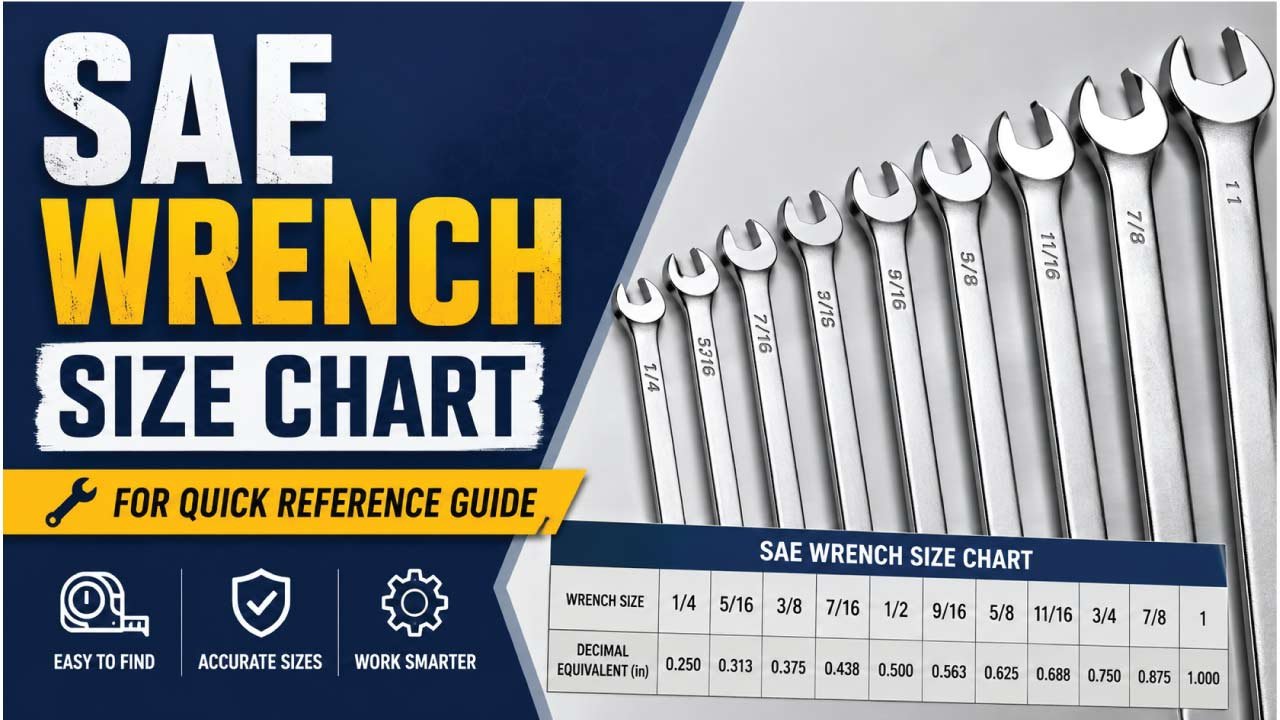
SAE Wrench Size Chart (Quick Reference)
Here is a simple and practical SAE wrench size chart used by mechanics:
| SAE Wrench Size | Common Bolt/Nut Size | Typical Use |
|---|---|---|
| 1/4″ | Small fasteners | Electronics, light fixtures |
| 5/16″ | Small bolts | Appliances, brackets |
| 3/8″ | Light mechanical work | Bikes, small engines |
| 7/16″ | Medium bolts | Automotive panels |
| 1/2″ | Common bolt size | Cars, machinery |
| 9/16″ | Automotive use | Suspension, engine parts |
| 5/8″ | Heavy-duty bolts | Frames, structural parts |
| 11/16″ | Industrial fittings | Machinery, equipment |
| 3/4″ | Large bolts | Trucks, heavy equipment |
| 7/8″ | Very large bolts | Construction, industrial |
| 1″ | Extra heavy-duty | Structural steel work |
| 1-1/8″ | Industrial systems | Heavy machinery |
| 1-1/4″ | Large assemblies | Engineering equipment |
| 1-1/2″ | Very large bolts | Industrial frameworks |
Most Common SAE Wrench Sizes
In real workshop use, you won’t need every size. Most mechanics regularly use:
- 3/8″
- 7/16″
- 1/2″
- 9/16″
- 5/8″
- 3/4″
👉 If you’re building a basic tool kit, start with these first.
SAE vs Metric: Simple Difference
Many beginners get confused between SAE and metric systems because both use different measurement standards for tools and fasteners. SAE sizes are based on inches, while metric sizes use millimeters. Understanding the difference helps you choose the correct wrench size and prevents damage during automotive or mechanical repair work.
SAE System
- Measured in inches
- Used mainly in the USA
- Common in older vehicles
Metric System
- Measured in millimeters (mm)
- Used worldwide
- Standard in modern vehicles
👉 Important rule:
Never mix SAE and metric wrenches on the same bolt because even slight size differences can cause slipping, rounded bolt heads, damaged tools, and unsafe working conditions. Always use the exact matching wrench system for proper grip, better torque control, and safer mechanical work.
SAE to Metric Approximate Conversion
Sometimes you may need to cross systems. Here’s a rough comparison:
| SAE Size | Approx. Metric Size |
|---|---|
| 1/4″ | 6–7 mm |
| 5/16″ | 8 mm |
| 3/8″ | 10 mm |
| 7/16″ | 11 mm |
| 1/2″ | 13 mm |
| 9/16″ | 14–15 mm |
| 5/8″ | 16 mm |
| 3/4″ | 19 mm |
| 7/8″ | 22 mm |
| 1″ | 25 mm |
👉 These are approximate values—always verify when precision is important.
How to Choose the Right SAE Wrench Size
Choosing the correct SAE wrench size is important for preventing damage to bolts, nuts, and tools. A properly fitted wrench provides better grip, improves safety, and makes mechanical work easier. Following the correct process also helps avoid stripped fasteners and unnecessary repair problems during maintenance or assembly tasks.
Step 1: Identify the Bolt
Start by identifying the bolt or nut you need to tighten or loosen. Look for size markings stamped on the fastener head if available. If markings are unclear, use a measuring tool or caliper to measure the bolt head across the flats to determine the correct SAE size accurately.
Step 2: Match with Chart
After measuring the bolt, compare the measurement with an SAE wrench size chart. The chart helps you quickly find the closest matching wrench size for proper fitment. Using a size chart reduces guesswork and ensures you choose a wrench that grips the fastener securely without slipping.
Step 3: Test Fit
Place the wrench carefully over the bolt head and check the fit before applying pressure. The wrench should fit snugly with little or no movement. A loose wrench can round off bolt corners, while an overly tight wrench may not fit properly and could damage the fastener.
Step 4: Apply Force Carefully
Once the wrench fits correctly, apply force slowly and evenly while turning the fastener. Sudden or excessive pressure may damage the bolt head or cause injury. Pulling the wrench steadily gives better control, reduces slipping risk, and helps protect both the tool and the mechanical components.
Also Read:
Types of SAE Wrenches You Should Know
Different tasks require different wrench types because each wrench design offers specific advantages for grip, torque, speed, and accessibility. Choosing the correct SAE wrench helps improve efficiency, prevents fastener damage, and makes automotive or mechanical repair work safer and easier in tight or challenging working conditions.
1. Open-End Wrench
An open-end wrench has U-shaped openings on both ends, allowing quick placement around bolts and nuts. It is commonly used in tight spaces where full wrench rotation is difficult. Although it provides fast access, the grip strength is lower compared to closed-end wrench designs.
- Fast access
- Good for tight spaces
- Less grip strength
2. Box-End Wrench
A box-end wrench completely surrounds the bolt head, providing a stronger and more secure grip during operation. This design reduces slipping and allows higher torque application. It is especially useful for stubborn, rusted, or tightly fastened bolts in automotive and industrial repair tasks.
- Strong grip
- Better torque
- Ideal for stubborn bolts
3. Combination Wrench
A combination wrench includes one open end and one box end of the same size. This versatile design allows quick access with the open end and stronger tightening with the box end. It is one of the most commonly used wrench types in mechanical and automotive work.
- One open end + one box end
- Most commonly used
4. Socket Wrench
A socket wrench uses detachable sockets connected to a ratchet handle for faster and easier bolt removal or tightening. It is highly efficient for repetitive work and hard-to-reach areas. Socket wrenches are widely used in automotive maintenance because they save both time and effort.
- Works with ratchet handle
- Fast and efficient
- Great for automotive work
5. Adjustable Wrench
An adjustable wrench features a movable jaw that allows it to fit different fastener sizes. It is useful for emergency repairs or situations where multiple wrench sizes are unavailable. However, it is less precise than fixed-size SAE wrenches and may slip if not adjusted properly.
- Flexible sizing
- Useful for emergencies
- Not as precise
Also Read:
Common Mistakes to Avoid
Even experienced mechanics and tool users sometimes make mistakes when working with SAE wrenches and fasteners. These errors can damage bolts, reduce tool life, and create safety risks during repairs or assembly work. Understanding these common problems helps improve accuracy, safety, and overall mechanical performance.
❌ Using Wrong Size
Using the incorrect wrench size is one of the most common causes of fastener damage. A wrench that is too large may slip during use, while one that is too small may not fit properly. This often leads to rounded bolt corners, poor grip, and difficulty removing or tightening fasteners safely.
❌ Mixing SAE and Metric Tools
SAE and metric tools may appear similar in size, but they are not exactly the same. Using a metric wrench on an SAE bolt, or vice versa, creates an improper fit. This increases wear on both the tool and fastener, reduces gripping strength, and raises the chance of slipping during operation.
❌ Using Loose Adjustable Wrench
An adjustable wrench that is not tightened properly can move during use and damage the bolt head. Loose jaw movement reduces contact area and creates uneven pressure on the fastener. Over time, this may round off bolt edges and make future removal much more difficult.
❌ Applying Excess Force
Applying too much force while using a wrench can break bolts, damage threads, or even crack the tool itself. Excessive pressure also increases the risk of personal injury if the wrench slips suddenly. Using controlled and steady force provides better safety and protects both the fastener and equipment.
Best SAE Wrench Set for Beginners
If you are just getting started with mechanical work, automotive repairs, or DIY maintenance, buying a complete SAE wrench set is a smart investment. A quality set helps you handle most common fastening tasks without constantly searching for missing sizes, making your work faster, safer, and more professional from the beginning.
Recommended Range
For beginners, a wrench set ranging from 1/4 inch to 1 inch is usually enough to handle most household, automotive, and workshop repairs. This size range covers the most commonly used SAE fasteners found in older vehicles, machinery, lawn equipment, and construction tools, making it ideal for learning and everyday maintenance tasks.
- 1/4″ to 1″ SAE wrench set
Must-Have Features
A good SAE wrench set should be durable, comfortable, and easy to use for long-term reliability. High-quality materials and proper design improve grip strength, reduce hand fatigue, and help prevent tool damage during heavy use. Investing in the right features now can save money and frustration later.
- Chrome vanadium steel
- Rust-resistant coating
- Clearly marked sizes
- Comfortable grip design
👉 A good set will last years and cover most jobs.
Why This SAE Chart Is Important
Understanding SAE wrench sizes is essential for anyone working with tools, machinery, vehicles, or mechanical equipment. A proper SAE chart helps you quickly identify the correct wrench size, avoid damaging bolts, and improve efficiency during repairs. Both beginners and experienced mechanics rely on these charts to save time and work more accurately.
- ✔ Work faster
- ✔ Avoid tool damage
- ✔ Improve accuracy
- ✔ Reduce frustration
- ✔ Handle professional-level tasks
Even experienced mechanics rely on quick reference charts like this every day.
Final Thoughts
The SAE wrench size chart is one of the most useful references for anyone working with tools. Once you understand the pattern, choosing the right wrench becomes second nature.
If you remember just one thing, let it be this:
👉 Always match the wrench size exactly—SAE tools are not forgiving.
With practice, you’ll start recognizing sizes instantly and working like a professional mechanic.
Also Read:
FAQs:
Can I use a metric wrench on an SAE bolt?
Yes, but it is not recommended because metric and SAE systems use different sizing standards. Even a small mismatch can lead to slipping, rounded bolt heads, or tool damage. Always use the correct SAE wrench to ensure a secure fit, proper torque application, and safer, more accurate mechanical work.
What are the most commonly used SAE wrench sizes?
The most commonly used SAE wrench sizes are 3/8″, 7/16″, 1/2″, 9/16″, 5/8″, and 3/4″. These sizes cover most automotive and workshop applications. Mechanics use them daily because they fit a wide range of bolts found in vehicles, machinery, and general maintenance or repair tasks efficiently.
Why do bolts get rounded when using a wrench?
Bolts get rounded mainly when the wrong wrench size is used or excessive force is applied. A loose fit causes slipping under pressure, damaging bolt edges. Rust, dirt, and worn tools also contribute. Using the correct size wrench and applying steady, controlled force helps prevent rounding and ensures safer fastening work.
Are SAE wrench sizes still used in modern vehicles?
Yes, SAE wrench sizes are still used in many American-made vehicles, older machinery, and industrial equipment. However, most modern vehicles rely on metric fasteners. Because both systems are common, mechanics often keep SAE and metric wrench sets to handle different repair situations efficiently in automotive and workshop environments today.
What is the difference between a box-end and open-end wrench?
A box-end wrench fully encloses the bolt head, giving a stronger grip and allowing higher torque without slipping. An open-end wrench provides faster access in tight spaces but offers less grip strength. Mechanics choose based on task needs, using box-end for stubborn bolts and open-end for quick adjustments or positioning.
How do I know if my wrench size is correct?
A correct wrench size fits snugly on the bolt or nut without any looseness or movement. It should grip evenly from all sides. If it feels tight, loose, or slips during testing, it is incorrect. Always check fit before applying force to prevent damage to fasteners, tools, or injury risks.
What material is best for SAE wrench sets?
Chrome vanadium steel is the best material for SAE wrench sets due to its high strength, durability, and resistance to rust and wear. It can handle heavy torque without bending or breaking. This makes it ideal for automotive, industrial, and workshop use where long-lasting performance and reliability are essential.