
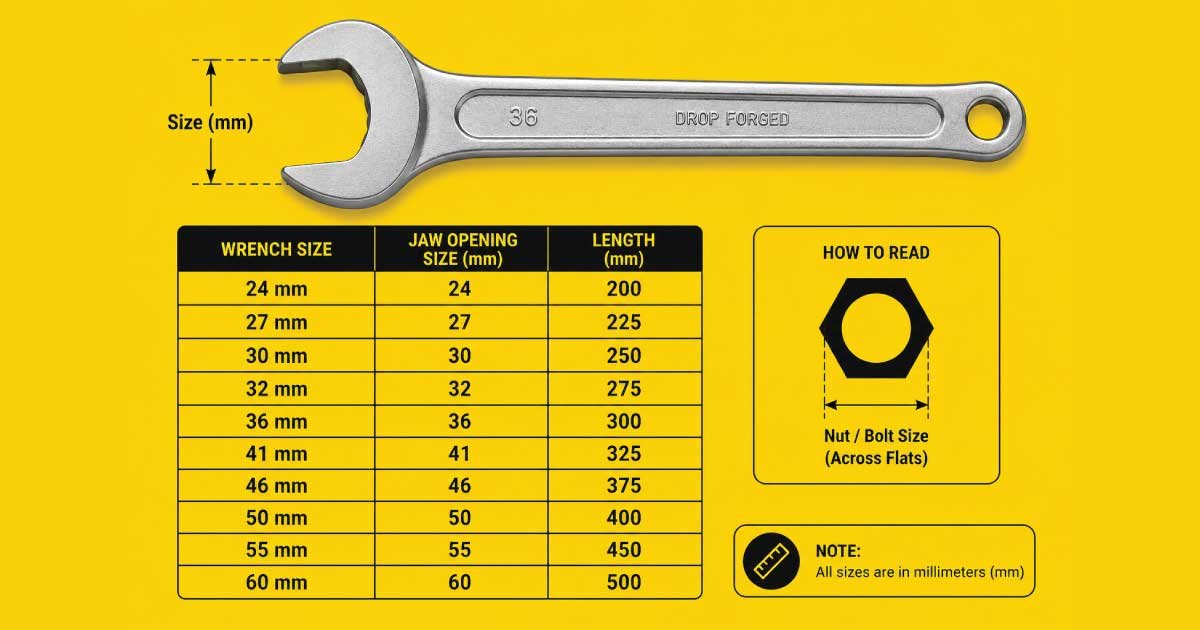
Large wrenches are among the most important hand tools used in heavy-duty mechanical work. Whether you’re repairing construction equipment, maintaining industrial machinery, servicing agricultural equipment, or working on large trucks, choosing the correct wrench size can make a significant difference in both safety and efficiency.
A wrench that is too small will not fit properly, while a wrench that is too large can slip and damage the fastener. This is why mechanics, technicians, and engineers often rely on a large wrench size chart as a quick reference when working with oversized nuts and bolts.
In this complete guide, you’ll learn about common large wrench sizes, SAE and metric charts, applications, wrench types, measurement methods, and expert tips for selecting the right tool for every job.
What Is a Large Wrench?
A large wrench is generally defined as a wrench designed to tighten or loosen large fasteners that require substantial torque. These tools are commonly used when standard automotive wrenches are too small for the application.
Large wrenches are typically found in industries such as:
- Heavy equipment maintenance
- Construction
- Mining
- Agriculture
- Oil and gas
- Manufacturing
- Transportation
- Industrial plant maintenance
Because large fasteners often secure critical components, using the correct wrench size is essential for preventing damage and ensuring proper tightening.
Why Wrench Size Matters
Choosing the correct wrench size is extremely important in mechanical work because it directly affects safety, efficiency, and the condition of fasteners. A properly fitted wrench ensures better grip, smooth operation, and accurate torque application. On the other hand, using the wrong size can lead to damaged bolts, wasted time, and unsafe working conditions. That is why professionals always rely on accurate size selection before starting any repair or assembly work.
1. Prevents Fastener Damage
Using the correct wrench size prevents rounding or stripping of bolt and nut corners. When a wrench is too loose or too tight, it applies uneven pressure that damages the fastener head. Once rounded, the fastener becomes extremely difficult to remove or tighten. Proper sizing ensures a secure grip, protects hardware, and maintains the integrity of mechanical connections during repeated use.
2. Improves Safety
A properly sized wrench reduces the chances of slipping during use, which helps prevent hand injuries and accidental damage to surrounding components. Slipping tools can cause sudden force loss, leading to cuts or impact injuries. Correct sizing ensures stable contact with the fastener, giving the user better control, safer operation, and reduced risk of accidents in high-torque or tight spaces.
3. Provides Better Torque Transfer
When a wrench fits correctly, it transfers force more efficiently to the fastener without wasting energy through slipping or misalignment. This allows stubborn nuts and bolts to loosen or tighten more easily. Proper torque transfer reduces physical effort, improves accuracy, and ensures that mechanical parts are secured to the correct specifications without unnecessary strain on tools or hands.
4. Increases Productivity
Using the right wrench size helps technicians complete tasks faster because there is no need to struggle with slipping tools or damaged fasteners. It reduces downtime, minimizes rework, and improves workflow efficiency. With the correct size selection, repairs and assembly jobs become smoother, allowing workers to focus more on completing tasks rather than fixing avoidable tool-related problems.
SAE Large Wrench Size Chart
The following chart lists common SAE fastener sizes and their corresponding wrench sizes.
| Bolt Diameter | Standard Hex Size | Wrench Size |
|---|---|---|
| 5/8″ | 15/16″ | 15/16″ |
| 3/4″ | 1-1/8″ | 1-1/8″ |
| 7/8″ | 1-5/16″ | 1-5/16″ |
| 1″ | 1-1/2″ | 1-1/2″ |
| 1-1/8″ | 1-11/16″ | 1-11/16″ |
| 1-1/4″ | 1-7/8″ | 1-7/8″ |
| 1-3/8″ | 2-1/16″ | 2-1/16″ |
| 1-1/2″ | 2-1/4″ | 2-1/4″ |
| 1-3/4″ | 2-5/8″ | 2-5/8″ |
| 2″ | 3″ | 3″ |
These sizes are frequently used on large machinery, industrial equipment, and structural assemblies.
Metric Large Wrench Size Chart
Metric fasteners are common on modern equipment and imported machinery.
| Bolt Size | Wrench Size |
|---|---|
| M16 | 24 mm |
| M18 | 27 mm |
| M20 | 30 mm |
| M22 | 32 mm |
| M24 | 36 mm |
| M27 | 41 mm |
| M30 | 46 mm |
| M33 | 50 mm |
| M36 | 55 mm |
| M39 | 60 mm |
| M42 | 65 mm |
| M48 | 75 mm |
Many industrial maintenance departments keep both SAE and metric wrench sets because equipment often contains a mixture of fastener systems.
Common Large Wrench Sizes Explained
Large wrench sizes are essential in heavy-duty mechanical, industrial, and construction work. These tools are designed to handle oversized fasteners that require high torque and strong grip. Each size is suited for specific applications, and using the correct wrench ensures safety, efficiency, and proper fastening without damaging components.
1. 1-1/2 Inch Wrench
The 1-1/2 inch wrench is one of the most commonly used large wrench sizes in heavy equipment maintenance. It is widely used in industries where strong and reliable fastening is required.
Common applications include:
- Truck suspension systems
- Agricultural machinery
- Large hydraulic assemblies
- Equipment frame repairs
Because of its versatility, it is often considered a must-have size for professional mechanics.
2. 1-11/16 Inch Wrench
This wrench size is commonly used in heavy industrial and mining environments where larger machinery components require high torque applications.
Typical uses include:
- Large gearboxes
- Hydraulic cylinders
- Industrial pumps
- Construction machinery
The larger contact area allows technicians to apply substantial torque without damaging fasteners.
3. 1-7/8 Inch Wrench
The 1-7/8 inch wrench is frequently used in construction and heavy equipment maintenance where strong fastening is critical.
You’ll often see it used for:
- Excavator repairs
- Loader maintenance
- Crane assemblies
- Heavy-duty mounting brackets
Many fleet maintenance shops keep several of these wrenches available because of their frequent use.
4. 2-1/4 Inch Wrench
A 2-1/4 inch wrench is considered a specialty tool used in demanding industrial and high-load environments where standard sizes are not sufficient.
Applications include:
- Mining equipment
- Oilfield machinery
- Large industrial presses
- Heavy manufacturing systems
5. 3 Inch Wrench
The 3-inch wrench is typically used in extremely large industrial applications where oversized fasteners are involved in critical structures and machinery.
Common uses include:
- Structural steel connections
- Refinery equipment
- Large compressors
- Mining haul trucks
Because of their size, these wrenches are often used by teams rather than individual technicians.
Adjustable Wrench Size Chart
Adjustable wrenches can handle multiple fastener sizes, making them useful for field repairs.
| Adjustable Wrench Length | Maximum Jaw Capacity |
|---|---|
| 10 Inch | 1-1/4″ |
| 12 Inch | 1-1/2″ |
| 15 Inch | 1-3/4″ |
| 18 Inch | 2″ |
| 24 Inch | 2-7/8″ |
| 30 Inch | 3-1/2″ |
| 36 Inch | 4″ |
Although adjustable wrenches are versatile, fixed-size wrenches generally provide better grip and torque transfer.
Browse Our Detailed Guide:
How to Measure a Wrench Size
Measuring a wrench size correctly is essential for selecting the right tool for any fastening job. Accurate measurement helps prevent fastener damage, improves torque application, and ensures safe working conditions. Whether working on automotive repairs, machinery, or household tasks, understanding how to measure and match wrench sizes properly makes the job faster, easier, and more precise.
1. Measure Across the Flats
The first step is to measure the distance across the flat sides of the nut or bolt head. This is known as “across the flats” measurement. A caliper or precision measuring tool is used for accuracy. This measurement determines the exact wrench size needed, ensuring a proper grip and reducing the risk of slipping or rounding the fastener edges.
2. Identify SAE or Metric
Next, determine whether the fastener follows SAE (inch-based) or Metric sizing. SAE sizes are commonly used in older machinery and some American equipment, while metric sizes are standard in most modern vehicles and tools worldwide. Identifying the correct system is crucial because mixing SAE and metric tools can lead to poor fit, damage, and inefficient torque application.
3. Match the Correct Wrench
After identifying the measurement system, select a wrench that closely matches the fastener size. The fit should be snug with minimal movement when placed on the nut or bolt. A properly matched wrench ensures even pressure distribution, reduces slipping risk, and allows efficient force transfer, making tightening or loosening operations smoother and more effective.
4. Test the Fit
Before applying force, always test the wrench fit on the fastener. It should sit firmly without excessive looseness or wobbling. A correct fit ensures full contact with the flat sides of the fastener, reducing wear and preventing damage. A tight, accurate fit improves safety, increases control, and ensures reliable performance during mechanical work.
Browse Our Detailed Guide:
Industries That Use Large Wrenches
Large wrenches are essential tools in heavy-duty industries where oversized fasteners and high torque requirements are common. These tools help technicians maintain, repair, and assemble large machinery safely and efficiently. Different industries rely on them for durability, strength, and reliable performance under demanding working conditions.
1. Construction Industry
In the construction industry, large wrenches are widely used for assembling and maintaining heavy structures and equipment. Workers depend on them for handling high-load fastening tasks where strong torque is required for safety and stability.
Construction workers use large wrenches for:
- Heavy equipment repairs
- Structural steel installation
- Crane maintenance
2. Agriculture
Agricultural machinery includes many large fasteners that require strong and durable tools for proper maintenance and repair. Large wrenches help farmers keep their equipment operating efficiently during demanding field operations.
Common applications include:
- Tractors
- Combines
- Balers
- Sprayers
3. Mining
The mining industry relies heavily on large wrenches due to the extreme size and strength of mining machinery. These tools are essential for maintaining equipment that operates under harsh and high-stress conditions. Mining equipment requires large tools because of the massive fasteners used in machinery.
4. Oil and Gas
In the oil and gas industry, large wrenches are used in drilling rigs, refineries, and pipeline systems. These environments require tools that can handle heavy-duty fastening tasks under extreme pressure and environmental conditions.
Refineries and drilling operations frequently use large wrenches for equipment maintenance.
5. Manufacturing
Manufacturing plants use large wrenches for assembling and maintaining industrial systems and production equipment. These tools ensure machinery operates smoothly and safely during continuous production cycles.
Industrial plants use large wrenches for:
- Production machinery
- Conveyor systems
- Hydraulic equipment
- Mechanical assemblies
Browse Our Detailed Guide:
Tips for Choosing the Right Large Wrench
Selecting the right large wrench is important for achieving durability, safety, and efficient performance in heavy-duty mechanical work. The right tool not only improves productivity but also reduces the risk of tool failure and fastener damage. Different factors such as material, finish, and design should always be considered before purchasing.
1. Material Quality
The material of a large wrench directly affects its strength, durability, and resistance to wear. High-quality materials ensure the tool can handle heavy torque without bending or breaking under pressure.
Look for:
- Chrome vanadium steel
- Alloy steel
- Heat-treated construction
These materials provide superior durability.
2. Finish
A good finish improves the wrench’s resistance to rust, corrosion, and environmental damage. It also helps maintain a clean surface and extends tool life in harsh working conditions.
Common options include:
- Chrome plating
- Black oxide coating
- Industrial protective coatings
3. Handle Length
Handle length plays a major role in torque application. Longer handles provide better leverage, making it easier to loosen or tighten large fasteners with less physical effort. Longer handles provide greater leverage and make it easier to apply torque.
4. Intended Application
The type of work you perform should determine the wrench you choose. Industrial, construction, and automotive applications all require different levels of strength and durability. Choose a wrench designed for your specific industry and workload. Professional users often benefit from investing in premium-quality tools that can withstand daily use.
Conclusion
A large wrench size chart is an essential resource for anyone working with heavy machinery, industrial equipment, agricultural systems, or large structural assemblies. Understanding the relationship between bolt sizes and wrench sizes helps prevent fastener damage, improves safety, and increases efficiency on the job.
Whether you’re using a 1-1/2 inch wrench for truck repairs, a 2-1/4 inch wrench for mining equipment, or a 3-inch wrench for industrial machinery, selecting the proper size ensures better performance and longer tool life. Keeping a complete set of both SAE and metric large wrenches allows technicians to handle virtually any maintenance or repair task with confidence.
Browse Our Detailed Guide:
FAQs:
What is a large wrench and where is it used
A large wrench is a heavy-duty hand tool designed for tightening or loosening oversized nuts and bolts that require high torque. It is commonly used in construction, mining, agriculture, and industrial maintenance. These tools ensure strong grip, safety, and efficiency when working with large machinery and structural assemblies.
Why is choosing the correct wrench size important
Choosing the correct wrench size prevents fastener damage, improves safety, and ensures proper torque transfer. A correct fit reduces slipping, increases control, and avoids rounding of bolts. It also improves productivity by making tasks faster and easier, while protecting both tools and mechanical components from unnecessary wear or failure.
What are the most common large wrench sizes
Common large wrench sizes include 1-1/2 inch, 1-11/16 inch, 1-7/8 inch, 2-1/4 inch, and 3 inch in SAE systems. In metric systems, sizes like 24 mm to 75 mm are widely used. These sizes are commonly found in heavy equipment, trucks, and industrial machinery maintenance.
What industries use large wrenches the most
Large wrenches are widely used in construction, agriculture, mining, oil and gas, manufacturing, and transportation industries. These sectors deal with heavy machinery and large fasteners that require high torque. Technicians rely on large wrenches for maintenance, assembly, and repair work in demanding and high-load environments.
How do I measure the correct wrench size
To measure correctly, determine the distance across the flat sides of the bolt or nut using a caliper. Identify whether the fastener is SAE or metric, then match it with the correct wrench size. Always test the fit to ensure it is snug, stable, and secure before applying force.
What are the safety tips for using large wrenches
Always wear safety gear like gloves and goggles. Inspect the wrench for damage before use and ensure correct sizing for a proper fit. Pull the wrench instead of pushing it for better control. Avoid using pipe extensions, as they can cause tool failure or accidents during high-torque applications.