
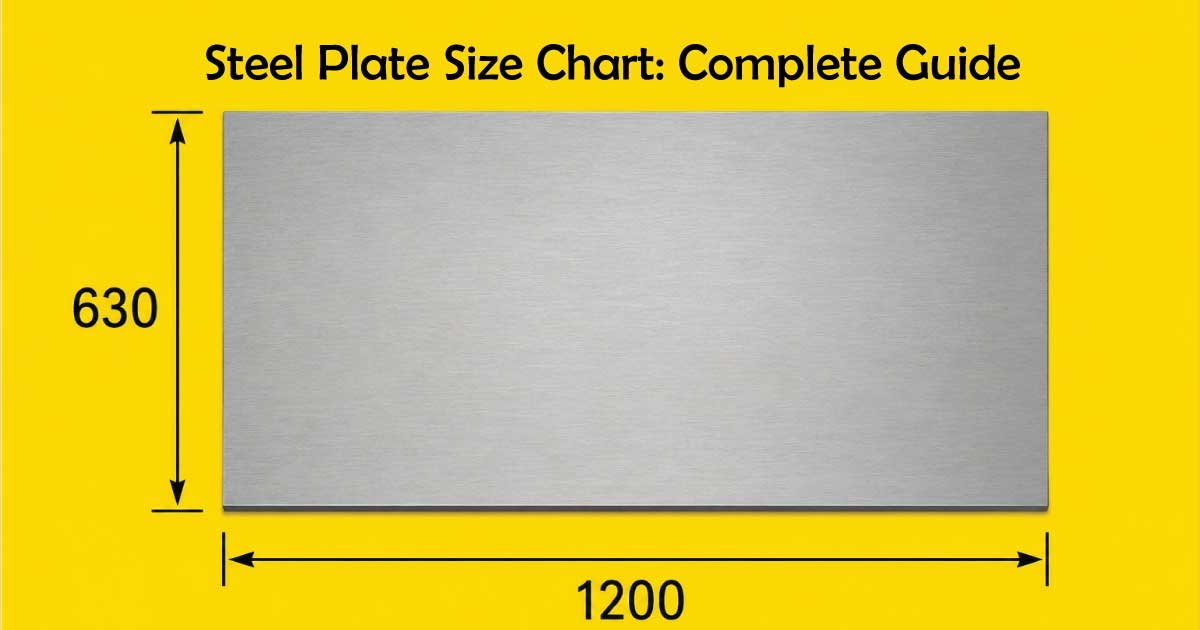
Steel plates are one of the most widely used materials in construction, manufacturing, shipbuilding, automotive industries, and heavy engineering. Whether you are designing a bridge, fabricating a machine base, or building industrial equipment, selecting the correct steel plate size is essential for strength, durability, and cost efficiency.
This guide explains everything about steel plate size charts, standard dimensions, thickness ranges, weight calculations, and how to choose the right plate for your project.
What Is a Steel Plate?
A steel plate is a strong, flat metal sheet made from steel that is generally thicker than standard steel sheets or strips. It is produced through a rolling process where steel is compressed into flat, rectangular forms, giving it high structural strength and durability. Steel plates are designed to handle heavy loads and extreme working conditions, making them essential in industrial and engineering applications.
Due to their high strength and load-bearing capacity, steel plates are widely used in construction, manufacturing, and infrastructure projects where safety and reliability are critical. They are available in different grades, thicknesses, and sizes depending on the application requirements.
Steel plates are commonly used in:
- Construction structures
- Shipbuilding
- Heavy machinery
- Pressure vessels
- Bridges and infrastructure
- Automotive frames
Because of their strength, steel plates are available in a wide range of thicknesses and sizes.
Standard Steel Plate Sizes
Steel plates come in standardized dimensions depending on regional manufacturing systems (metric or imperial).
Common metric steel plate sizes:
| Thickness (mm) | Width (mm) | Length (mm) |
|---|---|---|
| 3 mm | 1250 | 2500 |
| 5 mm | 1250 | 2500 |
| 6 mm | 1500 | 3000 |
| 8 mm | 1500 | 3000 |
| 10 mm | 1500 | 6000 |
| 12 mm | 2000 | 6000 |
| 16 mm | 2000 | 6000 |
| 20 mm | 2000 | 6000 |
| 25 mm | 2000 | 6000 |
| 30 mm+ | Custom | Custom |
These sizes may vary depending on manufacturer and application requirements.
Imperial Steel Plate Sizes (USA Standard)
In the United States, steel plates are often measured in inches.
| Thickness (inches) | Width (ft) | Length (ft) |
|---|---|---|
| 1/8″ | 4 | 8 |
| 3/16″ | 4 | 8 |
| 1/4″ | 4 | 8 |
| 3/8″ | 4 | 8 |
| 1/2″ | 4 | 8 |
| 5/8″ | 5 | 10 |
| 3/4″ | 5 | 10 |
| 1″+ | Custom | Custom |
The 4×8 ft steel plate is the most commonly used size in fabrication workshops.
Steel Plate Thickness Chart Explained
Steel plate thickness is one of the most important factors when selecting the right material for any engineering or construction project. It directly affects strength, load-bearing capacity, durability, and overall weight of the structure. Choosing the correct thickness ensures safety, performance, and long service life under different working conditions.
1. Thin Steel Plates (1 mm – 6 mm)
Thin steel plates are lightweight and easy to cut, shape, and fabricate. They are mainly used in applications where high structural strength is not the primary requirement but precision and flexibility are important. These plates are commonly found in automotive bodywork, light machinery covers, and household appliances due to their ease of processing.
- Used in light fabrication
- Automotive body panels
- Appliances and enclosures
2. Medium Thickness Plates (6 mm – 20 mm)
Medium thickness steel plates offer a balanced combination of strength and workability. They are widely used in structural and industrial applications where moderate to high load-bearing capacity is required. These plates are strong enough for construction frameworks and machinery bases while still being manageable for welding and machining processes.
- Structural components
- Machinery bases
- Construction frameworks
3. Heavy Steel Plates (20 mm – 100 mm+)
Heavy steel plates are designed for extreme strength and durability in high-load and heavy-duty environments. They are used in large-scale infrastructure and industrial projects where maximum stability is essential. These plates can withstand intense pressure, harsh conditions, and continuous heavy usage without deformation.
- Bridges
- Ship hulls
- Industrial pressure vessels
- Heavy-duty foundations
Standard Steel Grades Used in Plates
Steel plates are manufactured in different grades to meet specific strength, durability, and environmental requirements. Each grade is designed for particular applications, ranging from general construction to high-pressure industrial systems. The selection of the correct steel grade ensures safety, performance, and long-term structural reliability.
1. ASTM A36 – General Structural Steel
ASTM A36 is one of the most commonly used steel plate grades worldwide. It is known for its excellent weldability, good strength, and versatility, making it suitable for a wide range of structural applications. It is often used where moderate strength is sufficient and ease of fabrication is important.
- General structural steel
- Good weldability and machinability
- Widely used in construction projects
2. ASTM A572 – High-Strength Low-Alloy Steel
ASTM A572 is a high-strength low-alloy steel grade designed for applications that require greater strength without significantly increasing weight. It is commonly used in structural frameworks where improved load-bearing capacity is essential.
- High-strength low-alloy steel
- Better strength-to-weight ratio
- Used in structural frameworks
3. ASTM A516 – Pressure Vessel Quality Steel
ASTM A516 steel is specifically designed for pressure vessel applications where toughness and resistance to high pressure are critical. It performs well in low-temperature and high-stress environments, making it ideal for industrial storage tanks and boilers.
- Pressure vessel quality steel
- Excellent toughness
- Used in boilers and storage tanks
4. EN 10025 S275/S355 – European Structural Grades
EN 10025 S275 and S355 are widely used European structural steel grades. They offer reliable strength, good weldability, and are commonly used in construction and engineering projects across Europe and other global markets.
- European structural steel grades
- Good strength and weldability
- Used in construction and engineering
One of the most widely used materials globally is ASTM A36 steel, known for its excellent weldability and versatility.
Many large manufacturers such as ArcelorMittal produce structural plates in these grades for industrial and construction use.
Steel Plate Weight Chart
The weight of a steel plate depends on thickness, width, and length. Below is a simplified reference chart for a 4×8 ft plate:
| Thickness | Weight (approx.) |
|---|---|
| 1/8″ | 40 kg |
| 3/16″ | 60 kg |
| 1/4″ | 80 kg |
| 3/8″ | 120 kg |
| 1/2″ | 160 kg |
| 3/4″ | 240 kg |
| 1″ | 320 kg |
Weight formula:
Steel plate weight can also be calculated using:
- Weight = Length × Width × Thickness × Density of steel (7.85 g/cm³)
This formula is useful for custom-sized plates.
How to Read Steel Plate Size Specifications
Steel plate size specifications are usually written in a standard format that clearly defines the thickness, width, and length of the plate. Understanding this format is very important in fabrication, construction, and engineering work because it ensures you select the correct material for the intended application without errors.
1. Example: 12 mm × 2000 mm × 6000 mm
This specification represents a steel plate with three key dimensions that define its physical size and usability.
- Thickness = 12 mm
- Width = 2000 mm
- Length = 6000 mm
2. Thickness
The first value always represents thickness. It determines the strength, load-bearing capacity, and weight of the steel plate. Thicker plates are used for heavy-duty applications, while thinner plates are used for light fabrication work.
3. Width
The second value indicates the width of the steel plate. This measurement is important for planning layouts, cutting patterns, and ensuring the plate fits the required structure or design area.
4. Length
The third value shows the length of the steel plate. It helps determine coverage area and is crucial when calculating how many plates are needed for large-scale projects.
Always check all three dimensions carefully before purchasing or fabricating steel plates to ensure accuracy, proper fit, and safe usage in your project.
Read Our Detailed Guide:
Types of Steel Plates
Steel plates are available in different types based on how they are manufactured and the specific engineering requirements they are designed to meet. Each type has unique properties such as surface finish, strength, corrosion resistance, and heat tolerance, making them suitable for different industrial and structural applications.
1. Hot Rolled Steel Plates
Hot rolled steel plates are produced by processing steel at very high temperatures. This method makes the material easier to shape and form, but it results in a rougher surface finish. These plates are widely used in construction and general structural applications where surface finish is not a primary concern.
- Produced at high temperature
- Rough surface finish
- Used in structural applications
2. Cold Rolled Steel Plates
Cold rolled steel plates are manufactured at room temperature, which gives them a smoother surface and more precise dimensions. They are preferred in applications where accuracy and appearance are important, such as precision engineering and detailed fabrication work.
- Smooth finish
- Higher dimensional accuracy
- Used in precision engineering
3. Carbon Steel Plates
Carbon steel plates contain a higher carbon content, which increases their strength and hardness. These plates are commonly used in construction, machinery, and heavy equipment where durability and load-bearing capacity are essential.
- High strength
- Used in construction and machinery
4. Stainless Steel Plates
Stainless steel plates are known for their excellent resistance to corrosion and rust. They perform well in environments exposed to moisture, chemicals, or saltwater, making them ideal for food processing, chemical plants, and marine applications.
- Corrosion-resistant
- Used in food, chemical, and marine industries
5. Boiler and Pressure Vessel Plates
Boiler and pressure vessel plates are specially designed to withstand high pressure and temperature conditions. They are manufactured with strict quality standards to ensure safety and reliability in critical industrial systems.
- Designed for high pressure
- Used in power plants and refineries
Read Our Detailed Guide:
Applications of Steel Plate Sizes
Steel plates play a vital role in almost every heavy industry due to their strength, durability, and ability to withstand high loads. Different thicknesses and sizes are selected based on the specific application, ensuring safety, stability, and long-term performance in demanding environments.
1. Construction Industry
In the construction sector, steel plates are widely used for structural support and load-bearing applications. Their high strength makes them ideal for large infrastructure projects where stability and durability are essential.
- Bridges
- Buildings
- Foundations
2. Automotive Industry
Steel plates are essential in vehicle manufacturing, especially for components that must withstand heavy stress and vibration. They help ensure safety, structural integrity, and long service life in transportation systems.
- Chassis
- Truck frames
- Trailers
3. Shipbuilding
In shipbuilding, steel plates are used to construct strong and watertight structures capable of resisting harsh marine environments. They are critical for both commercial and industrial maritime applications.
- Hull structures
- Deck plates
- Offshore platforms
4. Industrial Machinery
Steel plates are widely used in manufacturing heavy machinery and industrial equipment. Their strength and rigidity provide a stable base for machines operating under high pressure and continuous load.
- Machine bases
- Press machines
- Heavy equipment frames
How to Choose the Right Steel Plate Size
Selecting the correct steel plate size is essential for ensuring strength, durability, and safety in structural and industrial applications. The right thickness and grade help the plate perform efficiently under load while also meeting environmental and fabrication requirements. Poor selection can lead to structural failure, increased costs, or reduced service life.
1. Load Requirements
The most important factor in choosing steel plate size is the expected load. Heavier loads require thicker plates to prevent bending, deformation, or failure. Proper thickness ensures even stress distribution and structural stability, making the steel plate suitable for demanding applications such as construction, machinery bases, and heavy equipment platforms.
2. Environmental Conditions
Environmental exposure significantly affects steel plate selection. In corrosive environments such as marine, chemical, or outdoor applications, stainless steel or coated steel plates are preferred to resist rust and degradation. For indoor or dry conditions, standard mild steel may be sufficient. Choosing the right material ensures long-term durability and reduces maintenance needs.
3. Fabrication Type
The intended fabrication process also influences steel plate selection. Processes such as cutting, welding, bending, or machining require specific thickness and material properties. Thinner plates are easier to shape and fabricate, while thicker plates provide greater strength but may require specialized equipment. Proper selection ensures smooth fabrication and reduces processing difficulties.
4. Cost Efficiency
Cost is a key consideration when selecting steel plate size. Thicker plates not only cost more in material but also increase transportation, handling, and fabrication expenses. Choosing the most efficient thickness that meets performance requirements helps balance strength and budget, making the project more economical without compromising structural integrity.
5. Standards Compliance
Always ensure steel plate selection follows relevant engineering standards such as ASTM, EN, or ISO specifications. These standards define material properties, thickness tolerances, and performance requirements for safe use. Compliance ensures reliability, safety, and consistency across applications, especially in construction, manufacturing, and engineering projects where precision and quality are critical.
Read Our Detailed Guide:
Conclusion
Understanding steel plate size charts is essential for engineers, fabricators, and construction professionals. From small workshop projects to large industrial structures, selecting the correct thickness, width, and length ensures safety, durability, and cost efficiency.
Steel plates are available in many standard and custom sizes, and knowing how to read specifications helps avoid costly mistakes. Whether you are working with light fabrication or heavy structural engineering, the right steel plate size is the foundation of strong and reliable design.
With proper selection, steel plates deliver unmatched strength, versatility, and long-term performance in virtually every industry.
Read Our Detailed Guide:
FAQs:
1: What is a steel plate size chart used for?
A steel plate size chart is used to identify standard dimensions such as thickness, width, and length of steel plates. It helps engineers, fabricators, and builders select the correct plate for construction or manufacturing projects. By using the chart, you can avoid sizing errors, improve strength selection, reduce waste, and ensure compatibility with design requirements and structural standards.
2: What is the most common steel plate size?
The most common steel plate size is 4×8 feet in imperial measurements and 1250×2500 mm in metric standards. These sizes are widely used in fabrication workshops, construction, and general manufacturing. They are popular because they are easy to handle, cut, and transport, while also being compatible with most machinery and structural applications across different industries.
3: How do I calculate steel plate weight?
Steel plate weight is calculated using the formula: Length × Width × Thickness × Density of steel (7.85 g/cm³). This helps determine the exact weight for custom sizes. Accurate weight calculation is important for transportation, load-bearing design, and cost estimation. Heavier plates require stronger support structures and proper handling equipment during installation and fabrication processes.
4: What thickness of steel plate should I choose?
The thickness depends on application requirements. Thin plates (1–6 mm) are used for light fabrication, medium plates (6–20 mm) for structural work, and heavy plates (20 mm+) for bridges, machinery, and industrial foundations. Choosing the correct thickness ensures safety, durability, and cost efficiency while preventing bending, cracking, or structural failure under load conditions.
5: What is the difference between hot rolled and cold rolled steel plates?
Hot rolled steel plates are produced at high temperatures, resulting in a rough surface but lower cost and easier shaping. Cold rolled steel plates are processed at room temperature, giving them a smoother finish and higher precision. Cold rolled plates are used for detailed fabrication, while hot rolled plates are preferred for structural and heavy-duty applications.
6: Which steel grade is best for construction?
ASTM A36 is one of the most commonly used steel grades for construction due to its good weldability, strength, and versatility. For higher strength applications, ASTM A572 is preferred. In corrosive environments, stainless steel grades are used. The best choice depends on load requirements, environmental conditions, and project design specifications for safety and durability.
7: Why is steel plate size important in engineering?
Steel plate size is important because it affects structural strength, load distribution, and safety. Incorrect sizing can lead to bending, failure, or excessive cost. Proper size selection ensures stability, reduces material waste, and improves fabrication accuracy. Engineers use size charts to match plate dimensions with design requirements for bridges, machinery, and industrial structures.
8: What industries use steel plates the most?
Steel plates are widely used in construction, automotive manufacturing, shipbuilding, heavy machinery, and infrastructure development. They are essential for building bridges, vehicle frames, industrial equipment, and pressure vessels. These industries rely on steel plates due to their high strength, durability, and ability to withstand extreme loads, harsh environments, and long-term operational stress conditions.