
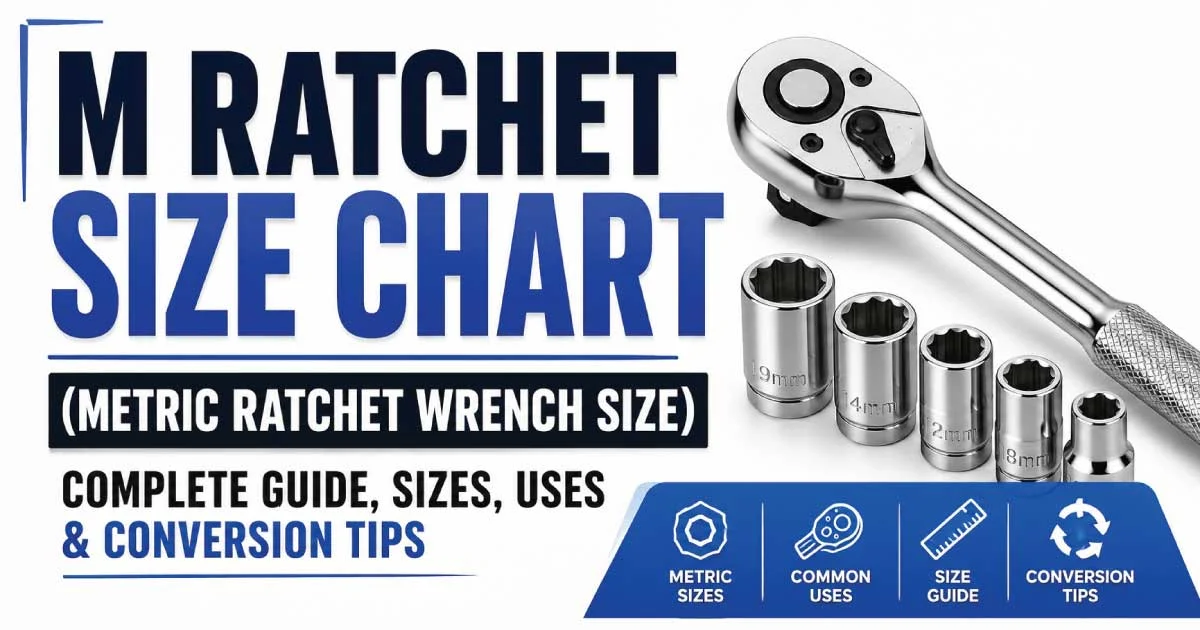
Metric ratchets are essential hand tools used for tightening and loosening bolts, nuts, and fasteners in automotive, mechanical, construction, and industrial applications. A ratchet wrench allows users to apply torque efficiently while working in tight spaces because the handle can move back and forth without removing the socket from the fastener.
Selecting the correct metric ratchet size is important because the wrong socket size can damage fasteners, reduce efficiency, and create safety issues. A metric ratchet size chart helps identify socket sizes, drive sizes, and common applications. This complete guide explains metric ratchet sizes, drive measurements, socket compatibility, materials, and how to choose the right ratchet for different tasks.
M Ratchet Size Chart (Metric Ratchet Wrench Size)
Metric ratchet sizes are identified by the drive size and the socket measurement. The drive size refers to the square connection between the ratchet handle and socket, while the socket size refers to the bolt or nut size.
| Ratchet Drive Size | Common Metric Socket Sizes | Common Applications |
|---|---|---|
| 1/4 Inch Drive | 4 mm – 14 mm | Small bolts, electronics, light repairs |
| 3/8 Inch Drive | 8 mm – 19 mm | Automotive repairs, general maintenance |
| 1/2 Inch Drive | 10 mm – 36 mm | Heavy automotive and machinery |
| 3/4 Inch Drive | 19 mm – 50 mm | Industrial equipment |
| 1 Inch Drive | 24 mm – 80 mm+ | Heavy-duty machinery and construction |
The correct ratchet size depends on fastener size, required torque, and working conditions.
What Is a Metric Ratchet?
A metric ratchet is a hand tool designed to work with metric sockets for installing and removing fasteners measured in millimeters. The ratcheting mechanism allows the user to tighten or loosen bolts without continuously repositioning the tool.
Unlike traditional wrenches, ratchets provide faster operation because they only require a small movement angle to continue turning the fastener.
Common uses include:
- Automotive repair
- Motorcycle maintenance
- Industrial machinery
- Equipment assembly
- Construction work
- Home repairs
- Manufacturing applications
Understanding Ratchet Drive Sizes
The drive size is one of the most important factors when selecting a ratchet. It determines the size of the socket that can be attached and the amount of torque the tool can handle.
1/4 Inch Drive Ratchet Size Chart
A 1/4-inch drive ratchet is designed for small fasteners and precision work.
| Socket Range | Common Uses |
|---|---|
| 4 mm – 8 mm | Electronics and small components |
| 9 mm – 12 mm | Small mechanical repairs |
| 13 mm – 14 mm | Light automotive applications |
Advantages:
- Compact design
- Easy access in tight spaces
- Lightweight operation
These ratchets are ideal for small engines, dashboards, and delicate assemblies.
3/8 Inch Drive Ratchet Size Chart
The 3/8-inch drive ratchet is one of the most popular sizes because it provides a balance between strength and flexibility.
| Socket Range | Common Uses |
|---|---|
| 8 mm – 13 mm | Small automotive bolts |
| 14 mm – 17 mm | General repairs |
| 18 mm – 19 mm | Medium fasteners |
Advantages:
- Versatile size
- Suitable for everyday repairs
- Good torque capacity
Many mechanics use 3/8-inch drive ratchets as their primary tool.
1/2 Inch Drive Ratchet Size Chart
A 1/2-inch drive ratchet is designed for larger fasteners requiring higher torque.
| Socket Range | Common Applications |
|---|---|
| 10 mm – 19 mm | Automotive systems |
| 20 mm – 30 mm | Heavy equipment |
| 32 mm – 36 mm | Large machinery |
Advantages:
- High torque capability
- Strong construction
- Suitable for demanding jobs
Common applications include wheel bolts, suspension parts, and industrial equipment.
Metric Socket Size Chart for Ratchets
Metric sockets are measured by the size of the fastener they fit. Common metric socket sizes include:
| Metric Socket Size | Common Applications |
|---|---|
| 6 mm | Small machine screws |
| 8 mm | Electrical and mechanical parts |
| 10 mm | Automotive components |
| 12 mm | Engine parts and brackets |
| 13 mm | General repairs |
| 14 mm | Automotive assemblies |
| 15 mm | Vehicle components |
| 17 mm | Suspension and machinery |
| 19 mm | Larger bolts |
| 22 mm+ | Heavy equipment |
The socket size should always match the fastener size to prevent rounding or damage.
Also Read: Band Saw Blade Size Chart: Comprehensive Guide
How to Measure a Metric Ratchet Size
Understanding how to measure ratchet dimensions helps in selecting the correct tool.
Measure Drive Size
The drive size is measured across the square connector where the socket attaches.
Common drive sizes include:
- 1/4 inch
- 3/8 inch
- 1/2 inch
- 3/4 inch
- 1 inch
Larger drive sizes provide more torque but are usually larger and heavier.
Measure Socket Size
Socket size is measured across the opening that fits the bolt head.
For example:
- A 10 mm socket fits a 10 mm fastener.
- A 17 mm socket fits a 17 mm fastener.
Check Ratchet Length
Ratchet handle length affects leverage and accessibility.
Longer handles provide:
- More torque
- Easier removal of tight fasteners
Shorter handles provide:
- Better control
- Easier access in limited spaces
Types of Metric Ratchets
Different ratchet designs are available for specific applications.
Standard Ratchet
Standard ratchets are the most common type and are used for general repair work.
Features include:
- Simple operation
- Reliable performance
- Wide socket compatibility
Long Handle Ratchet
Long handle ratchets provide additional leverage for difficult fasteners.
Common uses include:
- Automotive repairs
- Heavy machinery
- Large bolts
Flex Head Ratchet
Flex head ratchets have an adjustable head angle that improves access in restricted areas.
Advantages include:
- Better working angles
- Improved flexibility
- Easier access
Compact Ratchet
Compact ratchets are designed for small spaces where standard tools cannot fit.
Common applications include:
- Engine compartments
- Electronics
- Tight mechanical assemblies
Ratchet Materials and Construction
The material of a ratchet affects durability, strength, and performance.
Chrome Vanadium Steel Ratchets
Chrome vanadium steel is commonly used because it provides strength and resistance to wear.
Benefits include:
- High durability
- Good torque capacity
- Long service life
Chrome Molybdenum Ratchets
Chrome molybdenum tools are designed for heavy-duty applications.
Advantages include:
- Higher impact resistance
- Better performance under extreme loads
- Suitable for industrial use
Common Metric Ratchet Problems
Incorrect tool selection or poor maintenance can cause several issues.
Socket Slipping: Using the wrong socket size can cause slipping and damage the fastener.
Ratchet Mechanism Failure: Excessive force or improper use can damage internal ratchet components.
Broken Drive Head: Using a small drive ratchet for heavy-duty work can overload the tool.
Rust and Corrosion: Poor storage conditions can reduce tool life and affect performance.
Also Read: M Key Size Chart: Complete Guide for Beginners ( 2026 )
How to Choose the Right Metric Ratchet Size
Selecting the correct ratchet depends on the application and required torque.
Consider these factors:
- Fastener size
- Required torque
- Available working space
- Frequency of use
- Tool durability requirements
For general automotive and mechanical work, a 3/8-inch drive ratchet is often the most versatile option. For heavy-duty applications, a 1/2-inch drive or larger ratchet provides better strength.
Metric Ratchet Maintenance Tips
Proper maintenance improves ratchet performance and extends tool life.
Follow these tips:
- Keep the ratchet clean and dry.
- Store tools in a protected area.
- Avoid using ratchets as hammers.
- Lubricate moving parts when required.
- Use the correct socket size for each fastener.
Regular inspection helps prevent tool failure during important repairs.
Final Thoughts on M Ratchet Sizes
A metric ratchet size chart helps users select the correct ratchet drive and socket combination for different mechanical tasks. Understanding drive sizes, socket measurements, handle lengths, and tool materials ensures better performance and safety.
Whether used for automotive repair, industrial maintenance, or everyday mechanical work, choosing the correct metric ratchet size improves efficiency, prevents fastener damage, and extends tool life. Always match the ratchet and socket size to the application requirements for the best results.