
When I first started working with plumbing systems, one thing that confused me more than anything else was PEX pipe sizing. It looked simple at first—just pick a pipe and connect it but once you dig deeper, you realize that choosing the wrong size can lead to low water pressure, inefficiency, or even system failure.
If you are here, you are probably trying to understand how PEX pipe sizes work and which one is right for your project. Don’t worry, this guide will walk you through everything in a clear and practical way.
What is a PEX Pipe?
PEX stands for cross-linked polyethylene, a flexible plastic pipe widely used in modern plumbing systems. It has quickly replaced traditional materials like copper and PVC in many applications.
Why? Because PEX is:
- Flexible and easy to install
- Resistant to corrosion and scale
- Cost-effective
- Durable in both hot and cold systems
But here’s the catch—choosing the right size is critical.
Why PEX Pipe Size Matters
Pipe size directly affects how water flows through your system.
If the pipe is too small:
- Water pressure drops
- Flow rate decreases
- Appliances may not work properly
If it’s too large:
- You waste money
- Water may take longer to reach fixtures
So, getting the size right is not just technical—it’s practical and economical.
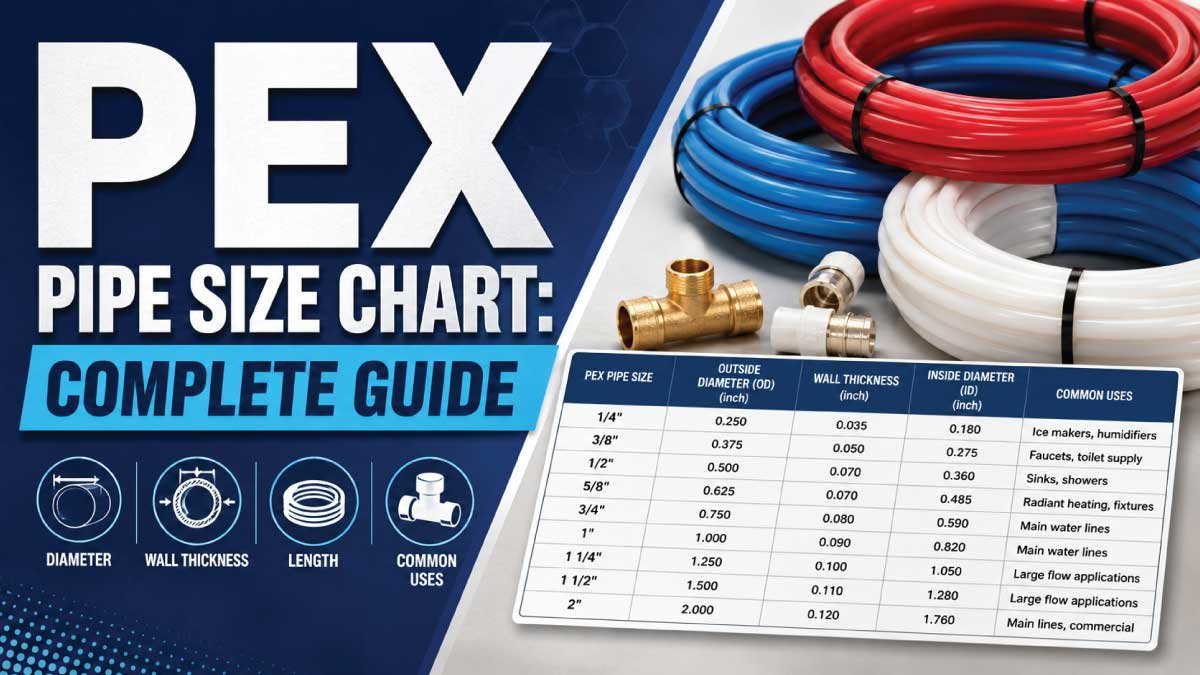
PEX Pipe Size Chart (Standard Sizes)
Here’s a simple and commonly used PEX pipe size chart:
| Nominal Size | Outside Diameter (OD) | Inside Diameter (ID) | Typical Use |
|---|---|---|---|
| 1/4 inch | 3/8 inch | ~0.25 inch | Ice makers, small lines |
| 3/8 inch | 1/2 inch | ~0.35 inch | Sink supply lines |
| 1/2 inch | 5/8 inch | ~0.475 inch | Residential plumbing |
| 3/4 inch | 7/8 inch | ~0.681 inch | Main supply lines |
| 1 inch | 1-1/8 inch | ~0.875 inch | Large homes |
| 1-1/4 inch | 1-3/8 inch | ~1.125 inch | Commercial systems |
| 1-1/2 inch | 1-5/8 inch | ~1.375 inch | High-flow systems |
| 2 inch | 2-1/8 inch | ~1.75 inch | Industrial use |
💡 Tip from experience: For most homes, you’ll mainly use 1/2 inch and 3/4 inch PEX pipes.
PEX vs Copper Pipe Size Comparison
If you are switching from copper to PEX, sizing is generally equivalent.
| Copper Pipe | Equivalent PEX Size |
|---|---|
| 1/2 inch | 1/2 inch PEX |
| 3/4 inch | 3/4 inch PEX |
| 1 inch | 1 inch PEX |
However, PEX has smoother interiors, which means:
👉 You may get slightly better flow even with the same size.
Our Trending Post:
Color Coding in PEX Pipes
PEX pipes are available in different colors to help plumbers and homeowners easily identify hot and cold water lines during installation, maintenance, and future repairs. The color itself does not change the pipe size, strength, or overall performance.
PEX pipes come in different colors:
- Red → Hot water
- Blue → Cold water
- White/Gray → Universal
This doesn’t affect size, but it helps in organizing your plumbing system. Color-coded piping also makes troubleshooting easier and improves the overall appearance and organization of residential plumbing layouts.
Common Mistakes to Avoid
Many plumbing issues happen because of simple planning mistakes during pipe selection and installation. Understanding these common problems early can help you build a more efficient and reliable PEX plumbing system.
Let me save you from some common headaches:
1. Using Too Small Pipes
Choosing pipes that are too small for the required water demand can create weak water flow and pressure problems throughout the plumbing system, especially when several fixtures operate at the same time.
- This leads to poor water pressure—very frustrating.
Small pipes may seem cheaper initially, but they often create long-term performance problems that are difficult and expensive to fix later.
2. Ignoring Pressure Drop
Water pressure naturally decreases as it travels through long pipe runs because of internal friction and resistance inside the plumbing system. Ignoring this factor can reduce fixture performance significantly.
- Long runs reduce pressure, so plan accordingly.
Using slightly larger pipes on longer runs helps maintain stable pressure and improves overall water delivery across the system.
3. Mixing Sizes Improperly
Using random pipe size changes without proper planning can create uneven flow characteristics, turbulence, and pressure inconsistencies throughout the plumbing network.
- Sudden size changes can affect flow.
Proper transitions and balanced sizing are important to keep water moving smoothly and efficiently between supply lines and fixtures.
4. Not Planning Layout
A poorly designed plumbing layout can waste materials, increase installation time, and create future maintenance difficulties. Careful planning before installation saves money and improves long-term system reliability.
- A poorly planned system wastes both time and money.
Planning pipe routes, fixture placement, and connection points beforehand makes installation cleaner, faster, and more efficient.
Example (Simple Setup)
Looking at a basic residential plumbing example makes PEX pipe sizing much easier to understand. Most standard homes use a combination of different pipe sizes depending on the fixture demand and water flow requirements.
Let’s say you’re plumbing a small house:
- Main supply line → 3/4 inch PEX
- Bathroom and kitchen lines → 1/2 inch PEX
- Refrigerator → 1/4 inch PEX
This setup works efficiently in most standard homes because the larger main line supplies enough water volume, while smaller branch lines distribute water effectively to individual fixtures and appliances.
Our Trending Post:
Advantages of Using Correct PEX Size
Selecting the correct PEX pipe size improves the overall efficiency, reliability, and performance of the plumbing system. Proper sizing also helps reduce future maintenance problems and unnecessary installation expenses.
Choosing the right size gives you:
- ✔ Consistent water pressure
- ✔ Efficient water flow
- ✔ Lower installation costs
- ✔ Longer system life
Correctly sized pipes reduce stress on the plumbing system and ensure smooth water delivery even during periods of heavy household usage.
PEX Pipe Installation Tips
Proper installation is just as important as choosing the correct pipe size. Even high-quality PEX pipes can perform poorly if installed incorrectly or without proper support and testing procedures.
From personal experience, here are a few tips:
- Always use proper fittings (crimp, clamp, or expansion)
- Avoid sharp bends unless using PEX-A
- Use supports to prevent sagging
- Pressure test before closing walls
Taking extra time during installation helps prevent leaks, pressure issues, and costly repairs after the plumbing system is fully installed.
When to Use Larger PEX Pipes
Larger PEX pipe sizes are necessary when the plumbing system must handle higher water demand, longer pipe runs, or lower incoming pressure from the main water supply source.
You should consider larger pipes when:
- You have multiple bathrooms
- You’re installing a commercial system
- Water pressure is naturally low
- Pipe runs are very long
In these situations, larger pipe diameters help maintain better flow rates and consistent pressure across the entire plumbing system.
Final Thoughts
PEX piping has become one of the most popular plumbing solutions because it is flexible, affordable, easy to install, and highly reliable for residential and light commercial applications. However, pipe sizing still plays a critical role in overall system performance.
PEX piping has made plumbing easier, faster, and more affordable—but only if you choose the right size.
If you remember just one thing from this guide, let it be this:
👉 Use 1/2 inch PEX for fixtures and 3/4 inch for main lines in most homes.
Everything else depends on your specific needs, layout, and water usage. Careful planning and proper sizing help avoid pressure problems and ensure long-term plumbing reliability.
Our Trending Post:
Conclusion
Understanding the PEX pipe size chart is not just about learning pipe dimensions. It is about designing a plumbing system that delivers reliable water pressure, efficient flow, and long-lasting performance for your home or project.
Whether you’re a DIY enthusiast or working on a professional project, the right pipe size will save you time, money, and future repairs.
Take a little extra time to plan your system properly, and you’ll thank yourself later because a well-designed PEX plumbing system can provide years of trouble-free performance.