
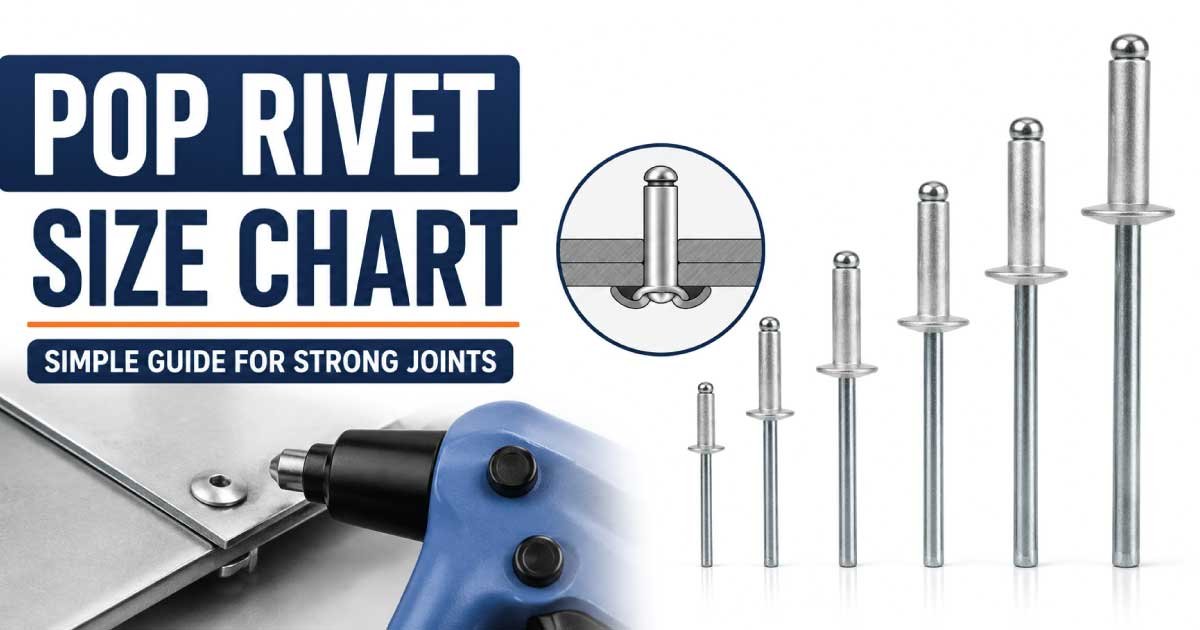
Pop rivets (also called blind rivets) are one of the most widely used fastening solutions in construction, automotive, sheet metal work, and DIY repairs. They are popular because they can be installed from one side only, making them perfect for tight or inaccessible spaces.
However, choosing the correct size is critical. A wrong pop rivet size can lead to weak joints, loose fittings, or material damage. This is why understanding a Pop Rivet Size Chart is essential for engineers, mechanics, and DIY users.
In this guide, you’ll learn everything about pop rivet sizes, measurement methods, types, and a complete size chart.
What Is a Pop Rivet?
A pop rivet is a type of permanent mechanical fastener used to join two or more materials together when access is available from only one side. It is widely used in manufacturing, construction, automotive, and DIY applications due to its simplicity, strength, and reliability.
A pop rivet consists of two main parts:
- A body (rivet shell)
- A mandrel (pulling pin)
When the mandrel is pulled using a rivet gun, the rivet body expands on the blind side, creating a strong and tight mechanical lock between the materials.
Key Features:
- One-sided installation (blind fastening)
- Strong and vibration-resistant
- Permanent joint (non-removable)
- Works on metal, plastic, and wood
- Available in multiple materials and sizes
Pop rivets are especially useful in situations where welding or bolting is not practical, making them a versatile fastening solution for many industries.
Why Pop Rivet Size Matters
Selecting the correct pop rivet size is essential for ensuring strong, secure, and long-lasting joints. The size directly affects how well the materials are held together and how much load the joint can withstand.
Using the wrong size can lead to:
- Weak joints
- Material cracking
- Rivet pull-out failure
- Loose fastening under vibration
- Reduced lifespan of assembly
Each of these issues can compromise structural integrity and lead to costly repairs or safety risks. This is why professionals always refer to a pop rivet size chart before installation to ensure correct selection based on material thickness and load requirements.
How Pop Rivet Sizes Are Measured
Pop rivet sizing is based on two primary measurements: diameter and grip range. These dimensions determine the strength of the joint and compatibility with the materials being fastened.
1. Diameter (Body Size)
The diameter refers to the thickness of the rivet shaft and plays a major role in determining joint strength.
Common diameters include:
- 2.4 mm (3/32″)
- 3.2 mm (1/8″)
- 4.0 mm (5/32″)
- 4.8 mm (3/16″)
- 6.4 mm (1/4″)
Larger diameters generally provide stronger fastening strength and are used for heavier applications, while smaller sizes are used for lightweight or precision work.
2. Grip Range (Material Thickness)
The grip range refers to the total thickness of the materials that the rivet can securely hold together. Selecting the correct grip range ensures a tight and reliable connection without loosening or over-stressing the joint.
For example:
3.2 × 6 mm means:
- 3.2 mm diameter
- 6 mm grip length
The grip range must always match the combined thickness of the materials being joined. If it is too short, the rivet will not secure properly; if it is too long, it may not expand correctly during installation.
Proper sizing ensures maximum strength, stability, and long-term durability of the fastening system.
Standard Pop Rivet Size Chart (Metric)
Pop rivets are widely used in industrial, automotive, and fabrication work, and selecting the correct size is essential for achieving a strong, vibration-resistant joint. The metric size chart below is commonly used in workshops and engineering applications to match rivet diameter, grip range, and drill size accurately.
Pop Rivet Size Chart (Metric)
| Rivet Diameter (mm) | Rivet Size (inch) | Grip Range (mm) | Drill Hole Size (mm) | Typical Use |
|---|---|---|---|---|
| 2.4 mm | 3/32″ | 1–3 mm | 2.4–2.5 mm | Thin sheet metal, electronics |
| 3.0 mm | 1/8″ small | 1–5 mm | 3.0–3.2 mm | Light fabrication |
| 3.2 mm | 1/8″ | 1–6 mm | 3.2–3.3 mm | Automotive panels, HVAC |
| 4.0 mm | 5/32″ | 2–10 mm | 4.1–4.2 mm | Medium metal joining |
| 4.8 mm | 3/16″ | 3–12 mm | 4.8–5.0 mm | Heavy sheet metal |
| 6.0 mm | 15/64″ | 4–15 mm | 6.0–6.5 mm | Structural applications |
| 6.4 mm | 1/4″ | 5–20 mm | 6.5–6.6 mm | Heavy-duty construction |
This chart helps ensure correct matching between material thickness and rivet strength. Using the right combination prevents loosening, cracking, or pull-out failure, especially in high-vibration or load-bearing applications.
Standard Pop Rivet Size Chart (Imperial)
Imperial pop rivet sizes are widely used in the United States and in industrial workshops that follow inch-based measurement systems. These sizes are especially common in automotive repair and structural metalwork.
Pop Rivet Size Chart (Imperial)
| Rivet Size | Diameter (inch) | Grip Range | Drill Size | Applications |
|---|---|---|---|---|
| 3/32″ | 0.093″ | Light duty | 3/32″ | Electronics, thin sheet |
| 1/8″ | 0.125″ | Light–medium | 1/8″ | General repairs |
| 5/32″ | 0.156″ | Medium | 5/32″ | Automotive panels |
| 3/16″ | 0.187″ | Medium–heavy | 3/16″ | HVAC systems |
| 1/4″ | 0.250″ | Heavy duty | 1/4″ | Structural metalwork |
These imperial sizes are often preferred in older machinery and North American manufacturing systems. Proper selection ensures strong fastening and long-term durability under mechanical stress.
How to Read a Pop Rivet Size Chart
Understanding a pop rivet chart is simple once you know what each column represents. Each measurement plays a specific role in ensuring proper fit, strength, and performance of the riveted joint.
1. Diameter
The diameter refers to the thickness of the rivet body. It is the most important factor because it directly affects the strength of the joint.
- Determines strength of the rivet
- Must match drill hole size
- Larger diameter = stronger joint
2. Grip Range
The grip range indicates the total thickness of materials the rivet can securely fasten.
- Total material thickness it can hold
- Must match combined sheet thickness
- Ensures tight and secure fastening
3. Drill Size
The drill size is the hole required for installation. It must match the rivet diameter for proper fit.
- Hole must match rivet diameter
- Ensures smooth installation
- Prevents loosening or movement
4. Material Type
Rivet material affects strength, durability, and corrosion resistance.
- Aluminum, steel, stainless steel, copper
- Affects strength and corrosion resistance
- Must match application environment
📖 Read Our Complete Size Guide 👉 Tap and Die Drill Chart: Complete Guide 2026 + Pdf
Types of Pop Rivets
Different types of pop rivets are designed for specific mechanical and environmental conditions. Choosing the correct type ensures better performance and longer service life.
1. Standard Pop Rivets
Standard pop rivets are the most commonly used type in general applications.
- General-purpose use
- Aluminum or steel body
- Most common type
They are suitable for everyday fabrication and light to medium-duty fastening tasks.
2. Structural Pop Rivets
Structural rivets are designed for high-strength applications where heavy loads are expected.
- High-strength applications
- Used in construction and automotive
- Heavy load resistance
These rivets provide superior shear and tensile strength, making them ideal for critical structural connections.
3. Sealed (Watertight) Rivets
Sealed rivets are designed to prevent air and water leakage through the joint.
- Prevent water and air leakage
- Used in HVAC and marine applications
They are commonly used in environments where moisture protection is essential for durability and safety.
4. Large Flange Rivets
Large flange rivets have an oversized head that distributes load over a wider area.
- Wider head for soft materials
- Prevents material tearing
These rivets are ideal for soft or thin materials where standard rivets may pull through or cause damage.
How to Choose the Right Pop Rivet Size
Selecting the correct pop rivet size is essential for creating strong, reliable, and long-lasting joints. A properly chosen rivet ensures that the materials are tightly secured without cracking, loosening, or failing under stress. Since pop rivets are permanent fasteners, careful selection before installation is very important for both safety and performance.
Choosing the correct rivet involves several key factors:
1. Material Thickness
The total thickness of the materials being joined is the first and most important factor. The rivet must have a grip range that fully covers this combined thickness.
- Measure the total thickness of materials being joined
- Ensure rivet grip range matches this value
- Prevents loose or incomplete fastening
If the grip range is too short, the rivet will not lock properly. If it is too long, it may not expand correctly, leading to weak joints.
2. Rivet Diameter
The diameter of the rivet directly affects the strength of the joint. Larger diameters provide greater shear strength and load resistance, making them suitable for heavier applications.
- Thicker materials need larger diameter rivets
- Small rivets for light-duty work
- Large rivets for structural strength
Choosing the correct diameter ensures the joint can handle vibration, tension, and mechanical stress without failure.
3. Load Requirements
The expected load on the joint plays a major role in rivet selection. High-stress applications require stronger materials and larger rivets.
- Heavy loads require steel or stainless steel rivets
- Light loads can use aluminum rivets
- Ensures long-term joint durability
Using the wrong material or size under load can result in rivet shear failure or loosening over time.
4. Environment
Environmental conditions affect the durability and lifespan of the rivet. Exposure to moisture, heat, or chemicals must be considered when selecting material type.
- Outdoor use → stainless steel
- Indoor use → aluminum
Stainless steel offers excellent corrosion resistance, while aluminum is lightweight and suitable for general indoor applications.
5. Hole Size Accuracy
Accurate hole sizing is critical for proper rivet installation. Even slight mismatches can weaken the joint or prevent proper expansion of the rivet body.
- Incorrect hole size leads to weak joints
- Hole must match rivet diameter precisely
- Ensures proper grip and expansion
A correctly drilled hole allows the rivet to expand evenly, creating a tight and secure connection between materials.
Choosing the right pop rivet size requires balancing material thickness, diameter, load, environment, and hole accuracy. When all factors are correctly matched, the result is a strong, vibration-resistant, and permanent joint suitable for a wide range of industrial and mechanical applications.
📖 Read Our Complete Size Guide 👉 T Bolt Size Chart: Complete Guide 2026 + Pdf
How to Measure Pop Rivet Size
Correct measurement of pop rivets is essential for achieving strong, secure, and long-lasting joints. Since pop rivets are permanent fasteners, selecting the right size before installation ensures proper grip, strength, and alignment between materials. A small error in measurement can lead to weak fastening or joint failure.
If you don’t know which rivet to use, follow these steps:
Step 1: Measure Material Thickness
The first step is to measure the total thickness of all materials being joined. This determines the required grip range of the rivet.
- Use a caliper to measure combined thickness
- Include all layers being fastened
- Record the total value accurately
This measurement ensures the rivet can fully expand and lock the materials together without being too short or too long.
Step 2: Select Grip Range
Once material thickness is known, choose a rivet with an appropriate grip range that fully covers that thickness.
- Choose a rivet that covers the thickness range
- Ensure proper locking after installation
- Avoid under- or over-sized grip ranges
A correct grip range ensures the rivet expands properly, creating a tight and vibration-resistant joint.
Step 3: Measure Drill Hole
The drill hole size must match the rivet diameter precisely for proper installation and strength.
- Ensure hole matches rivet diameter
- Use accurate drill bits for clean holes
- Avoid oversized or uneven holes
Incorrect hole size can cause loose fitting, reduced strength, or rivet failure under stress.
Step 4: Check Strength Requirement
Finally, consider the load and environmental conditions to choose the correct rivet material and strength level.
- Choose material based on load and environment
- Higher loads require stronger materials like steel
- Lightweight applications can use aluminum
Proper material selection ensures durability, corrosion resistance, and long-term performance.
Applications of Pop Rivets
Pop rivets are widely used across industries due to their simplicity, speed of installation, and strong holding capability. They are especially useful in situations where access is available from only one side.
Automotive Industry
- Body panels
- Trim installation
- Interior fittings
Pop rivets are commonly used in vehicle assembly because they provide strong, vibration-resistant joints without the need for welding.
Construction
- Metal roofing
- Aluminum framing
- HVAC ductwork
In construction, pop rivets are used for lightweight structural connections where fast installation and durability are required.
Aerospace
- Lightweight structures
- Aircraft panels
Aerospace applications require strong yet lightweight fastening solutions, making pop rivets ideal for non-critical structural components.
Home DIY
- Furniture repair
- Appliance fixing
- Metal crafts
Pop rivets are popular in home projects because they are easy to install and provide a clean, permanent finish without complex tools.
📖 Read Our Complete Size Guide 👉 I Bolt Size Chart: Complete Guide for 2026 With Pdf
Advantages of Pop Rivets
Pop rivets offer several benefits compared to traditional fasteners like screws and bolts, making them a preferred choice in many industries.
- One-sided installation
- Fast and easy to install
- Strong vibration resistance
- No threading required
- Clean and permanent finish
These advantages make pop rivets highly efficient for production lines, repairs, and structural assembly where speed and reliability are important.
Common Mistakes to Avoid
Incorrect rivet selection or installation can significantly reduce joint strength and durability. Avoiding common mistakes helps ensure safe and long-lasting results.
- Choosing wrong grip range
- Using incorrect drill size
- Mixing materials improperly
- Overloading small rivets
- Ignoring corrosion resistance
Each of these mistakes can lead to weak joints, premature failure, or reduced performance in demanding environments. Proper selection ensures maximum reliability and safety.
Pop Rivet vs Bolt vs Screw
Understanding the difference between pop rivets, bolts, and screws helps in choosing the right fastener for each application.
| Feature | Pop Rivet | Bolt | Screw |
|---|---|---|---|
| Installation | One-sided | Two-sided | One-sided |
| Removable | No | Yes | Yes |
| Strength | Medium–High | High | Medium |
| Speed | Fast | Slow | Medium |
Pop rivets are best suited for permanent and lightweight structures where quick installation and vibration resistance are more important than removability.
Final Thoughts
A Pop Rivet Size Chart is essential for selecting the correct fastener in any mechanical, automotive, or construction project. Since rivets depend on diameter and grip range, even a small mistake can weaken the entire joint.
By understanding sizes, types, and applications, you can confidently choose the right pop rivet for any job—whether it’s sheet metal repair, HVAC installation, or industrial fabrication.
Correct sizing ensures strong, clean, and long-lasting fastening every time.