
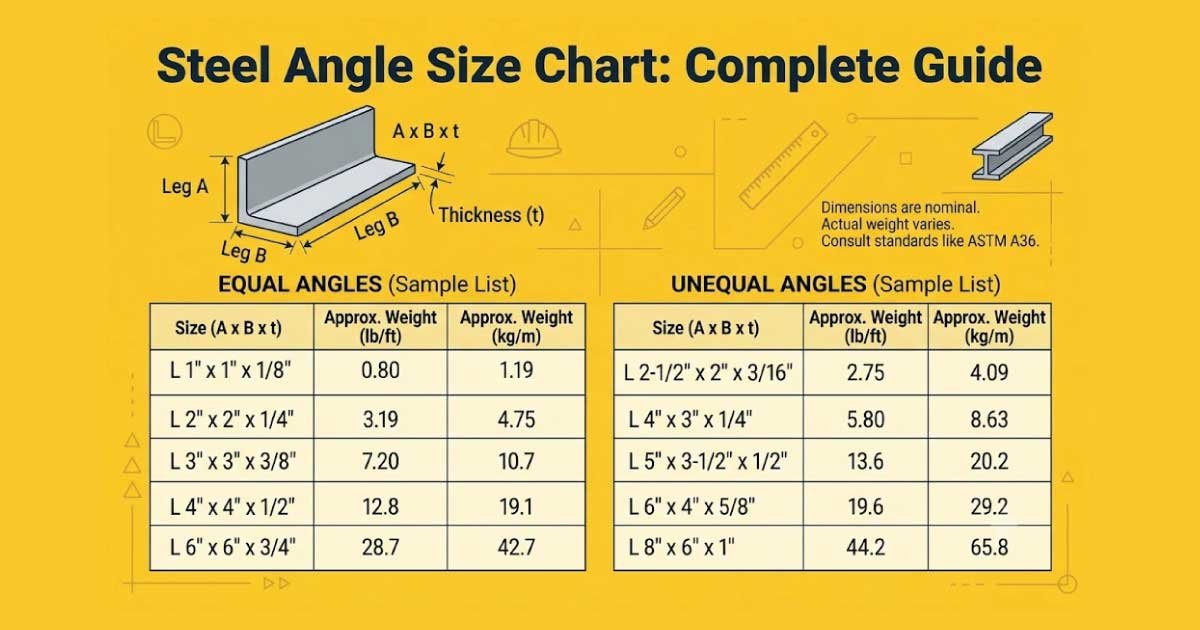
Steel angles are one of the most important structural components in modern construction and fabrication. From small workshop frames to massive bridges and industrial towers, steel angle iron plays a key role in providing strength, stability, and support. Because of their L-shaped design, they can handle load in multiple directions, making them extremely versatile.
In this guide, we will explore a complete steel angle size chart, understand dimensions, thickness, weight, types, applications, and how to choose the right size for your project.
What Is a Steel Angle?
A steel angle is a structural steel product with a distinctive 90-degree L-shaped cross-section. It consists of two legs joined together at a right angle, creating a strong and versatile shape that can support loads from multiple directions. Depending on the application, the two legs may be equal in length or unequal, providing flexibility for different engineering and construction requirements.
Steel angles are widely used because they offer excellent strength while using relatively little material. Their simple design makes them easy to fabricate, transport, and install in a variety of structural projects. They are commonly found in buildings, bridges, machinery frames, and reinforcement systems where stability and durability are essential.
Steel angles are commonly known as:
- Angle iron
- L-angle
- L-section steel
The shape provides excellent structural support, especially in frames, brackets, and reinforcement systems.
Why Steel Angles Are So Important
Steel angles remain one of the most popular structural components because they combine strength, versatility, and cost-effectiveness. Their ability to handle both compression and tension forces makes them suitable for a wide range of applications, from light-duty supports to heavy structural frameworks.
- High strength with low material use
- Easy to weld, cut, and drill
- Works in compression and tension
- Ideal for load-bearing structures
Steel angles are widely used in construction industries worldwide due to their reliability, durability, and affordability.
Types of Steel Angles
Before selecting a steel angle from a size chart, it is important to understand the main types available. Steel angles are generally classified based on the length of their two legs. The choice between equal and unequal angles depends on load requirements, structural design, and the way forces are distributed within the project.
1. Equal Angle Steel
Equal angle steel has two legs of the same length, creating a balanced and symmetrical profile. This design provides uniform strength on both sides, making it suitable for applications where loads are distributed evenly. Due to its versatility and ease of fabrication, equal angle steel is one of the most commonly used structural sections in construction and manufacturing.
Examples:
- 50 × 50 × 5 mm
- 75 × 75 × 6 mm
Uses:
- Building frames
- Roof trusses
- General fabrication
- Machine supports
Equal angles provide balanced strength on both sides, making them ideal for general structural applications where stability and uniform load distribution are required.
2. Unequal Angle Steel
Unequal angle steel features two legs of different lengths. This design is useful when one side of the structure requires more support than the other. Unequal angles are commonly selected for specialized engineering applications where loads are not evenly distributed or where space limitations affect the design.
Examples:
- 75 × 50 × 6 mm
- 100 × 75 × 8 mm
Uses:
- Structural reinforcement
- Bridges
- Industrial equipment
- Asymmetric load areas
Unequal angles are used when load distribution is uneven, allowing engineers to optimize strength and material usage while meeting specific structural requirements.
Standard Steel Angle Size Chart (Metric System)
Below is a complete and widely used metric steel angle size chart.
Equal Angle Size Chart
| Size (mm × mm) | Thickness (mm) | Weight (kg/m) | Common Use |
|---|---|---|---|
| 20 × 20 | 3 mm | 0.88 | Light frames, brackets |
| 25 × 25 | 3 mm | 1.12 | Small supports |
| 30 × 30 | 3–4 mm | 1.40 | Light fabrication |
| 40 × 40 | 3–5 mm | 2.00 | Furniture, frames |
| 50 × 50 | 5–6 mm | 3.05 | General construction |
| 65 × 65 | 6 mm | 4.50 | Medium structures |
| 75 × 75 | 6–8 mm | 5.60 | Building frames |
| 100 × 100 | 8–10 mm | 8.90 | Heavy construction |
| 125 × 125 | 10 mm | 11.80 | Industrial support |
| 150 × 150 | 10–12 mm | 14.00 | Bridges, heavy loads |
Unequal Angle Size Chart
| Size (mm × mm) | Thickness (mm) | Weight (kg/m) | Common Use |
|---|---|---|---|
| 50 × 30 | 5 mm | 2.20 | Light structural frames |
| 60 × 40 | 6 mm | 3.20 | Machine supports |
| 75 × 50 | 6–8 mm | 4.80 | Construction beams |
| 90 × 60 | 8 mm | 6.10 | Heavy support systems |
| 100 × 75 | 8–10 mm | 7.50 | Industrial fabrication |
| 150 × 90 | 10–12 mm | 12.80 | Bridges, towers |
Imperial Steel Angle Size Chart (USA Standard)
In the United States, steel angles are measured in inches.
| Size (inches) | Thickness | Weight (lb/ft) |
|---|---|---|
| 1″ × 1″ | 1/8″ | 0.85 |
| 1.5″ × 1.5″ | 3/16″ | 1.50 |
| 2″ × 2″ | 1/4″ | 2.70 |
| 3″ × 3″ | 1/4″ | 4.10 |
| 4″ × 4″ | 5/16″ | 6.80 |
| 6″ × 6″ | 3/8″ | 12.50 |
The most commonly used size in structural work is 2 × 2 inch steel angle.
How Steel Angle Size Is Defined
Steel angle sizes are specified using a set of standard dimensions that help engineers, fabricators, and builders select the right component for structural applications. Understanding these measurements is important because they determine the strength, load-carrying capacity, and suitability of the angle for a particular project. The three primary dimensions used to define a steel angle are leg length, thickness, and bar length.
1. Leg Length
Leg length refers to the dimensions of the two sides that form the L-shaped profile of the steel angle. For example, a 50 mm × 50 mm angle has two equal legs, each measuring 50 mm. Larger leg lengths generally provide greater structural support and are commonly used in construction, frames, supports, and reinforcement applications where strength is required.
2. Thickness
Thickness is the measurement of the steel material itself and is one of the most important factors affecting load capacity. Thicker steel angles can withstand higher loads and resist bending more effectively than thinner sections. Selecting the correct thickness ensures the angle can safely support the intended structural loads while maintaining durability and stability over time.
3. Length of Bar
The length of the steel angle refers to the total length of the supplied section. Standard lengths are typically 6 meters for general construction and fabrication work, while 12-meter lengths are often used in large industrial and infrastructure projects. Choosing the appropriate bar length helps reduce material waste, simplifies fabrication, and improves overall project efficiency.
These measurements work together to define the size, strength, and application suitability of a steel angle. By understanding leg length, thickness, and bar length, engineers and fabricators can select the most appropriate structural component for safe and efficient construction projects.
Steel Angle Weight Calculation
The weight of a steel angle is an important factor in structural design, transportation, material estimation, and project cost calculations. Engineers and fabricators use weight values to determine load requirements, support capacities, and shipping costs. Heavier angles generally provide greater strength, but they also increase overall structural weight and handling requirements.
Common Steel Angle Weights
The following examples show approximate weights for commonly used steel angle sizes:
- 25 × 25 × 3 mm → 1.12 kg/m
- 50 × 50 × 5 mm → 3.05 kg/m
- 75 × 75 × 6 mm → 5.60 kg/m
- 100 × 100 × 10 mm → 8.90 kg/m
Weight Formula
The weight of a steel angle can be calculated using the following formula:
Weight=Cross-sectional Area×Length×Density of Steel\text{Weight} = \text{Cross-sectional Area} \times \text{Length} \times \text{Density of Steel}
Density of Steel
For most engineering calculations, the standard density of steel is:
ρ=7.85 g/cm3\rho = 7.85\ \text{g/cm}^3
Why Weight Calculation Matters
Accurate weight calculations help engineers select the correct steel angle size for a project while ensuring structural safety and cost efficiency. They are also essential for transportation planning, crane lifting operations, and estimating the total material required for fabrication and construction work.
This formula is commonly used for custom design calculations in engineering, manufacturing, and construction projects where precise material estimation is required.
Also Read This:
Common Applications of Steel Angles
Steel angles are among the most versatile structural components used in engineering and construction. Their L-shaped design provides excellent strength, stability, and support, making them suitable for a wide range of applications. From large infrastructure projects to everyday household structures, steel angles play a critical role in ensuring durability and structural integrity.
1. Construction Industry
The construction industry is one of the largest users of steel angles. They are used to create strong structural frameworks, support systems, and reinforcements that help buildings withstand various loads and environmental conditions.
- Building frames
- Roof trusses
- Structural reinforcements
2. Industrial Machinery
Steel angles are widely used in manufacturing plants and industrial facilities because they provide a strong and reliable framework for machinery and equipment. Their durability makes them ideal for supporting heavy loads and continuous operation.
- Machine bases
- Conveyor supports
- Equipment frames
3. Infrastructure Projects
Large-scale infrastructure developments rely heavily on steel angles for strength and stability. They are used in projects that require durable structural members capable of handling heavy loads and harsh environmental conditions.
- Bridges
- Transmission towers
- Highway structures
4. Everyday Use
Steel angles are not limited to industrial applications. They are also commonly used in homes, workshops, and commercial buildings due to their strength, affordability, and ease of fabrication.
- Shelving systems
- Gates and fences
- Furniture frames
Steel angles are essential in both small and large-scale engineering projects because they provide dependable structural support while remaining cost-effective and easy to work with.
How to Choose the Right Steel Angle Size
Selecting the correct steel angle size is essential for ensuring structural strength, safety, and cost efficiency. The ideal size depends on the load it must support, the purpose of the structure, environmental conditions, and project budget. Choosing an angle that is too small can lead to structural failure, while an oversized angle may increase material and installation costs unnecessarily.
1. Load Requirement
The expected load is the most important factor when selecting a steel angle. Heavier loads require larger leg dimensions and greater thickness to provide adequate strength and prevent bending or deformation. Proper load calculations help ensure the angle can safely support the applied forces while maintaining long-term structural stability and reliability.
2. Structural Purpose
The intended use of the steel angle greatly influences the required size. Small angles are commonly used for bracing and light reinforcement, while medium-sized angles are suitable for supports and framing applications. Large steel angles are typically selected for heavy-load structures, equipment frames, and industrial projects where maximum strength and rigidity are required.
3. Environmental Conditions
Environmental exposure affects both material selection and long-term performance. For outdoor applications, galvanized or stainless steel angles are recommended because they offer superior resistance to rust and corrosion. In indoor environments with limited moisture exposure, mild steel angles are often sufficient and provide a more economical solution without compromising structural performance.
4. Budget Considerations
Larger and thicker steel angles contain more material, which increases their cost. In addition to material expenses, transportation, handling, and fabrication costs may also rise. Selecting the most efficient angle size that meets structural requirements helps balance performance and budget, ensuring cost-effective construction without sacrificing safety or durability.
5. Safety Requirements
Steel angle selection should always comply with relevant engineering standards and building codes. These standards help ensure that load-bearing structures can safely withstand expected forces and environmental conditions. Following established guidelines reduces the risk of structural failure, improves reliability, and ensures compliance with industry regulations for safe construction practices.
Surface Finishes of Steel Angles
Steel angles are available in various surface finishes to suit different environments and applications. The finish affects the appearance, corrosion resistance, maintenance requirements, and overall lifespan of the steel. Choosing the right finish is important for ensuring long-term performance and protection against environmental conditions.
1. Black Steel
Black steel angles have a raw, uncoated surface that results from the manufacturing process. They are commonly used in general fabrication and indoor structural applications where exposure to moisture and corrosion is limited. Black steel is cost-effective and easy to weld and machine.
- Raw finish
- Used in general fabrication
2. Galvanized Steel
Galvanized steel angles are coated with a layer of zinc to protect the steel from rust and corrosion. This finish significantly increases durability, making it suitable for outdoor and humid environments where weather resistance is important.
- Zinc-coated
- Rust-resistant
3. Painted Steel
Painted steel angles are covered with a protective paint coating that improves both appearance and corrosion resistance. They are often used in visible structures where aesthetics and additional surface protection are required.
- Protective coating
- Used in visible structures
4. Stainless Steel
Stainless steel angles contain alloying elements such as chromium that provide excellent resistance to rust, corrosion, and chemical exposure. They are commonly used in harsh environments where durability and cleanliness are critical.
- High corrosion resistance
- Used in marine and chemical environments
Selecting the proper surface finish helps extend the service life of steel angles, reduces maintenance requirements, and ensures reliable performance in different operating conditions.
Common Problems with Wrong Size Selection
Selecting the wrong steel angle size can create serious structural and operational problems. If the angle is too small, it may not provide sufficient strength to support the intended load. If it is oversized, it can increase project costs and unnecessary weight. Proper sizing is essential to ensure safety, efficiency, and long-term structural performance.
- Structural failure
- Bending or deformation
- Joint instability
- Safety risks
- Increased maintenance cost
Proper size selection is critical in engineering design because it directly affects load-bearing capacity, stability, and the overall reliability of the structure.
Standard Lengths Available
Steel angles are manufactured and supplied in several standard lengths to meet the needs of construction, fabrication, and industrial projects. Standard lengths help simplify transportation, storage, and installation while reducing the need for excessive cutting and welding.
- 6 meters (standard length)
- 12 meters (industrial projects)
- Custom cut lengths
Longer lengths reduce the number of welding joints required in construction projects, improving structural integrity and reducing fabrication time.
Trends in Steel Angles
The steel industry continues to evolve through advancements in manufacturing technology and material science. Modern developments focus on improving strength, reducing weight, increasing corrosion resistance, and minimizing environmental impact while maintaining high structural performance.
- High-strength lightweight alloys
- Corrosion-resistant coatings
- Eco-friendly steel production
- Precision manufacturing techniques
Companies like Abc are leading innovation in sustainable steel production, helping industries achieve stronger, more durable, and environmentally responsible construction materials.
Also Read This:
Conclusion
A steel angle size chart is essential for engineers, builders, and fabricators to choose the correct structural support for any project. Whether it’s a small bracket or a large industrial frame, selecting the right angle size ensures safety, durability, and performance.
Understanding dimensions, thickness, weight, and applications helps reduce construction errors and improves efficiency. Steel angles remain one of the most reliable and widely used structural materials in the world due to their strength, versatility, and affordability.
Also Read This:
FAQs:
What is a steel angle used for in construction?
Steel angles are mainly used to provide structural support in buildings, bridges, machinery, and fabrication work. Their L-shaped design helps distribute loads efficiently in multiple directions. They are commonly used in framing, bracing, and reinforcement because they offer strong support while keeping material usage and cost relatively low.
How do I choose the correct steel angle size?
Choosing the correct steel angle size depends on load requirements, structural purpose, and environmental conditions. Heavy loads require thicker and larger angles, while lighter work uses smaller sizes. Engineers also consider safety standards, durability, and budget to ensure the selected size performs safely and efficiently in real conditions.
What is the difference between equal and unequal steel angles?
Equal steel angles have both legs of the same length, providing balanced strength and stability. Unequal steel angles have different leg lengths and are used where load distribution is not uniform. Both types are selected based on design needs, making them suitable for different structural and engineering applications.
Are steel angles strong enough for heavy structures?
Yes, steel angles can handle heavy structural loads when the correct size and thickness are selected. Larger and thicker angles are commonly used in bridges, industrial frames, and towers. Their ability to resist both compression and tension makes them highly reliable for demanding construction and engineering projects.
What is the standard length of a steel angle?
Steel angles are commonly supplied in standard 6-meter lengths for general construction work. For large industrial projects, 12-meter lengths are also available. They can also be cut into custom sizes depending on project requirements, which helps reduce waste and makes fabrication and installation more efficient.
How is steel angle weight calculated?
Steel angle weight is calculated using cross-sectional area, length, and the density of steel, which is 7.85 g/cm³. Manufacturers also provide ready-made weight charts for convenience. Accurate weight calculation is important for structural design, transportation planning, and estimating total material cost for any project.
What are the advantages of using steel angles?
Steel angles offer high strength, durability, and versatility while remaining cost-effective. They are easy to weld, cut, and install, making them suitable for many applications. Their lightweight structure combined with strong load-bearing capacity makes them a popular choice in construction, fabrication, and industrial engineering projects.