
Whether you are a professional mechanic, a DIY enthusiast, or tackling home repairs, understanding spanner sizes is essential for efficiency and safety.
Spanners, also known as wrenches, come in various types, sizes, and standards. Choosing the right one ensures proper fit, prevents damage, and makes tasks easier.
This comprehensive guide covers spanner types, standard measurements, size conversion charts, and practical tips for every user.
What is a Spanner?
A spanner, also known as a wrench, is a hand tool designed to tighten or loosen nuts, bolts, and other fasteners.
Spanners are essential in mechanical work, automotive repair, plumbing, and construction, providing leverage and control for secure fastening.
They come in various shapes, sizes, and types, each suited for specific fasteners and applications.
Types of Spanners
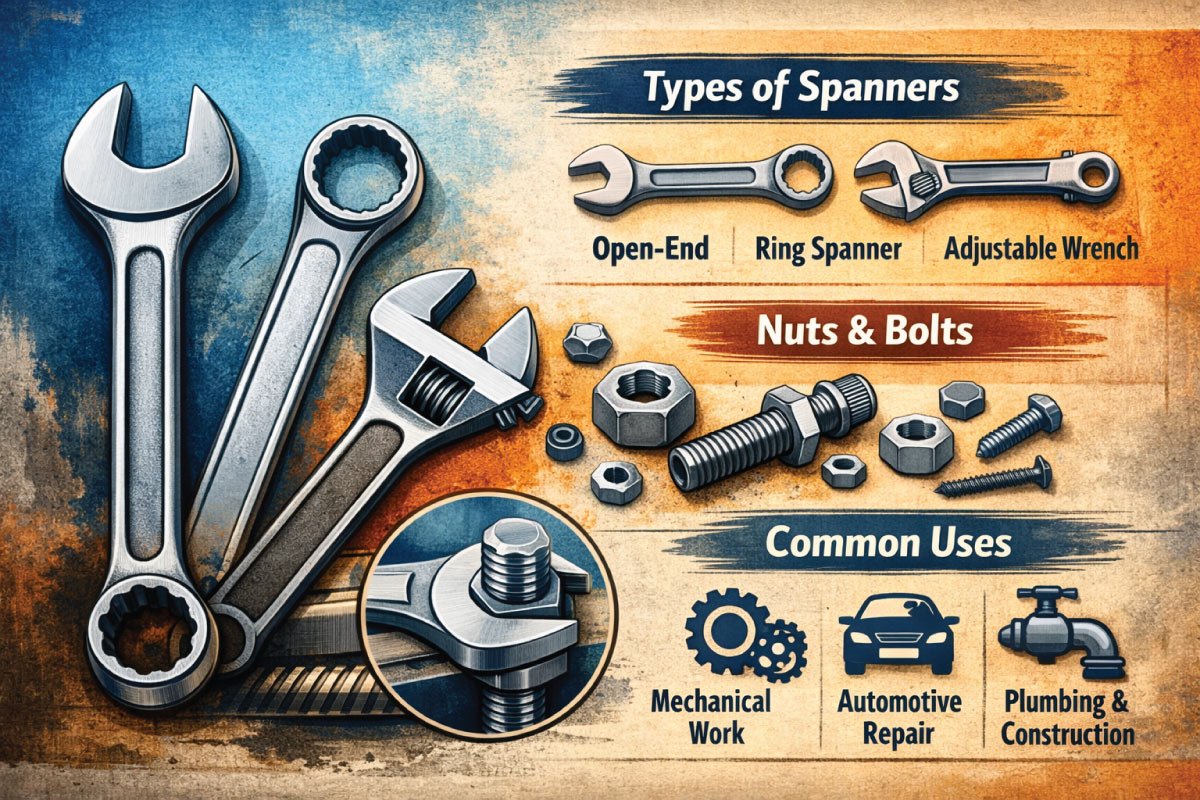
Spanners, also known as wrenches, are essential tools for fastening and loosening nuts and bolts in mechanical, automotive, and household applications.
They come in various designs, each tailored for specific tasks, ensuring efficiency, safety, and precision.
Understanding the different types of spanners helps you select the right tool for any job.
1- Open-End Spanners
Open-end spanners have two U-shaped jaws at either end, designed for quick and easy fitting onto nuts or bolts. They are ideal for situations where speed is required, and space is limited.
While they offer convenience, they may slip if not used carefully, so proper alignment with the fastener is essential for safety and effectiveness.
2- Ring Spanners
Ring spanners feature a circular end that completely encases a nut or bolt, providing a firm and secure grip. This design allows for greater torque without slipping, making them suitable for tight fasteners.
Ring spanners are perfect for precision work, preventing damage to fasteners, and are commonly used in automotive, plumbing, and mechanical applications.
3- Combination Spanners
Combination spanners combine the features of both open-end and ring spanners. One end has a U-shaped open jaw, while the other has a ring for secure gripping.
This dual functionality makes them versatile, reducing the need to switch tools frequently. They are ideal for mechanics and technicians who require efficiency and flexibility in their work.
4- Adjustable Spanners
Adjustable spanners have a movable jaw, allowing them to fit a wide range of nut and bolt sizes. They are highly versatile and reduce the need for multiple fixed-size spanners.
Commonly used in plumbing, household repairs, and automotive work, adjustable spanners are convenient, but care must be taken to ensure the jaw is tightly aligned to avoid slipping and potential damage.
5- Socket Wrenches
Socket wrenches are used with ratchets, providing the ability to apply more torque with less effort. They come in various sizes and are ideal for hard-to-reach or recessed fasteners.
The interchangeable sockets allow one wrench to handle multiple sizes, making them extremely versatile for automotive repairs, machinery maintenance, and assembly work, where efficiency and precision are required.
6- Torque Wrenches
Torque wrenches are specialized tools designed to apply a specific amount of torque to a fastener.
This ensures bolts and nuts are tightened to manufacturer specifications, preventing over-tightening or loosening.
They are critical in automotive, aerospace, and industrial applications where safety and precision are paramount. Using a torque wrench protects both components and personnel.
| Spanner Type | Best Use | Advantages |
|---|---|---|
| Open-End | Tightening/Loosening in tight spaces | Quick, easy to use |
| Ring | Nuts/bolts in automotive work | Full grip, reduces slipping |
| Combination | General use | Versatile, combines open and ring ends |
| Adjustable | Variable fasteners | Fits multiple sizes, reduces tool count |
| Socket | Heavy-duty automotive work | Handles high torque efficiently |
Importance of Knowing Spanner Sizes
Using the correct spanner size is crucial for both safety and efficiency. The right fit prevents damage to fasteners, avoids tool slippage, and ensures smooth operation.
Misusing spanners can lead to stripped threads, rounded bolts, or personal injury.
Understanding sizes helps in selecting the right tool for every job, saving time, effort, and cost.
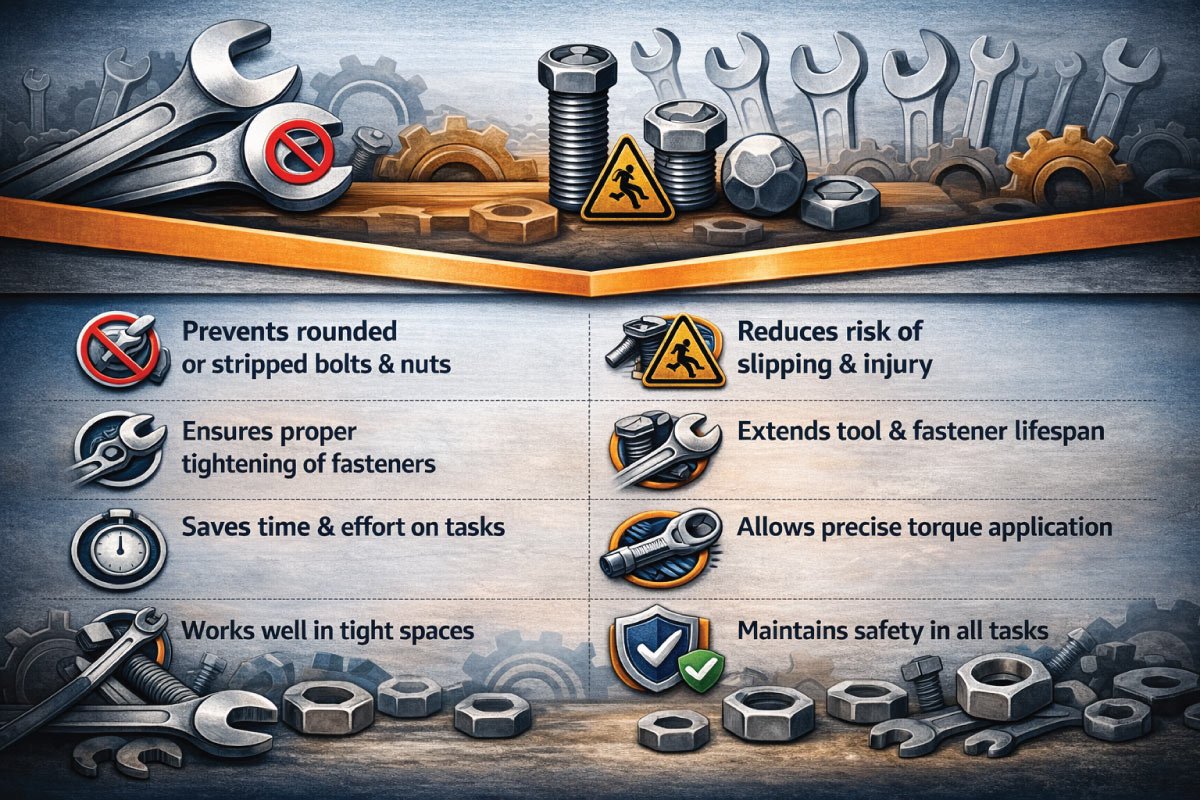
Prevents rounding or stripping of bolt and nut heads.
Reduces the risk of slipping and potential injury.
Ensures efficient tightening and loosening of fasteners.
Extends the lifespan of both tools and fasteners.
Saves time by avoiding repeated attempts or adjustments.
Allows precise application of torque for sensitive components.
Minimizes the risk of breaking the spanner or fastener.
Facilitates work in tight or confined spaces effectively.
Improves overall mechanical and maintenance workflow.
Helps maintain safety standards in professional and DIY tasks.
Metric vs. Imperial Spanner Sizes
Spanners come in two main measurement systems: metric (millimeters) and imperial (inches).
Metric sizes are widely used across Europe, Asia, and most modern machinery, while imperial sizes are common in the USA and UK.
Knowing both systems ensures compatibility with imported tools and equipment, making work more efficient and reducing the risk of damage to fasteners.
| Measurement System | Example Sizes | Regions Commonly Used |
|---|---|---|
| Metric | 8mm, 10mm, 12mm | Europe, Asia |
| Imperial | 1/4″, 3/8″, 1/2″ | USA, UK |
Standard Spanner Size Chart
Using the correct spanner size is essential to avoid damaging bolts, nuts, or tools. A standard size chart helps mechanics, engineers, and DIY enthusiasts quickly select the right spanner for a given bolt.
Below is a commonly used metric spanner size chart for reference in everyday mechanical and household tasks.
| Bolt Size (mm) | Spanner Size (mm) |
|---|---|
| 6 | 7 |
| 8 | 9 |
| 10 | 11 |
| 12 | 13 |
| 14 | 15 |
| 16 | 17 |
| 18 | 19 |
| 20 | 22 |
| 22 | 24 |
| 24 | 27 |
Common Spanner Sizes for Home Use
For most home repair and DIY tasks, only a few spanner sizes are needed.
Using the right size ensures fasteners are not damaged and tasks are completed efficiently.
Both metric and imperial sizes are common, depending on the tool or equipment, making it helpful to keep a small, versatile spanner set for everyday household work.
Metric: 8mm, 10mm, 12mm, 13mm, 14mm
Imperial: 1/4″, 3/8″, 1/2″, 9/16″
| Task | Recommended Spanner Sizes |
|---|---|
| Furniture assembly | 10mm, 12mm |
| Plumbing fixtures | 12mm, 14mm |
| Bicycle repairs | 8mm, 10mm |
| Automotive maintenance | 13mm, 17mm, 19mm |
Industrial Spanner Sizes
Industrial applications often involve larger bolts and heavy-duty equipment, requiring correspondingly bigger spanners.
Using the correct size ensures safety, prevents fastener damage, and allows efficient handling of high-torque tasks.
Keeping a range of industrial spanners is essential for construction, manufacturing, mining, and machinery maintenance where precision and reliability are critical.
27mm, 30mm, 32mm, 36mm, 41mm, 46mm, 50mm
| Industrial Bolt Size | Spanner Size | Application |
|---|---|---|
| 27mm | 30mm | Construction |
| 36mm | 41mm | Heavy machinery |
| 50mm | 55mm | Mining equipment |
Adjustable Spanners and Their Sizes
Adjustable spanners are versatile tools that can fit a range of bolt and nut sizes thanks to their movable jaw.
They are ideal for households, workshops, and industrial settings where carrying multiple fixed-size spanners isn’t practical.
Selecting the right adjustable spanner ensures efficiency, safety, and prevents slipping or damage to fasteners.
| Adjustable Spanner | Jaw Capacity (mm) | Overall Length (inch) |
|---|---|---|
| 6″ | 0-20 | 6 |
| 8″ | 0-25 | 8 |
| 10″ | 0-32 | 10 |
| 12″ | 0-38 | 12 |
How to Measure a Spanner
Measuring a spanner correctly is essential to ensure a perfect fit on nuts and bolts. Using the wrong size can damage fasteners, reduce efficiency, and increase the risk of injury.
Understanding the correct measurement techniques helps both professionals and DIY enthusiasts select the appropriate spanner for any task.
1. Identify the Jaw Width
The jaw width is the distance between the two parallel sides of the spanner’s opening.
Measuring this width accurately ensures that the spanner fits the nut or bolt snugly.
Use a caliper or ruler for precise measurement, especially when working with metric or imperial fasteners, to prevent slipping or rounding of bolt heads.
2. Measure Across the Flats of the Fastener
Fasteners such as nuts and bolts are measured “across the flats,” meaning the distance between two opposite flat sides.
This measurement determines the correct spanner size needed. Accurate measurement avoids tool slippage and ensures smooth fastening or loosening.
Always double-check with a ruler or caliper for precision.
3. Check Against Standard Charts
Once you have measured the fastener or spanner jaw, compare it to standard spanner size charts. Metric and imperial charts list common sizes for quick reference.
Matching your measurements with a chart ensures you select the correct spanner, preventing damage to the tool or fastener and making your work more efficient.
4. Consider Adjustable Spanners
If the exact size isn’t available, adjustable spanners provide flexibility. Measure the bolt or nut and adjust the jaw until it fits snugly.
Ensure the movable jaw is securely tightened to prevent slipping.
Adjustable spanners are ideal for a variety of sizes but always use caution to avoid over-tightening or damaging the fastener.
5. Verify Fit Before Use
Before applying torque, place the spanner on the fastener to confirm a proper fit. The spanner should sit securely without excessive play.
A snug fit ensures maximum grip, reduces the risk of rounding the fastener, and improves safety. Always inspect the tool and fastener condition before starting work.
6. Maintain Accurate Measurements for Future Use
Keep a record of frequently used fastener sizes and corresponding spanner sizes.
This practice helps speed up future tasks, ensures safety, and reduces the chance of errors.
Maintaining labeled tools and charts in your workspace saves time and helps both professionals and DIY enthusiasts work more efficiently.
Choosing the Right Spanner for a Job
Selecting the correct spanner for a task is crucial for efficiency, safety, and preventing damage to fasteners.
Each type of spanner has its ideal application, from high-torque jobs to confined spaces.
Understanding which spanner to use for specific tasks ensures proper handling, saves time, and protects both tools and components.
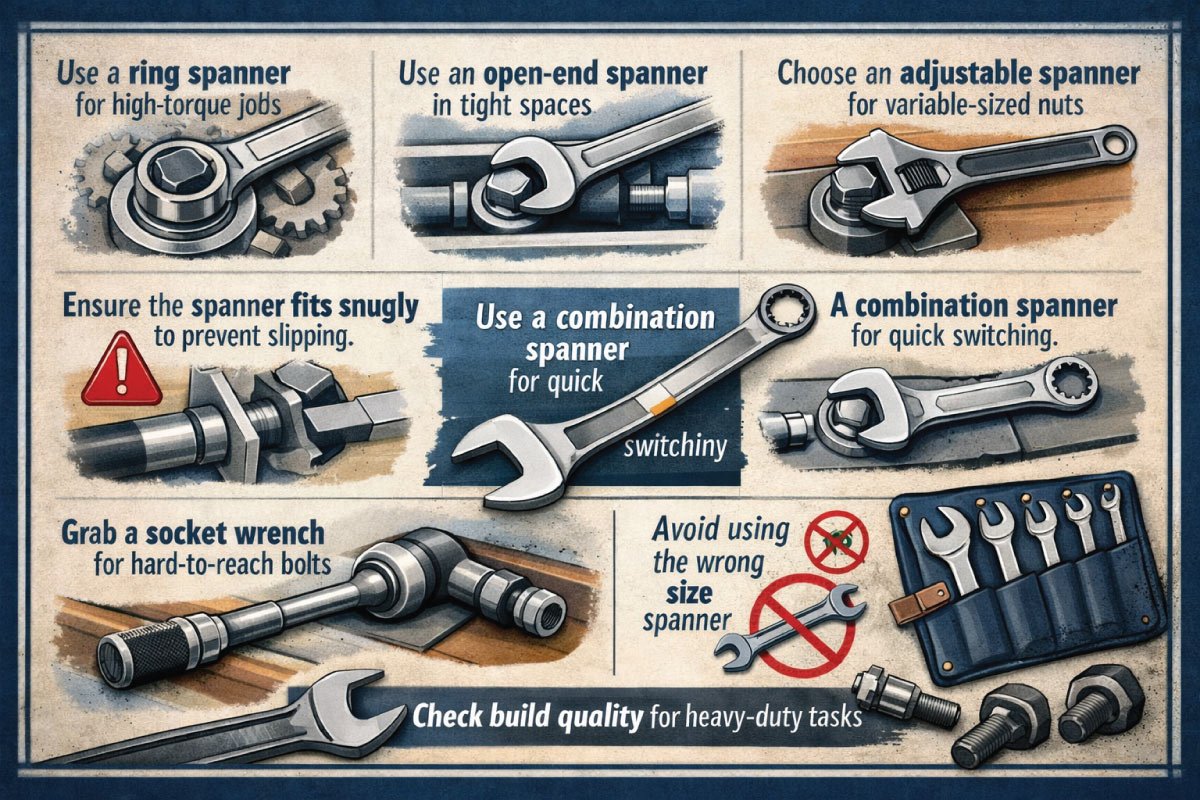
Use a ring spanner for high-torque applications to prevent rounding of nuts and bolts.
Use an open-end spanner when working in tight or confined spaces for better accessibility.
Select an adjustable spanner when dealing with variable-sized nuts and bolts.
Ensure the spanner fits snugly to prevent slipping and minimize the risk of injury.
For repeated tasks, use a combination spanner to switch quickly between open-end and ring ends.
Use socket wrenches for recessed or hard-to-reach fasteners requiring more torque.
Avoid forcing a spanner that is too small or too large on a fastener.
Consider the material and build quality of the spanner for heavy-duty tasks.
Keep a set of common sizes handy for home repairs and automotive work.
Always check manufacturer recommendations for torque and spanner type on critical assemblies.
Top 10 Most Used Spanner Sizes
Some spanner sizes are used more frequently than others, especially for common household, automotive, and DIY tasks.
Knowing these top sizes helps you maintain a versatile spanner set and ensures you’re prepared for most jobs.
Keeping these spanners handy saves time and prevents damage to fasteners during everyday repairs.
| Rank | Spanner Size | Common Use |
|---|---|---|
| 1 | 10mm | Furniture assembly |
| 2 | 12mm | Automotive repairs |
| 3 | 13mm | Bicycle repairs |
| 4 | 14mm | Plumbing fixtures |
| 5 | 17mm | Car maintenance |
| 6 | 19mm | Motorcycle repairs |
| 7 | 8mm | Small DIY tasks |
| 8 | 15mm | Lawn equipment |
| 9 | 9mm | Electrical work |
| 10 | 11mm | Household nuts & bolts |
Spanner Size Conversion Charts
When working with tools or machinery from different countries, converting between metric and imperial spanner sizes is essential.
Proper conversion ensures the right fit, prevents damage to fasteners, and maintains safety.
Keeping a conversion chart handy allows both professionals and DIY enthusiasts to work efficiently across metric and imperial systems.
| Metric (mm) | Imperial (inch) |
|---|---|
| 6 | 1/4″ |
| 8 | 5/16″ |
| 10 | 3/8″ |
| 12 | 1/2″ |
| 14 | 9/16″ |
| 17 | 11/16″ |
| 19 | 3/4″ |
| 22 | 7/8″ |
Torque and Spanner Size
The size and type of spanner directly affect torque application on bolts and nuts. Larger spanners provide greater leverage, allowing more force with less effort.
Always follow manufacturer torque specifications to avoid over-tightening or damaging fasteners.
Using the correct spanner ensures safety, efficiency, and long-lasting performance of mechanical assemblies.
| Bolt Size | Recommended Torque (Nm) | Spanner Type |
|---|---|---|
| M6 | 10 | Ring |
| M8 | 20 | Combination |
| M10 | 40 | Ring |
| M12 | 70 | Socket |
| M16 | 150 | Torque Wrench |
Safety Tips While Using Spanners
Using spanners safely is just as important as selecting the right size. Incorrect usage can lead to stripped fasteners, tool damage, or personal injury.
Following proper safety practices ensures efficiency and protects both you and your equipment.
Always inspect your tools and apply recommended techniques for every task.
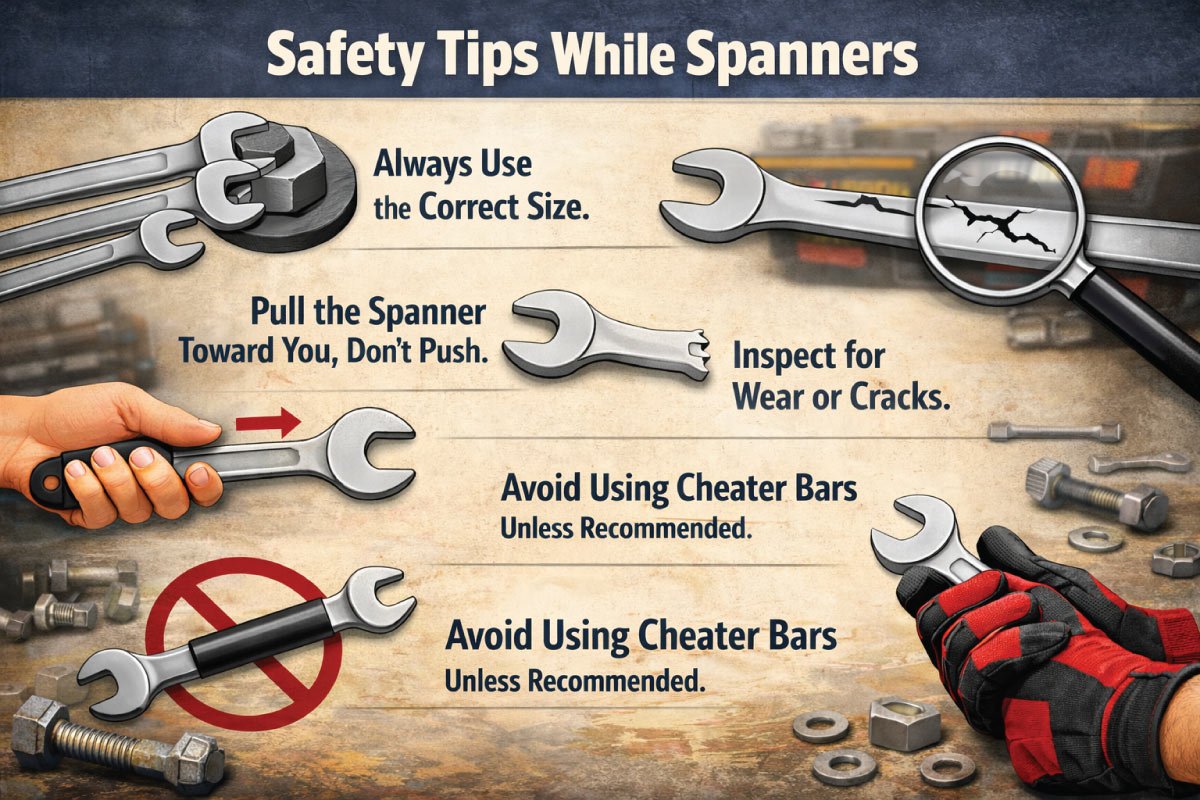
Always use the correct size.
Pull the spanner toward you, don’t push.
Inspect spanners for wear or cracks.
Avoid using cheater bars unless recommended.
Wear gloves for better grip and protection.
Bonus: Comprehensive Spanner Size Reference Table
For quick reference, this comprehensive spanner size table provides both metric and imperial equivalents for commonly used bolts.
It is designed to help professionals, DIY enthusiasts, and home users quickly select the correct spanner for any task.
Keeping this table handy ensures efficiency, prevents fastener damage, and simplifies all mechanical, automotive, and household projects.
| Bolt Size (mm) | Metric Spanner | Imperial Spanner | Common Use |
|---|---|---|---|
| 6 | 7 | 1/4″ | Furniture |
| 8 | 9 | 5/16″ | Bicycles |
| 10 | 11 | 3/8″ | Home repair |
| 12 | 13 | 1/2″ | Plumbing |
| 14 | 15 | 9/16″ | Automotive |
| 16 | 17 | 5/8″ | Industrial |
| 18 | 19 | 3/4″ | Construction |
| 20 | 22 | 7/8″ | Machinery |
| 22 | 24 | 15/16″ | Heavy equipment |
| 24 | 27 | 1 1/16″ | Industrial |
Conclusion
Understanding spanner sizes, types, and applications is vital for efficiency, safety, and cost-effectiveness.
Whether you are a beginner or a professional, this Spanner Size Guide ensures you select the right tool for every task.
Always measure accurately, choose the correct spanner type, and follow safety precautions to achieve optimal results in all mechanical, automotive, and DIY projects.
Discover More: