
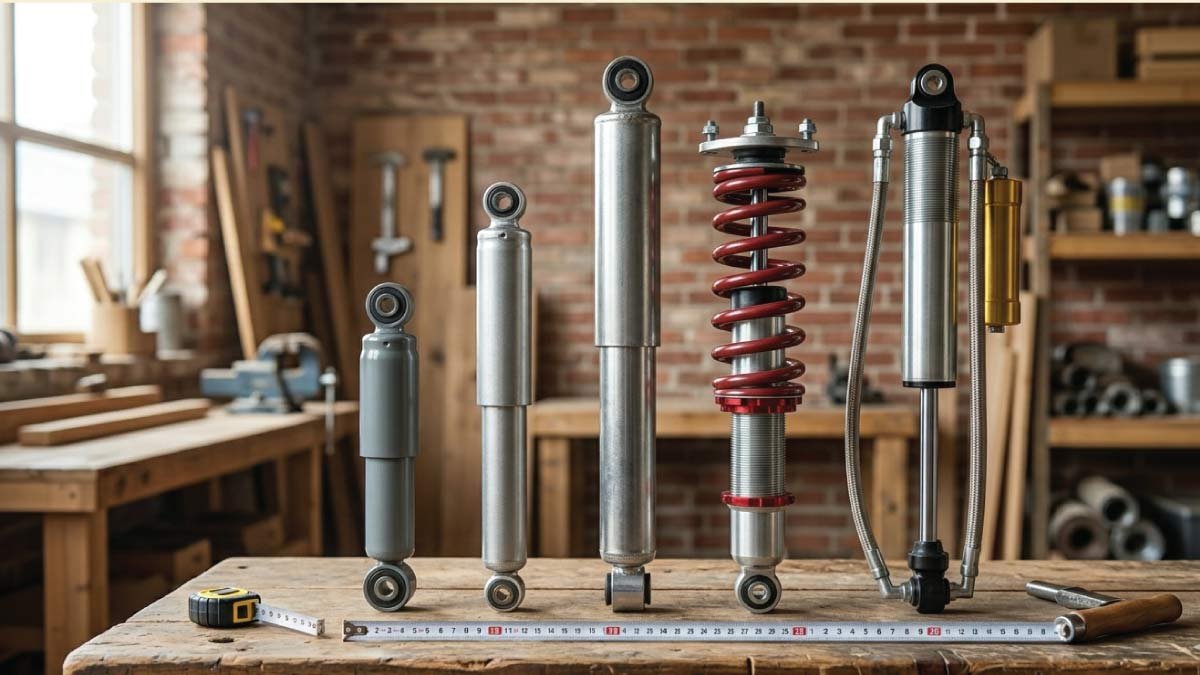
Shock absorbers are one of the most important parts of any vehicle’s suspension system. Whether it’s a car, truck, motorcycle, or even industrial machinery, shock absorbers control movement, improve stability, and ensure a smooth ride.
But one of the most commonly ignored aspects is shock absorber size. Many people focus only on brand or price, but the wrong size can cause poor handling, uneven tire wear, noise, and even suspension damage.
I once saw a car that had recently replaced shock absorbers, but the ride felt worse than before. The issue wasn’t quality, it was incorrect sizing. The stroke length was too short for the vehicle’s suspension travel, causing bottoming out on bumps. Once the correct size was installed, the ride quality improved immediately.
This guide explains the shock absorber size chart, types, measurements, applications, and how to choose the right shock absorber for your vehicle or equipment.
What Is a Shock Absorber?
A shock absorber is a key suspension component designed to control the movement of springs and reduce vibrations caused by uneven road surfaces. It ensures that the vehicle remains stable, comfortable, and easy to control even on rough terrain or during sudden movements.
Its main functions are:
- absorb road shocks
- control spring movement
- improve tire contact with road
- increase driving stability
- enhance comfort
Without shock absorbers, a vehicle would continue bouncing after hitting bumps, making driving unsafe and uncomfortable.
Why Shock Absorber Size Matters
The size of a shock absorber plays an important role in how a vehicle handles road conditions and maintains stability. It directly influences suspension performance, ride quality, and overall safety.
Shock absorber size affects:
- ride comfort
- suspension travel
- vehicle stability
- braking performance
- tire wear
If the size is incorrect:
- suspension may bottom out
- vehicle may feel too stiff or too soft
- handling becomes unsafe
- components wear faster
Correct sizing ensures proper suspension geometry, balanced movement, and smooth driving performance across different road conditions.
Shock Absorber Size Chart (General Reference)
Below is a practical shock absorber size chart used across different vehicle categories. These measurements help match suspension requirements based on vehicle type, load capacity, and driving conditions.
1. Passenger Cars
Passenger cars require balanced shock absorbers that provide both comfort and stability for everyday driving conditions.
| Vehicle Type | Extended Length | Compressed Length | Stroke Length | Typical Use |
|---|---|---|---|---|
| Small cars | 300–400 mm | 200–250 mm | 100–150 mm | City driving |
| Sedans | 350–450 mm | 220–280 mm | 120–170 mm | Daily use |
| SUVs | 400–550 mm | 250–350 mm | 150–200 mm | Mixed terrain |
| Crossovers | 380–500 mm | 240–320 mm | 140–180 mm | Comfort + stability |
2. Light Trucks and Vans
Light commercial vehicles use stronger shock absorbers to handle additional load and frequent usage while maintaining stability.
| Vehicle Type | Extended Length | Compressed Length | Stroke Length | Typical Use |
|---|---|---|---|---|
| Pickup trucks | 450–600 mm | 280–380 mm | 170–220 mm | Load carrying |
| Delivery vans | 400–550 mm | 260–360 mm | 150–200 mm | Commercial use |
3. Heavy-Duty Vehicles
Heavy-duty shock absorbers are designed for maximum load capacity, durability, and long-distance stability under extreme operating conditions.
| Vehicle Type | Extended Length | Compressed Length | Stroke Length | Typical Use |
|---|---|---|---|---|
| Heavy trucks | 500–700 mm | 300–450 mm | 200–300 mm | Freight transport |
| Buses | 550–750 mm | 350–500 mm | 200–300 mm | Passenger transport |
4. Motorcycles
Motorcycle shock absorbers vary based on riding style, terrain, and performance requirements. They are generally smaller but highly responsive.
| Type | Extended Length | Stroke Length | Use |
|---|---|---|---|
| Standard bikes | 250–350 mm | 60–120 mm | City riding |
| Sports bikes | 280–380 mm | 80–140 mm | High performance |
| Off-road bikes | 300–420 mm | 100–160 mm | Rough terrain |
Choosing the correct shock absorber size is essential for maintaining vehicle safety, comfort, and performance. Proper sizing ensures smooth suspension travel, better road grip, and reduced wear on tires and mechanical components, making it a critical factor in overall vehicle design and maintenance.
You May Also Like:
Key Shock Absorber Measurements
To properly select and install a shock absorber, it is important to understand its key measurements. These dimensions define how the suspension system behaves under load, how much movement is allowed, and whether the part will physically fit into the vehicle’s mounting points and operating range.
1. Extended length
Extended length is the maximum length of a shock absorber when it is fully stretched. It determines how far the wheel can move downward when the suspension is at full droop. This measurement is important for ensuring proper suspension travel and preventing overextension during uneven road conditions.
It determines:
- suspension droop limit
- wheel travel range
2. Compressed length
Compressed length is the shortest length of the shock absorber when it is fully compressed under load. It defines the minimum space required in the suspension system to avoid damage. This measurement is critical for preventing bottoming out when the vehicle experiences heavy impacts or maximum load conditions.
It determines:
- bump absorption limit
- bottoming resistance
3. Stroke length
Stroke length is the total usable movement range of the shock absorber between full extension and full compression. It shows how much travel the suspension can handle during driving conditions. A longer stroke length generally improves comfort, stability, and performance on rough or uneven terrain.
Stroke length = extended length − compressed length
It represents:
- total suspension travel
- movement range
4. Mounting type
Mounting type refers to how the shock absorber is connected to the vehicle’s chassis and suspension system. It is a crucial compatibility factor because even correctly sized shocks cannot be installed if the mounting style does not match the vehicle’s design requirements or attachment points.
Shock absorbers have different mounting styles:
- eye-to-eye
- eye-to-stud
- stud-to-stud
Incorrect mounting type makes installation impossible even if size is correct.
Types of Shock Absorbers
Shock absorbers are key suspension components that control spring movement and improve ride comfort, stability, and handling. Different types are designed for specific vehicle requirements such as comfort, performance, or heavy load capacity. Each type uses a different working principle to manage road shocks and vibrations effectively.
1. Hydraulic shock absorbers
Hydraulic shock absorbers use fluid resistance to control suspension movement. As the suspension compresses and rebounds, oil flows through small valves, creating resistance. They are commonly used in passenger vehicles because they provide a smooth and comfortable ride by reducing road shocks and vibrations effectively.
2. Gas-filled shock absorbers
Gas-filled shock absorbers use pressurized gas along with hydraulic fluid to improve performance. The gas helps reduce foam formation inside the oil, which maintains consistent damping. These shock absorbers perform better at high speeds and under continuous driving conditions, offering improved stability and control.
3. Adjustable shock absorbers
Adjustable shock absorbers allow users to change stiffness settings based on driving conditions. They are commonly used in performance and sports vehicles. Drivers can switch between soft and firm settings for comfort or handling, making them highly versatile for different road conditions and driving styles.
4. Heavy-duty shock absorbers
Heavy-duty shock absorbers are designed for trucks, buses, and commercial vehicles. They are built to handle high loads and rough road conditions. These shock absorbers provide strong damping force, improve stability under heavy weight, and ensure durability in demanding transportation and industrial applications.
You May Also Like:
How Shock Absorber Size Affects Performance
Shock absorber size has a direct impact on how a vehicle handles road conditions, absorbs impacts, and maintains stability. Even small mismatches in length or stroke can significantly change ride quality, safety, and long-term suspension performance.
1. Too short shock absorber
When a shock absorber is shorter than required, it limits the suspension’s ability to extend and compress properly. This creates mechanical stress on the system and reduces overall ride comfort, especially on uneven roads or during heavy load conditions.
Problems include:
- suspension bottoming out
- harsh ride
- damage to suspension components
2. Too long shock absorber
A shock absorber that is too long can prevent proper suspension geometry from functioning correctly. It reduces control over wheel movement and can negatively affect vehicle stability, especially during cornering or sudden directional changes.
Problems include:
- poor suspension control
- instability during turns
- reduced handling precision
3. Incorrect stroke length
Stroke length defines how much suspension travel is available. If it is not properly matched to the vehicle design, the suspension cannot operate within its intended range, leading to performance imbalance and uneven load distribution.
This leads to:
- limited suspension travel
- reduced comfort
- uneven tire wear
How to Choose the Right Shock Absorber Size
Selecting the correct shock absorber size is important for maintaining ride comfort, vehicle stability, and suspension durability. A proper selection process ensures that the shock matches the vehicle’s design, load requirements, and driving conditions without causing performance issues.
Step 1: Identify vehicle type
The first step is to determine the type of vehicle because each category has different suspension geometry and travel requirements. The shock absorber size is designed according to vehicle weight, usage, and suspension design characteristics.
Different vehicles require different suspension geometry.
Example:
- sedan → shorter shocks
- SUV → longer shocks
Step 2: Measure existing shock absorber
Before replacing a shock absorber, it is important to measure the old unit to ensure proper fitment. This includes checking all key dimensions and mounting configurations to avoid installation issues.
Always check:
- extended length
- compressed length
- mounting style
Step 3: Match stroke length
Stroke length is one of the most important factors because it defines the suspension’s total movement range. The new shock absorber should closely match the original specification to maintain correct suspension travel and vehicle balance.
Ensure new shock has similar stroke length to original specification.
Step 4: Consider load conditions
Vehicle load plays a major role in shock absorber selection. Heavier loads require stronger damping capability to maintain stability and prevent excessive suspension movement under stress.
Heavier vehicles or loads require:
- stronger damping
- slightly larger shock absorbers
Step 5: Check driving conditions
Driving environment also influences the ideal shock absorber type. Different road conditions require different levels of suspension travel, stiffness, and damping performance.
city driving → standard shocks
off-road → long travel shocks
highways → performance shocks
You May Also Like:
Shock Absorber Size by Vehicle Type
Shock absorber size is directly related to vehicle weight, suspension design, and performance requirements. Different vehicles require different shock dimensions to ensure proper ride comfort, stability, and load handling. Selecting the correct size improves safety, driving experience, and suspension durability.
1. Compact cars
Compact cars use smaller shock absorbers designed mainly for comfort and fuel efficiency. These shocks are tuned for light weight vehicles, offering smooth ride quality on city roads. They prioritize comfort over heavy load handling, making them ideal for daily commuting and urban driving conditions.
2. Sedans
Sedans use medium-sized shock absorbers that provide a balance between comfort and handling. They are designed to absorb road shocks effectively while maintaining stability at higher speeds. This makes sedans suitable for both city driving and highway travel with consistent ride comfort and control.
3. SUVs
SUVs require longer shock absorbers to support higher ground clearance and improved off-road capability. These shocks are designed to handle uneven terrain and heavier vehicle weight. They provide better stability and control, especially on rough roads, while maintaining comfort for passengers.
4. Pickup trucks
Pickup trucks use heavy-duty shock absorbers built for load carrying and rugged conditions. These shocks are stronger and more durable to handle heavy cargo and rough surfaces. They ensure stability under load, reduce bouncing, and improve control during transportation of goods or equipment.
5. Sports vehicles
Sports vehicles use performance shock absorbers designed for high-speed stability and precise handling. These shocks are stiffer than standard ones, reducing body roll during aggressive driving. They improve cornering control and responsiveness, making them ideal for performance-focused driving conditions.
Installation Tips for Shock Absorbers
Proper installation of shock absorbers is essential for safety, performance, and long service life. Incorrect installation can lead to poor handling, noise, and premature wear. Following correct procedures ensures that the suspension system works efficiently and maintains vehicle stability.
1. Check bushings
Bushings play a key role in absorbing vibration and securing the shock absorber. Worn bushings can reduce performance even if the shock size is correct. Always inspect and replace damaged bushings to maintain proper alignment, reduce noise, and ensure smooth suspension operation.
2. Replace in pairs
Shock absorbers should always be replaced in pairs (left and right). Replacing only one side can cause imbalance in suspension performance. Pair replacement ensures even damping, stable handling, and consistent ride quality across both sides of the vehicle.
3. Torque correctly
Proper torque application is important during installation. Over-tightening can damage mounting points, while under-tightening may cause looseness and noise. Following manufacturer torque specifications ensures secure fitting, safe operation, and long-term durability of the shock absorber system.
4. Inspect suspension components
Before installing new shocks, inspect related suspension parts such as springs, control arms, and mounts. Worn components can affect shock performance and reduce efficiency. Ensuring all parts are in good condition improves overall suspension balance and vehicle safety.
5. Alignment after installation
Wheel alignment is essential after replacing shock absorbers. Improper alignment can cause uneven tire wear, poor handling, and reduced stability. A proper alignment ensures correct tire contact with the road and improves overall driving comfort and safety.
You May Also Like:
Common Shock Absorber Problems
Shock absorbers can develop issues over time due to wear, poor maintenance, or incorrect installation. Identifying these problems early helps prevent suspension failure, improve safety, and maintain smooth driving performance.
1. Leaking oil
Oil leakage occurs when internal seals are damaged or worn out. This reduces damping performance and leads to poor suspension control. Leaking shocks must be replaced immediately to restore proper ride quality and vehicle stability.
2. Excessive bouncing
Excessive bouncing indicates worn or incorrect shock absorbers. The vehicle continues to move up and down after hitting bumps, reducing comfort and control. This issue often requires shock replacement to restore proper damping performance.
3. Noise during driving
Unusual noises such as knocking or squeaking are often caused by loose mounts or worn bushings. These issues affect suspension stability and should be inspected promptly to prevent further damage to the shock absorber system.
4. Uneven tire wear
Uneven tire wear can result from poor damping or suspension misalignment. Faulty shock absorbers allow excessive movement, affecting tire contact with the road. Fixing the shocks and alignment helps restore even tire wear and better handling performance.
Quick Shock Absorber Size Reference
This quick reference chart helps match common vehicle types with their typical shock absorber length ranges. These values are widely used in automotive repair and suspension design to ensure correct fitment and balanced performance.
| Vehicle Type | Recommended Shock Size |
|---|---|
| Small car | 300–400 mm |
| Sedan | 350–450 mm |
| SUV | 400–550 mm |
| Pickup truck | 450–600 mm |
| Heavy truck | 500–700 mm |
| Motorcycle | 250–400 mm |
Practical Automotive Insight
In real-world driving, selecting a shock absorber is not just about physical fitment, it is about achieving the right balance between comfort, control, and stability. The correct size ensures the suspension works within its designed range under all driving conditions.
A properly sized shock ensures:
- stable braking
- smooth cornering
- better ride comfort
- safer driving experience
Even small size mismatches can significantly change how a vehicle behaves on the road, affecting handling precision, tire wear, and overall safety performance.
Common Mistakes in Shock Absorber Selection
Choosing the correct shock absorber is critical for vehicle safety, comfort, and handling performance. Many problems occur when selection is based on wrong assumptions or incomplete technical information. These mistakes can lead to poor ride quality, instability, and premature suspension failure.
1. Buying based only on appearance
One of the most common mistakes is selecting shock absorbers based on appearance rather than specifications. The external look does not reflect performance or compatibility. Proper selection should always be based on vehicle requirements, load capacity, and manufacturer specifications to ensure correct functionality.
2. Ignoring stroke length
Stroke length is a critical factor in shock absorber performance, but it is often ignored. It determines how far the suspension can move during compression and rebound. Incorrect stroke length can cause bottoming out or limited movement, reducing ride comfort and overall suspension efficiency.
3. Mixing different sizes
Using different shock absorber sizes on the left and right sides creates imbalance in suspension performance. This leads to uneven handling, poor stability, and increased tire wear. Both sides should always use identical specifications to ensure balanced damping and safe vehicle operation.
4. Not considering vehicle load
Vehicle load plays an important role in shock absorber selection. Heavier or frequently loaded vehicles require stronger damping capacity. Using standard shocks for heavy loads can result in excessive bouncing, reduced control, and faster wear. Proper load-based selection ensures stability and long-term suspension durability.
Final Thoughts
Shock absorbers play a critical role in vehicle safety and comfort. Choosing the correct size ensures proper suspension movement and stable handling.
The right shock absorber size chart helps you select:
- correct extended length
- proper compressed length
- suitable stroke range
- correct mounting type
The key rule is simple:
Always match shock absorber size to vehicle specifications and driving conditions—not just price or brand.
For most passenger cars, standard medium-length shock absorbers provide the best balance of comfort and performance, while SUVs and trucks require longer and stronger units.
When properly selected and installed, shock absorbers ensure a smooth, controlled, and safe driving experience under all road conditions.