
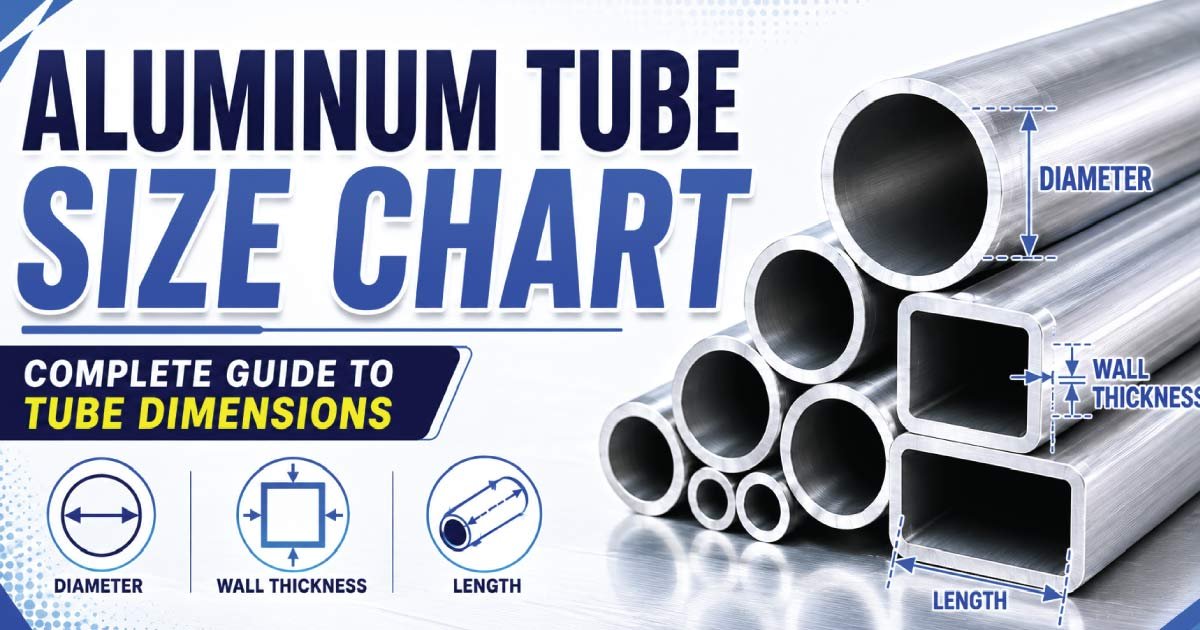
Aluminum tubes are among the most versatile and widely used metal products in modern industries. Their lightweight design, corrosion resistance, excellent strength-to-weight ratio, and ease of fabrication make them ideal for applications ranging from aerospace and automotive manufacturing to construction and DIY projects.
When selecting an aluminum tube, understanding tube dimensions is essential. Choosing the wrong size can affect structural performance, material costs, and overall project efficiency.
This guide explains aluminum tube sizes, dimensions, measurement methods, standard size charts, and factors to consider when choosing the right aluminum tube for your application.
What Is an Aluminum Tube?
An aluminum tube is a hollow metal section manufactured from aluminum alloys. Unlike pipes, which are typically sized according to nominal pipe sizes, aluminum tubes are usually measured by their actual outside dimensions and wall thickness.
Aluminum tubes are available in various shapes, including:
- Round tubes
- Square tubes
- Rectangular tubes
- Oval tubes
- Custom extruded profiles
Their lightweight nature and corrosion resistance make them popular in industries where weight reduction is important.
Advantages of Aluminum Tubes
Aluminum tubes offer several benefits compared to steel and other materials.
Lightweight Construction
Aluminum weighs approximately one-third as much as steel, making it ideal for transportation and structural applications.
Excellent Corrosion Resistance
A natural oxide layer protects aluminum from rust and environmental damage.
Easy Fabrication
Aluminum can be easily cut, drilled, welded, and machined.
High Strength-to-Weight Ratio
Many aluminum alloys provide impressive strength while remaining lightweight.
Recyclability
Aluminum is one of the most recyclable metals available and can be reused repeatedly without losing its properties.
Understanding Aluminum Tube Dimensions
Before using a tube size chart, it is important to understand how aluminum tubes are measured.
Outside Diameter (OD)
The outside diameter is the measurement across the external surface of a round tube.
For example:
- A 2-inch aluminum tube has an outside diameter of 2 inches.
Inside Diameter (ID)
The inside diameter measures the hollow opening inside the tube.
The inside diameter depends on wall thickness.
Wall Thickness
Wall thickness is the distance between the inside and outside surfaces.
Common wall thicknesses include:
- 0.035 inches
- 0.049 inches
- 0.065 inches
- 0.083 inches
- 0.125 inches
Thicker walls generally provide greater strength and load-carrying capacity.
Length
Aluminum tubes are commonly supplied in standard lengths such as:
- 8 feet
- 10 feet
- 12 feet
- 20 feet
Custom lengths are also available.
Round Aluminum Tube Size Chart
The following chart shows common round aluminum tube sizes.
| Outside Diameter (OD) | Wall Thickness | Inside Diameter (Approx.) |
|---|---|---|
| 1/4″ | 0.035″ | 0.180″ |
| 3/8″ | 0.035″ | 0.305″ |
| 1/2″ | 0.035″ | 0.430″ |
| 3/4″ | 0.049″ | 0.652″ |
| 1″ | 0.065″ | 0.870″ |
| 1-1/4″ | 0.065″ | 1.120″ |
| 1-1/2″ | 0.065″ | 1.370″ |
| 2″ | 0.065″ | 1.870″ |
| 2-1/2″ | 0.083″ | 2.334″ |
| 3″ | 0.125″ | 2.750″ |
| 4″ | 0.125″ | 3.750″ |
These dimensions represent some of the most commonly available aluminum tube sizes used across industries.
Square Aluminum Tube Size Chart
Square aluminum tubes are widely used in construction and fabrication projects.
| Outside Dimension | Wall Thickness |
|---|---|
| 1/2″ × 1/2″ | 0.065″ |
| 3/4″ × 3/4″ | 0.065″ |
| 1″ × 1″ | 0.065″ |
| 1-1/4″ × 1-1/4″ | 0.083″ |
| 1-1/2″ × 1-1/2″ | 0.125″ |
| 2″ × 2″ | 0.125″ |
| 3″ × 3″ | 0.125″ |
| 4″ × 4″ | 0.188″ |
Square tubes offer excellent rigidity and are commonly used for frames and support structures.
Rectangular Aluminum Tube Size Chart
Rectangular aluminum tubes provide greater strength in one direction and are commonly used in structural applications.
| Tube Size | Wall Thickness |
|---|---|
| 1″ × 2″ | 0.065″ |
| 1″ × 3″ | 0.083″ |
| 2″ × 3″ | 0.125″ |
| 2″ × 4″ | 0.125″ |
| 3″ × 4″ | 0.125″ |
| 4″ × 6″ | 0.188″ |
These sizes are frequently used in trailers, equipment frames, and architectural projects.
Common Aluminum Tube Alloys
Different alloys provide different mechanical properties.
6061 Aluminum Tube
6061 is one of the most popular aluminum alloys.
Benefits include:
- High strength
- Good corrosion resistance
- Excellent weldability
- Easy machining
Applications include:
- Structural frames
- Automotive parts
- Aerospace components
6063 Aluminum Tube
6063 is commonly used for architectural applications.
Benefits include:
- Smooth surface finish
- Good corrosion resistance
- Excellent extrusion characteristics
Applications include:
- Railings
- Window frames
- Decorative structures
5052 Aluminum Tube
5052 provides excellent corrosion resistance in marine environments.
Applications include:
- Boat components
- Marine equipment
- Chemical processing equipment
How to Read an Aluminum Tube Size
Consider the following specification:
2″ OD × 0.125″ Wall × 12 ft
This means:
- Outside diameter = 2 inches
- Wall thickness = 0.125 inches
- Length = 12 feet
Inside diameter can be calculated using:
ID = OD − (2 × Wall Thickness)
For this example:
ID = 2 − (2 × 0.125)
ID = 1.75 inches
This calculation helps determine flow capacity and weight.
Factors to Consider When Selecting Aluminum Tube Sizes
Several factors influence the selection of aluminum tube dimensions.
Load Requirements: Heavier loads require larger diameters or thicker walls.
Structural Strength: Projects involving structural support need tubes with adequate bending and compression resistance.
Weight Limitations: Many applications use aluminum specifically to reduce weight.
Corrosion Environment: Marine and outdoor environments may require corrosion-resistant alloys.
Fabrication Requirements: Welding, bending, and machining operations may affect alloy and size selection.
Common Applications of Aluminum Tubes
Aluminum tubes are used in numerous industries.
Construction Industry
Used for:
- Handrails
- Scaffolding
- Structural frameworks
Automotive Industry
Used in:
- Roll cages
- Chassis components
- Performance vehicles
Aerospace Industry
Used for:
- Aircraft structures
- Fuel systems
- Lightweight assemblies
Marine Industry
Used in:
- Boat frames
- Towers
- Deck structures
Manufacturing Industry
Used for:
- Machine frames
- Conveyor systems
- Equipment supports
DIY and Home Projects
Popular for:
- Furniture
- Shelving
- Hobby projects
- Custom fabrication
Aluminum Tube vs Aluminum Pipe
Many people confuse tubes and pipes.
Aluminum Tube
Measured by:
- Actual outside dimensions
- Wall thickness
Typically used in:
- Structural applications
- Fabrication projects
- Mechanical assemblies
Aluminum Pipe
Measured by:
- Nominal pipe size (NPS)
- Schedule thickness
Typically used in:
- Fluid transportation
- Plumbing systems
- Process piping
Understanding this difference helps avoid ordering incorrect materials.
Tips for Choosing the Right Aluminum Tube
When selecting aluminum tubing:
- Determine required load capacity.
- Choose the appropriate alloy.
- Verify wall thickness requirements.
- Consider environmental exposure.
- Account for fabrication processes.
- Check standard size availability.
- Avoid oversizing to reduce material costs.
Careful planning helps improve project performance and efficiency.
Industry Standards for Aluminum Tubes
Several standards govern aluminum tube manufacturing.
ASTM B221
Specifies aluminum alloy extruded bars, rods, wire, profiles, and tubes.
ASTM B241
Covers seamless aluminum and aluminum-alloy pipes and tubes.
AMS Standards
Widely used in aerospace applications for quality control and material performance.
Following these standards ensures dimensional accuracy and material reliability.
Conclusion
An aluminum tube size chart is an essential reference for engineers, fabricators, contractors, and manufacturers. Understanding outside diameter, inside diameter, wall thickness, and alloy selection helps ensure the correct tube is chosen for each application.
Whether you’re building a lightweight structure, manufacturing equipment, fabricating vehicle components, or completing a DIY project, selecting the proper aluminum tube dimensions improves performance, safety, and cost efficiency. By using standard size charts and understanding tube measurements, you can confidently choose the right aluminum tubing for your next project.
Also Read: 👉 Understanding sewer pipe sizes is essential for proper drainage system design and installation. This Sewer Pipe Size Chart guide covers standard sewer pipe dimensions, sizing requirements, and common applications for residential and commercial plumbing systems. Learn how to choose the correct pipe size to ensure efficient wastewater flow and prevent costly problems. Read the full post for detailed charts, specifications, and expert sizing tips.
FAQs:
What are aluminum tube sizes defined by?
Aluminum tube sizes are defined by outside diameter (OD), inside diameter (ID), and wall thickness. For square and rectangular tubes, size is defined by leg length and wall thickness. These measurements determine strength, weight, and application suitability in construction, automotive, and industrial uses, ensuring proper fit and performance in designs.
What is the difference between OD, ID, and wall thickness in aluminum tubing?
Outside diameter (OD) is the total width of the tube. Inside diameter (ID) is the hollow space where fluid or materials pass. Wall thickness is the material between OD and ID. These three measurements control strength, flow capacity, and weight, and are essential for selecting the correct aluminum tube size.
What shapes do aluminum tubes come in?
Aluminum tubes are commonly available in round, square, and rectangular shapes. Round tubes are used for piping and fluid transport, while square and rectangular tubes are preferred for structural frames and fabrication. Each shape offers different strength, flexibility, and design advantages depending on mechanical or architectural requirements.
What is a standard aluminum tube size chart?
A standard aluminum tube size chart is a reference table showing common dimensions like OD, ID, wall thickness, and length. It helps engineers and fabricators choose correct sizes quickly. The chart ensures compatibility with fittings and structural requirements, following industrial standards such as ASTM and other global specifications.
What does schedule (SCH10, SCH40, SCH80) mean in aluminum tubing?
Schedule refers to the wall thickness of aluminum tubing. SCH10 means thin wall for low pressure, SCH40 is standard thickness for general use, and SCH80 is thicker for high-pressure or structural applications. Higher schedule numbers indicate stronger but heavier tubes, affecting weight, durability, and pressure resistance.
How are aluminum square and rectangular tube sizes measured?
Square and rectangular aluminum tubes are measured by outside leg length and wall thickness. For example, a 2×2 inch square tube refers to the outer dimensions. Wall thickness determines strength and weight. These measurements are important for construction, framing, and mechanical applications where load-bearing capacity is required.
What materials or alloys are commonly used in aluminum tubes?
Common aluminum tube alloys include 6061, 6063, and 7075. 6061 offers high strength and corrosion resistance, 6063 is widely used for architectural purposes due to smooth finish, and 7075 is very strong for aerospace applications. Each alloy provides different mechanical properties for specific industrial and structural uses.
How do I choose the correct aluminum tube size for my project?
To choose the correct size, consider load requirements, pressure, and application type. Select shape (round, square, or rectangular), then check OD, wall thickness, and alloy grade. Lightweight or structural needs determine schedule and size. Proper selection ensures safety, durability, and cost efficiency in fabrication and engineering projects.