
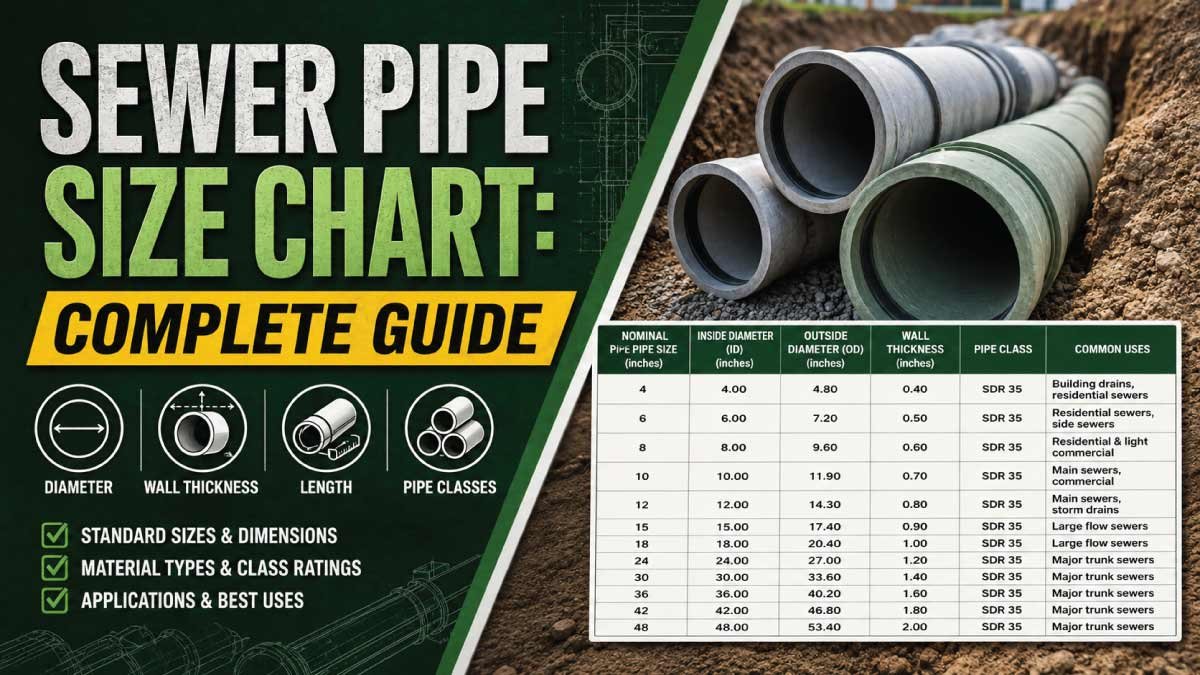
When I first started learning about plumbing systems, one thing that confused me the most was sewer pipe sizing. It may seem like a small detail, but choosing the right sewer pipe size can make a huge difference in how efficiently your drainage system works.
Whether you are a homeowner planning a renovation, a DIY enthusiast, or someone working in construction, understanding sewer pipe sizes is essential. In this complete guide, I’ll walk you through everything—from sewer pipe size charts to real-world applications—so you can confidently choose the right size.
What Is a Sewer Pipe?
A sewer pipe is a critical part of any plumbing system. It carries wastewater from sinks, toilets, showers, and appliances away from your home and into a municipal sewer system or septic tank.
Unlike water supply pipes, sewer pipes rely on gravity to move waste. That’s why the size and slope of the pipe are extremely important.
Why Sewer Pipe Size Matters
Let me explain this in simple terms.
If the pipe is too small:
- It can clog easily
- Wastewater may back up into your home
- Maintenance costs increase
If the pipe is too large:
- Waste may not flow properly
- Solids can settle and cause blockages
- Installation costs increase unnecessarily
So, choosing the correct size ensures:
- Smooth flow of waste
- Reduced clogging
- Long-term durability of the system
Standard Sewer Pipe Size Chart
Here’s a commonly used sewer pipe size chart to help you understand different applications:
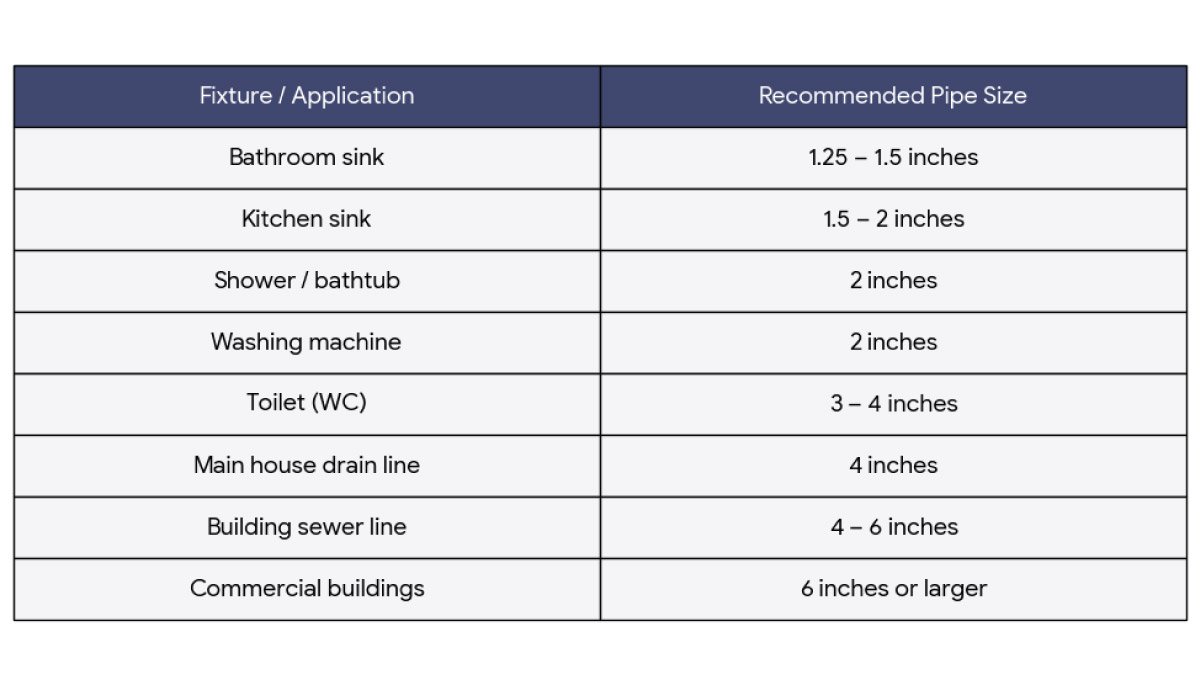
| Fixture / Application | Recommended Pipe Size |
|---|---|
| Bathroom sink | 1.25 – 1.5 inches |
| Kitchen sink | 1.5 – 2 inches |
| Shower / bathtub | 2 inches |
| Washing machine | 2 inches |
| Toilet (WC) | 3 – 4 inches |
| Main house drain line | 4 inches |
| Building sewer line | 4 – 6 inches |
| Commercial buildings | 6 inches or larger |
This chart gives a general idea, but actual requirements may vary depending on local plumbing codes.
Standard Sewer Pipe Size Chart PDF
Common Sewer Pipe Sizes Explained
Sewer pipes come in different sizes, each designed to handle specific types of wastewater flow. Choosing the correct size ensures efficient drainage and prevents clogs or backups. Let’s explore the most commonly used pipe sizes and their typical applications in residential and commercial plumbing systems.
1. 1.25 to 1.5 Inch Pipes
These small-diameter pipes are designed for light wastewater drainage. They are commonly installed in locations where water flow is minimal and waste is mostly liquid. Their compact size makes them easy to fit in tight spaces but unsuitable for heavier waste.
These are typically used for:
- Bathroom sinks
- Small drainage fixtures
They handle light wastewater flow and are not suitable for heavy waste.
2. 2 Inch Pipes
Two-inch pipes are widely used in homes because they can carry moderate amounts of wastewater without clogging. They are versatile and can be installed in various locations, providing an ideal balance between flow capacity and ease of installation.
Used for:
- Showers
- Bathtubs
- Washing machines
It provides enough capacity for moderate water flow without clogging easily.
3. 3 Inch Pipes
Three-inch pipes are the minimum size recommended for toilets in most plumbing systems. Their wider diameter allows for the passage of solid waste without blockages. These pipes are essential in bathrooms where heavier waste must flow efficiently to the main sewer line.
Why?
- Toilets discharge solid waste
- Requires a wider pipe to prevent blockage
4. 4 Inch Pipes
Four-inch pipes are the standard choice for main sewer lines in residential homes. They provide sufficient capacity to handle all household wastewater, connecting efficiently to municipal sewer systems. Most home plumbing relies heavily on this size for reliable drainage.
This is the standard size for:
- Main sewer lines in homes
- Connection to municipal sewer
If you remember just one size, remember this—4 inches is the backbone of most residential sewer systems.
5. 6 Inch and Larger Pipes
Pipes six inches and above are typically used in commercial, industrial, and multi-unit residential buildings. They are designed to handle a high volume of wastewater efficiently, preventing backups even under heavy usage. These large pipes are essential for robust drainage systems.
Used in:
- Commercial buildings
- Apartment complexes
- Industrial drainage systems
These pipes handle large volumes of wastewater.
Our Trending Post:
Factors That Affect Sewer Pipe Size Selection
Choosing the correct sewer pipe size is critical for efficient wastewater management. It’s not random—several factors determine the optimal size, from the number of fixtures to building type. Using the wrong size can cause clogs, backups, and long-term plumbing issues. Let’s break down these factors.
1. Number of Fixtures
The total number of plumbing fixtures directly impacts the required pipe size. More fixtures mean more wastewater entering the system simultaneously, which necessitates a larger pipe. Proper sizing ensures smooth flow and prevents blockages in both residential and commercial properties.
For example:
- A single bathroom home → smaller main line
- Multi-story house → larger main line
2. Flow Rate
Different fixtures discharge varying amounts of water. A sink produces a low, steady flow, while toilets and washing machines generate higher volumes, sometimes in sudden bursts. The pipe must be sized to handle peak flows efficiently, ensuring no overflow or backups occur during heavy usage periods.
Flow examples:
- Sink → low flow
- Toilet → high flow
- Washing machine → sudden heavy discharge
3. Pipe Slope (Gradient)
Sewer pipes rely on gravity to move wastewater. Proper slope or gradient is essential for efficient flow. Too steep a slope can leave solids behind, while too flat a slope causes stagnation. Following standard slope guidelines helps maintain the correct flow rate for various pipe sizes.
Standard slope guidelines:
- 1/4 inch per foot for smaller pipes
- 1/8 inch per foot for larger pipes
If slope is incorrect:
- Too steep → water flows too fast, solids left behind
- Too flat → waste doesn’t move properly
4. Local Plumbing Codes
Plumbing codes vary by region and dictate minimum pipe sizes, acceptable materials, and installation standards. Compliance ensures safety, functionality, and legal adherence. Always consult local regulations before selecting pipe sizes to avoid violations and ensure long-term performance of the sewer system.
Check for:
- Minimum pipe sizes
- Material requirements
- Installation standards
5. Type of Building
The type and size of a building affect the required pipe diameter. Residential homes need smaller pipes, while commercial and industrial facilities demand larger diameters to accommodate higher water usage. Proper sizing prevents drainage problems and ensures the sewer system can handle peak demand efficiently.
Pipe sizing differs based on:
- Residential homes
- Commercial buildings
- Industrial facilities
Larger buildings require larger pipes due to higher usage.
Our Trending Post:
Types of Sewer Pipes and Their Sizes
Sewer systems use different types of pipes depending on material, durability, and application. Each pipe type comes in standard sizes suitable for specific uses. Choosing the right material ensures efficient drainage, long-lasting performance, and compliance with plumbing codes. Let’s explore the common types of sewer pipes.
1. PVC Pipes
PVC (Polyvinyl Chloride) pipes are the most commonly used in modern residential plumbing. They are lightweight, easy to cut and install, and resistant to corrosion and chemical damage. Their smooth interior ensures efficient wastewater flow with minimal maintenance.
Sizes:
- 1.5 inch to 6 inch (residential)
Advantages:
- Lightweight
- Easy to install
2. Cast Iron Pipes
Cast iron pipes are commonly found in older buildings and commercial properties. They are extremely durable and can last for decades. One key advantage is excellent noise reduction, making them ideal for interior plumbing where sound insulation matters.
Sizes:
- 2 inch to 15 inch
Advantages:
- Durable
- Noise reduction
3. ABS Pipes
ABS (Acrylonitrile Butadiene Styrene) pipes are similar to PVC but usually black in color. They are commonly used in residential drainage systems and offer good durability. ABS is resistant to impact and can handle a wide range of temperatures, making it versatile for indoor plumbing.
Sizes:
- 1.5 inch to 6 inch
Used in:
- Residential drainage systems
4. Clay Pipes
Clay pipes are primarily used in underground sewer lines. They are extremely durable and resistant to chemical corrosion, but their heavy weight makes installation more challenging. These pipes are still found in older municipal sewer systems and certain long-lasting drainage projects.
Sizes:
- 4 inch to 24 inch
Advantages:
- Very durable
- Long-lasting for underground use
Residential Sewer Pipe Layout Example
Here’s a simple, real-world layout to help visualize a typical house’s sewer setup. Each fixture connects to a pipe of appropriate size, ensuring efficient wastewater flow to the main sewer line. Proper sizing prevents clogs and keeps plumbing working smoothly.
Example:
- Bathroom sink → 1.5 inch pipe
- Shower → 2 inch pipe
- Toilet → 3 inch pipe
All lines connect to:
- 4 inch main sewer line → municipal sewer system or septic tank
This layout ensures smooth drainage and proper connection to larger sewer systems.
Our Trending Post:
Common Sewer Pipe Problems (Due to Wrong Size)
Incorrect sewer pipe sizing can lead to a range of plumbing issues, from minor inconvenience to major home damage. Pipes that are too small or too large disrupt the flow of wastewater, causing clogs, backups, and unpleasant odors. Understanding these problems helps prevent costly repairs.
1. Frequent Clogs
Small-diameter pipes often struggle to handle solid waste effectively. This can result in repeated blockages in sinks, toilets, and showers. Frequent clogs require constant maintenance and can damage plumbing fixtures, making it essential to select the proper pipe size for each fixture.
2. Slow Drainage
Insufficient pipe size causes water to drain slowly from sinks, tubs, and showers. This is frustrating for homeowners and can contribute to standing water in drains, leading to hygiene issues, bad odors, and increased wear on plumbing components over time.
3. Sewer Backups
One of the most serious issues caused by wrong pipe sizing is sewer backup. Wastewater can flow backward into toilets, sinks, or showers, potentially damaging floors, walls, and personal belongings. Proper pipe selection is crucial to prevent these messy and costly problems.
4. Bad Odors
Improperly sized pipes can disrupt the flow of wastewater, allowing gases to accumulate in the plumbing system. These odors can escape into living spaces, causing discomfort and potential health hazards. Correct pipe sizing ensures smooth flow and proper venting of sewer gases.
Tips for Choosing the Right Sewer Pipe Size
Selecting the correct pipe size is critical for long-term plumbing efficiency and safety. Here are practical tips to ensure your sewer system functions optimally while avoiding common mistakes that lead to costly repairs and unpleasant household problems.
✔ Always Follow Plumbing Codes
Never guess the pipe size—always adhere to local plumbing regulations. Codes specify minimum pipe diameters, material types, and installation standards to ensure safety, efficiency, and long-lasting performance.
✔ Don’t Undersize Pipes
Choosing smaller pipes to save money may seem tempting, but it leads to frequent clogs, backups, and damage. Always select the correct size to accommodate current and peak water flow.
✔ Consider Future Expansion
If you plan to add bathrooms, fixtures, or additional appliances, select pipes slightly larger than current needs. This ensures your system can handle increased wastewater without major modifications.
✔ Use Standard Sizes
Stick to commonly available pipe sizes for easier installation, maintenance, and replacement. Non-standard sizes can increase costs and make repairs or replacements difficult in the future.
✔ Consult a Professional
When in doubt, consult a licensed plumber or engineer. Professionals can assess flow rates, building type, and fixture count to recommend the right pipe size, preventing long-term issues.
Sewer Pipe Sizing for DIY Projects
For small DIY plumbing projects, using standard sewer pipe sizes ensures smooth installation and proper drainage. Even if you’re not a professional, following recommended sizes for each fixture prevents clogs and backups, making your project more efficient and long-lasting.
Recommended DIY sizes:
- Sink drain → 1.5 inch
- Shower → 2 inch
- Toilet → 3 inch
- Main drain → 4 inch
For most homes, this setup works perfectly and covers all common fixtures without issues.
How to Measure Sewer Pipe Size
If pipes are already installed, measuring their size is straightforward. Accurate measurement helps determine the right replacement or extension parts. Using simple tools and manufacturer markings can save time and ensure you maintain proper flow throughout your plumbing system.
Method:
- Measure the outer diameter
- Subtract pipe thickness
- Compare with standard sizes
Or simply:
- Check manufacturer markings on the pipe
Our Trending Post:
Future Trends in Sewer Pipe Systems
Plumbing technology continues to evolve, with new materials and systems improving efficiency, sustainability, and durability. Modern solutions focus on reducing maintenance and environmental impact while enhancing monitoring and performance. Despite these advancements, proper pipe sizing remains a critical factor in any sewer system.
Trends include:
- Eco-friendly pipe materials
- Smart drainage monitoring systems
- Improved pipe coatings to reduce clogging
Correct pipe sizing ensures optimal flow, even as materials and technologies evolve.
Final Thoughts
Understanding sewer pipe sizes may seem technical at first, but once you break it down, it becomes quite simple.
If there’s one takeaway from this guide, it’s this:
Choosing the correct sewer pipe size is essential for a smooth, efficient, and long-lasting plumbing system.
From small sink drains to large main sewer lines, every pipe has a purpose. By using the sewer pipe size chart and considering factors like flow rate, slope, and building size, you can make the right decision.
👉 Explore the updated Pipe Size Chart with complete dimensions, diameter details, and sizing standards for 2026. Learn how to identify the correct pipe sizes for plumbing, HVAC, construction, and industrial projects. Read the full guide and simplify your pipe selection process today!