
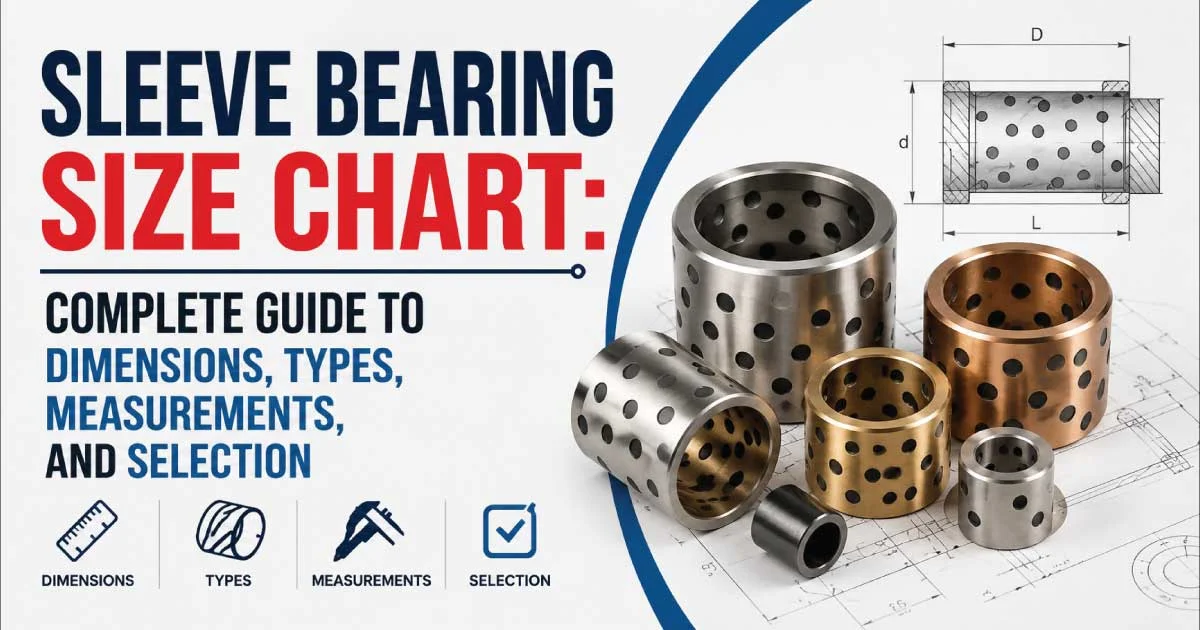
Sleeve bearings are widely used mechanical components designed to reduce friction between moving parts and provide smooth rotational or sliding motion. They are commonly found in electric motors, automotive systems, industrial machinery, pumps, appliances, and precision equipment. Selecting the correct sleeve bearing size is important because an improper fit can lead to excessive wear, vibration, overheating, and premature failure.
A sleeve bearing size chart helps engineers, technicians, and manufacturers identify the correct bearing dimensions based on inside diameter, outside diameter, length, wall thickness, and application requirements. This complete guide explains sleeve bearing sizes, measurements, materials, types, and how to choose the right bearing for different mechanical applications.
Sleeve Bearing Size Chart
Sleeve bearings are generally sized according to three primary measurements: inside diameter (ID), outside diameter (OD), and length. The inside diameter determines the shaft size that fits through the bearing, while the outside diameter determines how the bearing fits into the housing.
| Sleeve Bearing Size | Inside Diameter | Outside Diameter | Length Range | Common Applications |
|---|---|---|---|---|
| Small | 3 mm – 10 mm | 5 mm – 15 mm | 5 mm – 20 mm | Small motors, electronics |
| Medium | 10 mm – 30 mm | 15 mm – 45 mm | 10 mm – 50 mm | Automotive and machinery |
| Large | 30 mm – 75 mm | 45 mm – 100 mm | 25 mm – 100 mm | Industrial equipment |
| Heavy Duty | 75 mm+ | 100 mm+ | 50 mm+ | Large machines and systems |
The exact sleeve bearing dimensions vary depending on manufacturer standards, load requirements, and application conditions.
What Is a Sleeve Bearing?
A sleeve bearing is a cylindrical bearing that supports a rotating shaft by providing a low-friction surface between the shaft and housing. Unlike ball bearings that use rolling elements, sleeve bearings operate through sliding contact.
Sleeve bearings are also known as plain bearings, bushings, or journal bearings. They are designed to handle radial loads and provide smooth operation in compact mechanical systems.
Common applications include:
- Electric motors
- Fans and blowers
- Pumps
- Automotive components
- Industrial machines
- Office equipment
- Household appliances
- Hydraulic systems
Types of Sleeve Bearings and Their Sizes
Sleeve bearings are available in different designs depending on the application, load capacity, and installation requirements.
Standard Sleeve Bearing Size Chart
Standard sleeve bearings are cylindrical and are commonly used for general mechanical applications.
| Shaft Diameter | Bearing Outside Diameter | Typical Length |
|---|---|---|
| 5 mm | 8 mm | 5 mm – 15 mm |
| 10 mm | 15 mm | 10 mm – 30 mm |
| 20 mm | 30 mm | 20 mm – 50 mm |
| 30 mm | 45 mm | 30 mm – 75 mm |
| 50 mm | 75 mm | 50 mm – 100 mm |
Standard sleeve bearings are often selected for their simple design, low cost, and easy installation.
Flanged Sleeve Bearing Size Chart
Flanged sleeve bearings include an extended flange that prevents axial movement and provides additional support.
| Inside Diameter | Outside Diameter | Common Uses |
|---|---|---|
| 5 mm | 8 mm | Small equipment |
| 10 mm | 15 mm | Motors and appliances |
| 20 mm | 30 mm | Industrial machines |
| 30 mm | 45 mm | Heavy mechanisms |
Flanged sleeve bearings are useful where the bearing needs additional positioning support inside the housing.
Also Read: Drill Size Guide: Conversion Chart, Types, Uses
How to Measure a Sleeve Bearing Size
Accurate measurements are necessary when selecting a replacement sleeve bearing. The wrong size can cause poor performance and reduce equipment life.
Measure Inside Diameter: The inside diameter is the opening through which the shaft passes. Use a precision caliper or micrometer to measure the bore size.
For example, a shaft measuring 20 mm requires a sleeve bearing with a suitable 20 mm inside diameter.
Measure Outside Diameter: The outside diameter determines how the bearing fits into the housing. A bearing with an incorrect outside diameter may be too loose or impossible to install.
Measure Bearing Length: Length affects load distribution and shaft support. Longer bearings generally provide better stability for applications with higher side loads.
Measure Wall Thickness: Wall thickness is the difference between the outside diameter and inside diameter. It affects bearing strength and load capacity.
Sleeve Bearing Materials
Sleeve bearings are manufactured from various materials depending on operating conditions, lubrication requirements, and load capacity.
Bronze Sleeve Bearings
Bronze sleeve bearings are among the most common choices for industrial applications because of their strength and wear resistance.
Advantages include:
- High durability
- Good load capacity
- Excellent wear resistance
- Long service life
Bronze bearings are commonly used in machinery, pumps, and heavy equipment.
Steel Sleeve Bearings
Steel sleeve bearings are designed for applications requiring high strength and durability.
Benefits include:
- High mechanical strength
- Resistance to heavy loads
- Suitable for demanding environments
They are commonly used in industrial machinery and automotive systems.
Plastic Sleeve Bearings
Plastic sleeve bearings provide low friction and corrosion resistance. Materials such as nylon and PTFE are commonly used.
Advantages include:
- Lightweight design
- Quiet operation
- Corrosion resistance
- Low maintenance
Plastic sleeve bearings are often used in electrical equipment and lightweight mechanisms.
Also Read: Stud Bolt, Sizes, Threads, Lengths & Industrial Uses
Self-Lubricating Sleeve Bearings
Self-lubricating sleeve bearings contain lubricating materials within their structure, reducing the need for regular maintenance.
These bearings are commonly made from:
- Oil-impregnated bronze
- Sintered materials
- Composite plastics
Benefits include:
- Reduced maintenance
- Smooth operation
- Longer service intervals
- Better performance in hard-to-reach locations
Self-lubricating bearings are widely used in automation systems, motors, and industrial equipment.
Sleeve Bearing Standards and Specifications
Sleeve bearings are manufactured according to different industry standards to maintain consistent dimensions and performance.
Common standards include:
- ISO bearing specifications
- SAE standards
- DIN bearing dimensions
When selecting a sleeve bearing, consider:
- Shaft diameter
- Housing size
- Load requirements
- Operating speed
- Temperature range
- Lubrication method
- Environmental conditions
Standardized dimensions make replacement and maintenance easier.
Common Sleeve Bearing Problems
Incorrect sizing, poor lubrication, or excessive loads can cause several sleeve bearing problems.
Excessive Wear: A worn sleeve bearing may create additional clearance between the shaft and bearing surface, reducing performance.
Overheating: Insufficient lubrication or excessive friction can cause increased operating temperatures.
Noise and Vibration: A damaged or improperly fitted bearing can produce unusual sounds and vibration.
Bearing Failure: Overloading, contamination, or incorrect installation can lead to cracks, deformation, or complete failure.
Also Read: Anchor Bolt Size: Types, Loads, Installation and Material
How to Choose the Right Sleeve Bearing Size
Selecting the correct sleeve bearing requires understanding the operating requirements of the machine.
Important factors include:
- Shaft diameter
- Housing dimensions
- Radial load
- Operating speed
- Temperature conditions
- Lubrication requirements
- Material compatibility
For general applications, bronze sleeve bearings provide excellent durability. For lightweight and corrosion-resistant applications, plastic bearings may be a better option.
Sleeve Bearing Installation Tips
Proper installation improves bearing performance and extends service life.
Follow these steps:
- Clean the shaft and housing before installation.
- Confirm that bearing dimensions match the application.
- Use proper tools to press the bearing into place.
- Ensure correct alignment between shaft and bearing.
- Apply recommended lubrication if required.
Avoid forcing an incorrectly sized bearing because it can damage both the bearing and surrounding components.
Final Thoughts
A sleeve bearing size chart provides a valuable reference for selecting the correct bearing for different mechanical applications. Understanding inside diameter, outside diameter, length, material, and operating conditions helps ensure reliable performance.
Whether used in electric motors, automotive systems, industrial machinery, or precision equipment, choosing the correct sleeve bearing size reduces friction, improves efficiency, and extends component life. Always verify measurements and manufacturer specifications before installation to achieve the best results.