
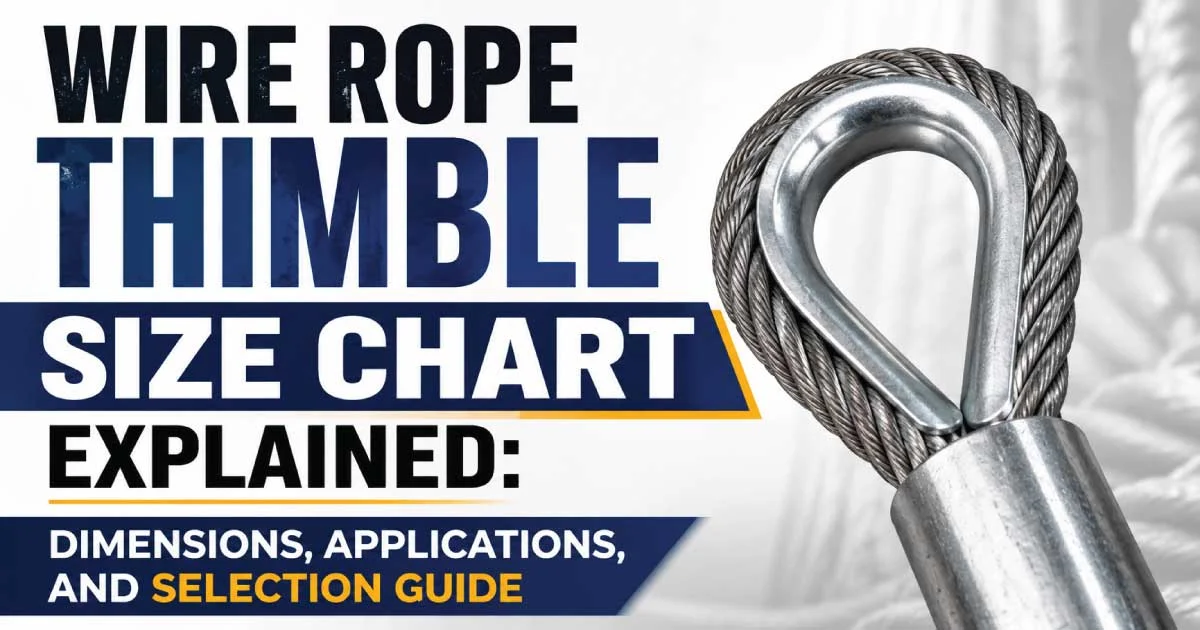
Wire rope thimbles are important components used to protect the eyes or loops formed at the end of wire ropes. They help maintain the shape of the rope, reduce wear, and increase the service life of wire rope assemblies. Choosing the correct wire rope thimble size is essential for safe and reliable lifting, rigging, towing, and industrial applications.
A wire rope thimble size chart helps identify the proper thimble based on wire rope diameter, groove dimensions, material, and application requirements. This guide explains wire rope thimble sizes, types, measurements, materials, and how to select the correct thimble for different projects.
Wire Rope Thimble Size Chart
Wire rope thimbles are mainly selected according to the diameter of the wire rope they support. The thimble must match the rope size to provide proper protection and prevent excessive bending or damage.
| Wire Rope Diameter | Thimble Size | Approximate Application |
|---|---|---|
| 1/8 inch | Small | Light-duty ropes, small assemblies |
| 3/16 inch | Small | Utility and general applications |
| 1/4 inch | Medium | Small lifting and rigging |
| 5/16 inch | Medium | Industrial applications |
| 3/8 inch | Medium | Towing and equipment support |
| 1/2 inch | Large | Heavy-duty rigging |
| 5/8 inch | Large | Construction applications |
| 3/4 inch | Extra Large | Heavy lifting systems |
| 1 inch | Heavy Duty | Industrial lifting operations |
| 1-1/4 inch and above | Custom Heavy Duty | Specialized applications |
The exact dimensions of a wire rope thimble vary by manufacturer and standard. Always confirm the specifications before installation.
What Is a Wire Rope Thimble?
A wire rope thimble is a protective metal fitting installed inside the looped end of a wire rope. It creates a reinforced eye that prevents the rope from bending sharply and reduces stress on individual wire strands.
Without a thimble, repeated loading can cause the wire rope to flatten, weaken, or break at the eye connection. A thimble distributes the load around the rope loop and provides a smoother connection point for hooks, shackles, and other fittings.
Common applications include:
- Crane lifting systems
- Marine rigging
- Winch cables
- Towing equipment
- Suspension systems
- Industrial machinery
- Construction equipment
Types of Wire Rope Thimbles and Their Sizes
Wire rope thimbles are available in different designs depending on the application, load requirements, and working environment.
Standard Wire Rope Thimbles
Standard thimbles are the most common type and are used for general-purpose wire rope assemblies. They provide basic protection for rope eyes and are suitable for many everyday applications.
| Rope Diameter | Standard Thimble Size |
|---|---|
| 1/8 inch | No. 1 |
| 1/4 inch | No. 2 |
| 3/8 inch | No. 3 |
| 1/2 inch | No. 4 |
| 5/8 inch | No. 5 |
| 3/4 inch | No. 6 |
Standard thimbles are commonly manufactured from galvanized steel for corrosion resistance and durability.
Heavy Duty Wire Rope Thimble Sizes
Heavy-duty thimbles are designed for demanding applications where wire ropes experience higher loads, repeated movement, or harsh conditions.
| Wire Rope Size | Heavy Duty Thimble Use |
|---|---|
| 1/2 inch | Industrial rigging |
| 5/8 inch | Heavy lifting |
| 3/4 inch | Construction equipment |
| 1 inch | Large cranes and machinery |
| 1-1/4 inch | Specialized lifting systems |
Heavy-duty thimbles usually have thicker walls and stronger construction compared to standard models.
Also Read: PVC Pipes Explained: Types, Sizes & Materials (2026)
How to Measure a Wire Rope Thimble Size
Selecting the correct thimble requires accurate measurement of the wire rope diameter and thimble dimensions.
Measure Wire Rope Diameter
The first step is measuring the outside diameter of the wire rope. Use a caliper to measure across the widest point of the rope.
For example, a wire rope measuring 3/8 inch requires a thimble designed for a 3/8-inch rope.
Check Thimble Groove Size
The groove of the thimble must match the rope diameter. A groove that is too small can damage the rope, while a groove that is too large may not provide enough support.
Measure Thimble Length and Width
The overall size of the thimble affects how much protection it provides. Larger ropes generally require longer and wider thimbles to maintain proper bending radius.
Important measurements include:
- Inside length
- Inside width
- Groove diameter
- Material thickness
Wire Rope Thimble Materials
Wire rope thimbles are manufactured from different materials depending on environmental conditions and strength requirements.
Galvanized Steel Thimbles
Galvanized steel is the most common material because it provides strength and corrosion resistance.
Advantages include:
- Affordable cost
- Good durability
- Rust protection
- Suitable for outdoor use
Galvanized thimbles are widely used in construction, marine, and general rigging applications.
Stainless Steel Thimbles
Stainless steel thimbles are used where corrosion resistance is a priority. They are commonly found in marine environments and applications exposed to moisture.
Benefits include:
- Excellent corrosion resistance
- Long service life
- Attractive finish
- Suitable for harsh environments
Heavy Steel Thimbles
Heavy steel thimbles are designed for high-load applications where maximum strength is required.
They are commonly used in:
- Cranes
- Industrial lifting equipment
- Mining machinery
- Heavy towing systems
Also Read: Tube Size Chart 2026 Explained: Diameters & Thickness
Wire Rope Thimble Standards and Specifications
Wire rope thimbles are manufactured according to industry standards to ensure safe and reliable performance.
Common standards include:
- Federal specifications
- DIN standards
- ASTM guidelines
- Manufacturer-specific specifications
When selecting a wire rope thimble, consider:
- Wire rope diameter
- Working load limit
- Safety requirements
- Environmental conditions
- Connection hardware size
Using a properly rated thimble helps maintain the strength of the complete wire rope assembly.
Common Wire Rope Thimble Problems
Incorrect sizing or installation can reduce the effectiveness of a wire rope thimble.
Incorrect Thimble Size: A thimble that does not match the rope diameter may cause uneven loading and premature rope wear.
Rope Slippage: If the rope eye is not properly secured, the rope can move inside the thimble and reduce assembly strength.
Corrosion Damage: Exposure to moisture, chemicals, or saltwater can weaken metal thimbles over time.
Rope Deformation: A poorly fitted thimble may allow sharp bending, causing damage to the wire rope strands.
How to Install a Wire Rope Thimble Correctly
Proper installation ensures maximum protection and performance.
Installation steps include:
- Select a thimble matching the wire rope diameter.
- Form the wire rope into an eye around the thimble.
- Secure the rope using clamps, swaged fittings, or other approved methods.
- Ensure the rope sits properly inside the thimble groove.
- Inspect the connection before applying load.
The wire rope should fit smoothly around the thimble without gaps or excessive movement.
Also Read: Understand Pipe Sizes: Types, Uses and Measurements
Choosing the Right Wire Rope Thimble Size
The correct thimble depends on the wire rope size, application, and required strength. Before selecting a thimble, consider:
- Wire rope diameter
- Load capacity
- Operating environment
- Frequency of use
- Corrosion exposure
- Required safety standards
For general applications, galvanized steel thimbles provide reliable performance. For marine or corrosive environments, stainless steel options may provide longer service life.
Final Thoughts on Wire Rope Thimble Sizes
A wire rope thimble size chart makes it easier to select the correct fitting for different rope applications. Matching the thimble size with the wire rope diameter ensures better protection, improved strength, and longer service life.
Whether used in lifting equipment, marine systems, towing applications, or industrial machinery, the correct wire rope thimble helps maintain the safety and reliability of the entire rope assembly. Always follow manufacturer specifications and safety guidelines when choosing and installing wire rope components.