
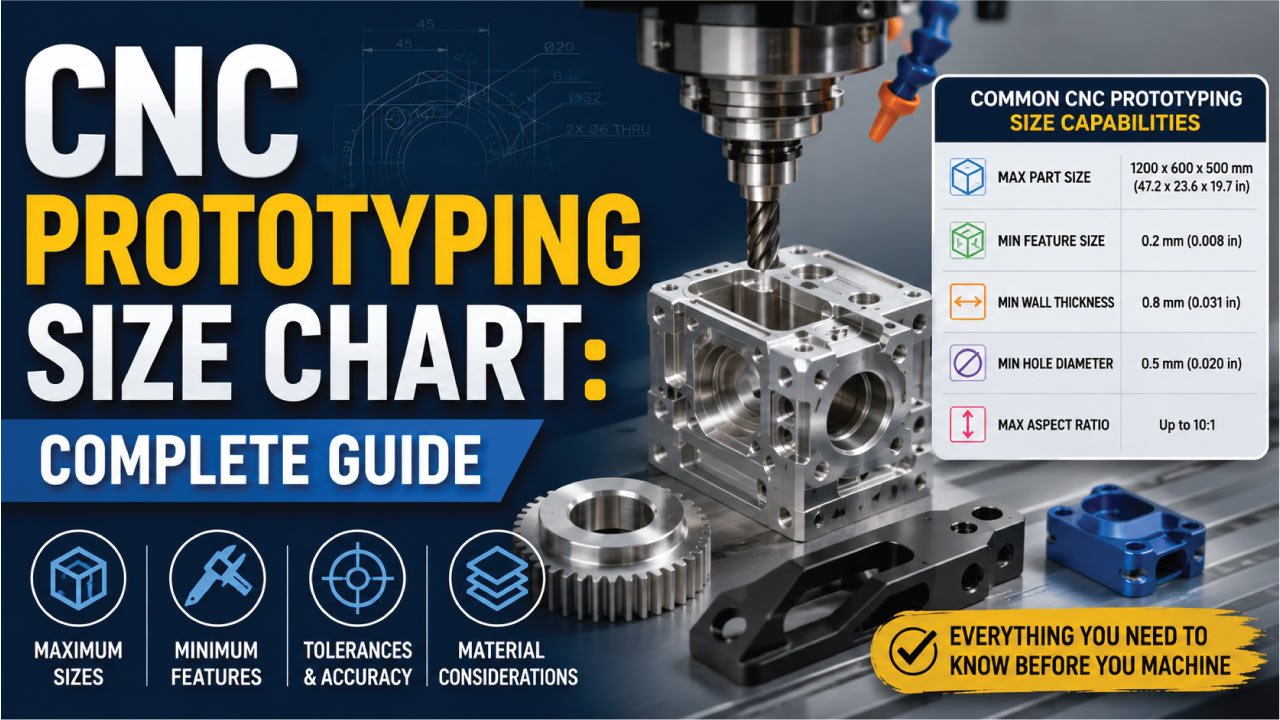
CNC prototyping is one of the most important manufacturing methods used in product development, engineering, industrial design, automotive manufacturing, aerospace production, and custom fabrication. It allows manufacturers and designers to create accurate prototype parts quickly using computer-controlled machining technology.
Choosing the correct CNC prototyping size is essential because prototype dimensions directly affect machining capability, material usage, production cost, machine selection, accuracy, and manufacturing speed. Whether you are developing small mechanical components, automotive parts, aerospace prototypes, or consumer products, understanding CNC prototyping sizes helps improve efficiency and precision.
This complete guide explains CNC prototyping dimensions, machine capacities, material thicknesses, tolerance ranges, machining sizes, and prototype selection considerations.
What Is CNC Prototyping?
CNC prototyping is the process of creating prototype parts using CNC machining technology. CNC stands for Computer Numerical Control, meaning the machine follows programmed instructions to cut, drill, shape, and finish materials automatically.
CNC prototyping is commonly used for:
- Product development
- Functional testing
- Engineering validation
- Automotive prototypes
- Aerospace components
- Medical devices
- Industrial equipment
- Consumer product samples
Unlike mass production methods, CNC prototyping focuses on creating precise sample parts before full-scale manufacturing begins.
Why CNC Prototype Size Matters
CNC prototype size plays a major role in manufacturing quality, machining efficiency, production cost, and overall project success. The size of a prototype directly impacts machine selection, material usage, machining precision, testing capability, and production speed. Choosing the correct prototype dimensions helps engineers and manufacturers avoid unnecessary waste, reduce machining errors, and improve final product performance during development and testing stages.
1. Machine Compatibility
The CNC prototype must fit properly within the working envelope of the CNC machine being used. If the prototype exceeds machine limits, additional setups or multiple machining operations may be required, increasing production complexity, machining time, and overall manufacturing costs significantly.
2. Material Efficiency
Correct CNC prototype sizing helps reduce unnecessary material waste during machining operations. Proper dimensions allow manufacturers to optimize raw material usage, improve cutting efficiency, and lower production expenses. Efficient material planning also supports sustainable manufacturing practices and minimizes scrap generation during prototype development.
3. Machining Accuracy
Larger CNC prototypes often require stronger fixtures, rigid machine setups, and additional support during machining. Without proper stability, vibrations and tool deflection can reduce dimensional accuracy and surface finish quality. Correct sizing helps maintain precision, tolerance control, and consistent machining performance throughout production.
4. Production Speed
Smaller CNC prototypes usually require shorter machining cycles because they involve less material removal and simpler tool movements. Compact parts can often be produced faster with reduced setup time, helping manufacturers improve productivity, shorten lead times, and accelerate product development processes efficiently.
5. Testing Capability
Prototype dimensions directly influence product testing, assembly validation, and functional evaluation during development stages. Correctly sized prototypes allow engineers to verify fit, movement, structural strength, and operational performance before mass production. Accurate testing helps identify design issues early and improves final product reliability.
Understanding CNC Prototyping Dimensions
CNC prototyping dimensions refer to the physical measurements and design specifications required to manufacture a prototype accurately using computer-controlled machining. These dimensions help determine the type of CNC machine, tooling setup, material usage, machining time, and overall production cost involved in creating precise and functional prototype components.
CNC prototype sizes are typically defined by:
- Length
- Width
- Height
- Material thickness
- Tolerance requirements
These dimensions determine machining complexity, machine compatibility, cutting tool selection, production efficiency, and overall equipment requirements. Accurate dimensional planning also helps reduce material waste, improve machining precision, and ensure the prototype performs correctly during testing, assembly, and product development stages.
CNC Prototyping Size Chart
The CNC prototyping size chart helps manufacturers, engineers, and designers classify prototypes based on their dimensions and intended applications. Different prototype sizes require specific machining setups, tooling configurations, materials, and production methods. Understanding these size categories helps improve manufacturing efficiency, reduce costs, and ensure prototypes meet testing, assembly, and performance requirements.
| Prototype Category | Typical Size Range | Common Application |
|---|---|---|
| Micro Prototype | Under 1 inch | Electronics |
| Small Prototype | 1–6 inches | Mechanical parts |
| Medium Prototype | 6–24 inches | Automotive parts |
| Large Prototype | 24–60 inches | Industrial equipment |
| Oversized Prototype | 60+ inches | Aerospace structures |
Small CNC Prototype Sizes
Small CNC prototypes are widely used in industries that require precision, compact dimensions, and detailed machining. These prototypes are commonly manufactured for electronics, medical tools, robotics, and mechanical engineering applications. Their smaller size allows faster production, tighter tolerances, reduced material waste, and improved machining efficiency compared to larger prototype components.
Typical Dimensions
The following size ranges represent common small CNC prototype dimensions used across precision manufacturing and product development industries. Each size category is suitable for specific applications depending on component complexity, assembly requirements, and functional testing needs during the prototyping and product validation process.
| Size Range | Common Use |
|---|---|
| 1 × 1 inch | Electronic housings |
| 2 × 2 inch | Precision components |
| 4 × 4 inch | Mechanical fittings |
| 6 × 6 inch | Small assemblies |
Advantages of Small Prototypes
Small CNC prototypes offer several manufacturing and engineering benefits, especially in industries requiring accuracy and rapid development. Their compact size allows easier machining, quicker production cycles, reduced tooling stress, and lower raw material consumption. These advantages make small prototypes highly suitable for testing, product development, and low-volume manufacturing projects.
- Faster machining
- Lower material cost
- Higher accuracy
- Easier handling
Common Materials
Small CNC prototypes can be manufactured using a wide variety of metals and plastics depending on strength, durability, corrosion resistance, and machining requirements. Material selection plays an important role in determining prototype performance, surface finish, production cost, and suitability for functional testing or real-world engineering applications.
- Aluminum
- Brass
- Stainless steel
- ABS plastic
- Acrylic
Medium CNC Prototype Sizes
Medium-sized CNC prototypes are commonly used in automotive manufacturing, industrial product development, robotics, and engineering testing applications. These prototypes provide a balance between machining complexity and structural functionality. Their dimensions allow manufacturers to test real-world performance, assembly fitment, durability, and mechanical operation before full-scale production begins.
Typical Dimensions
The following medium prototype size ranges are frequently used in manufacturing environments for testing mechanical systems, enclosures, and structural components. Each dimension category supports different engineering applications depending on product complexity, material requirements, and prototype functionality during product development and validation stages.
| Size Range | Common Application |
|---|---|
| 8 × 8 inch | Mechanical systems |
| 12 × 12 inch | Product housings |
| 18 × 18 inch | Automotive brackets |
| 24 × 24 inch | Industrial components |
Large CNC Prototype Sizes
Large CNC prototypes are designed for heavy-duty industrial applications where full-scale testing and structural evaluation are required. These prototypes often involve larger materials, longer machining cycles, and advanced fixturing systems. Industrial manufacturers use large prototypes to validate equipment performance, assembly compatibility, strength, and operational reliability before mass production.
Common Applications
Large CNC prototypes are commonly manufactured for industries that require strong structural components and large-scale assemblies. These applications typically demand high machining precision, rigid setups, and advanced CNC equipment capable of handling oversized materials and complex industrial parts efficiently.
- Aerospace panels
- Machinery frames
- Automotive body components
- Industrial equipment housings
Typical Sizes
The following large CNC prototype sizes are commonly used in aerospace, industrial manufacturing, and heavy machinery applications. These dimensions require industrial-grade CNC machining centers with larger work envelopes, reinforced structures, and specialized tooling systems to maintain accuracy and machining stability during production.
| Prototype Size | Industry Use |
|---|---|
| 36 × 36 inch | Machinery parts |
| 48 × 48 inch | Aerospace components |
| 60 × 60 inch | Industrial systems |
CNC Prototype Thickness Chart
Material thickness plays a major role in CNC machining performance, tooling selection, cutting speed, and structural strength. Thicker materials generally require stronger cutting tools, slower machining speeds, and more rigid machine setups. Selecting the correct thickness helps improve machining efficiency, product durability, and prototype functionality for intended engineering applications.
| Material Thickness | Common Application |
|---|---|
| 1–3 mm | Thin covers and panels |
| 5–10 mm | Mechanical brackets |
| 12–25 mm | Structural components |
| 25–50 mm | Heavy-duty prototypes |
CNC Prototype Tolerance Chart
Tolerance refers to the acceptable dimensional variation allowed during CNC machining operations. Tight tolerances are essential for precision engineering, assembly compatibility, and high-performance applications. Different industries require different tolerance levels depending on the function, complexity, and operational accuracy needed for the final prototype component.
| Tolerance Level | Typical Accuracy |
|---|---|
| Standard | ±0.005 inch |
| Precision | ±0.002 inch |
| High Precision | ±0.0005 inch |
CNC Prototyping Machine Size Chart
Different CNC machines are designed to support specific prototype dimensions and machining requirements. Machine size directly affects work area capacity, material handling capability, tooling options, and production efficiency. Choosing the correct CNC machine ensures better machining accuracy, reduced setup issues, and smoother manufacturing operations for prototype development projects.
| Machine Type | Typical Work Area |
|---|---|
| Desktop CNC | 12 × 12 inch |
| Benchtop CNC | 24 × 24 inch |
| Vertical CNC Mill | 40 × 20 inch |
| Large Industrial CNC | 60+ inch work areas |
CNC Prototype Materials
CNC prototyping supports a wide range of engineering materials used across automotive, aerospace, electronics, medical, and industrial manufacturing industries. Material selection affects machining speed, surface finish, durability, weight, corrosion resistance, and overall prototype performance. Choosing the correct material helps ensure accurate testing, functional validation, and successful product development outcomes.
1. Metals
Metal materials are widely used in CNC prototyping because of their strength, durability, heat resistance, and excellent machinability. Different metals are selected depending on the application, structural requirements, corrosion resistance, and mechanical performance needed for the prototype during testing, production evaluation, or industrial use.
- Aluminum
- Steel
- Stainless steel
- Brass
- Copper
- Titanium
2. Plastics
Plastic materials are commonly used for lightweight CNC prototypes, product housings, consumer components, and low-cost testing applications. These materials are easier to machine, offer good dimensional stability, and are suitable for prototypes requiring electrical insulation, chemical resistance, or reduced manufacturing costs during product development stages.
- ABS
- Nylon
- Delrin
- PVC
- Acrylic
3. Composite Materials
Composite materials are used in advanced CNC prototyping applications where lightweight construction and high structural strength are required. These materials are commonly found in aerospace, motorsports, robotics, and high-performance engineering projects due to their excellent durability, stiffness, and resistance to environmental conditions.
- Carbon fiber
- Fiberglass
Aluminum CNC Prototype Sizes
Aluminum is one of the most widely used materials in CNC prototyping because of its lightweight properties, corrosion resistance, excellent machinability, and high strength-to-weight ratio. It is commonly selected for aerospace, automotive, electronics, and industrial applications where precision machining, durability, and efficient production are important manufacturing requirements.
Common Aluminum Prototype Sizes
The following aluminum prototype categories are commonly used in modern CNC machining applications. Each size range supports different engineering projects depending on product complexity, structural requirements, and intended industrial use during prototype testing, development, and low-volume manufacturing operations.
| Prototype Type | Typical Size |
|---|---|
| Electronic enclosures | Small |
| Automotive brackets | Medium |
| Aerospace panels | Large |
Steel CNC Prototype Sizes
Steel CNC prototypes are commonly manufactured for heavy-duty industrial applications that require high strength, durability, and structural stability. Steel is harder to machine than aluminum, which means it requires stronger cutting tools, rigid machine structures, slower machining speeds, and advanced cooling systems to maintain machining accuracy and surface quality.
Common Uses
Steel prototypes are widely used in industrial and engineering environments where components must handle heavy loads, high stress, or harsh operating conditions. These applications often demand superior mechanical strength, wear resistance, and long-term reliability during testing and real-world operational use.
- Industrial machinery
- Structural components
- Heavy-duty parts
Recommended Machine Features
Machining steel prototypes efficiently requires CNC machines equipped with powerful and durable components. Strong machine construction and proper cooling systems help reduce vibration, improve cutting performance, extend tool life, and maintain dimensional accuracy throughout complex machining operations involving hard metal materials.
- High spindle torque
- Rigid frame
- Coolant systems
- Heavy-duty fixturing
CNC Prototype Surface Finish Chart
Surface finish quality is an important factor in CNC prototyping because it affects component appearance, friction, wear resistance, sealing capability, and assembly performance. Different machining processes produce different roughness levels, depending on tooling quality, cutting speed, material type, and finishing techniques used during manufacturing operations.
| Finish Type | Typical Roughness |
|---|---|
| Rough Machining | 125–250 µin |
| Standard Finish | 63–125 µin |
| Fine Finish | 16–32 µin |
| Precision Finish | Below 16 µin |
CNC Prototype Hole Size Chart
Hole dimensions are critical in CNC prototype machining because they directly affect fastener compatibility, assembly accuracy, structural integrity, and mechanical performance. Proper hole sizing helps ensure accurate fitting, smooth assembly operations, and reliable component functionality in engineering and manufacturing applications.
| Hole Size | Common Use |
|---|---|
| Under 1 mm | Electronics |
| 2–5 mm | Fasteners |
| 6–12 mm | Mechanical assembly |
| 12+ mm | Structural applications |
Also Read:
CNC Prototype Thread Size Chart
Threaded holes are widely used in CNC prototypes for fastening, assembly, and structural connections. Correct thread sizing is essential for maintaining secure joints, proper load distribution, and reliable mechanical performance. Different industries use metric or imperial thread standards depending on regional manufacturing specifications and engineering requirements.
| Thread Type | Common Size |
|---|---|
| Metric | M3–M12 |
| Imperial | #4–1/2 inch |
CNC Prototype Cost by Size
CNC prototype cost is heavily influenced by the overall size of the component being machined. Larger prototypes require more raw material, longer machining cycles, stronger fixturing systems, and increased tooling wear. Understanding how size affects manufacturing expenses helps businesses plan budgets and optimize prototype development processes more effectively.
| Prototype Size | Cost Level |
|---|---|
| Small | Low |
| Medium | Moderate |
| Large | High |
| Oversized | Very high |
CNC Prototype Weight Chart
Prototype weight varies depending on the material used, component dimensions, and structural design requirements. Weight plays an important role in handling, transportation, machine setup, fixturing stability, and overall manufacturing efficiency. Selecting suitable materials helps balance strength, durability, and machining performance during prototype production.
| Prototype Material | Weight Factor |
|---|---|
| Aluminum | Lightweight |
| Steel | Heavy |
| Titanium | Moderate |
| Plastic | Very lightweight |
Weight affects handling, fixturing, shipping costs, machine stability, and overall production efficiency. Heavier prototypes may require stronger machine setups and additional support systems, while lightweight materials are generally easier to machine, transport, and test during product development stages.
CNC Prototype Production Speed
CNC prototype production speed depends on several factors including part size, material type, machining complexity, tooling requirements, and tolerance levels. Smaller prototypes usually machine faster because they require less material removal and simpler setups, while larger parts often involve extended machining cycles and more advanced operations.
1. Small Parts
Small CNC parts generally machine quickly because they require shorter cutting paths, less material removal, and simpler fixturing systems. Their compact size also allows faster setup times, reduced tooling stress, and improved production efficiency during prototype manufacturing and testing processes.
2. Large Parts
Large CNC prototypes require longer machining times due to increased material removal, multiple machining passes, and more complex setup procedures. These parts may also require specialized industrial machines, stronger fixtures, and additional quality inspections to maintain dimensional accuracy throughout production.
Also Read:
Common CNC Prototyping Problems
CNC prototyping can involve several manufacturing challenges that affect machining quality, production efficiency, and prototype performance. Identifying these common issues early helps engineers improve design quality, reduce machining errors, and avoid unnecessary production delays or increased manufacturing costs.
1. Oversized Designs
Oversized prototype designs may exceed the CNC machine’s travel limits or work envelope capacity. This can require specialized industrial equipment, multiple machining operations, or design modifications to ensure the part can be manufactured accurately and efficiently.
2. Thin Wall Failure
Very thin wall sections may vibrate, bend, or crack during machining operations. Thin features reduce structural stability and increase the risk of dimensional inaccuracies, tool chatter, and material damage, especially when machining harder metals or large prototype components.
3. Poor Tolerance Planning
Excessively tight tolerances increase machining complexity, production time, and tooling requirements. Improper tolerance planning can also raise manufacturing costs and create unnecessary machining challenges without providing meaningful improvements in prototype functionality or performance.
4. Incorrect Material Thickness
Using incorrect material thickness may negatively affect prototype strength, durability, weight, and functional performance. Material thickness should always match the intended application, testing requirements, and structural demands of the final product design.
CNC Prototype Design Tips
Good CNC prototype design improves machining efficiency, reduces manufacturing costs, and helps achieve better dimensional accuracy. Proper design planning also minimizes tooling problems, shortens production time, and increases the likelihood of successful prototype testing and product validation.
1. Avoid Extremely Thin Walls
Extremely thin walls can reduce machining stability and increase the risk of vibration, deformation, or breakage during cutting operations. Maintaining adequate wall thickness helps improve structural rigidity and overall machining accuracy throughout the manufacturing process.
2. Use Standard Hole Sizes
Using standard hole sizes improves tooling efficiency because commonly available drill bits and cutting tools can be used without custom machining operations. Standardization also helps reduce setup time, tooling costs, and overall production complexity.
3. Reduce Unnecessary Complexity
Simpler prototype designs are easier and faster to machine, resulting in lower manufacturing costs and shorter production cycles. Reducing unnecessary features also improves machining reliability and minimizes the risk of dimensional inaccuracies or tooling difficulties.
4. Match Machine Capabilities
Prototype designs should remain within realistic CNC machine capabilities, including travel limits, spindle power, tooling capacity, and material handling constraints. Designing within machine limitations helps improve production efficiency, machining accuracy, and overall manufacturing success.
CNC Prototype Safety Tips
Safety is extremely important during CNC prototyping because machining operations involve high-speed cutting tools, rotating components, sharp materials, and powerful industrial equipment. Following proper safety procedures helps prevent machine damage, reduce workplace accidents, improve machining quality, and maintain efficient manufacturing operations throughout the prototyping process.
1. Secure Workpieces Properly
Workpieces must be clamped securely before machining begins to prevent movement, vibration, or accidental displacement during cutting operations. Loose materials can damage cutting tools, reduce machining accuracy, and create serious safety hazards for machine operators and surrounding equipment.
2. Use Proper Coolant
Proper coolant application helps reduce heat generation, friction, and tool wear during CNC machining. Cooling systems improve surface finish quality, extend tool life, and prevent overheating that could damage both the workpiece material and machine components.
3. Wear Safety Equipment
Machine operators should always wear appropriate safety equipment including safety glasses, hearing protection, and protective clothing. Personal protective equipment helps reduce the risk of injuries caused by flying chips, loud machine noise, sharp edges, and accidental tool contact.
4. Inspect Tooling Regularly
Cutting tools should be inspected frequently for wear, cracks, or damage before and during machining operations. Damaged tooling can reduce machining quality, increase vibration, create dimensional inaccuracies, and potentially cause dangerous machine failures during prototype production.
Also Read:
CNC Prototyping vs 3D Printing Size Limits
CNC prototyping and 3D printing are both widely used manufacturing technologies, but they differ significantly in strength, material capability, dimensional accuracy, and size limitations. Choosing the right process depends on prototype complexity, functional requirements, production goals, and intended engineering applications.
| Technology | Strength |
|---|---|
| CNC Prototyping | Strong functional parts |
| 3D Printing | Complex lightweight shapes |
CNC machining usually produces stronger, more durable, and more dimensionally accurate prototypes compared to 3D printing. However, 3D printing is often preferred for highly complex shapes, lightweight structures, and rapid conceptual model development during early product design stages.
Industrial CNC Prototyping Sizes
Industrial CNC prototyping systems are designed to handle large-scale manufacturing projects requiring oversized components, heavy materials, and advanced machining capabilities. These systems are commonly used in industries where full-size structural testing, high-strength materials, and precision engineering are critical for operational success.
1. Common Industries
Large industrial CNC prototypes are widely used across industries that require strong structural components, accurate machining, and full-scale product testing. These sectors often depend on advanced CNC equipment capable of handling large dimensions and complex engineering requirements efficiently.
- Aerospace
- Defense
- Heavy machinery
- Automotive engineering
2. Industrial Prototype Sizes
The following industrial prototype categories represent common large-scale applications used in manufacturing and engineering environments. Prototype size varies depending on the structural function, operational requirements, and industry-specific performance standards involved in product development and testing.
| Industry | Typical Prototype Size |
|---|---|
| Aerospace | Large panels |
| Automotive | Full assemblies |
| Industrial equipment | Structural parts |
Conclusion
Understanding CNC prototyping sizes is essential for selecting the correct machining process, machine capacity, tooling setup, and manufacturing strategy. A well-structured CNC prototyping size chart helps engineers and manufacturers compare dimensions, tolerance levels, material thicknesses, and machining capabilities across different industrial applications and production environments.
Small CNC prototypes are ideal for electronics, consumer products, and precision engineering applications where compact dimensions and high accuracy are required. Medium and large prototypes are commonly used in automotive, aerospace, industrial equipment, and heavy machinery industries where structural strength and full-scale testing are important manufacturing considerations.
Choosing the correct CNC prototype size improves machining efficiency, reduces material waste, lowers production costs, and helps ensure accurate functional testing during product development. Proper prototype sizing also improves machine compatibility, fixturing stability, tooling performance, and overall manufacturing reliability throughout the machining process.
Before beginning a CNC prototyping project, manufacturers should carefully evaluate machine capacity, material selection, tolerance requirements, budget limitations, and testing objectives. Proper planning helps achieve precise, durable, and high-quality prototype results suitable for engineering validation and successful product development.
Also Read: