
If you are changing tires, rotating wheels, or performing brake maintenance, an impact wrench can make the job much faster than using a traditional lug wrench. One of the most common questions DIY mechanics ask is, “What size impact wrench is best for lug nuts?”
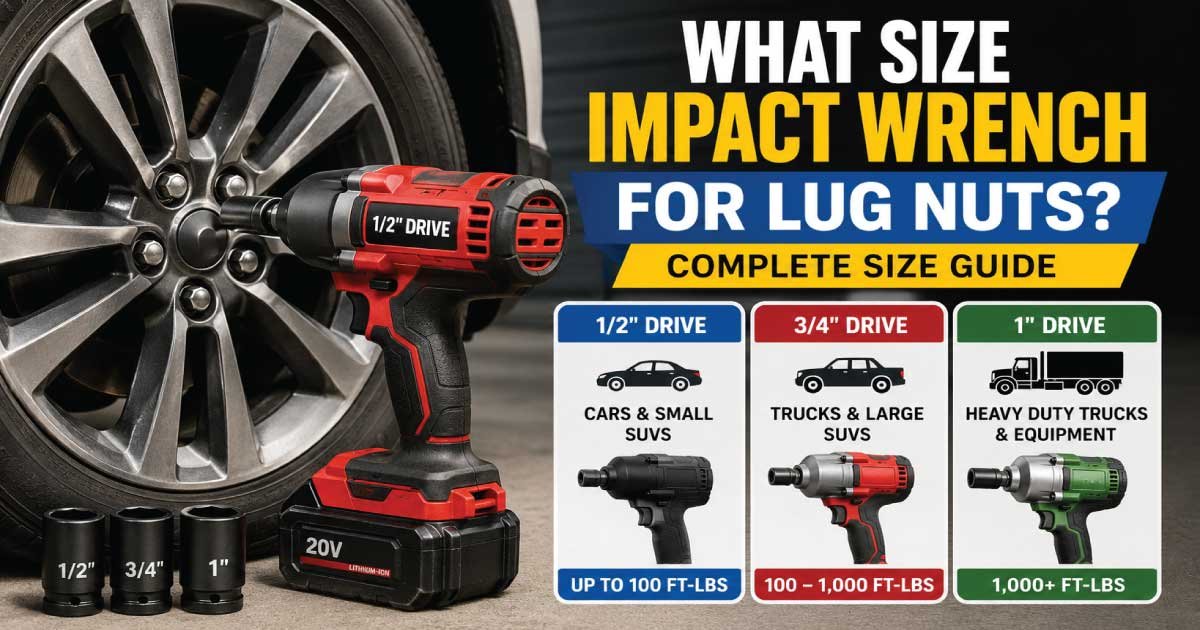
The answer depends on the type of vehicle you’re working on. For most passenger cars, SUVs, and light-duty trucks, a 1/2-inch drive impact wrench is the best choice. It offers the ideal balance of power, versatility, and compatibility with common impact sockets.
In this guide, you will learn the differences between impact wrench drive sizes, how much torque you need for lug nuts, and how to choose the right impact wrench for your vehicle.
What Is an Impact Wrench?
An impact wrench is a powerful handheld tool designed to loosen and tighten bolts and nuts by delivering high torque combined with rapid rotational hammering action. This hammering effect allows the tool to break free stubborn, rusted, or over-tightened fasteners that would be difficult to remove with standard hand tools.
Unlike a regular drill or manual ratchet, an impact wrench reduces physical effort while significantly increasing turning force. This makes it especially useful in automotive and heavy-duty mechanical work.
Impact wrenches are commonly used for:
- Removing lug nuts
- Tire rotations
- Brake repairs
- Suspension work
- Automotive maintenance
- Heavy equipment repairs
- Construction projects
They are available in different power types, including cordless (battery-powered), pneumatic (air-powered), and corded electric models. Cordless versions are the most popular for home and workshop use due to portability and convenience.
What Does Drive Size Mean?
The drive size refers to the square-shaped connection point (called the anvil) where the socket attaches to the impact wrench. It determines what size sockets can be used with the tool and also indicates the general power capacity of the wrench.
Common impact wrench drive sizes include:
- 1/4 inch
- 3/8 inch
- 1/2 inch
- 3/4 inch
- 1 inch
Smaller drive sizes are used for light-duty tasks, while larger drives are designed for heavy industrial applications. The drive size directly affects torque output and durability.
For lug nuts, the most commonly recommended and widely used size is the 1/2-inch drive, as it offers the best balance between power and usability.
Best Impact Wrench Size for Lug Nuts
For most vehicles, a 1/2-inch drive impact wrench is considered the ideal choice for working with lug nuts. It is powerful enough to handle stubborn fasteners while still being manageable for everyday use.
A 1/2-inch impact wrench offers several advantages:
- High torque output for easy lug nut removal
- Wide compatibility with standard automotive sockets
- Balanced weight for better control during use
- Versatility for multiple automotive tasks
- Easy availability of accessories and impact-rated sockets
Whether you are working on a sedan, SUV, crossover, or light pickup truck, a 1/2-inch impact wrench is generally sufficient for most wheel and tire service tasks. It is the most common tool size found in both home garages and professional workshops.
Recommended Drive Sizes by Vehicle Type
Different vehicles require different levels of torque and tool strength depending on their size and weight. Choosing the correct drive size ensures safe and efficient fastener removal.
| Vehicle Type | Recommended Drive Size |
|---|---|
| Passenger cars | 1/2 inch |
| Crossovers | 1/2 inch |
| SUVs | 1/2 inch |
| Light-duty trucks | 1/2 inch |
| Heavy-duty trucks | 3/4 inch |
| Commercial trucks | 3/4 or 1 inch |
| Semi-trucks | 1 inch |
| Agricultural equipment | 3/4 or 1 inch |
For most users working at home, a 1/2-inch impact wrench is more than enough. It covers nearly all common automotive repair needs, including tire changes and brake service, without requiring heavier industrial tools.
How Much Torque Do Lug Nuts Require?
Drive size alone does not determine performance—torque output is equally important when selecting an impact wrench. Lug nuts must be tightened to specific torque levels to ensure wheel safety and proper clamping force.
Most passenger vehicle lug nuts are tightened to:
- 80–120 ft-lb (108–163 Nm)
However, removing lug nuts often requires more force because of:
- Rust buildup
- Dirt and debris
- Over-tightening during previous installation
A good 1/2-inch impact wrench typically provides:
- 300–600 ft-lb of fastening torque
- 500–1,200 ft-lb of breakaway torque
This range is more than enough to loosen even stubborn lug nuts while still being suitable for general automotive use.
Typical Lug Nut Torque by Vehicle
Lug nut torque varies depending on the type and weight of the vehicle. Heavier vehicles require higher torque to ensure proper wheel security.
| Vehicle | Typical Lug Nut Torque |
|---|---|
| Compact car | 80–90 ft-lb |
| Sedan | 90–100 ft-lb |
| SUV | 100–110 ft-lb |
| Half-ton pickup | 110–150 ft-lb |
| Heavy-duty truck | 140–180+ ft-lb |
These values are general guidelines, and exact specifications may differ depending on manufacturer design and wheel type. Always check the vehicle’s owner’s manual or service guide for precise torque settings before tightening lug nuts.
Cordless vs. Air Impact Wrench
There are two main types of impact wrenches used for removing and tightening lug nuts. Both serve the same purpose but differ significantly in power source, portability, and usage environment. Choosing the right type depends on whether you are working at home, on the road, or in a professional workshop.
1. Cordless Impact Wrench
A cordless impact wrench is powered by a rechargeable battery, making it one of the most convenient tools for modern automotive work. It has become extremely popular due to its portability and ease of use.
Advantages:
- Fully portable and cordless design
- No air compressor required
- Easy to use for beginners
- Ideal for roadside tire changes
- Minimal setup and quick operation
Cordless models are especially useful for emergency situations, such as flat tire repairs, where carrying an air compressor is not practical. Modern high-torque battery models are now powerful enough to handle most passenger vehicle lug nuts without difficulty.
Disadvantages:
- Limited by battery life and charge level
- Slightly heavier due to battery pack
- May require spare batteries for extended use
Despite these limitations, cordless impact wrenches are now the preferred choice for most home users due to their flexibility and improving performance.
2. Pneumatic (Air) Impact Wrench
A pneumatic impact wrench is powered by compressed air supplied through an air compressor. It is widely used in professional garages and tire shops due to its consistent performance and durability.
Advantages:
- Continuous power supply without battery limits
- Lighter tool body compared to cordless models
- Extremely durable under heavy daily use
- Preferred in professional workshops
Because it does not rely on batteries, an air impact wrench can operate continuously for long periods, making it ideal for high-volume tire and repair work.
Disadvantages:
- Requires an air compressor to operate
- Air hoses reduce mobility
- Higher overall setup cost
While less convenient for mobile use, pneumatic impact wrenches remain a standard in professional environments where consistent performance is more important than portability.
Choosing the Right Socket Size
The drive size of the impact wrench is not the same as the socket size used on lug nuts. Selecting the correct socket size is essential for safe and effective wheel removal.
Common lug nut socket sizes include:
- 17 mm
- 19 mm
- 21 mm
- 22 mm
- 13/16 inch
- 7/8 inch
It is very important to use impact-rated sockets rather than standard hand tool sockets. These sockets are specifically designed to handle the high torque and sudden impact forces produced by an impact wrench.
Why You Shouldn’t Use Chrome Sockets
Standard chrome sockets are designed for manual tools such as ratchets and wrenches. They are not built to handle repeated high-impact forces.
Using chrome sockets with an impact wrench can result in:
- Cracked or shattered sockets
- Flying metal fragments causing injury
- Damage to tools and fasteners
- Increased safety risks during operation
Impact sockets are made from stronger, more flexible steel alloys. They are engineered to absorb repeated shock loads without breaking, making them essential for safe use with impact tools.
How to Remove Lug Nuts with an Impact Wrench
Using an impact wrench correctly ensures safe wheel removal and prevents damage to studs, rims, and brake components. Following the correct procedure is important for both safety and efficiency.
Step 1: Park Safely
Park the vehicle on a level surface and engage the parking brake. This prevents movement while working and ensures stability during the process.
Step 2: Loosen the Lug Nuts
Before lifting the vehicle, use the impact wrench to slightly loosen each lug nut. Do not remove them completely at this stage.
This step is important because the tire still has ground contact, preventing it from spinning while loosening.
Step 3: Raise the Vehicle
Use a properly rated hydraulic jack to lift the vehicle. Once raised, always support it with jack stands for safety.
Never rely only on the jack, as it can fail under load or pressure.
Step 4: Remove the Lug Nuts
Now use the impact wrench to fully remove the lug nuts. Keep them organized in a safe place to avoid losing any during the process.
This allows the wheel to be removed easily without resistance.
Step 5: Install the Wheel
When reinstalling the wheel, always start by threading the lug nuts by hand. This prevents cross-threading, which can damage the wheel studs.
Never use an impact wrench at the initial threading stage.
Step 6: Tighten Carefully
Use the impact wrench only to snug the lug nuts lightly into place. Final tightening should always be done with a torque wrench to ensure accuracy.
This ensures:
- Even clamping force across the wheel
- Proper safety and stability
- Prevention of warped brake rotors
- Reduced risk of wheel loosening
Following the correct torque specification is essential for safe driving and long-term wheel performance.
 Advance your research now with
  American Screw Size Chart: Complete Guide + Free PDF
Should You Tighten Lug Nuts with an Impact Wrench?
An impact wrench can be used to install lug nuts, but only for initial tightening, not final torque. It is strong enough to quickly run the nuts down and seat the wheel, but it does not provide the precision needed for safe wheel installation.
You can use an impact wrench to lightly snug the lug nuts, but you should never rely on it for final tightening. The final torque must always be applied using a calibrated torque wrench to ensure accuracy.
Using a torque wrench helps:
- Prevent overtightening
- Avoid stretched wheel studs
- Ensure proper wheel clamping force
- Improve driving safety
Even a small torque error can affect wheel balance and long-term safety, especially at highway speeds.
Common Mistakes to Avoid
Using an impact wrench for lug nuts is simple, but incorrect usage can lead to serious mechanical and safety issues. Avoiding these common mistakes ensures safe and reliable wheel installation.
1. Using the Wrong Drive Size
Selecting the wrong impact wrench size can affect both performance and safety.
- A 3/8-inch impact wrench may not generate enough torque for stubborn or rusted lug nuts
- A 3/4-inch impact wrench is often too large and powerful for standard passenger vehicles
For most cars, SUVs, and light trucks, a 1/2-inch drive impact wrench provides the best balance of power and control.
2. Using Chrome Sockets
Chrome sockets are not designed for impact tools. They are made for hand tools and cannot withstand sudden high torque loads.
Using them with an impact wrench can cause:
- Socket cracking or shattering
- Metal fragments causing injury
- Damage to fasteners and tools
Always use impact-rated sockets, which are specifically engineered to absorb high-impact force safely.
3. Overtightening Lug Nuts
Excessive tightening is one of the most common and dangerous mistakes. Over-tightened lug nuts can lead to:
- Stretched or weakened wheel studs
- Warped brake rotors
- Difficulty removing wheels later
Proper torque ensures even pressure distribution across the wheel and maintains braking performance and safety.
4. Cross-Threading
Cross-threading happens when lug nuts are not properly aligned during installation. This can permanently damage wheel studs and make future removal difficult.
To prevent this:
- Always start lug nuts by hand
- Ensure threads engage smoothly before using power tools
- Never force a nut onto a stud
This simple step prevents expensive repairs and ensures proper alignment.
5. Skipping Final Torque
Even if the impact wrench feels strong enough, it should never be used for final tightening. Impact tools apply inconsistent torque, which can result in uneven clamping force.
Always finish the process with a torque wrench to:
- Apply manufacturer-specified torque
- Ensure even wheel seating
- Maintain long-term safety
Skipping this step can lead to wheel vibration, uneven wear, or loose lug nuts over time.
Advance your research now with Machine Screw Size Chart: Complete Guide 2026 + Free PDF
Features to Look for in an Impact Wrench
Choosing the right impact wrench improves efficiency, safety, and ease of use. Modern tools come with several advanced features that make automotive work easier and more precise.
Key features to consider include:
1/2-inch drive for compatibility with most automotive applications
Brushless motor for better efficiency and longer tool life
Variable speed trigger for improved control
Multiple torque settings to match different tasks
High breakaway torque for removing stubborn fasteners
Built-in LED work light for low-light conditions
Comfortable ergonomic grip for reduced fatigue
Battery compatibility (for cordless models) for flexibility and convenience
These features not only improve performance but also make the tool safer and easier to use, especially for beginners and DIY mechanics.
Final Thoughts
So, what size impact wrench is best for lug nuts? For most drivers and DIY mechanics, the answer is a 1/2-inch drive impact wrench. It provides the ideal combination of power, versatility, and compatibility for passenger cars, SUVs, and light-duty trucks. Pair it with high-quality impact sockets and always finish tightening your lug nuts with a torque wrench to ensure a secure and safe installation.
Choosing the right impact wrench not only makes tire changes faster but also helps protect your wheel studs, brake components, and overall vehicle safety. Whether you’re building a home garage or upgrading your automotive toolkit, a 1/2-inch impact wrench is a reliable investment that will handle most wheel maintenance tasks with ease.
Advance your research now with ER Collet Size Chart: Latest 2026 Guide
FAQs:
What size impact wrench is best for changing tires?
A 1/2-inch drive impact wrench is the best choice for changing tires on most passenger cars, SUVs, and light-duty trucks. It provides the ideal balance of power, durability, and compatibility with common lug nut sockets, making it the preferred option for both DIY mechanics and professional technicians.
Is a 3/8-inch impact wrench strong enough for lug nuts?
Some high-powered 3/8-inch impact wrenches can remove lug nuts, especially on smaller vehicles. However, they are generally designed for lighter automotive tasks. A 1/2-inch impact wrench offers higher torque and greater versatility, making it the better choice for loosening stubborn lug nuts and handling routine tire changes.
Can I use an impact wrench instead of a torque wrench?
No. An impact wrench is designed to quickly remove and snug lug nuts, but it cannot accurately apply the manufacturer’s recommended tightening torque. After installing the lug nuts, always use a calibrated torque wrench to tighten them to the specified torque for safe and proper wheel installation.
What socket size fits most lug nuts?
The most common lug nut socket sizes are 17 mm, 19 mm, 21 mm, and 22 mm. However, the correct size depends on your vehicle’s make and model. Before removing or installing lug nuts, verify the required socket size in your owner’s manual or by checking the existing lug nuts.