
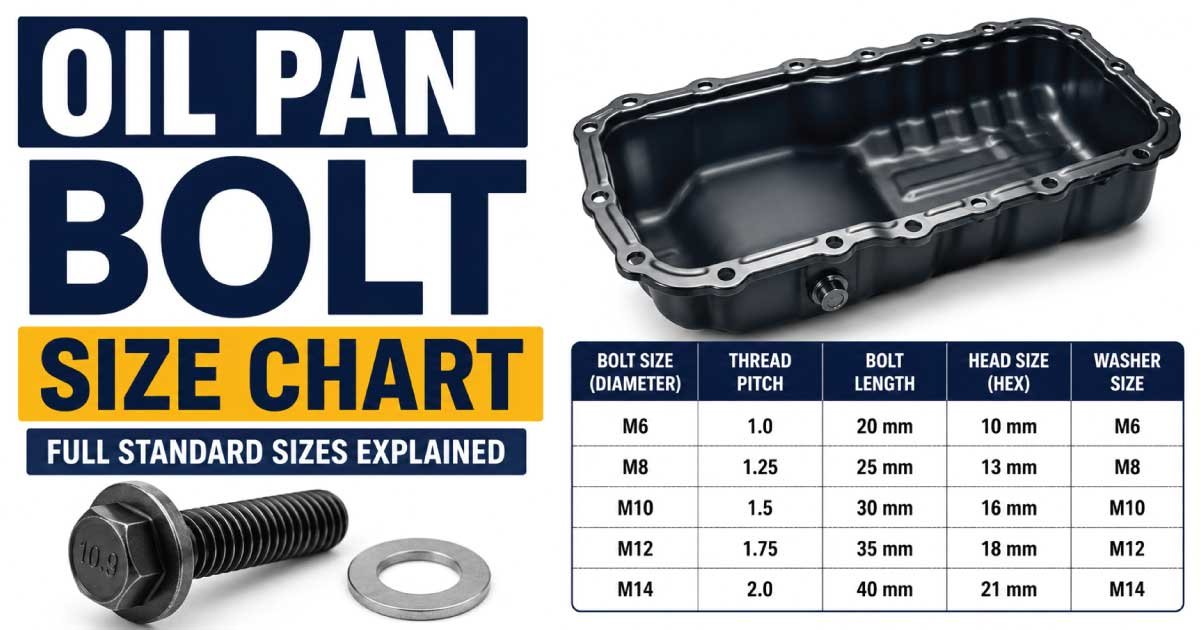
The oil pan is one of the most important components in any internal combustion engine. It stores engine oil, helps with lubrication, and ensures smooth engine operation. To keep the oil pan securely attached to the engine block, oil pan bolts are used.
Selecting the correct oil pan bolt size is extremely important. If the bolts are too loose, oil leakage can occur. If they are too tight or incorrect, it can damage threads in the engine block or cause gasket failure.
This complete guide explains the oil pan bolt size chart, thread types, torque values, materials, and how to choose the correct bolt for different engines.
What Is an Oil Pan Bolt?
An oil pan bolt is a small threaded fastener used to attach the oil pan securely to the engine block. It works with a gasket to create an oil-tight seal, preventing leakage and maintaining proper engine lubrication during operation, vibration, and temperature changes inside the engine system.
Main Functions
Oil pan bolts perform essential roles in maintaining engine sealing, stability, and structural integrity. Despite their small size, they are critical for preventing oil loss, supporting gasket compression, and ensuring the oil pan remains tightly secured under constant engine vibration and pressure during long-term vehicle operation.
- Secure oil pan to engine block
- Maintain oil-tight sealing
- Resist vibration from engine operation
- Support gasket compression
These functions help maintain engine reliability and prevent internal damage caused by oil leakage or improper sealing.
Why Oil Pan Bolt Size Matters
Choosing the correct oil pan bolt size is extremely important for engine safety, sealing efficiency, and long-term durability. Incorrect sizing can lead to mechanical failures, oil leakage, and damage to engine components due to improper fit and uneven torque distribution across the oil pan assembly.
Problems Caused by Incorrect Size
Using the wrong bolt size can create serious mechanical and operational issues in the engine system. These problems often lead to costly repairs, reduced performance, and safety risks due to oil leakage or structural damage under heat and vibration conditions.
- Oil leakage
- Stripped threads in engine block
- Cracked oil pan flange
- Uneven gasket pressure
- Engine contamination or oil loss
Benefits of Correct Size
Proper oil pan bolt sizing ensures stable engine operation, effective sealing, and long service life. It helps distribute torque evenly, maintain gasket pressure, and prevent leakage even under high vibration, heat, and continuous engine load during driving conditions.
- Leak-free sealing
- Proper torque distribution
- Long engine life
- Safe operation under vibration
How Oil Pan Bolt Sizes Are Measured
Oil pan bolt sizes are determined using standard mechanical measurements that ensure correct fitting, sealing performance, and compatibility with engine components. These measurements help engineers and mechanics select the right bolt for safe installation and reliable long-term engine operation.
1. Thread Diameter
Thread diameter refers to the thickness of the bolt threads, commonly available in metric sizes like M6, M8, and similar standards. It determines how tightly the bolt fits into the engine block and how much load it can safely support.
2. Thread Pitch
Thread pitch is the distance between two adjacent threads on the bolt. Fine threads provide stronger grip and sealing, while coarse threads allow easier installation and removal depending on engine design and maintenance requirements.
3. Bolt Length
Bolt length is measured from the underside of the head to the tip of the bolt. Correct length ensures proper engagement with the engine block without causing damage, over-tightening, or insufficient sealing pressure on the oil pan.
4. Head Type
Oil pan bolts come in different head types such as hex, flange, or Torx. Each design is made for specific tools and torque applications, ensuring proper tightening, easy maintenance, and secure fastening in automotive engine assemblies.
Standard Oil Pan Bolt Size Chart (Metric)
Metric oil pan bolt sizes are widely used in modern vehicles because they offer standardized dimensions, reliable torque control, and compatibility with global automotive systems. These bolts ensure secure oil pan mounting, proper gasket compression, and leak-free sealing under engine vibration, heat, and continuous mechanical stress conditions.
🔧 Oil Pan Bolt Size Chart (Metric)
| Bolt Size | Thread Pitch | Typical Length | Common Use |
|---|---|---|---|
| M6 | 1.0 mm | 16 – 25 mm | Small engines, motorcycles |
| M8 | 1.25 mm | 20 – 35 mm | Most cars and light vehicles |
| M10 | 1.5 mm | 25 – 45 mm | Heavy-duty engines |
| M12 | 1.75 mm | 30 – 50 mm | Trucks and industrial engines |
Each size is selected based on engine load, oil pan design, vibration levels, and required sealing strength for safe and long-term performance.
Standard Oil Pan Bolt Size Chart (Imperial)
Imperial oil pan bolt sizes are commonly used in older American engines and certain specialized machinery. These bolts follow inch-based measurements and thread counts, making them different from metric systems used in modern automotive engineering and global manufacturing standards.
🔩 Oil Pan Bolt Size Chart (Imperial)
| Bolt Size | Threads Per Inch (TPI) | Length Range | Application |
|---|---|---|---|
| 1/4″ | 20 – 28 TPI | 1″ – 1.5″ | Small engines |
| 5/16″ | 18 – 24 TPI | 1″ – 2″ | Automotive engines |
| 3/8″ | 16 – 24 TPI | 1.5″ – 2.5″ | Heavy engines |
| 7/16″ | 14 – 20 TPI | 2″ – 3″ | Industrial engines |
These sizes are still important in legacy systems where original imperial designs are maintained for compatibility and repair purposes.
Oil Pan Bolt Torque Specifications
Correct torque values are essential for ensuring proper sealing, gasket compression, and engine safety. Proper tightening prevents oil leakage, thread damage, and uneven pressure distribution while maintaining long-term reliability in engine assemblies under heat, vibration, and continuous operational stress conditions.
Typical Torque Values
| Bolt Size | Torque Range (Nm) |
|---|---|
| M6 | 8 – 12 Nm |
| M8 | 15 – 25 Nm |
| M10 | 25 – 45 Nm |
| M12 | 45 – 70 Nm |
Incorrect torque can cause gasket failure, oil leaks, or stripped threads, while proper torque ensures balanced fastening and durable engine performance over time.
Types of Oil Pan Bolts
Oil pan bolts are available in different designs to suit various engine configurations, accessibility requirements, and torque specifications. Each type offers unique benefits in terms of installation ease, vibration resistance, and sealing performance in automotive applications.
1. Hex Head Bolts
Hex head bolts are the most common type used in oil pan assemblies. They allow easy installation and removal using standard tools and provide reliable fastening strength in most automotive engine applications.
2. Flange Bolts
Flange bolts feature an integrated washer surface that distributes pressure evenly. This design improves sealing performance, reduces gasket stress, and helps prevent loosening due to engine vibration during operation.
3. Torx Bolts
Torx bolts use a star-shaped head design that improves tool grip and reduces slipping. They are commonly used in modern engines where precise torque application and secure fastening are required.
4. Allen Bolts
Allen bolts have an internal hex drive, making them suitable for tight engine spaces. They are widely used in compact designs where external tool access is limited during installation or maintenance.
🚀 Read Our Latest Guide 👉 Valve Size Chart in mm and Inches: Detailed Guide
Materials Used in Oil Pan Bolts
Oil pan bolts are designed to withstand heat, vibration, and continuous oil exposure inside engines. Material selection is critical for strength, corrosion resistance, and durability. Different materials are used depending on engine type, environment, and performance requirements in automotive applications to ensure safe and long-lasting sealing and fastening reliability.
1. Carbon Steel
Carbon steel is the most commonly used material for oil pan bolts due to its affordability and adequate strength. It is suitable for standard engines and everyday vehicles, providing reliable performance under normal driving conditions without excessive cost or specialized requirements in basic automotive applications.
2. Alloy Steel
Alloy steel oil pan bolts offer higher strength and better resistance to stress and heat. They are commonly used in heavy-duty engines where durability and long-term mechanical stability are required under demanding conditions, including high loads, vibration, and continuous engine operation in commercial or industrial vehicles.
3. Stainless Steel
Stainless steel oil pan bolts provide excellent corrosion resistance, making them ideal for engines exposed to moisture or harsh environments. They prevent rust formation and ensure long service life, especially in marine, coastal, or humid conditions where durability and protection against environmental damage are essential for engine reliability.
4. Coated Bolts (Zinc or Black Oxide)
Coated oil pan bolts feature protective layers such as zinc or black oxide that improve corrosion resistance. These coatings extend service life, reduce rust risk, and enhance durability in automotive engines exposed to heat, oil, and moisture, ensuring better long-term fastening performance and appearance.
How to Choose the Right Oil Pan Bolt Size
Choosing the correct oil pan bolt size is essential for engine safety, sealing performance, and durability. Incorrect selection can cause leaks, thread damage, or improper gasket compression. Careful attention to specifications ensures proper fit, reliable fastening, and long-term performance in automotive engine systems under varying operating conditions.
1. Check Vehicle Manual
Always consult the vehicle manufacturer’s service manual before selecting bolts. It provides exact specifications for bolt size, thread type, and torque values specific to your engine model, ensuring safe installation and preventing compatibility or performance issues during assembly or maintenance work.
2. Match Thread Size
Matching the correct thread size such as M6, M8, or M10 is essential for proper fit. Incorrect thread matching can cause cross-threading, weak fastening, or damage to the engine block, leading to leaks and reduced structural integrity in oil pan assembly systems.
3. Select Proper Length
Correct bolt length ensures secure fastening without damaging internal engine parts. If bolts are too long, they may interfere with components, while too short bolts may fail to hold the oil pan properly, resulting in leakage or poor sealing performance during engine operation.
4. Check Thread Pitch
Thread pitch determines how tightly the bolt engages with the engine block threads. Matching fine or coarse pitch correctly is important for achieving proper torque, sealing efficiency, and mechanical stability in the oil pan assembly to prevent loosening or vibration-related failures.
5. Choose Correct Material
Selecting the right material depends on engine type and environment. Carbon steel suits standard engines, alloy steel is used for heavy-duty applications, and stainless steel is preferred for corrosion resistance, ensuring long-term durability and reliable performance under different operating conditions and exposure levels.
🚀 Read Our Latest Guide 👉 Piston Size Guide with Chart ( 2026 ) for Beginners
Step-by-Step Oil Pan Bolt Installation
Proper installation of oil pan bolts is essential for achieving a secure seal, preventing oil leakage, and ensuring long-term engine reliability. Following correct steps helps avoid thread damage, uneven pressure, and gasket failure during engine operation under heat and vibration conditions.
Step 1: Clean Oil Pan Surface
Remove all old gasket material, dirt, and debris from the oil pan and engine block surface. A clean surface ensures proper sealing, prevents leakage, and allows the gasket to sit evenly during installation.
Step 2: Position Oil Pan
Carefully align the oil pan with the engine block mounting surface. Proper alignment ensures bolt holes match correctly and prevents cross-threading or misplacement during installation, which can affect sealing performance.
Step 3: Insert Bolts
Insert all bolts by hand first to avoid cross-threading. Hand-tightening ensures correct thread engagement and helps identify alignment issues before applying full torque during final tightening.
Step 4: Tighten in Sequence
Tighten bolts using a crisscross or diagonal pattern. This ensures even pressure distribution across the oil pan gasket and prevents warping or uneven sealing that could lead to oil leaks.
Step 5: Apply Torque
Use a torque wrench to tighten bolts according to manufacturer specifications. Proper torque ensures secure fastening without over-tightening, protecting threads, gasket integrity, and engine block surfaces.
Common Mistakes When Using Oil Pan Bolts
Incorrect handling of oil pan bolts can lead to serious engine problems, including leaks, thread damage, and gasket failure. Avoiding these mistakes ensures safe installation and long-term engine performance under continuous vibration and thermal stress conditions.
1. Over-Tightening
Over-tightening bolts can strip engine threads or crack the oil pan. It also damages the gasket, leading to improper sealing and potential oil leakage during engine operation.
2. Under-Tightening
Under-tightened bolts fail to compress the gasket properly. This results in oil leaks, reduced sealing efficiency, and potential engine contamination or oil loss over time.
3. Wrong Bolt Size
Using incorrect bolt size can damage engine block threads or prevent proper fitting. This leads to weak fastening, misalignment, and possible mechanical failure under load conditions.
4. Reusing Damaged Bolts
Reusing stretched or damaged bolts reduces clamping force and sealing reliability. It increases the risk of leakage and mechanical failure in engine assemblies.
5. Ignoring Torque Pattern
Skipping proper tightening sequence causes uneven gasket pressure. This results in poor sealing, warping, and increased chances of oil leakage from the oil pan.
Applications of Oil Pan Bolts
Oil pan bolts are essential fasteners used across various engine types to secure the oil pan and maintain proper sealing under vibration, heat, and continuous mechanical stress in automotive and industrial systems.
🚗 Automotive Engines
Used in cars, SUVs, and motorcycles to secure the oil pan and maintain oil-tight sealing during everyday driving conditions and engine operation.
🚚 Heavy Vehicles
Applied in trucks and buses where engines operate under higher loads, requiring strong fastening and vibration resistance for long-distance and heavy-duty performance.
🏭 Industrial Engines
Used in generators and construction machinery where continuous operation demands durable fastening and reliable oil containment under harsh working conditions.
🚜 Agricultural Equipment
Found in tractors and harvesters where engines face dust, vibration, and heavy workloads requiring strong sealing and dependable oil pan fastening.
Importance of Oil Pan Gasket with Bolts
Oil pan bolts alone cannot create a proper seal; they work together with a gasket to prevent oil leakage. The gasket fills gaps between surfaces, while bolts provide the required clamping force for compression.
Types of Gaskets
- Rubber gaskets
- Cork gaskets
- Silicone gaskets
- Liquid sealants
Proper bolt tightening ensures uniform gasket compression, which is essential for maintaining an oil-tight seal and preventing engine oil leakage during operation.
Maintenance Tips
Regular maintenance of oil pan bolts is important for preventing leaks, ensuring proper sealing, and extending engine life. Inspections help identify wear, damage, or loosening caused by vibration and thermal cycling.
- Check for leaks regularly
- Replace damaged bolts
- Use correct torque every time
- Avoid reusing stretched bolts
- Inspect threads during oil changes
Final Thoughts
The oil pan bolt size chart is essential for anyone working on vehicle engines or mechanical systems. These small fasteners play a major role in preventing oil leaks and maintaining engine performance.
To summarize:
- Most cars use M6 or M8 bolts
- Torque accuracy is critical
- Proper tightening sequence matters
- Always follow manufacturer specifications
A correctly selected and properly installed oil pan bolt ensures a leak-free, safe, and long-lasting engine performance.
🚀 Read Our Latest Guide 👉 HVAC Piston Size Guide with Chart (2026) for Beginners