
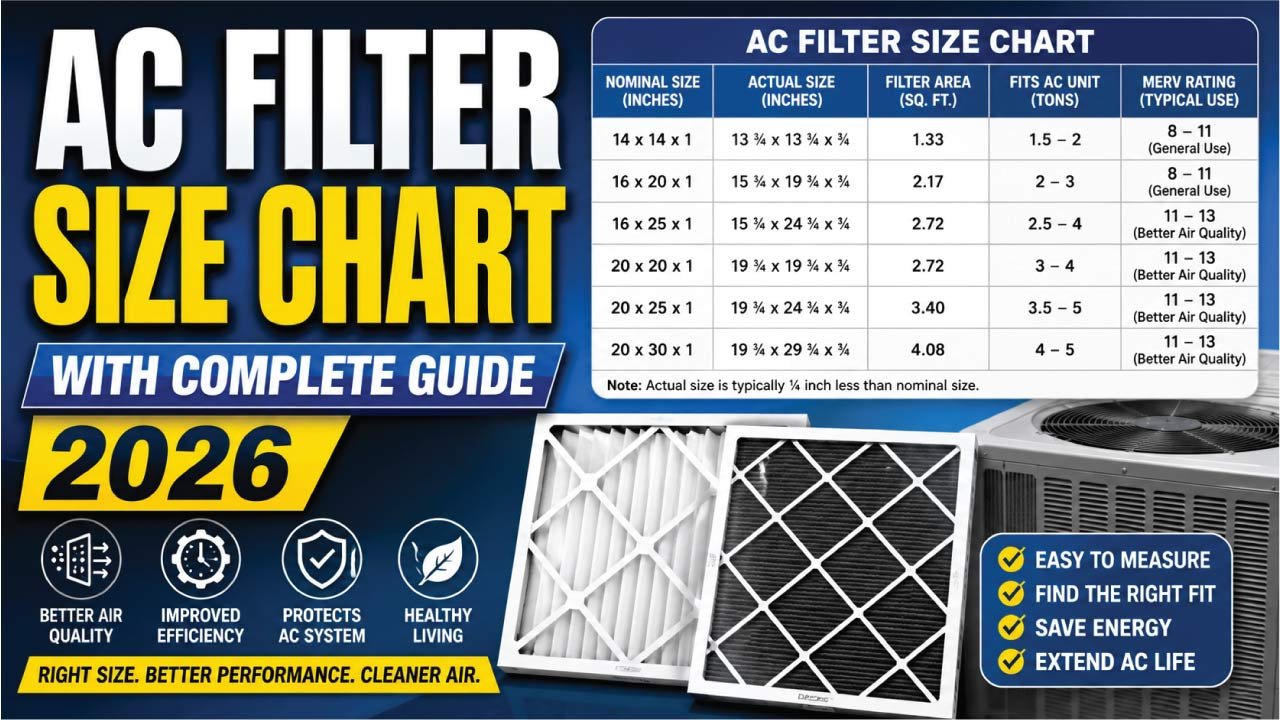
Air conditioning systems rely on filters to keep indoor air clean and maintain efficient airflow. Whether you use a central HVAC system, window AC, or commercial cooling unit, selecting the correct AC filter size is essential for system performance, energy efficiency, and indoor air quality.
Many homeowners replace filters without understanding sizing, thickness, MERV ratings, or airflow requirements. Using the wrong filter can reduce cooling efficiency, increase electricity bills, and even damage HVAC equipment over time.
This complete guide explains AC filter sizes, standard dimensions, measurement methods, filter types, and maintenance tips to help you choose the perfect AC filter for your system.
What Is an AC Filter?
An AC filter is a replaceable or washable component installed inside an air conditioning or HVAC system. Its main purpose is to trap:
- Dust
- Dirt
- Pollen
- Pet dander
- Mold spores
- Smoke particles
- Airborne contaminants
The filter prevents these particles from entering the HVAC system and circulating throughout the home.
Why AC Filter Size Matters
Choosing the correct AC filter size is essential for maintaining HVAC efficiency, indoor air quality, and overall cooling performance. An improperly sized filter can restrict airflow, increase energy consumption, and place unnecessary stress on HVAC components. The right filter size helps the air conditioning system operate smoothly while improving comfort and reducing maintenance problems.
1. Proper Airflow
Correctly sized AC filters allow air to move freely through the HVAC system without excessive resistance. Smooth airflow helps maintain balanced cooling throughout the building. When airflow becomes restricted due to the wrong filter size, the system must work harder, increasing stress on fans, motors, and blowers.
2. Improved Cooling Efficiency
A properly fitted air filter supports stable airflow across the evaporator coils and ventilation system. Consistent airflow helps the air conditioner cool rooms more effectively and maintain steady indoor temperatures. Incorrect filter sizing can reduce cooling performance and cause uneven airflow throughout the home or office.
3. Cleaner Indoor Air
Correct-sized AC filters trap dust, pollen, pet dander, smoke particles, and other airborne contaminants more efficiently. A tight-fitting filter prevents unfiltered air from bypassing the filtration system through gaps around the edges. This helps improve indoor air quality and creates a cleaner, healthier environment.
4. Lower Energy Bills
Efficient airflow reduces the amount of energy required for the HVAC system to circulate air and maintain cooling performance. Incorrect filter sizes can force the air conditioner to run longer cycles, increasing electricity usage. Properly sized filters help reduce operating costs and improve overall energy efficiency.
5. Longer HVAC Lifespan
When airflow remains balanced, important HVAC components such as compressors, blower motors, and fans experience less mechanical strain. Reduced stress helps minimize wear and tear on the system over time. Using the correct AC filter size can help extend equipment lifespan and reduce costly repair needs.
Understand The AC Filter Sizes
AC filter sizes are typically written in this format:
Length × Width × Thickness
Example:
- 16 × 20 × 1
- 20 × 25 × 4
- 24 × 24 × 1
These measurements are usually listed in inches.
Standard AC Filter Size Chart
Below is a common AC filter size chart used in residential HVAC systems.
| Nominal Size | Actual Size (Approx.) |
|---|---|
| 10 × 20 × 1 | 9.75 × 19.75 × 0.75 |
| 12 × 12 × 1 | 11.75 × 11.75 × 0.75 |
| 12 × 24 × 1 | 11.75 × 23.75 × 0.75 |
| 14 × 20 × 1 | 13.75 × 19.75 × 0.75 |
| 14 × 25 × 1 | 13.75 × 24.75 × 0.75 |
| 16 × 20 × 1 | 15.75 × 19.75 × 0.75 |
| 16 × 25 × 1 | 15.75 × 24.75 × 0.75 |
| 18 × 20 × 1 | 17.75 × 19.75 × 0.75 |
| 20 × 20 × 1 | 19.75 × 19.75 × 0.75 |
| 20 × 25 × 1 | 19.75 × 24.75 × 0.75 |
| 20 × 25 × 4 | 19.5 × 24.5 × 3.75 |
| 24 × 24 × 1 | 23.75 × 23.75 × 0.75 |
| 25 × 25 × 1 | 24.75 × 24.75 × 0.75 |
Nominal Size vs Actual Size
Many people are confused because AC filters often have two different dimensions.
Nominal Size
This is the rounded size printed on packaging.
Example:
- 20 × 25 × 1
Actual Size
This is the filter’s real measured dimension.
Example:
- 19.75 × 24.75 × 0.75
Manufacturers slightly reduce actual dimensions so filters can fit properly inside filter slots.
How to Measure AC Filter Size
Measuring an AC filter correctly is important when replacing an old or damaged filter, especially if the original size label is missing or unreadable. Accurate measurements help ensure proper airflow, better filtration, improved cooling efficiency, and a secure filter fit inside the HVAC system. Even small sizing errors can reduce system performance and indoor air quality.
Step 1: Turn Off the AC System
Before removing the air filter, always turn off the air conditioning or HVAC system for safety. Shutting down the system prevents dust circulation and protects internal components during filter removal. This also reduces the risk of debris entering the ductwork while handling the filter.
Step 2: Remove the Existing Filter
Carefully slide the existing AC filter out of the filter slot or return vent without bending or damaging it. Place the filter on a flat surface to make measuring easier and more accurate. Avoid shaking the filter because accumulated dust and dirt can spread into the surrounding area.
Step 3: Measure Width
Use a measuring tape or ruler to measure the shorter side of the filter from one outer edge to the opposite edge. This dimension represents the filter width. Accurate width measurement is important because even slight differences can affect how tightly the filter fits inside the housing.
Step 4: Measure Length
Next, measure the longer side of the filter from edge to edge. This measurement is the filter length. Keep the measuring tape straight while measuring to ensure precise dimensions. Correct length helps prevent air leaks and supports efficient airflow through the HVAC system.
Step 5: Measure Thickness
Measure the depth or thickness of the filter from the front side to the back side. AC filters are available in different thickness options such as 1-inch, 2-inch, 4-inch, and 5-inch models. Correct thickness ensures compatibility with the filter slot and helps maintain proper airflow performance.
Step 6: Round to Nearest Whole Number
Most AC filter manufacturers use nominal sizes instead of exact dimensions when labeling filters. Nominal sizes are rounded measurements that simplify filter identification and replacement. Always compare both actual dimensions and nominal dimensions before purchasing a replacement filter.
For example:
- Actual Size: 15.75 × 24.75 × 0.75
- Nominal Size: 16 × 25 × 1
This rounding system is common in the HVAC industry, so slight differences between actual and labeled sizes are completely normal.
Common AC Filter Thickness Options
AC filters are available in multiple thicknesses.
| Thickness | Typical Use |
|---|---|
| 1 inch | Standard residential systems |
| 2 inch | Better airflow systems |
| 4 inch | High-efficiency HVAC systems |
| 5 inch | Advanced filtration systems |
| 6 inch | Commercial HVAC systems |
Types of AC Filters
AC filters are available in several different types, each designed for specific filtration needs, airflow requirements, and indoor air quality improvements. Choosing the right filter type can help improve cooling efficiency, reduce airborne contaminants, and protect HVAC equipment from dust buildup and damage over time.
1. Fiberglass Filters
Fiberglass filters are basic and affordable disposable filters commonly used in residential HVAC systems. Their primary purpose is to protect HVAC equipment from large dust particles and debris rather than significantly improving indoor air quality. These filters usually provide low airflow resistance and are suitable for budget-friendly applications.
2. Pleated Filters
Pleated AC filters offer improved filtration performance because their folded design increases the total filter surface area. They can capture smaller particles such as dust, pollen, pet dander, and mold spores more effectively than standard fiberglass filters. Pleated filters are widely used in homes and commercial HVAC systems for balanced airflow and better air quality.
3. HEPA Filters
HEPA (High-Efficiency Particulate Air) filters are designed to capture extremely small airborne particles with very high efficiency. These filters are commonly used in hospitals, laboratories, clean rooms, and advanced air purification systems. HEPA filters help remove allergens, bacteria, smoke particles, and fine dust from indoor environments.
4. Washable Filters
Washable or reusable AC filters can be cleaned and reused multiple times instead of being replaced regularly. These filters help reduce waste and lower long-term replacement costs. Proper cleaning and maintenance are important to maintain good airflow and filtration efficiency throughout the filter’s lifespan.
5. Electrostatic Filters
Electrostatic air filters use static electricity to attract and capture airborne dust, pollen, and other small particles. Some electrostatic filters are disposable, while others are reusable and washable. These filters can improve indoor air quality while maintaining efficient airflow inside the HVAC system.
6. Activated Carbon Filters
Activated carbon filters are designed to remove odors, smoke, gases, and certain chemical pollutants from indoor air. The activated carbon material absorbs unwanted smells and airborne contaminants more effectively than standard filters alone. These filters are commonly used in homes, kitchens, offices, and environments where odor control is important.
MERV Ratings Explained
MERV stands for Minimum Efficiency Reporting Value. It measures filtration efficiency.
| MERV Rating | Filtration Quality |
|---|---|
| 1–4 | Basic filtration |
| 5–8 | Standard residential filtration |
| 9–12 | Better allergy protection |
| 13–16 | Hospital-grade filtration |
| 17–20 | Cleanroom-level filtration |
Best MERV Rating for Home AC Systems
Most residential systems work well with:
- MERV 6–8 for standard homes
- MERV 9–12 for allergy sufferers
- MERV 13 for advanced filtration
Very high MERV ratings can restrict airflow if the HVAC system is not designed for them.
Signs Your AC Filter Needs Replacement
A dirty or clogged AC filter can reduce cooling performance, restrict airflow, increase energy usage, and lower indoor air quality. Replacing the filter at the right time helps maintain efficient HVAC operation and improves overall indoor comfort. Recognizing these warning signs early can help prevent costly HVAC problems and system damage.
1. Weak Airflow
If the air coming from vents feels weaker than usual, the AC filter may be clogged with dust and debris. Restricted airflow makes it harder for the HVAC system to circulate cool air throughout the home. This can reduce cooling efficiency and create uneven room temperatures.
2. Increased Energy Bills
A dirty air filter forces the air conditioning system to work harder to maintain the desired indoor temperature. Longer operating cycles increase electricity consumption and monthly utility costs. Replacing a clogged filter can help restore normal airflow and improve overall energy efficiency.
3. Dusty Indoor Air
When the AC filter becomes overloaded with dust, it loses its ability to capture airborne particles effectively. As a result, more dust may settle on furniture, floors, vents, and household surfaces. Excessive indoor dust is often a clear sign that the filter needs replacement.
4. Frozen Evaporator Coils
Restricted airflow caused by a dirty filter can reduce proper heat exchange across the evaporator coils. This may lead to moisture freezing on the coil surface, causing frozen evaporator coils. Frozen coils reduce cooling performance and can damage important HVAC components if not addressed quickly.
5. Longer Cooling Cycles
If the AC system takes longer than normal to cool the home, poor airflow from a clogged filter may be the cause. The system must run for extended periods to maintain indoor temperatures, increasing wear on compressors, fans, and blower motors over time.
6. Allergy Symptoms
Dirty AC filters may allow dust, pollen, pet dander, and other allergens to circulate indoors more easily. Poor filtration can worsen allergy symptoms, respiratory irritation, and indoor air quality problems. Replacing the filter regularly helps maintain cleaner and healthier indoor air.
How Often Should AC Filters Be Changed?
Replacement intervals vary based on filter type and household conditions.
| Filter Type | Replacement Time |
|---|---|
| Fiberglass Filters | Every 30 days |
| Pleated Filters | Every 60–90 days |
| HEPA Filters | Every 6–12 months |
| Washable Filters | Clean monthly |
| Thick Media Filters | Every 6–12 months |
Homes with pets, smokers, or allergies may require more frequent replacement.
Explore Our Latest Article:
Common AC Filter Problems
AC filters can develop several problems that reduce HVAC efficiency, restrict airflow, and lower indoor air quality. Poor filter selection, incorrect installation, or lack of maintenance can place additional stress on air conditioning systems and increase energy consumption. Understanding these common AC filter issues helps maintain better cooling performance and system reliability.
1. Wrong Filter Size
Using the wrong AC filter size can create gaps around the filter frame, allowing unfiltered air to bypass the filtration system. This reduces filtration efficiency and allows dust, pollen, and contaminants to circulate through the HVAC system. Incorrect sizing may also affect airflow and overall cooling performance.
2. Dirty Filters
Dirty or clogged filters are one of the most common HVAC problems. As dust and debris accumulate, airflow becomes restricted, forcing the AC system to work harder to cool the home. This can increase energy usage, reduce cooling efficiency, and place additional strain on motors and compressors.
3. High MERV Restriction
While high MERV-rated filters provide improved filtration, some HVAC systems are not designed to handle very dense filters. Excessively restrictive filters can reduce airflow and negatively affect cooling performance. Choosing a MERV rating that matches the system’s airflow capability is important for balanced operation.
4. Poor Installation
Incorrect filter installation can affect airflow direction and reduce filtration performance. Most AC filters include airflow arrows printed on the frame to indicate the correct installation direction. Installing the filter backward may restrict airflow and decrease the filter’s ability to capture airborne contaminants effectively.
5. Bent Filter Frame
A bent, damaged, or warped filter frame may prevent the filter from sealing properly inside the filter slot. Poor sealing allows unfiltered air to leak around the edges instead of passing through the filter material. This can reduce indoor air quality and increase dust buildup inside the HVAC system.
How to Install an AC Filter Correctly
Installing an AC filter correctly is important for maintaining proper airflow, improving indoor air quality, and protecting HVAC equipment from dust buildup and damage. Incorrect installation can reduce cooling efficiency, restrict airflow, and allow contaminants to bypass the filtration system. Following the correct installation process helps ensure safe and efficient HVAC performance.
Step 1: Turn Off the HVAC System
Before replacing the air filter, turn off the HVAC or air conditioning system completely. This prevents dust and debris from being pulled into the system during filter removal. Shutting down the system also helps protect internal HVAC components while the filter compartment is open.
Step 2: Remove Old Filter
Carefully slide the old or dirty filter out of the filter slot or return vent. Avoid shaking the filter because accumulated dust and debris may spread into the surrounding area. Inspect the old filter for heavy dirt buildup, damage, or incorrect sizing before disposal.
Step 3: Check Airflow Arrow
Most AC filters have airflow direction arrows printed on the side of the frame. These arrows indicate the correct airflow direction through the HVAC system. The arrow should usually point toward the blower motor or inside the ductwork, depending on the system design.
Step 4: Insert New Filter
Slide the new filter into the filter slot carefully while keeping the airflow arrow facing the correct direction. Ensure the filter fits tightly without bending or leaving gaps around the edges. Proper installation helps maintain effective filtration and balanced airflow throughout the system.
Step 5: Close Access Panel
After installing the new filter, securely close the filter access panel or return vent cover. A properly sealed panel helps prevent unfiltered air from bypassing the filter. Good sealing also improves HVAC efficiency and overall indoor air quality.
Step 6: Turn System Back On
Once the filter is installed and the access panel is closed properly, turn the HVAC system back on. Check that airflow feels normal and the system operates smoothly. Regular filter replacement and correct installation help maintain reliable cooling performance and extend HVAC system life.
Explore Our Latest Article:
AC Filter Sizes for Different Systems
Different air conditioning systems use different filter sizes depending on airflow requirements, equipment design, and cooling capacity. Choosing the correct filter size for each system type is important for maintaining proper airflow, improving filtration efficiency, and protecting HVAC components from dust buildup and damage.
1. Central Air Conditioning Systems
Central HVAC systems commonly use standard rectangular air filters available in various sizes and thicknesses. These filters are installed in return vents, air handlers, or furnace compartments to filter air throughout the entire building. Some of the most common residential AC filter sizes include:
- 16 × 20 × 1
- 20 × 25 × 1
- 20 × 20 × 1
Larger homes and high-capacity HVAC systems may use thicker filters such as 4-inch or 5-inch media filters for improved airflow and filtration performance.
2. Window AC Units
Window air conditioners usually contain small washable mesh filters instead of large disposable HVAC filters. These filters are designed to capture dust and debris before air enters the cooling system. Regular cleaning is important because clogged mesh filters can reduce airflow and cooling efficiency significantly.
3. Portable AC Units
Portable air conditioning units often use compact removable filters that can be cleaned and reused. These filters are typically smaller than standard HVAC filters and are located near the air intake section of the unit. Proper filter maintenance helps portable AC systems maintain strong airflow and effective cooling performance.
4. Commercial HVAC Systems
Commercial HVAC systems generally use larger panel filters, pleated filters, bag filters, or high-capacity media filters designed for heavy airflow requirements. These systems may require advanced filtration for offices, hospitals, factories, retail buildings, and industrial facilities. Commercial filters are often thicker and larger to support higher airflow volumes and improved contaminant removal.
Explore Our Latest Article:
Washable vs Disposable AC Filters
Washable and disposable AC filters are both commonly used in HVAC systems, but each type offers different advantages and disadvantages. The best choice depends on factors such as filtration needs, maintenance preferences, indoor air quality requirements, and long-term operating costs. Understanding the differences can help homeowners choose the most suitable filter type for their HVAC system.
1. Washable Filters
Washable AC filters are reusable filters that can be cleaned and reinstalled multiple times instead of being replaced regularly. These filters are often made from durable materials such as aluminum mesh, electrostatic media, or washable synthetic fibers. They are commonly used in residential HVAC systems where long-term cost savings are important.
Advantages of Washable Filters
- Reusable design reduces the need for frequent replacements
- Lower long-term operating cost compared to disposable filters
- Eco-friendly because less filter waste is sent to landfills
- Suitable for homeowners who prefer reusable maintenance solutions
Disadvantages of Washable Filters
- Require regular cleaning and drying to maintain performance
- Dirty washable filters may reduce airflow if not cleaned properly
- Some models offer lower filtration efficiency than high-quality disposable filters
- Cleaning process may take more time and effort compared to simple replacement
2. Disposable Filters
Disposable AC filters are designed for one-time use and must be replaced once they become dirty or clogged. These filters are available in various materials, thicknesses, and MERV ratings to support different HVAC systems and indoor air quality needs. Disposable filters are widely used because they provide convenient maintenance and strong filtration performance.
Advantages of Disposable Filters
- Better filtration performance for capturing dust and airborne particles
- Easy and quick replacement process without cleaning requirements
- Available in many MERV ratings for different air quality needs
- Widely compatible with most residential and commercial HVAC systems
Disadvantages of Disposable Filters
- Require ongoing replacement purchases over time
- Generate more environmental waste due to regular disposal
- High-efficiency filters may restrict airflow in some HVAC systems if not selected properly
- Long-term replacement costs may become higher than reusable filter options
Explore Our Latest Article:
AC Filter Maintenance Tips
Proper AC filter maintenance is essential for maintaining strong airflow, improving indoor air quality, reducing energy consumption, and extending HVAC system life. Dirty or poorly maintained filters can restrict airflow, reduce cooling efficiency, and increase stress on HVAC components. Following regular maintenance practices helps keep the air conditioning system operating smoothly and efficiently.
1. Inspect Filters Monthly
AC filters should be checked at least once every month for visible dust, dirt, and debris buildup. Regular inspection helps identify clogged filters before they begin affecting airflow and cooling performance. Homes with pets, smokers, or high dust levels may require more frequent filter inspections and replacements.
2. Replace Filters on Schedule
Do not wait until airflow becomes severely restricted before replacing the filter. Dirty filters force the HVAC system to work harder, increasing electricity usage and system wear. Following the manufacturer’s recommended replacement schedule helps maintain efficient airflow, better cooling performance, and cleaner indoor air.
3. Keep Vents Clean
Dusty supply vents and return vents can reduce overall HVAC efficiency and airflow performance. Cleaning vents regularly helps improve air circulation throughout the building and reduces the amount of dust entering the HVAC system. Cleaner vents also help maintain healthier indoor air quality.
4. Seal Air Leaks
Air leaks around the filter frame or filter compartment allow unfiltered air to bypass the filtration system completely. Proper sealing ensures that all circulating air passes through the filter media for effective contaminant removal. Sealing leaks also improves HVAC efficiency and reduces dust accumulation inside the system.
5. Maintain HVAC Equipment
Regular HVAC maintenance helps improve overall filtration performance and cooling efficiency. Professional servicing may include cleaning evaporator coils, inspecting blower motors, checking ductwork, and verifying airflow levels. Well-maintained HVAC equipment works more efficiently and helps extend the lifespan of filters and system components.
Explore Our Latest Article:
Energy Efficiency and AC Filters
Clean and properly sized AC filters play a major role in improving HVAC energy efficiency and overall cooling performance. When airflow remains unrestricted, the air conditioning system can operate more smoothly with less strain on internal components. Dirty or incorrect filters force the system to work harder, increasing electricity consumption, equipment wear, and long-term operating costs.
Benefits of Clean AC Filters
Properly maintained air filters provide several important efficiency and performance benefits for HVAC systems, including:
- Reduced electricity usage through improved airflow efficiency
- Faster cooling performance and more consistent indoor temperatures
- Better airflow throughout vents and duct systems
- Lower repair and maintenance costs due to reduced system strain
- Improved indoor comfort and balanced temperature control
When filters become clogged with dust and debris, airflow resistance increases significantly. This forces fans, blowers, and compressors to run longer cycles to maintain cooling performance, which increases both energy usage and equipment wear over time.
Indoor Air Quality Benefits
AC filters help improve indoor air quality by capturing airborne contaminants before they circulate through the HVAC system and living spaces. Effective filtration reduces the amount of dust and allergens present inside homes, offices, and commercial buildings, creating a cleaner and healthier indoor environment.
Common Contaminants Removed by AC Filters
High-quality AC filters can help reduce:
- Dust
- Pet hair and pet dander
- Pollen
- Smoke particles
- Mold spores
- Airborne allergens and fine particles
Improved indoor air quality is especially important for children, elderly individuals, and people with allergies, asthma, or respiratory sensitivities. Higher-quality filters with appropriate MERV ratings can significantly improve indoor comfort and reduce airborne irritants.
Explore Our Latest Article:
Custom AC Filter Sizes
Some HVAC systems require custom-sized air filters because standard filter dimensions may not fit properly. Custom filters are manufactured using exact measurements to ensure proper airflow, tight sealing, and efficient filtration performance. These filters are commonly used in specialized or non-standard HVAC installations.
Applications That Often Require Custom Filters
Custom AC filters are frequently used in:
- Older homes with non-standard HVAC systems
- Commercial buildings with large ventilation units
- Industrial ventilation and air handling systems
- Specialty HVAC installations and custom ductwork designs
Custom filters can usually be ordered using precise width, length, and thickness measurements. Accurate sizing is important because even small dimension differences can affect airflow, filtration efficiency, and HVAC system performance.
Best AC Filter Sizes for Residential Homes
Popular residential filter sizes include:
- 16 × 20 × 1
- 16 × 25 × 1
- 20 × 20 × 1
- 20 × 25 × 1
- 20 × 25 × 4
The correct size depends entirely on the HVAC system design.
Conclusion
Understanding AC filter sizes is essential for maintaining efficient cooling performance, clean indoor air, and long HVAC system life. A properly sized AC filter improves airflow, reduces energy costs, and helps prevent expensive HVAC repairs.
Using an AC filter size chart makes it easier to identify standard dimensions and choose the right replacement filter for your system. Always verify actual measurements, select the correct thickness, and choose a suitable MERV rating based on your indoor air quality needs.
Regular filter replacement and proper maintenance help your air conditioning system operate efficiently while creating a healthier and more comfortable indoor environment.
Explore Our Latest Article:
FAQ:
Q: What is an AC filter and why is it important?
AC filter is a component in HVAC systems that traps dust, pollen, smoke, and airborne particles before air circulates indoors. It is important because it protects HVAC equipment, improves indoor air quality, and maintains smooth airflow. A clean filter ensures efficient cooling, reduces system strain, and supports healthier indoor environments.
Q: How do I know what size AC filter I need?
You can find the correct AC filter size by checking the existing filter label or measuring length, width, and thickness manually. Sizes are usually in inches like 16 × 20 × 1. Always compare nominal and actual sizes before buying. Correct sizing ensures proper fit, prevents air leakage, and maintains HVAC efficiency.
Q: What happens if I use the wrong AC filter size?
Using the wrong AC filter size can cause airflow restriction, reduced cooling performance, and higher energy consumption. A loose filter allows dust bypass, while a tight one strains the system. Over time, this may damage HVAC components, reduce efficiency, increase repair costs, and negatively affect indoor air quality and comfort.
Q: How often should AC filters be replaced?
AC filter replacement depends on type and usage. Fiberglass filters should be replaced every 30 days, pleated filters every 60–90 days, and HEPA filters every 6–12 months. Homes with pets or dust may need more frequent changes. Regular replacement ensures proper airflow, better cooling efficiency, and cleaner indoor air.
Q: What are the main types of AC filters?
Main AC filter types include fiberglass, pleated, HEPA, washable, electrostatic, and activated carbon filters. Fiberglass provides basic protection, pleated and HEPA offer higher filtration, washable filters are reusable, electrostatic uses charge to trap particles, and carbon filters remove odors. Each type serves different HVAC and air quality needs.
Q: What is the difference between nominal and actual AC filter size?
Nominal size is the rounded measurement printed on the filter box, while actual size is the exact physical dimension. For example, a 20 × 25 × 1 filter may measure 19.75 × 24.75 × 0.75 inches. This difference ensures proper fit and smooth installation inside HVAC systems.
Q: How does AC filter size affect energy efficiency?
Correct AC filter size improves energy efficiency by allowing smooth airflow through the HVAC system. When airflow is unrestricted, the system uses less energy to cool spaces. Incorrect sizes restrict airflow or cause leaks, forcing the system to work harder, increasing electricity usage, reducing efficiency, and raising long-term operating costs.